
When summer heat hits Lafayette, Louisiana, the last thing you want is a malfunctioning air conditioner. Whether you’re dealing with an AC that won’t cool your home or strange noises coming from your unit, understanding common AC problems can help you identify issues quickly and know when to call for professional help.
At Fontenot Air Conditioning and Heating, we’ve seen just about every air conditioner problem imaginable. In this comprehensive guide, we’ll walk you through the most frequent AC issues Lafayette homeowners face, what causes them, and how to address them effectively.
What Are the Most Common AC Problems Homeowners Face?
Air conditioning systems are complex machines with multiple components working together to keep your home comfortable. When one part fails or doesn’t function properly, it can affect your entire cooling system.
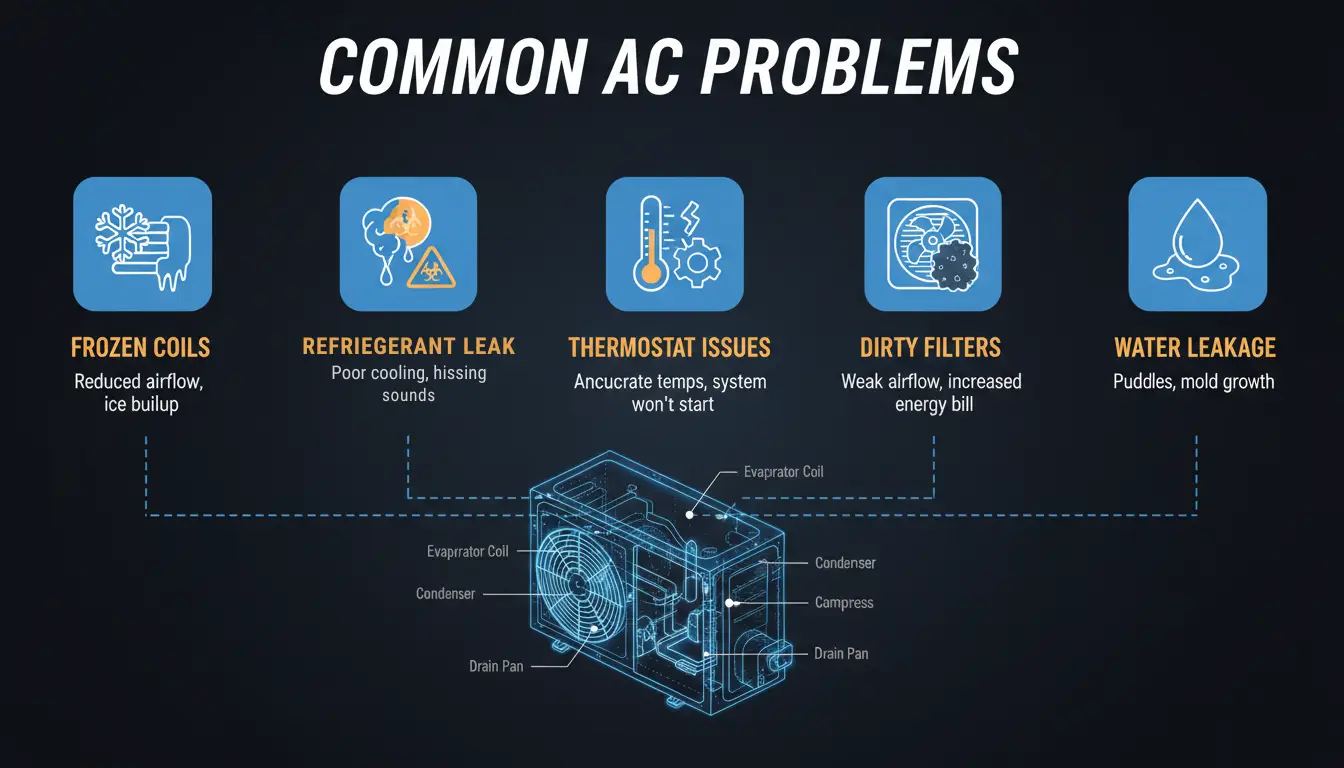
The most frequent AC problems we encounter in Lafayette homes include cooling issues, electrical failures, drainage problems, and mechanical component breakdowns. Many of these issues stem from three main causes: lack of regular maintenance, normal wear and tear, and extreme weather conditions that put extra stress on your system.
Understanding these common problems helps you spot warning signs early, potentially saving you from costly emergency repairs during the hottest days of summer.
AC Not Cooling or Blowing Warm Air
One of the most frustrating situations is when your air conditioner runs but doesn’t actually cool your home. This is perhaps the single most common complaint we hear from Lafayette residents.
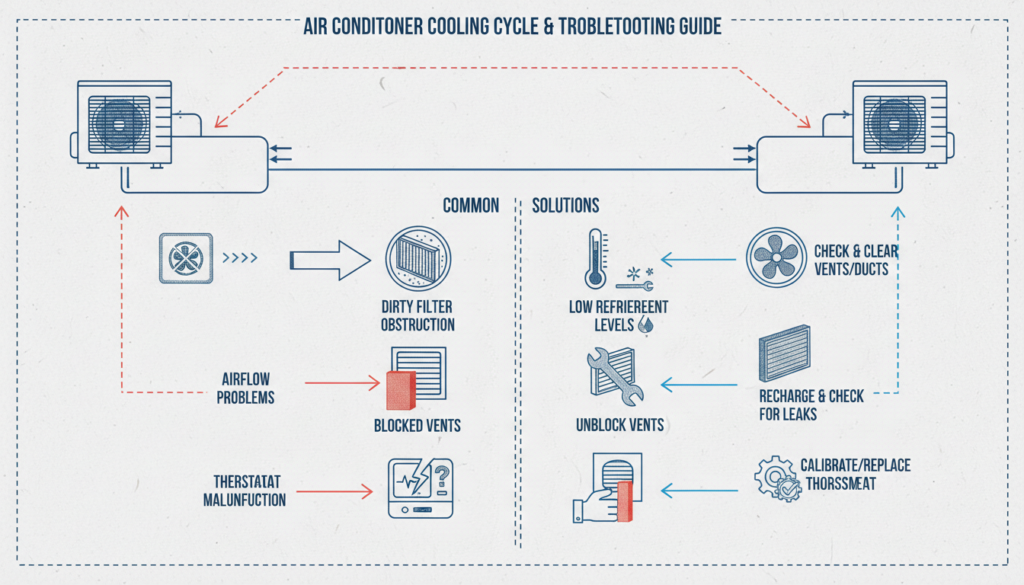
Air Conditioner Running But Not Cooling the House
If your AC is running continuously but your home stays warm, several issues could be at play. Low refrigerant levels are often the culprit when your system doesn’t have enough refrigerant; it can’t absorb heat effectively from your indoor air. You might notice ice forming on the refrigerant lines or the evaporator coil, which is a telltale sign of this problem.
Dirty air filters are another major cause. When filters become clogged with dust, pet hair, and debris, they restrict airflow through your system. This makes it nearly impossible for your AC to circulate enough cool air throughout your home. Check your filter monthly and replace it every 1-3 months, depending on usage.
Blocked or closed vents can also create uneven cooling in your house. Walk through your home and make sure all supply vents are open and unobstructed by furniture, curtains, or other items.
Thermostat problems can trick you into thinking your AC isn’t cooling when the real issue is with your temperature control system. If your thermostat is placed in direct sunlight, near a lamp, or in an unusually warm area, it may be reading temperatures incorrectly.
Learn More- Common Causes of AC not cooling
AC Blowing Warm Air Instead of Cold
When your AC blows warm air, it’s typically a more serious issue than simply not cooling well. This often indicates compressor problems, complete refrigerant loss, or a malfunctioning reversing valve (in heat pump systems).
A failing compressor cannot pressurize refrigerant properly, which means the cooling cycle can’t complete. You might hear unusual noises from the outdoor unit or notice that it’s not running at all, even though the indoor fan works.
Dirty condenser coils on your outdoor unit can also cause warm air issues. When the coils are covered in dirt, grass clippings, or cottonwood (common in Lafayette), they can’t release heat effectively. This causes your system to work harder and eventually blow warm air.
If you’ve recently had your system serviced and it’s now blowing warm air, the refrigerant may have been incorrectly charged. This is why it’s crucial to work with experienced HVAC technicians like our team at Fontenot Air Conditioning and Heating.
Learn More- Common Causes of AC Blowing Warm Air
Weak Airflow from AC Vents
Weak airflow makes your entire home uncomfortable and forces your AC to run longer cycles, driving up energy bills. The blower fan might be failing, or its motor could be wearing out. These components are essential for moving air through your ductwork and into your living spaces.
Ductwork leaks are common in older Lafayette homes. When conditioned air escapes through gaps, holes, or disconnected sections before reaching your rooms, you’ll notice significantly reduced airflow from your vents.
A dirty evaporator coil inside your indoor unit can also restrict airflow. As dust and debris accumulate on the coil, less air can pass through it, resulting in weak output from your vents.
Learn More- Causes and Fixes of Weak Airflow from AC Vents
AC Won’t Turn On or Start
Few things are more stressful than pressing your thermostat’s “cool” button and getting no response from your air conditioner.
No Power to the Air Conditioner
When your AC won’t turn on at all, start with the basics. Check your circuit breaker panel. A tripped breaker is one of the most common reasons for complete AC failure. Air conditioners draw significant power, and electrical surges or overloading can trip the breaker. If you reset the breaker and it immediately trips again, you have an electrical problem that requires professional attention.
Blown fuses in your outdoor disconnect box can also prevent your AC from starting. However, replacing these requires electrical knowledge and should be handled by a professional to avoid safety risks.
Electric control failure happens when components that control your compressor and fan wear out, especially if your AC frequently cycles on and off. Corrosion of wires and terminals is also common in humid climates like Lafayette’s.
Learn More- Why AC Turns On and How to Fix
Thermostat Not Working Properly
Your thermostat is the command center for your cooling system. Dead batteries in battery-operated thermostats are an easy fix; simply replace them and see if your system responds.
Incorrect thermostat settings are surprisingly common. Make sure your thermostat is set to “cool” mode, not “heat” or “off,” and that the temperature setting is lower than your current room temperature.
Thermostat sensor problems occur when the sensor gets knocked out of position. In mechanical thermostats, a small sensor sits near the evaporator coil. If it touches the coil, it can give false readings. Gently adjust it so it’s near the coil but not touching it.
Older thermostats may need calibration or replacement. If your thermostat is more than 10 years old and is causing problems, upgrading to a programmable or smart thermostat can improve both comfort and efficiency.
Learn More- AC Thermostat Not Working
Common AC Component Failures
Air conditioners have several critical components that can fail over time. Recognizing the signs of component failure helps you address problems before they cause complete system breakdowns.
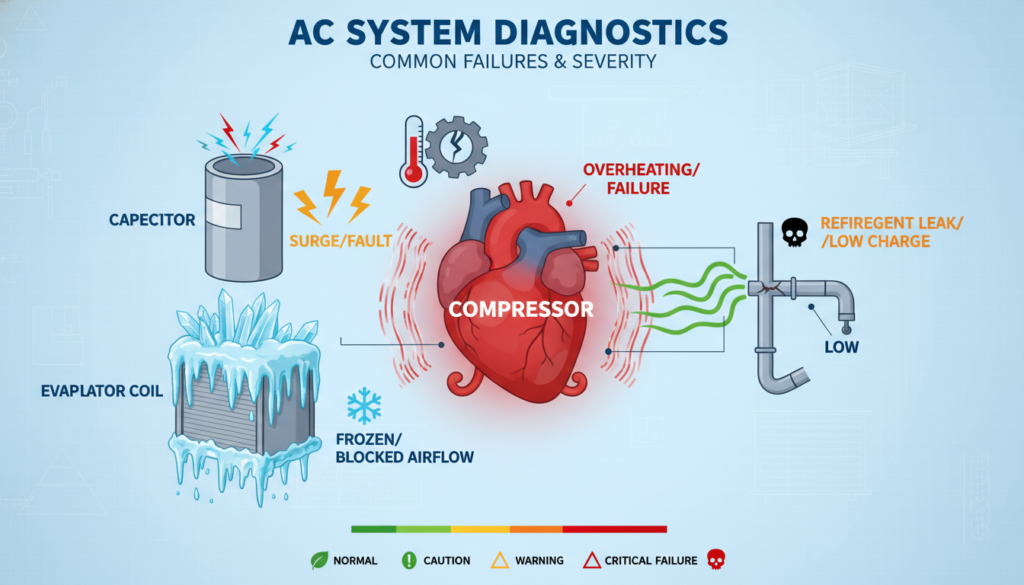
Refrigerant Leaks
Refrigerant is the lifeblood of your air conditioning system. It absorbs heat from your indoor air and releases it outside, creating the cooling effect you depend on. When refrigerant leaks, your AC can’t cool effectively.
Signs of refrigerant leaks include ice buildup on refrigerant lines or the evaporator coil, hissing or bubbling sounds near the AC unit, and significantly reduced cooling performance. Your energy bills might also spike as your system works harder to compensate for low refrigerant levels.
Refrigerant leaks require professional repair. The leak must be located and sealed, and the system must be recharged with the correct amount of refrigerant. It’s illegal for homeowners to purchase most types of refrigerant, and improper handling can be dangerous and harmful to the environment.
Never try to fix a refrigerant leak yourself. Contact Fontenot Air Conditioning and Heating for proper diagnosis and EPA-compliant repair.
Learn More- Resolve Low Refrigerant Issues
Frozen Evaporator or Condenser Coils
Seeing ice on your AC components is never normal, despite what you might think about a “cooling” system. Frozen coils actually prevent cooling and can damage your compressor if not addressed quickly.
Restricted airflow is the most common cause of frozen coils. This typically results from dirty air filters, blocked return vents, or a failing blower fan. When air can’t flow freely over the evaporator coil, the temperature drops below freezing, and condensation on the coil freezes.
Low refrigerant levels can also cause freezing. When refrigerant pressure drops due to a leak, the temperature in the evaporator coil falls too low, causing ice formation.
If you discover frozen coils, turn off your AC immediately and let the ice melt completely (this may take several hours). Check and replace your air filter, ensure all vents are open, then restart the system. If it freezes again, call a professional; you likely have a refrigerant leak or mechanical problem.
Learn More about the AC freezing issue
Compressor Not Working
The compressor is often called the “heart” of your AC system. It pressurizes the refrigerant and pumps it through the cooling cycle. When it fails, your entire system stops cooling.
Compressor failure symptoms include the outdoor unit making unusual grinding or squealing noises, the circuit breaker repeatedly tripping when the AC starts, or the outdoor fan running while the compressor stays silent.
Common causes of compressor failure include electrical problems (like damaged wiring or a bad capacitor), refrigerant issues (too much or too little), dirty coils that cause overheating, and old age (most compressors last 10-15 years).
Compressor replacement is one of the most expensive AC repairs. Depending on your system’s age and overall condition, replacing the entire outdoor unit or even the whole AC system might be more cost-effective than replacing just the compressor.
Learn More- Why the AC Compressor is Not Working?
Faulty Capacitor or Contactor
Capacitors store and release electrical energy to start your compressor and fan motors. When a capacitor fails, your AC might hum but not start, the fan might spin slowly, or the system might not turn on at all.
Contactors are electrical switches that control power to your compressor and condenser fan. A damaged contactor might cause your AC to randomly shut off, fail to start, or make buzzing sounds without starting.
These electrical components typically last 10-20 years but can fail earlier due to electrical surges, extreme heat, or moisture damage. Replacing them requires electrical expertise and should be handled by certified technicians.
Learn More- How to fix a faulty capacitor
Water Leakage and Drainage Problems
Your air conditioner removes humidity from your indoor air as part of the cooling process. This moisture needs to drain away properly; when it doesn’t, you’ll have water problems.
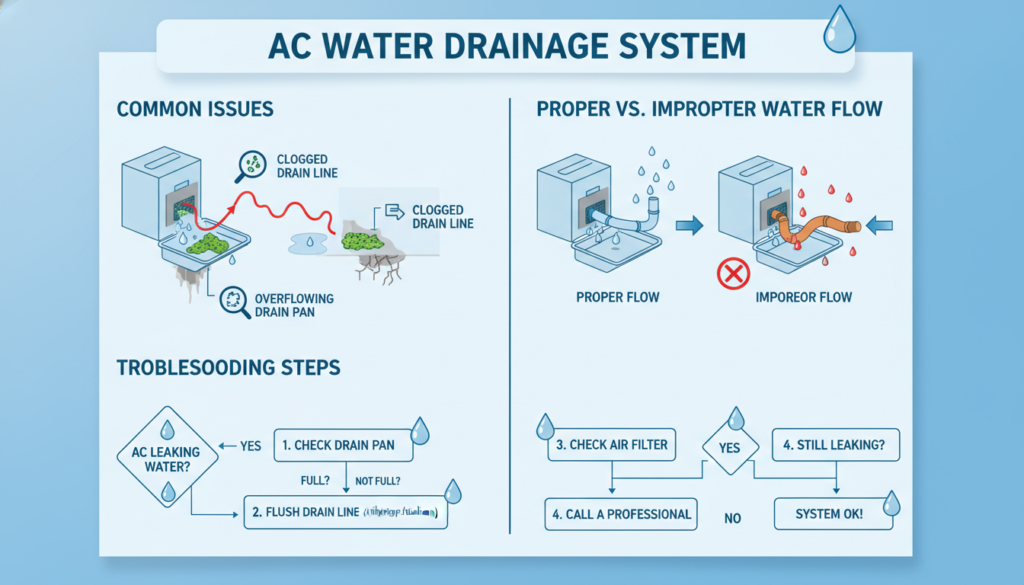
AC Drain Pan Overflowing
Water in or around your indoor AC unit is never a good sign. Your evaporator coil sits in a drain pan designed to catch condensation. This water normally flows through a condensate drain line to the outside of your home or into a drain.
When the drain pan overflows, it’s usually because the condensate drain line is clogged. Algae, mold, and debris can build up in this line over time, creating blockages. In Lafayette’s humid climate, these clogs are particularly common.
You can try clearing the drain line yourself by locating the outdoor end of the drain pipe and using a wet/dry vacuum to suction out the clog. Some homeowners pour a cup of white vinegar through the drain line every few months to prevent algae growth.
However, if water continues to overflow or you can’t locate or clear the clog, professional help is needed. Standing water can damage your floors and walls and promote mold growth.
AC Leaking Water
Water pooling around your indoor or outdoor unit has several possible causes beyond clogged drains. A cracked or rusted drain pan needs replacement these typically last 15-20 years before deteriorating.
Frozen evaporator coils that later thaw can produce more water than your drain system can handle, leading to overflow. Improper installation, where the unit isn’t level, can cause water to pool instead of draining properly.
Low refrigerant can also indirectly cause water leaks by creating ice that melts and overwhelms your drainage system.
Don’t ignore water leaks; they can cause serious damage to your home’s structure and create conditions for mold growth, which is a significant health concern.
Learn More- How to fix AC Leaking Water
Strange Noises and Smells from AC
Unusual sounds or odors from your air conditioner are warning signs that something isn’t right.
Air Conditioner Making Unusual Sounds
Your AC should run relatively quietly with just a gentle hum. Loud or strange noises indicate mechanical problems that need attention.
Grinding noises usually mean worn bearings in the blower motor or outdoor fan motor. These components need lubrication or replacement before they seize up completely.
Buzzing sounds often point to electrical issues, such as loose wiring, a failing contactor, or a capacitor going bad. Electrical problems can be fire hazards, so address buzzing sounds quickly.
Clicking noises when your AC starts are normal, but repeated clicking or clicking that continues while running suggest a failing relay, a defective control, or thermostat issues.
Squealing or screeching typically indicates a worn belt (in older systems) or a failing motor bearing. These sounds often get louder over time and can lead to component failure if ignored.
Banging or clanking sounds are the most serious; they suggest something has come loose inside your unit, like a fan blade, or that the compressor itself is failing.
Never ignore unusual AC noises. What starts as a minor issue can quickly escalate into a major breakdown, especially during peak summer heat when your system works hardest.
Learn More About AC Clicking Noises
Musty or Burning Smell from AC Vents
Odors from your air conditioner can indicate anything from simple maintenance needs to serious safety hazards.
Musty or moldy smells suggest mold or mildew growth somewhere in your AC system, usually in the evaporator coil housing, drain pan, or ductwork. Lafayette’s humid climate creates perfect conditions for mold growth. Professional duct cleaning and coil treatment can eliminate these odors and improve your indoor air quality.
Burning smells are more concerning. A light dusty smell when you first turn on your AC for the season is normal; it’s just dust burning off components. But persistent burning smells could indicate:
- Overheating motors or the compressor
- Electrical wiring issues or short circuits
- Melting plastic components
- A severely clogged air filter is causing the blower motor to overheat
If you smell something burning, turn off your AC immediately and call Fontenot Air Conditioning and Heating. Electrical fires can start small and spread quickly, so don’t take chances with burning odors.
AC Short Cycling (Turning On and Off Frequently)
Short cycling happens when your air conditioner turns on, runs for just a few minutes, then shuts off, only to repeat this cycle continuously. This is hard on your equipment, wastes energy, and prevents proper cooling.
An oversized AC unit is a common cause of short cycling. When an AC is too powerful for your home’s size, it cools the area around the thermostat too quickly, triggering a shutdown before the rest of your home reaches the desired temperature. This creates uneven cooling and unnecessary wear on your compressor.
Thermostat location matters more than most people realize. If your thermostat is installed in direct sunlight, near a heat-producing appliance, or in a particularly warm or cool spot, it will get false temperature readings and cause short cycling.
Dirty air filters restrict airflow, which can cause the system to overheat and shut down as a safety measure. The system then cools down, restarts, and repeats the cycle.
Low refrigerant levels can trick the system into thinking it has reached the desired temperature when it hasn’t, leading to frequent on-off cycles.
Electrical problems like a failing compressor contactor or a bad capacitor can also cause the system to start and stop irregularly.
Short cycling significantly reduces your AC’s lifespan and increases energy consumption. If your system cycles more than 2-3 times per hour, have it inspected by a professional.
Learn More About AC Short Cycling and Why AC Shutting Off
AC Not Turning Off
On the opposite end of the spectrum, an AC that won’t stop running is also problematic. Continuously running not only wastes energy but can also freeze up your evaporator coil.
Common causes include a thermostat stuck in the “on” position, a malfunctioning fan relay, extremely hot weather that prevents your AC from reaching the set temperature, or an undersized unit that can’t keep up with cooling demand.
Check your thermostat fan setting; if it’s set to “on” instead of “auto,” the fan will run continuously even when not actively cooling. Switch it to “auto,” so it only runs during cooling cycles.
If the thermostat is set correctly but your AC still won’t turn off, you may have a wiring issue or a failing thermostat that needs replacement.
Learn More: Why AC is not turning off
How to Prevent Common AC Problems
While some AC problems are unavoidable, regular maintenance can prevent the majority of issues Lafayette homeowners face.
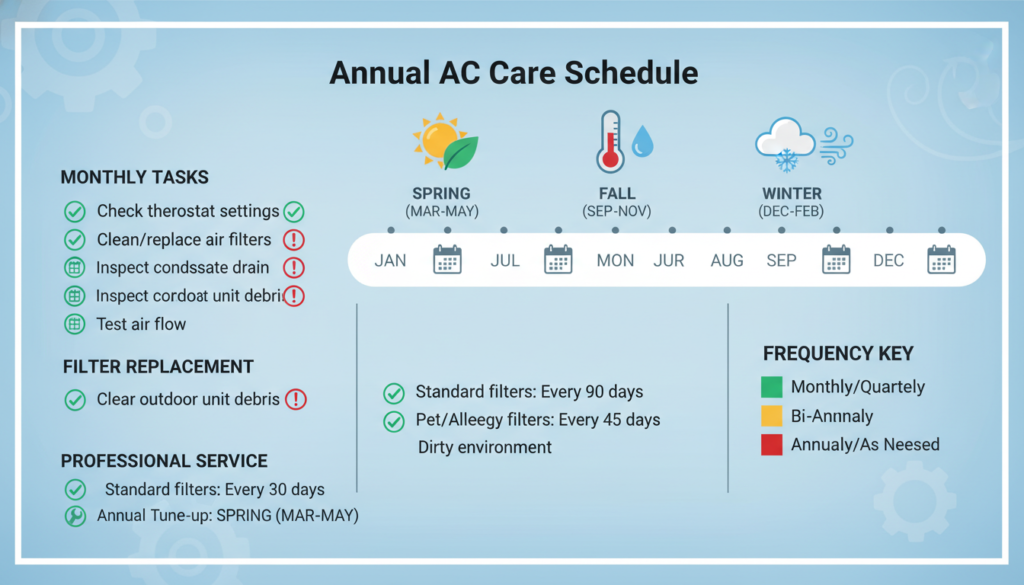
Regular Maintenance Schedule
Consistency is key to keeping your air conditioner running smoothly. Here’s a practical maintenance schedule:
Monthly tasks:
- Check and replace air filters (every 30-90 days, depending on household factors like pets, allergies, and usage)
- Inspect the condensate drain line for clogs
- Listen for unusual noises during operation
Seasonal tasks (before summer):
- Schedule a professional AC tune-up with Fontenot Air Conditioning and Heating
- Clear debris from around the outdoor unit
- Test your system before extreme heat arrives
Annual tasks:
- Professional inspection and cleaning
- Refrigerant level check
- Electrical connection tightening
- Lubrication of moving parts
- Coil cleaning
Professional maintenance catches small problems before they become expensive repairs. Our technicians at Fontenot Air Conditioning and Heating can spot warning signs of impending failure and address them proactively.
Air Filter Replacement Guide
Your air filter is your AC system’s first line of defense against dust, debris, and indoor air quality problems. Yet it’s the most neglected maintenance task.
Standard 1-inch filters should be checked monthly and replaced every 1-3 months. Homes with pets, multiple occupants, or residents with allergies should replace filters more frequently, sometimes monthly.
Higher-efficiency pleated filters (MERV 8-11) capture more particles but may need replacement every 30-60 days. Ultra-high-efficiency filters (MERV 13+) should only be used if your system is designed for them; they can restrict airflow in systems not built to handle them.
Set a reminder on your phone or mark your calendar. The few dollars spent on regular filter replacement save hundreds or thousands on repairs caused by dirty filters.
Keep the Outdoor Unit Clean and Clear
Your outdoor condenser unit needs room to breathe. Maintain at least 2 feet of clearance on all sides and 5 feet above the unit. Trim bushes, remove leaves and debris, and keep grass clippings from accumulating on the unit.
Periodically spray down the condenser coils with a garden hose (from the inside out) to remove dirt and debris. Turn off the power to the unit first, and never use a pressure washer; the high pressure can damage the delicate fins.
In Lafayette, where we get heavy pollen, cottonwood, and seasonal debris, checking your outdoor unit monthly during peak seasons prevents many performance problems.
Thermostat Best Practices
Proper thermostat use extends your AC’s life and keeps energy bills manageable. Avoid setting your thermostat to extremely low temperatures, thinking it will cool faster; your AC cools at the same rate regardless of the setting. You’ll just end up overcooling and wasting energy.
The Department of Energy recommends 78°F when you’re home and need cooling, with higher settings when you’re away or sleeping. Each degree above 78°F can save you 3-5% on cooling costs.
Consider upgrading to a programmable or smart thermostat. These automatically adjust temperatures based on your schedule, so you’re not cooling an empty house all day while you’re at work.
Don’t place lamps, televisions, or other heat sources near your thermostat; they’ll cause false temperature readings and inefficient operation.
When to Call a Professional HVAC Technician
While some troubleshooting steps are safe for homeowners, many AC problems require professional expertise, specialized tools, and technical knowledge.
Call Fontenot Air Conditioning and Heating immediately if you experience:
- Any refrigerant-related issues (leaks, low charge, frozen coils that refreeze after thawing)
- Electrical problems (repeated circuit breaker trips, burning smells, buzzing sounds)
- Complete system failure (won’t turn on despite basic troubleshooting)
- Water leaks that you can’t stop or identify
- Compressor or major component failure
- Any situation where you feel unsafe or uncertain
Attempting DIY repairs on complex AC components can void warranties, violate local codes, cause injuries, or make problems worse. Refrigerant handling requires EPA certification, and electrical work requires specific training and licensing.
Cost of Repairs vs. Replacement Considerations
When facing a major repair, you’ll need to decide whether to fix or replace your system. Consider these factors:
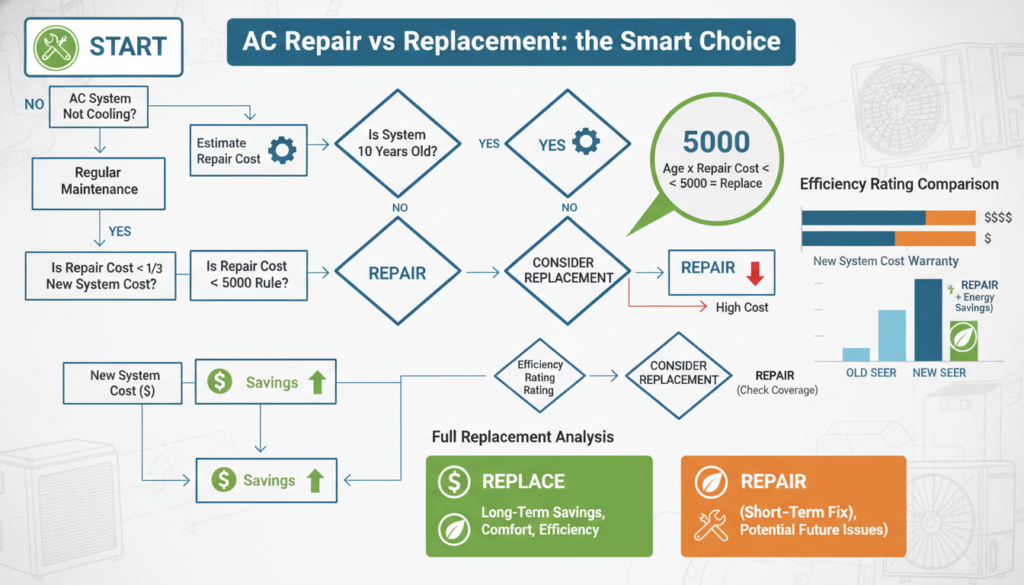
Age of system: If your AC is more than 12-15 years old and needs expensive repairs (compressor, coil replacement), replacement often makes more sense. Newer systems are significantly more efficient and can save 20-40% on cooling costs.
Repair cost vs. replacement cost: A common rule is the “5,000 rule,” multiply the repair cost by your system’s age in years. If the result exceeds $5,000, replacement is usually the better investment.
Frequency of repairs: If you’re calling for repairs multiple times per season, those costs add up quickly. A new system comes with warranties and should run trouble-free for years.
Efficiency and comfort: Older systems use outdated refrigerants (like R-22, which is being phased out) and operate less efficiently. New systems cool better, run quieter, and cost less to operate.
Our team at Fontenot Air Conditioning and Heating provides honest assessments and never pushes unnecessary replacements. We’ll give you all the information you need to make the best decision for your home and budget.
Frequently Asked Questions About Common AC Problems
Why is my AC not cooling, but the fan is running?
When your fan runs but doesn’t cool, you likely have a compressor problem, refrigerant leak, or frozen evaporator coil. The indoor fan can operate independently of the cooling cycle, so it might continue running even when cooling has stopped. Check for ice on the refrigerant lines or outdoor unit. If present, turn off the system and let it thaw. If the problem persists, you need a professional diagnosis.
How much does it cost to fix a refrigerant leak?
Refrigerant leak repair costs vary based on leak location and severity. Simple leaks in accessible areas might cost $200-$500 to repair and recharge. Leaks in the evaporator coil or compressor are more expensive, often $1,000-$2,500. If your system uses older R-22 refrigerant (Freon), costs are higher due to refrigerant scarcity. Systems more than 10 years old with refrigerant leaks may be better candidates for replacement rather than repair.
Can I fix AC problems myself?
Some simple tasks are safe for homeowners: changing air filters, clearing debris from the outdoor unit, resetting tripped breakers, and checking thermostat settings. However, repairs involving refrigerant, electrical components, or internal parts should only be handled by licensed HVAC professionals. DIY repairs can void warranties, violate environmental regulations (for refrigerant work), and create safety hazards.
How often should I service my air conditioner?
Schedule professional AC maintenance at least once per year, ideally in spring before the cooling season begins. In Lafayette’s climate, where AC systems run heavily for 6-8 months, some homeowners benefit from twice-yearly service. Regular maintenance prevents 95% of AC breakdowns and extends system lifespan by years.
What is the lifespan of a typical AC unit?
Well-maintained air conditioning systems in Lafayette typically last 12-15 years. Systems that receive minimal maintenance may fail in 8-10 years, while those with excellent care can reach 15-20 years. Factors affecting lifespan include maintenance frequency, quality of installation, system sizing, local climate (Lafayette’s heat and humidity are tough on AC systems), and usage patterns.
How to troubleshoot AC problems?
Start with basic checks: verify your thermostat is set to “cool,” and the temperature is lower than your room temperature, check if the circuit breaker hasn’t tripped, and inspect your air filter. Replace it if it’s dirty. Next, examine your outdoor unit to ensure it’s running and clear of debris. Listen for unusual noises and check for ice buildup on refrigerant lines. If your AC still isn’t working properly after these checks, the problem likely involves refrigerant, electrical components, or internal parts that require professional diagnosis. For complex issues like compressor failure, refrigerant leaks, or electrical problems, contact Fontenot Air Conditioning and Heating for expert troubleshooting.
How to fix AC coil problems?
AC coil problems fall into two categories: dirty coils and damaged coils. For dirty evaporator coils (inside unit), turn off power and gently clean with a soft brush or coil cleaner spray, though this is best left to professionals during annual maintenance. For dirty condenser coils (outside unit), turn off the power and spray them gently with a garden hose from the inside out. Never use a pressure washer, as it damages the delicate fins. If you notice frozen coils, turn off your AC, let ice melt completely (2-4 hours), replace your air filter, and restart. If coils freeze again, you have a refrigerant leak or airflow problem requiring professional repair. Damaged, corroded, or leaking coils cannot be repaired and must be replaced by certified HVAC technicians.
How to diagnose AC problems?
Diagnosing AC problems involves systematic observation: First, identify the symptom, whether it is not cooling, not turning on, making noise, or leaking water. Check your thermostat settings and batteries, inspect the air filter, and verify the circuit breaker hasn’t tripped. Listen to your AC when it runs grinding, which suggests motor problems, hissing, which indicates refrigerant leaks, and clicking, which points to electrical issues. Look for visual clues like ice on refrigerant lines (airflow or refrigerant problems), water pooling (drainage issues), or the outdoor fan not spinning (capacitor or motor failure). Feel the air from vents; if it’s warm or weak, you have cooling or airflow problems. However, accurate diagnosis of refrigerant levels, electrical failures, and component problems requires specialized tools like manifold gauges, multimeters, and thermal imaging cameras that only HVAC professionals have. For anything beyond basic troubleshooting, contact Fontenot Air Conditioning and Heating for proper diagnosis.
Protect Your Comfort with Professional AC Care
Understanding common AC problems helps Lafayette homeowners recognize issues early and take appropriate action. While some basic troubleshooting is safe for homeowners, most AC repairs require the expertise of certified HVAC professionals.
At Fontenot Air Conditioning and Heating, we’ve served Lafayette families for years, providing reliable AC repair, maintenance, and replacement services. Our experienced technicians diagnose problems accurately, explain your options clearly, and complete repairs right the first time.
Don’t wait until a minor issue becomes a major breakdown during the hottest week of summer. Schedule your AC maintenance or repair service with Fontenot Air Conditioning and Heating today. Contact us at (337) 789-6070 or visit our Business Profile to book your appointment.