

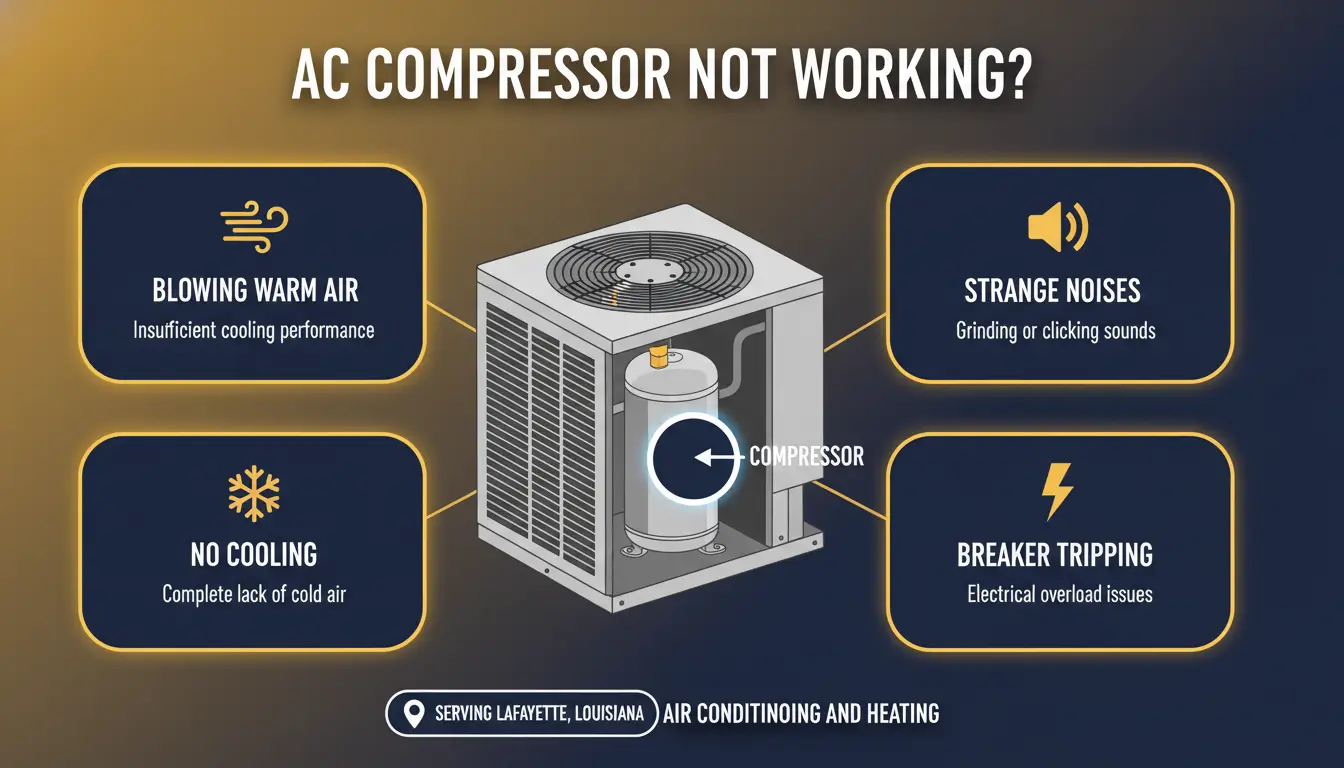
If your air conditioner is running but not cooling, or it has stopped working altogether, the problem might be your AC compressor not working. This is one of the most common and most frustrating AC problems homeowners and drivers deal with, especially during the hot, humid summers here in Lafayette, Louisiana.
The good news is that not every AC compressor problem means you need a full replacement. Many issues can be fixed once you understand what’s actually going wrong. In this guide, we’ll walk you through the most common reasons your AC compressor is not working, how to spot the warning signs early, and what you can do to fix it, or when to call in a professional.
At Fontenot Air Conditioning and Heating, we’ve helped hundreds of Lafayette homeowners and drivers get their cooling systems back on track. And this guide is here to help you do the same.
What Does an AC Compressor Actually Do?
Think of the AC compressor as the heart of your entire cooling system. Its job is to compress the refrigerant, the special fluid that absorbs heat from inside your home or car, and push it through the system so it can cool the air.
Without a working compressor, the refrigerant can’t circulate. And without refrigerant circulation, your AC simply cannot cool anything. That’s why a faulty compressor usually means warm air blowing from your vents, even when your AC system seems to be running.
There are two main types of AC compressors you’ll encounter:
• Home HVAC compressor, located in the outdoor unit of your central air conditioning system.
• Car AC compressors, located in the engine bay, are driven by the engine belt.
Both work the same way, but they can fail for slightly different reasons. We’ll cover both in this guide.
Warning Signs: How to Tell Your AC Compressor Is Not Working
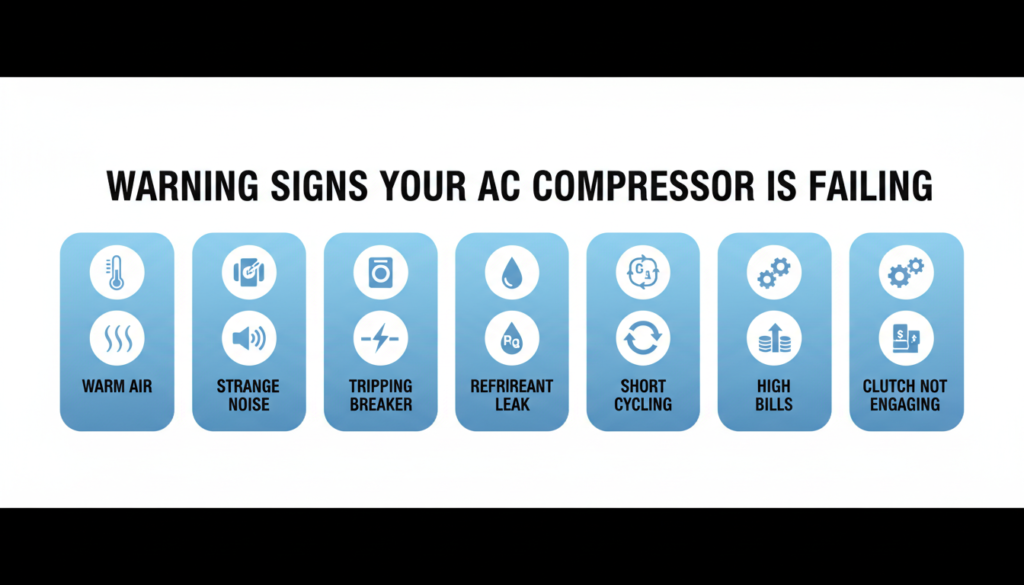
Before we dive into causes and fixes, you need to know what to look for. Here are the most common symptoms of a failing or dead AC compressor:
1. Your AC Blows Warm or Hot Air
This is the most obvious sign. If your AC is running but the air coming out of your vents is warm, your compressor has likely stopped compressing refrigerant. No compression means no cooling.
2. Strange Noises When the AC Turns On
Grinding, rattling, screeching, or loud clicking sounds when your AC kicks on are red flags. These noises often mean there’s a problem inside the compressor, like worn bearings, broken parts, or internal damage.
3. The AC Compressor Clutch Is Not Engaging (Car AC)
In a car, the compressor has a clutch that engages when you turn on the AC. If the clutch is not spinning or not engaging at all, the compressor is not running, which means no cold air.
4. Circuit Breaker Keeps Tripping (Home AC)
If your home AC trips the circuit breaker every time it tries to start, the compressor may be drawing too much power. This is often a sign of an overheating or failing compressor motor.
5. Visible Refrigerant Leak Around the Unit
Refrigerant leaks can cause the compressor to run without enough fluid to compress, which causes it to overheat and fail. If you see oily stains or ice buildup around your AC unit, that could be a leak.
6. AC Turns On and Off Too Quickly (Short Cycling)
If your AC keeps turning on and off every few minutes without actually cooling your space, this is called short cycling. It’s often related to compressor problems or electrical issues and should not be ignored.
7. Higher Than Normal Energy Bills
A struggling compressor works harder than it should, which uses more electricity. If your utility bills have gone up but your cooling has gone down, your compressor efficiency may be dropping.
9 Common Reasons Why Your AC Compressor Is Not Working
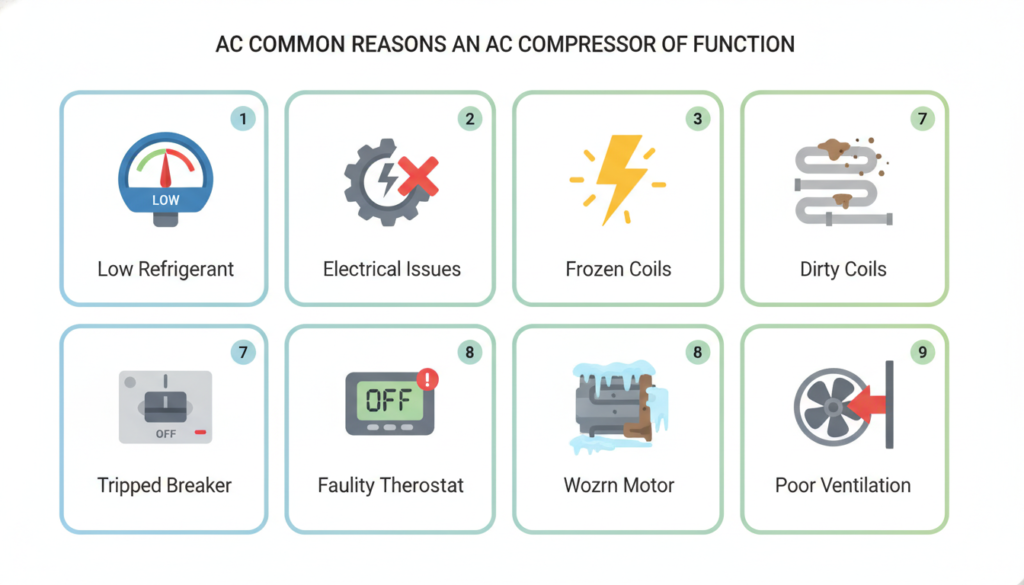
Now let’s get into the root causes. Understanding why your AC compressor stopped working is the first step toward fixing it.
1. Low or Leaking Refrigerant
Refrigerant is the lifeblood of your AC system. When levels drop too low, usually because of a leak, the compressor can overheat or lose the pressure it needs to work properly. Over time, this can cause the compressor to seize up completely.
What to look for: Ice on the refrigerant lines, hissing sounds, or warm air from vents.
The fix: A certified HVAC technician must locate the leak, repair it, and recharge the refrigerant. This is not a DIY job; handling refrigerant requires special equipment and certification.
2. Electrical Issues: Blown Fuse, Bad Capacitor, or Wiring Problems
Electrical failures are one of the leading causes of an AC compressor not turning on. A blown fuse, a failed capacitor, or damaged wiring can cut off power to the compressor entirely.
What to look for: The compressor does not start at all, the breaker keeps tripping, or there’s a humming noise with no movement.
The fix: Check your fuse box and reset the breaker. If the problem keeps coming back, have a professional inspect the capacitor and wiring.
3. Dirty or Clogged Condenser Coils
The condenser coils release heat from the refrigerant to the outside. When they get coated in dirt, dust, or debris, which happens quickly here in Louisiana, the system can’t release heat properly. This forces the compressor to work overtime until it overheats.
What to look for: Visible dirt or grime on the outdoor unit’s fins, reduced cooling performance, or a compressor that frequently shuts off.
The fix: Carefully clean the condenser coils with a garden hose or a coil cleaning spray. Annual professional cleaning is even better.
4. Faulty Compressor Clutch (Car AC Only)
In your car’s AC system, a magnetic clutch connects the compressor to the engine. If this clutch fails, the compressor cannot be powered on. The clutch can wear out, seize, or stop engaging due to electrical faults.
What to look for: The center part of the compressor pulley is not spinning when the AC is turned on.
The fix: Clutch replacement is usually possible without replacing the entire compressor. A mechanic can diagnose and replace just the clutch component.
5. Bad Thermostat or Control Board
Sometimes the compressor itself is perfectly fine, but it’s not getting the signal to turn on. A faulty thermostat or a damaged control board can prevent the compressor from receiving the command to start.
What to look for: The indoor unit seems to work, but the outdoor compressor unit never kicks on, or the thermostat display is blank or unresponsive.
The fix: Replace the thermostat batteries first. If that doesn’t help, have a technician inspect the control board for damage or failed relays.
6. Frozen Evaporator Coils
Frozen evaporator coils block the flow of air and refrigerant through your system. This can cause a pressure backup that prevents the compressor from operating correctly. In humid climates like Lafayette, this issue is especially common.
What to look for: Ice on the indoor unit or refrigerant lines, water dripping from the unit, or very little airflow from the vents.
The fix: Turn off the AC and let the coils thaw for a few hours. Check and replace your air filter. If the coils keep freezing, call a professional; you likely have a refrigerant or airflow issue.
7. Tripped Circuit Breaker
A tripped breaker is often the first thing to check when your AC compressor stops working suddenly. It’s a simple fix, but if it keeps tripping, there’s a deeper issue that needs attention.
What to look for: Your AC completely stops working, or the outdoor unit is silent, but the indoor unit runs.
The fix: Go to your electrical panel, reset the breaker for the AC, and try again. If it trips a second time, stop resetting it and call an HVAC professional.
8. Worn-Out or Seized Compressor Motor
Like any motor, the compressor motor has a limited lifespan. After many years of use, the internal parts can wear down, seize up, or burn out entirely. This is more common in older systems or units that have not been maintained regularly.
What to look for: A completely dead compressor that makes no sound, or a unit that hums but does not start.
The fix: A seized compressor usually needs to be replaced. Depending on the age of your system, it may make more sense to replace the entire AC unit.
9. Overheating Due to Poor Ventilation
The outdoor unit needs open space around it to release heat. If your compressor is surrounded by overgrown plants, fencing, or stored items, it can overheat and shut down as a protective measure.
What to look for: The compressor shuts off after running for a short time, especially on very hot days.
The fix: Clear at least 2 feet of space around all sides of the outdoor unit. Make sure nothing is blocking the top of the unit either.
Car AC vs. Home AC Compressor Problems: Key Differences
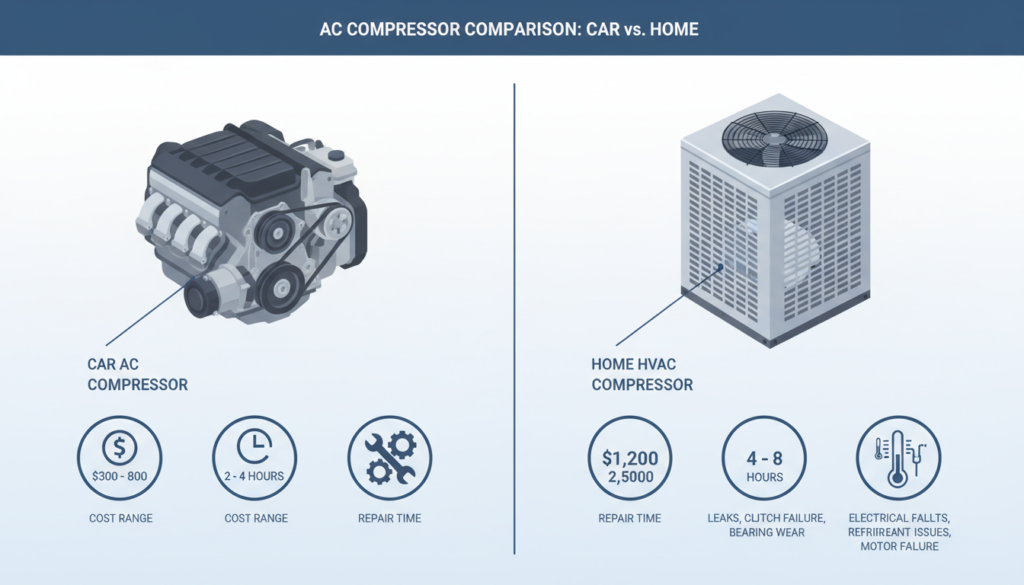
While the core function of a compressor is the same in both a car and a home AC system, the problems and fixes can differ. Here’s a quick comparison to help you figure out what you’re dealing with:
| Issue | Car AC Compressor | Home AC Compressor |
| Common Cause | Low refrigerant, bad clutch | Capacitor failure, dirty coils |
| Warning Sound | Rattling or squealing | Humming or clicking |
| DIY Difficulty | Moderate | Moderate to Hard |
| Avg Repair Cost | $500 – $1,200 | $800 – $2,800 |
| How Long to Fix | 1 – 3 hours | 2 – 5 hours |
No matter which type of system you have, the key is to not ignore the warning signs. The longer you run a struggling compressor, the more damage it can do to the rest of your AC system.
How to Troubleshoot an AC Compressor: Step-by-Step
Before you call a technician, there are a few things you can check yourself. Here’s a simple troubleshooting process for both home and car AC systems.
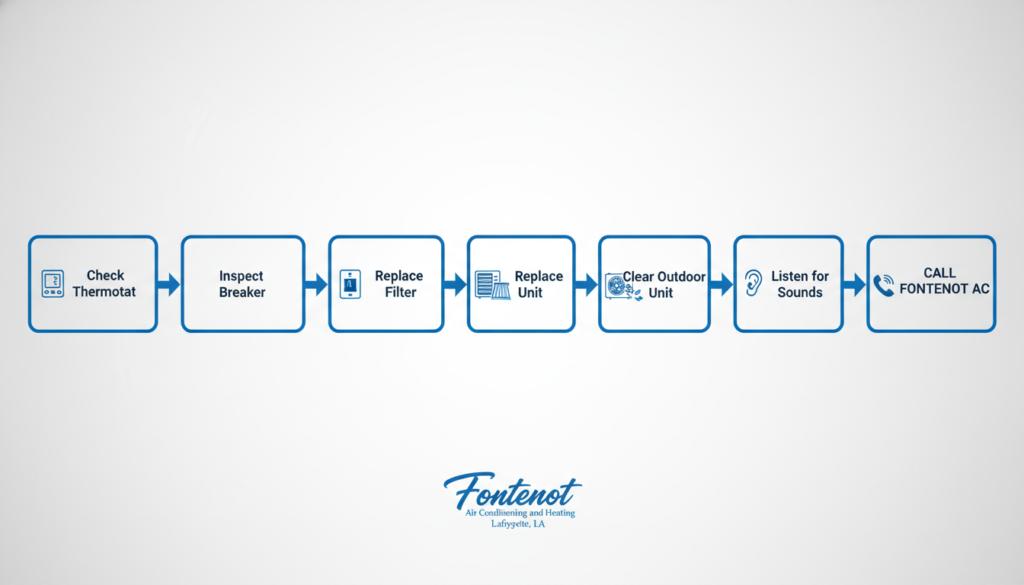
For Home AC Compressor:
1. Check your thermostat. Make sure it is set to ‘Cool,’ and the temperature is set lower than the current room temperature. Replace the batteries if needed.
2. Inspect the circuit breaker. Go to your electrical panel and look for any tripped breakers. Reset the AC breaker and see if the compressor kicks on.
3. Check and replace your air filter. A clogged air filter is one of the most common causes of frozen coils and compressor strain. If it looks dirty, replace it.
4. Clear the area around your outdoor unit. Remove any debris, leaves, or plants blocking the airflow around the compressor.
5. Listen for unusual sounds. Turn on the AC and listen carefully. Humming without starting usually points to a bad capacitor. Grinding or rattling often means internal damage.
6. Look for ice on the unit or lines. If you see ice, turn off the AC and let it thaw before turning it back on. If it freezes again, call a professional.
7. Call Fontenot Air Conditioning and Heating if the problem continues. Refrigerant issues, electrical faults, and compressor replacements require a licensed technician.
For Car AC Compressor:
1. Turn on the AC and open the hood. Look at the compressor and check if the clutch (the center part of the pulley) is spinning.
2. Check the AC fuse. Look in your owner’s manual for the AC fuse location. A blown fuse is a quick and cheap fix.
3. Check the AC relay. The relay sends the electrical signal to the compressor. A bad relay can prevent the compressor from turning on.
4. Inspect refrigerant levels. If the system is low on refrigerant, the compressor may not engage. You can buy a DIY recharge kit, but a professional check is recommended.
5. Use an OBD scanner if available. Some AC fault codes can be read with a basic OBD2 scanner, which can help pinpoint the problem.
6. See a mechanic if the clutch won’t engage. If the compressor clutch is not moving at all, professional diagnosis is the safest next step.
Should You Fix It Yourself or Call a Professional?
Some AC compressor issues are easy enough to handle on your own. Others require professional tools, certifications, and experience. Here’s a simple breakdown:
Safe to DIY:
• Replacing the air filter
• Resetting a tripped circuit breaker (once)
• Clearing debris from around the outdoor unit
• Replacing thermostat batteries
• Letting frozen coils thaw before restarting the system
Call a Professional For:
• Refrigerant leaks and recharging require EPA 608 certification
• Capacitor and electrical component replacement , risk of serious injury
• Compressor motor replacement or full unit replacement
• Diagnosing refrigerant pressure issues
• Any repair where the problem keeps coming back
| Pro Tip from Fontenot Air Conditioning and Heating:If your circuit breaker trips more than once, do not keep resetting it. That is your electrical system’s way of telling you something is seriously wrong. Continuing to reset it can cause a fire hazard or further damage to your compressor. |
How Much Does It Cost to Fix or Replace an AC Compressor?

Compressor repairs and replacements are not cheap, but costs vary widely depending on the type of system and the severity of the problem. Here’s a general idea of what to expect:
Home AC Compressor:
• Capacitor replacement: $150 – $400
• Refrigerant recharge: $200 – $600 (depending on the type and amount needed)
• Compressor repair: $800 – $1,500
• Full compressor replacement: $1,200 – $2,800
• New AC unit (if system is old): $3,000 – $7,000 installed
Car AC Compressor:
• Fuse or relay replacement: $20 – $100
• Clutch replacement: $300 – $700
• Refrigerant recharge: $100 – $300
• Full compressor replacement: $500 – $1,200
Repair vs. Replace Rule of Thumb: If your system is less than 10 years old and the compressor is the only problem, repairing it usually makes sense. If your system is 12 to 15 years old, replacing the whole unit may save you more money in the long run, especially considering the improved energy efficiency of newer systems.
How to Prevent AC Compressor Problems
The best repair is one you never have to make. Here’s how to keep your AC compressor in great shape and avoid a costly breakdown, especially important in a place like Lafayette, where your AC works hard for most of the year.
• Schedule annual HVAC maintenance. A professional tune-up every spring catches small problems before they become big ones. Fontenot Air Conditioning and Heating offers maintenance plans for Lafayette homeowners.
• Change your air filter every 1 to 3 months. A dirty filter forces your system to work harder and leads to frozen coils and compressor strain.
• Keep the outdoor unit clean and clear. Remove leaves, grass clippings, and debris regularly. Maintain at least 2 feet of clearance on all sides.
• Don’t ignore refrigerant leaks. Even a small refrigerant leak will get worse over time and eventually damage your compressor. Get it fixed right away.
• Watch your energy bills. A sudden increase in your electric bill is often an early warning sign that your AC system, including the compressor, is working harder than it should.
• Don’t run your AC when it’s acting up. If your system is making strange sounds or blowing warm air, turn it off and call a professional. Running a damaged compressor makes the problem worse.
AC Compressor Problems Are Just One Piece of the Puzzle
An AC compressor not working is one of the most serious AC problems you can face, but it’s not the only one. From refrigerant leaks and frozen coils to thermostat failures and clogged filters, there are many things that can go wrong with your air conditioning system.
To get a complete picture of everything that could be affecting your AC’s performance, check out our full guide: [INTERNAL LINK: AC Problems, Your Complete Troubleshooting Guide]. It covers all the common AC issues Lafayette homeowners face, with simple solutions for each one.
Understanding the full range of AC problems helps you catch issues early, save money on repairs, and keep your home comfortable all year long.
Frequently Asked Questions About AC Compressor Problems
Here are answers to the questions we hear most often from Lafayette homeowners and drivers:
| Question | Answer |
| How do I know if my AC compressor is bad? | If your AC blows warm air, makes strange noises, or the compressor clutch won’t engage, those are strong signs of compressor failure. |
| Can I run my AC without the compressor? | No. The compressor is essential. Without it, your AC system cannot circulate refrigerant and will not cool the air at all. |
| How long does an AC compressor last? | A well-maintained compressor lasts 10 to 15 years in a home unit and 8 to 12 years in a car. |
| What causes AC compressor failure? | The most common causes are low refrigerant, electrical issues, dirty coils, lack of maintenance, and old age. |
| Is it worth fixing an AC compressor? | It depends on the age of your system. If it is under 10 years old and otherwise in good shape, a repair is usually worth it. Otherwise, replacement may be smarter. |
| Why is my AC compressor not turning on? | It could be a tripped breaker, a bad capacitor, low refrigerant, or a faulty thermostat. Check these items first before calling a technician. |
Final Thoughts: Don’t Let a Failing Compressor Ruin Your Summer
An AC compressor not working is one of those problems that rarely gets better on its own and tends to get worse the longer it’s ignored. But now that you understand the warning signs, the most common causes, and the right steps to take, you’re in a much better position to handle it.
If you can handle simple things like resetting your breaker, changing your air filter, or clearing debris from your outdoor unit, start there. But for anything involving refrigerant, electrical components, or the compressor motor itself, trust a licensed professional to get it done right.
If you’re in the Lafayette, Louisiana area and your AC compressor has stopped working, the team at Fontenot Air Conditioning and Heating is ready to help. We offer fast diagnostics, honest pricing, and quality repairs that last. Contact us today to schedule your inspection before the next heat wave hits.