
Is your air conditioner playing games with you? One minute, it’s running fine, cooling your Lafayette home perfectly. The next minute, it shuts off completely. Then it kicks back on again. And the cycle repeats endlessly.
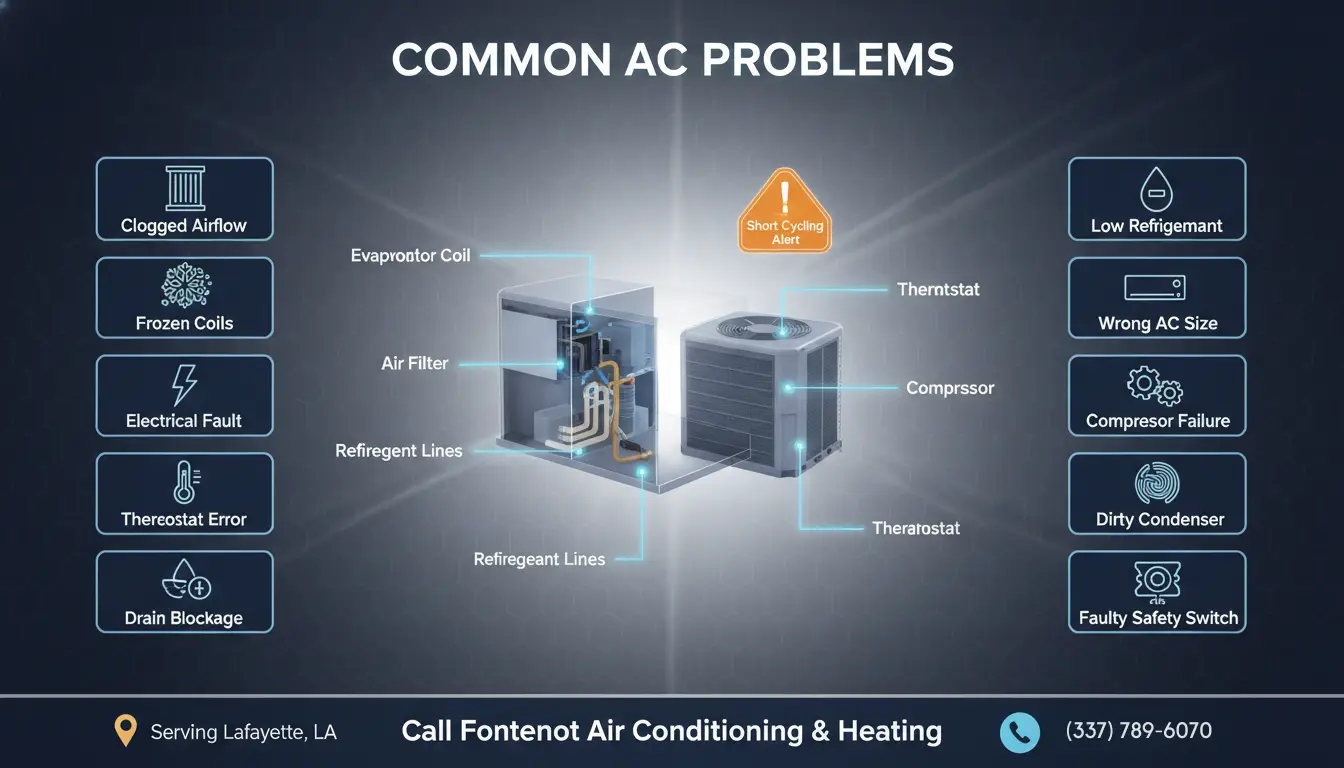
If your AC keeps shutting off every few minutes, you’re dealing with what HVAC professionals call “short cycling.” This isn’t just annoying, it’s a serious problem that can damage your system, spike your energy bills, and leave you sweating through Louisiana’s brutal summer heat.
The good news? Most causes of an AC turning off by itself can be fixed, and some you can even handle yourself. In this guide, we’ll walk through the 11 most common reasons your air conditioner keeps shutting off, how to troubleshoot each one, and when you need to call in the pros at Fontenot Air Conditioning and Heating.
What Is Short Cycling and Why Should You Care?
Before we dive into solutions, let’s talk about what’s actually happening when your AC keeps turning off and on.
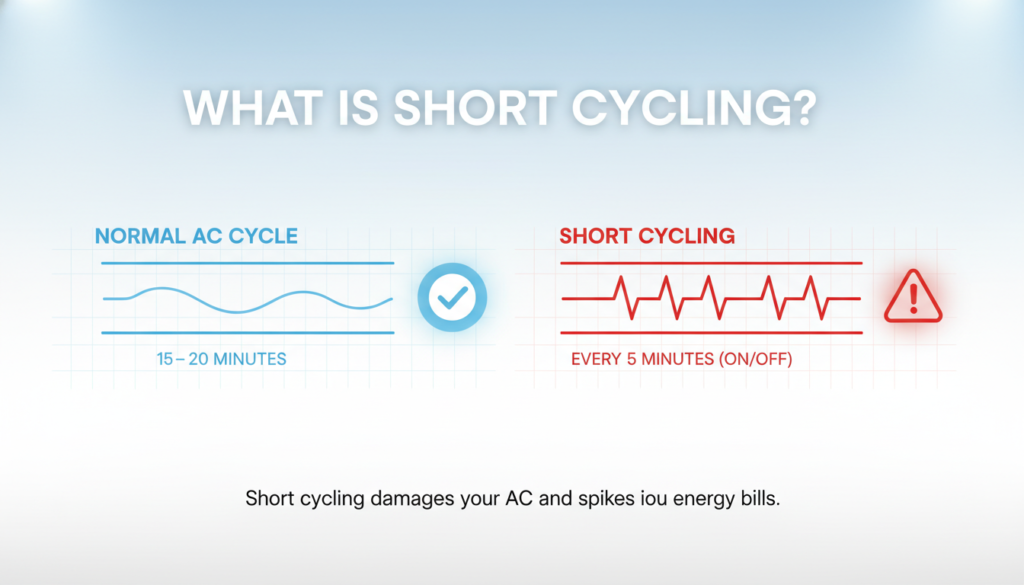
A normal air conditioning cycle works like this: your AC turns on, runs for about 15-20 minutes to cool your home to the temperature you set, then shuts off. It stays off until the temperature rises again, then the cycle repeats. In Lafayette’s summer heat, you might see 2-3 cycles per hour on really hot days.
Short cycling is when your AC shuts off after just 5-10 minutes (or even less), then turns back on almost immediately. This rapid on-off pattern puts enormous stress on your system.
Here’s why short cycling is a big deal:
- Higher energy bills – Starting up uses the most electricity. Constant restarts mean your meter is spinning like crazy.
- Reduced comfort – Your AC never runs long enough to properly dehumidify your home or reach the set temperature.
- Shorter equipment life – The compressor wears out faster with all those start-stop cycles.
- Expensive repairs – The stress can damage components like capacitors, contactors, and even the compressor itself.
Bottom line: if your air conditioner keeps shutting off, don’t ignore it. Let’s figure out what’s wrong.
11 Common Reasons Your AC Keeps Shutting Off
1. Dirty or Clogged Air Filter (The #1 Culprit)
This is hands-down the most common reason an AC turns off by itself. Your air filter traps dust, pollen, pet hair, and all the stuff floating around your Lafayette home. When it gets clogged, airflow drops dramatically.
Here’s what happens: restricted airflow causes the evaporator coils inside your system to get too cold. Ice starts forming. Your AC detects the problem and shuts down to protect itself.
How to check: Pull out your air filter (usually located at the return air vent or in the furnace cabinet). Hold it up to a light. If you can’t see light passing through, it’s clogged.
The fix: Replace disposable filters or clean reusable ones. In Lafayette’s dusty conditions, check your filter monthly during the cooling season. Replace it every 1-3 months depending on usage, pets, and allergies.
Cost: $5-25 for a new filter. That’s a whole lot cheaper than a service call.
2. Thermostat Problems
Your thermostat is the brain of your cooling system. When it malfunctions, your AC keeps shutting off even though your home isn’t cool enough.
Common thermostat issues include:
- Wrong location – If your thermostat sits in direct sunlight or near heat sources (lamps, appliances, doorways), it thinks your home is warmer than it really is. It’ll shut off the AC prematurely.
- Incorrect settings – Make sure it’s set to “Cool” mode and “Auto” fan setting (not “On”).
- Dead batteries – Many thermostats use batteries. When they’re low, weird things happen.
- Loose wiring – Vibrations can loosen wire connections over time.
- Needs recalibration – The temperature sensor inside might be reading incorrectly.
The fix: Check batteries first. Make sure settings are correct. If problems continue, you might need a thermostat replacement. Modern programmable or smart thermostats are more accurate and can actually save you money.
Cost: DIY battery replacement is under $5. Professional thermostat replacement runs $150-400.
3. Frozen Evaporator Coils
See ice anywhere on your AC system? That’s a major red flag. Frozen evaporator coils will definitely cause your air conditioner to shut off repeatedly.
The evaporator coil (located in the indoor unit) should be cold, but not freezing. Ice formation happens when:
- Airflow is restricted (dirty filter, blocked vents)
- Refrigerant levels are low
- The system runs when outdoor temperatures drop below 60°F
- The blower motor isn’t working properly
Signs of frozen coils:
- Ice is visible on copper refrigerant lines
- Frost on the indoor unit
- Water pooling around your furnace/air handler
- Reduced cooling performance
The fix: Turn off your AC immediately. Let the ice melt completely (this can take 24 hours). Check and replace your air filter. Make sure all supply vents are open. Once melted, try running the system again. If it freezes again, call Fontenot Air Conditioning and Heating—you likely have a refrigerant leak or other mechanical issue.
Cost: If it’s just a dirty filter, you’re good. If it’s a refrigerant leak, repairs run $200-1,500 depending on the leak location.

4. Low Refrigerant Levels
Refrigerant is the lifeblood of your AC system. It absorbs heat from your home and releases it outside. When refrigerant levels drop (usually from a leak), your AC can’t cool properly and may shut off frequently.
AC systems don’t “use up” refrigerant like a car’s gas. If it’s low, there’s a leak somewhere.
Signs of low refrigerant:
- AC runs constantly but doesn’t cool well
- Ice on the refrigerant lines
- Hissing or bubbling sounds
- Higher electric bills
- The system shuts off before reaching the temperature
The fix: This requires a licensed HVAC technician. They’ll locate the leak, repair it, and recharge your system with the correct amount of refrigerant. This isn’t a DIY job—refrigerant handling requires EPA certification.
Cost: $200-1,500 depending on leak location and refrigerant type. Older R-22 refrigerant costs more than newer R-410A.
5. Dirty Condenser Coils
The outdoor unit (condenser) releases the heat your AC pulls from your home. The condenser coils need to be clean to do this job effectively.
Living in Lafayette means dealing with grass clippings, cottonwood seeds, leaves, dirt, and pollen. All this debris builds up on your outdoor unit. When the coils get coated, heat can’t escape efficiently. Your system overheats and shuts down.
How to check: Look at your outdoor unit. Do the metal fins look clogged with debris? Can you see through them?
The fix: Turn off power to the unit at the disconnect box. Gently spray the coils with a garden hose from the inside out (don’t use a pressure washer, it’ll bend the fins). Remove any debris around the unit. Keep at least 2 feet of clearance around all sides.
Prevention: Clean your condenser coils twice a year, once in spring before cooling season, once in fall. Keep vegetation trimmed back.
Cost: DIY cleaning is free. Professional coil cleaning runs $75-200.

6. Electrical Issues
Air conditioners draw a lot of power. Electrical problems can definitely cause your AC to keep shutting off.
Common electrical issues:
- Tripped breaker – Your AC might be drawing too much current, causing the breaker to trip for safety.
- Faulty capacitor – The capacitor gives your compressor and fan motors the jolt they need to start. When it fails, the AC struggles to run and may shut off.
- Bad contactor – This switch controls power to the compressor. When it wears out, your AC won’t keep running.
- Loose wiring – Vibration and heat can loosen electrical connections over time.
- Wrong breaker size – If someone installed the wrong size breaker, it might trip under normal AC operation.
Warning signs:
- Burning smell
- Clicking or buzzing sounds
- Breaker trips repeatedly
- AC won’t start at all, or starts then immediately stops
The fix: Check your electrical panel. Is the AC breaker tripped? Try resetting it once. If it trips again immediately, don’t keep resetting it—there’s a serious problem. Call Fontenot Air Conditioning and Heating right away.
For capacitor, contactor, or wiring issues, you need a professional. These components carry high voltage even when the unit is off. Don’t risk it.
Cost: Capacitor replacement: $150-400. Contactor replacement: $150-350. Wiring repairs vary widely.
7. Oversized AC Unit
Bigger isn’t always better when it comes to air conditioners. An oversized unit actually causes more problems than it solves.
Here’s why: an oversized AC cools your home too quickly. It reaches the thermostat temperature in just a few minutes, then shuts off. But it hasn’t run long enough to remove humidity from the air. So your home feels cold and clammy. Then the temperature creeps up quickly, and the cycle repeats endlessly.
This is classic short cycling, and it’s a design problem, not a mechanical one.
How does this happen? Sometimes contractors don’t do proper load calculations. They just guess or follow the “bigger is better” mindset. Sometimes homeowners add insulation or replace windows after the AC is installed, reducing their actual cooling needs.
When replacing your AC, insist on a proper load calculation — Fontenot’s AC installation team always sizes equipment correctly.
The fix: Unfortunately, there’s no easy fix. You might be able to adjust fan speeds or install a variable-speed system, but often the best solution is replacing the unit with a properly-sized one. A Manual J load calculation determines the right size for your Lafayette home.
Prevention: When replacing your AC, insist on a proper load calculation. Fontenot Air Conditioning and Heating always sizes equipment correctly based on your home’s specific needs.
8. Compressor Issues
The compressor is the heart of your AC system. It’s what actually pumps refrigerant through the system. When it fails or overheats, your AC shuts down.
Compressor problems often develop over time from:
- Lack of maintenance
- Dirty condenser coils (force the compressor to work harder)
- Low refrigerant levels
- Electrical issues
- Normal wear and tear (compressors typically last 12-15 years)
Signs of compressor trouble:
- Hard starting (lights dim when AC kicks on)
- Loud banging or clanking when starting
- AC shuts off after running briefly
- Warm air blowing from vents
- The circuit breaker trips when the AC starts
The fix: Compressor diagnosis and repair require specialized tools and knowledge. If your compressor is failing, you’re looking at either compressor replacement or full system replacement.
Here’s the tough truth: if your AC is over 10 years old and the compressor fails, replacing the entire system often makes more financial sense than just replacing the compressor.
Cost: Compressor replacement: $1,500-2,500. Full system replacement: $3,500-7,500 depending on size and efficiency.

9. Clogged Condensate Drain Line
Your AC removes moisture from the air as it cools. That water has to go somewhere. It drips into a drain pan, then flows out through a condensate drain line (usually a PVC pipe).
In Lafayette’s humid climate, your AC produces a lot of condensate. When the drain line clogs (usually with algae, mold, or debris), water backs up. Most modern systems have a safety float switch. When water rises too high in the pan, the switch kills power to the AC to prevent water damage to your home.
Signs of a clogged drain:
- Water pooling around your indoor unit
- Musty smell near the air handler
- AC shuts off seemingly at random
- Full drain pan
The fix: Locate the condensate drain line (usually exits near your outdoor unit). Check if water flows when the AC runs. If not, it’s clogged.
DIY unclogging: Turn off your AC. Pour a cup of white vinegar or a 50/50 bleach-water solution down the drain line access port. Wait 30 minutes. Flush with water. For stubborn clogs, use a wet/dry shop vac to suck debris from the outside end of the drain line.
Prevention: Pour a cup of vinegar down the drain every few months to prevent algae growth.
Cost: DIY fix costs almost nothing. Professional drain cleaning: $75-150.
10. Faulty Sensors and Safety Switches
Modern AC systems have multiple sensors and safety switches to protect the equipment and your home. When these malfunction, your AC might shut off even though nothing is actually wrong.
Common sensor issues:
- Thermostat sensor – If bent or knocked out of position, it won’t read temperature correctly
- High-pressure switch – Trips if pressure gets too high (from dirty coils or refrigerant overcharge)
- Low-pressure switch – Trips if refrigerant is low
- Float switch – Shuts down AC if condensate drain backs up (we covered this above)
- Limit switch – In systems with gas heat, this can interfere with AC operation if faulty
The fix: Sensor and switch diagnosis requires HVAC expertise and proper testing equipment. If you’ve ruled out the obvious problems (dirty filter, thermostat issues, clogged drain), faulty sensors might be the culprit.
Cost: Sensor replacement typically runs $150-400, including labor.
11. Poor or No Maintenance
Here’s an uncomfortable truth: most AC problems stem from neglect. Air conditioners need regular maintenance just like your car needs oil changes.
Without annual maintenance, small issues turn into big problems:
- Dust builds up on coils, reducing efficiency
- Refrigerant leaks go undetected
- Electrical connections loosen
- Parts wear out prematurely
- The system works harder and harder until something breaks
An AC that’s been neglected for years is much more likely to shut off unexpectedly.
The fix: Schedule annual maintenance with Fontenot Air Conditioning and Heating before cooling season starts (ideally in spring). A tune-up includes:
- Filter check/replacement
- Coil cleaning
- Refrigerant level check
- Electrical connection tightening
- Thermostat calibration
- Condensate drain clearing
- Safety control testing
- Lubrication of moving parts
Cost: Professional maintenance runs $80-150 annually. That’s cheap insurance against expensive breakdowns and lost efficiency.
Quick Troubleshooting Checklist

Before you call for service, run through this checklist. You might solve the problem yourself:
Step 1: Check Your Thermostat
- Is it set to “Cool” mode?
- Is the temperature set lower than the current room temperature?
- Are the batteries fresh?
- Is the fan setting on “Auto” (not “On”)?
Step 2: Inspect Your Air Filter
- Pull it out and look at it
- Can you see through it when held to the light?
- If it’s dirty, replace it immediately
Step 3: Check the Circuit Breaker
- Go to your electrical panel
- Look for the AC breaker—is it tripped?
- Try resetting it once (only once)
Step 4: Examine the Outdoor Unit
- Is it clear of debris, grass, and leaves?
- Is anything blocking airflow?
- Do the coils look clogged?
- Is the fan spinning when the AC is on?
Step 5: Look for Ice
- Check refrigerant lines for frost or ice
- Look at the indoor coil (if accessible)
- If you see ice, turn the system off and let it thaw
Step 6: Test Airflow
- Are all supply vents open and unblocked?
- Put your hand near a vent. Is air flowing strongly?
- Check return vents for anything blocking them?
If you’ve worked through this checklist and your AC still keeps shutting off, it’s time to call in the professionals.
DIY Fixes You Can Try Today
Some AC problems are within reach of handy homeowners. Here’s what you can safely do yourself:
Replace Your Air Filter
- Turn off your AC
- Locate the filter (return vent or air handler)
- Note the size (printed on the filter frame)
- Slide out the old filter
- Insert the new filter (arrow points toward the blower)
- Turn the AC back on
Do this every 1-3 months in Lafayette’s dusty climate.
Adjust Your Thermostat
- Move it away from heat sources
- Replace batteries annually
- Upgrade to a programmable or smart model for better performance
Clean Your Outdoor Unit
- Turn off the power at the disconnect box near the unit
- Remove debris from around and on top of the unit
- Gently spray coils with a garden hose (inside out)
- Let dry completely
- Restore power
Clear the Condensate Drain
- Turn off your AC
- Locate the drain line access port
- Pour in 1 cup of white vinegar
- Wait 30 minutes
- Flush with water
Reset Your System Sometimes a simple reset helps:
- Turn off the AC at the thermostat
- Flip the circuit breaker off
- Wait 5 minutes
- Turn the breaker back on
- Wait 5 minutes
- Turn the AC on at the thermostat
When to Call Fontenot Air Conditioning and Heating
Some problems are beyond DIY fixes. Call us immediately if you notice:
- Refrigerant leaks – Hissing sounds, ice on lines, poor cooling
- Electrical issues – Burning smell, repeated breaker trips, sparking
- Compressor problems – Hard starting, loud noises, won’t run
- Frozen coils that refreeze – After thawing and filter replacement
- Strange noises – Grinding, squealing, banging sounds
- Complete system failure – Won’t turn on at all
- Water leaks – Significant water around the indoor or outdoor unit
These issues require professional diagnosis and repair. Trying to fix them yourself can be dangerous and might void your warranty.
Emergency situations (call us 24/7):
- Complete AC failure during extreme heat (especially with the elderly or those with health issues)
- Electrical burning smell
- Significant water damage from leaks
- Refrigerant leak in the living space
Non-emergency situations (schedule during business hours):
- AC runs but doesn’t cool well
- Short cycling with no other symptoms
- Higher-than-normal electric bills
- Routine maintenance
At Fontenot Air Conditioning and Heating, we’ve been serving Lafayette families for years. We know Louisiana’s climate puts unique demands on your AC system. Our technicians are trained, licensed, and equipped to diagnose and fix any AC problem quickly.
Prevention Tips: Stop Your AC From Shutting Off
An ounce of prevention is worth a pound of cure. Here’s how to keep your AC running smoothly:
Monthly Tasks:
- Check and change air filters
- Clear debris from around the outdoor unit
- Make sure vents aren’t blocked by furniture or drapes
- Pour vinegar down the condensate drain
Seasonal Tasks (Spring):
- Schedule professional maintenance
- Clean the outdoor unit thoroughly
- Test thermostat accuracy
- Check for unusual sounds or smells when first running
Seasonal Tasks (Fall):
- Clean the outdoor unit again
- Cover it if desired (though not always necessary)
- Change the filter before switching to heat
Annual Professional Maintenance: This is the big one. Annual tune-ups catch small problems before they become expensive failures. Think of it like going to the dentist, you’re preventing cavities, not just filling them.
A professional maintenance visit includes things you can’t do yourself: refrigerant level checks, electrical testing, motor lubrication, safety control verification, and more.
Schedule annual HVAC maintenance with Fontenot Air Conditioning and Heating before cooling season starts.
Smart Thermostat Benefits: Consider upgrading to a smart thermostat. Modern models like Nest, Ecobee, or Honeywell Home offer:
- More accurate temperature control
- Learning features that optimize your schedule
- Remote access from your phone
- Energy usage reports
- Alerts if your system isn’t working right
Many Lafayette homeowners see 10-20% savings on cooling costs after switching to smart thermostats.
Consider upgrading to a smart thermostat for better performance and energy savings.
Frequently Asked Questions
Why does my AC shut off after 5 minutes?
This is classic short cycling. The most common causes are a dirty air filter, frozen evaporator coils, or low refrigerant. Start by checking your filter. If it’s clean, you likely need a professional diagnosis.
Can a dirty filter cause my AC to shut off?
Absolutely. A clogged filter is the #1 cause of short cycling. Restricted airflow causes the evaporator coils to freeze, triggering safety shutoffs. Changing your filter fixes this immediately in most cases.
How often should my AC cycle on and off?
In normal operation, your AC should run for 15-20 minutes per cycle, cycling 2-3 times per hour on hot days. If it’s cycling more than 4 times per hour, or running less than 10 minutes per cycle, something’s wrong.
Is it normal for my air conditioner to turn on and off frequently?
No. Frequent cycling (more than every 10-15 minutes) indicates a problem. This wastes energy, reduces comfort, and shortens your system’s life. Get it checked out.
What does it mean when my AC turns off by itself?
If your AC shuts off before reaching the set temperature, it’s usually protecting itself from damage. Common triggers are frozen coils, electrical problems, clogged drain lines, or refrigerant issues. The system shuts down rather than damage components.
Should I turn my AC off if it keeps shutting off?
If it’s rapidly cycling on and off, yes—turn it off at the thermostat and the breaker. Continued cycling can damage the compressor and other components. Check the simple stuff (filter, thermostat, breaker), then call for service if the problem persists.
Get Your AC Fixed Today
An air conditioner that keeps shutting off is more than just annoying—it’s a warning sign. Whether it’s a simple dirty filter or a more serious refrigerant leak, the problem won’t fix itself. It’ll only get worse (and more expensive).
The good news is that most causes are fixable, especially when caught early. Start with the simple troubleshooting steps we covered. Check your filter, thermostat, and breaker. Clear debris from your outdoor unit. See if ice is forming anywhere.
If the problem continues, don’t wait. Lafayette’s summer heat isn’t getting any milder, and a broken AC during a heatwave is miserable.
Fontenot Air Conditioning and Heating is here to help. We’ve been keeping Lafayette homes comfortable for years. Our technicians have seen every AC problem imaginable, and we have the expertise to fix them right the first time.
Whether you need a simple repair, major overhaul, or complete system replacement, we’ll give you honest answers and fair pricing. No gimmicks, no pressure—just quality service you can trust.
Don’t spend another day fighting with an AC that won’t stay on. Call Fontenot Air Conditioning and Heating today and get back to enjoying cool, comfortable indoor air.