

When your heating and cooling system breaks down on the coldest night of winter, you face a choice. Pay hundreds or even thousands for emergency repair work, or wonder if regular tune-ups could have prevented the whole mess. Most homeowners in Lafayette and across Louisiana don’t think about their heat pump until something goes wrong. That’s exactly when bills get scary.
Here’s what you need to know about heat pump repairs vs annual maintenance: 70 to 80 percent of all heat pump repairs happen to systems that never get regular checkups. Think about that for a second. Your air conditioning and heating equipment works every single day, moving refrigerant through coils, pushing airflow through ducts, and keeping your indoor air quality comfortable. Without maintenance, small problems turn into big ones fast.
This guide breaks down the real numbers. You’ll see what annual service actually costs versus waiting for emergency repairs. We’ll look at how proper care affects your electricity bills, extends your investment, and keeps your family comfortable year-round.
What Professional Heat Pump Maintenance Actually Includes
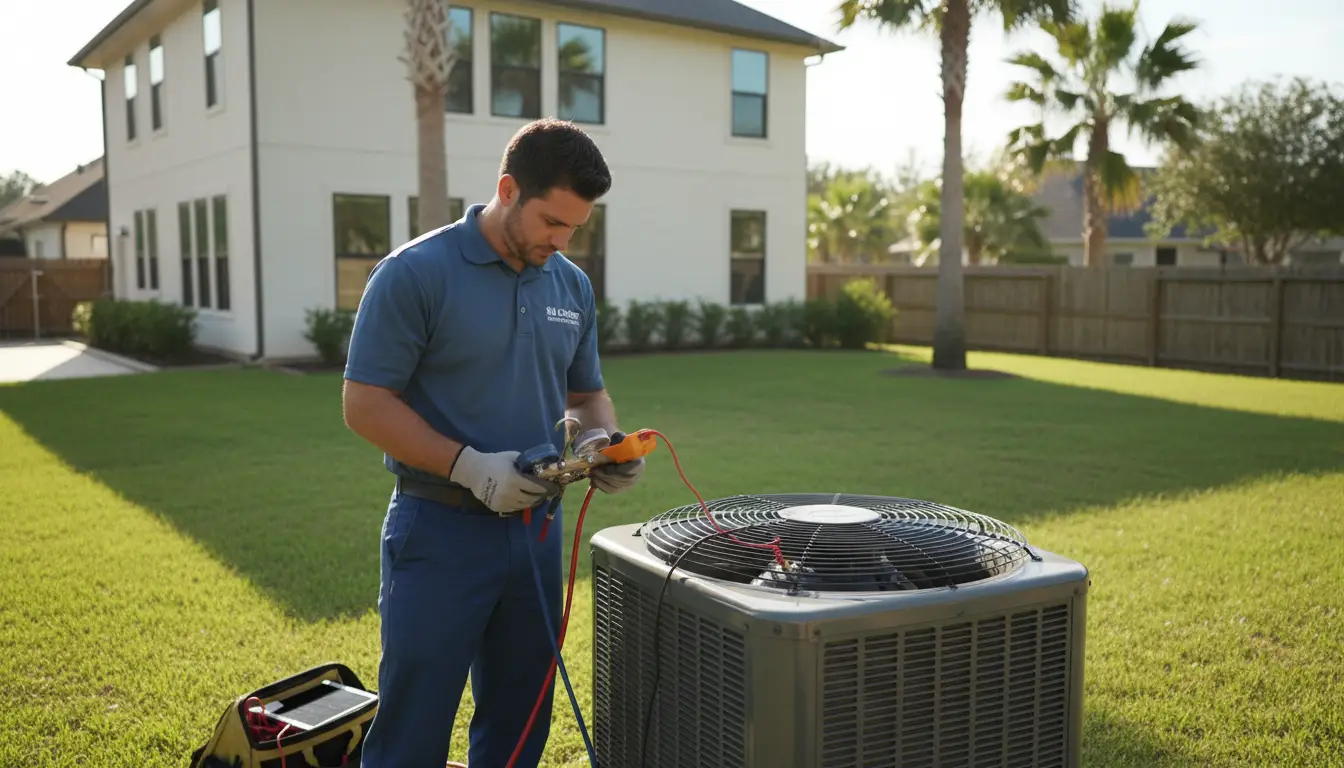
When a qualified technician shows up for seasonal maintenance, they’re doing way more than changing your air filter. A complete tune-up covers every part of your hvac system that keeps your home comfortable.
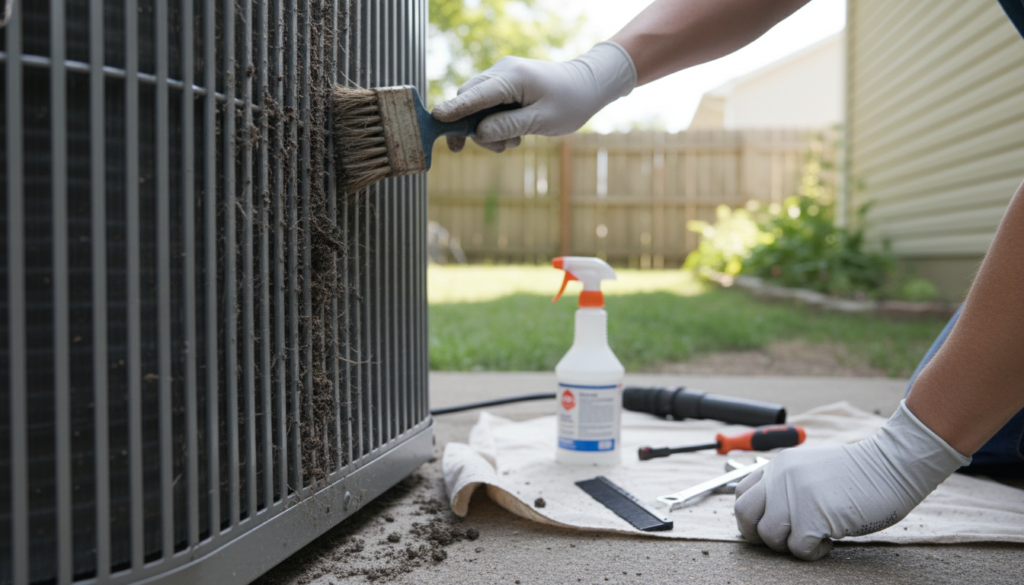
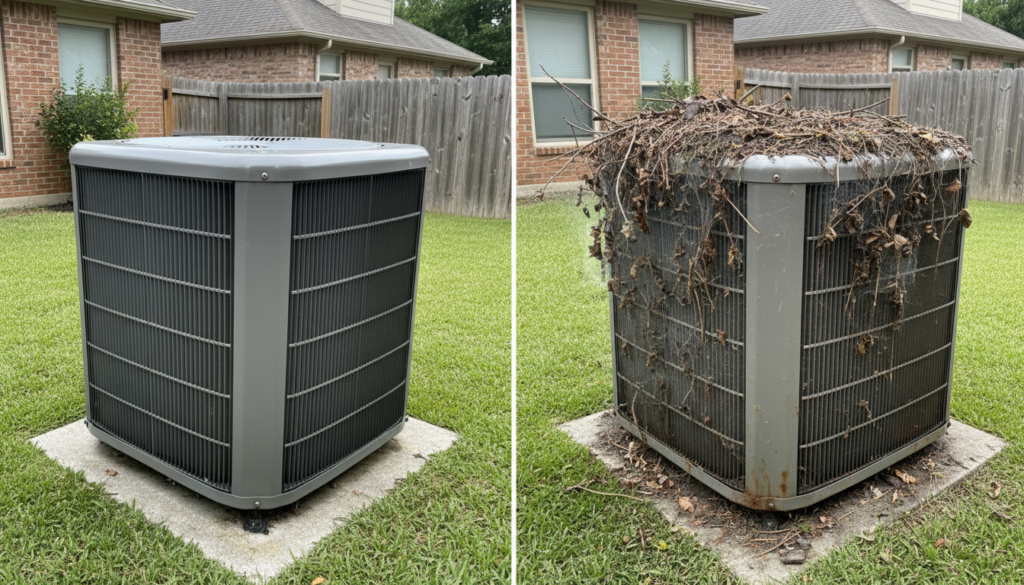
The outdoor condenser unit gets cleaned inside and out. Dirt, leaves, and debris block airflow and make your compressor work harder. Your tech will check refrigerant levels to make sure your system can actually heat and cool properly. Low refrigerant means poor efficiency and higher operating costs.
Inside your home, the air handler needs attention too. The evaporator coil collects dust that reduces heat transfer. Electrical connections get checked and tightened because loose wiring causes system failure. The technician tests your thermostat calibration, inspects the reversing valve that switches between heating and cooling modes, and examines your heat exchanger for any cracks or damage.
Your ductwork gets a visual inspection for leaks. Even small gaps waste tons of conditioned air and spike your energy bills. The capacitor that starts your system gets tested. When this part fails, your whole unit shuts down.
Here’s what a complete preventive maintenance visit covers:
- Clean condenser and evaporator coils for better heat transfer
- Test refrigerant charge and check for leaks
- Inspect all electrical connections and components
- Lubricate moving parts to reduce wear and tear
- Calibrate thermostat for accurate temperature control
- Check reversing valve operation
- Measure airflow through the system
- Inspect ductwork for air leaks
- Test defrost cycle performance
- Replace or clean air filter
- Check condensate drain for clogs
- Inspect blower motor and belts
The whole process takes about an hour for most residential hvac systems. A good technician will show you what they found and explain any concerns before you face a surprise repair bill later.
Why Heat Pumps Need Service Twice Per Year
Your furnace sits idle all summer. Your air conditioner rests all winter. But your heat pump runs 365 days a year. It’s both your heating system and cooling system rolled into one unit. That year-round workload means double the wear on components like the compressor, fan motors, and refrigerant lines.
Spring maintenance prepares your system for hot Louisiana summers. Your technician makes sure cooling mode works efficiently before temperatures climb into the 90s. Fall service gets heating mode ready for those surprise cold snaps we get in Lafayette.
The U.S. Department of Energy says well-maintained heating and cooling equipment runs 10 to 25 percent more efficiently than neglected systems. That’s real money on your electricity bill every single month. Over a year, the energy savings from two tune-ups often pays for the service itself.
Skipping even one seasonal visit lets small issues grow. A dirty coil reduces efficiency by 5 percent. A low refrigerant charge can cut performance by 20 percent while making your compressor work overtime. These problems don’t fix themselves. They just get worse and more expensive.
What You’ll Actually Pay for Annual Maintenance
Professional heat pump service in Lafayette typically runs between $150 and $300 for a single visit. Most companies offer maintenance plans that cover both spring and fall checkups for $300 to $500 per year.
What affects the price? System size matters. A larger unit takes more time to service. Your service provider’s experience level changes rates too. Established hvac companies with certified technicians charge more than new operations, but you’re paying for expertise that catches problems early.
Many maintenance plans include extra benefits beyond the basic inspection. You might get priority scheduling, discounts on future repairs, or waived diagnostic fees. Some companies throw in free air filter replacements or annual duct cleaning.
Here’s how pricing breaks down across different service levels:
| Service Type | Price Range | What’s Included |
|---|---|---|
| Single Tune-up | $150-$300 | Basic inspection and cleaning |
| Annual Plan | $300-$500 | Two visits plus service discounts |
| Premium Plan | $500-$750 | Multiple visits, priority service, free filters |
Compare those numbers to what you’ll pay when something breaks. A failed capacitor costs $200 to $400 to replace. Refrigerant leak repair runs $300 to $1,500 depending on where the leak is. Compressor replacement can hit $2,000 or more.
The math is pretty simple. Two maintenance visits cost less than one medium-sized repair. And regular service prevents most of those repairs from happening in the first place.
The Real Cost When Heat Pumps Break Down
Emergency hvac repair doesn’t just cost more because parts fail. You’re paying premium rates when you need help right now. Weekend and holiday service calls add 25 to 50 percent to your invoice. After-hours emergency service can tack on another $100 to $300.
Small repairs handle things like thermostat problems, bad contactors, or blown fuses. These fixes typically run $150 to $400. Medium repairs cover issues like refrigerant leaks, fan motor replacement, or reversing valve problems. Expect bills between $400 and $1,200.
Major component failures get expensive fast. Here’s what the big stuff costs:
- Compressor replacement: $1,500 to $2,500
- Evaporator coil: $1,200 to $2,000
- Air handler motor: $800 to $1,500
- Full outdoor unit: $2,000 to $3,500
The age of your system changes everything. Parts for heat pumps older than 10 years get harder to find. Your technician might need to order special components or modify newer parts to fit. That drives up labor costs and extends the time you’re without heating or cooling.
Your location affects pricing too. In Lafayette, you’re looking at labor rates between $85 and $125 per hour depending on the company and complexity of the work. More rural areas might add travel fees on top of hourly rates.
Warning Signs Your Heat Pump Needs Repairs
Most system failures give you warning before they quit completely. Catch these signs early and you’ll pay for a scheduled service call instead of emergency pricing.
Strange noises top the list. Grinding sounds usually mean bearing problems in the motor. Squealing points to belt issues. Banging or clanking suggests loose components inside the unit. Any of these sounds mean you should call for service before the part fails completely.
Higher electricity bills show up when your system loses efficiency. A dirty evaporator coil, low refrigerant, or failing compressor makes your heat pump run longer to reach the same temperature. Check your energy consumption month to month. A sudden spike often means trouble.
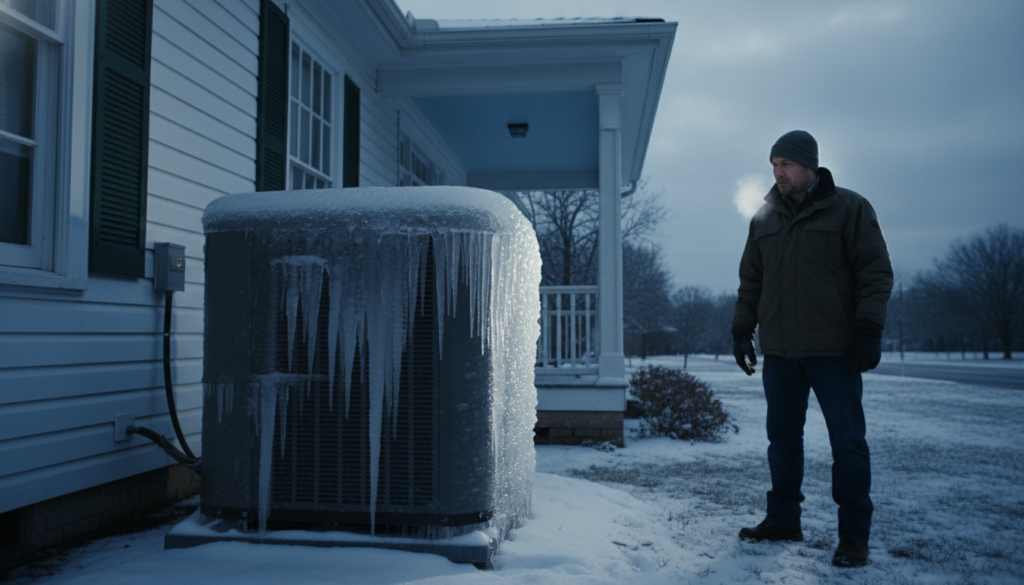
Ice buildup outside of the normal defrost cycle indicates problems. Your heat pump should automatically melt frost during heating mode. Ice that doesn’t clear suggests issues with the defrost cycle, low refrigerant, or blocked airflow.
Other red flags include:
- Rooms that won’t reach the temperature you set
- System that cycles on and off too frequently
- Weak airflow from vents
- Burning smells or unusual odors
- Heat pump that won’t switch between heating and cooling
- Moisture or water pooling around the indoor unit
Don’t ignore these symptoms hoping they’ll go away. That grinding noise is a bearing wearing out. When it fails completely, metal parts can damage your compressor. A $200 repair becomes a $2,000 replacement because you waited.
The 10-Year Cost Comparison: Maintenance vs. Repairs
Let’s look at real numbers over time. We’ll compare two identical heat pumps installed in Lafayette homes. One gets regular preventive maintenance. The other only gets attention when something breaks.
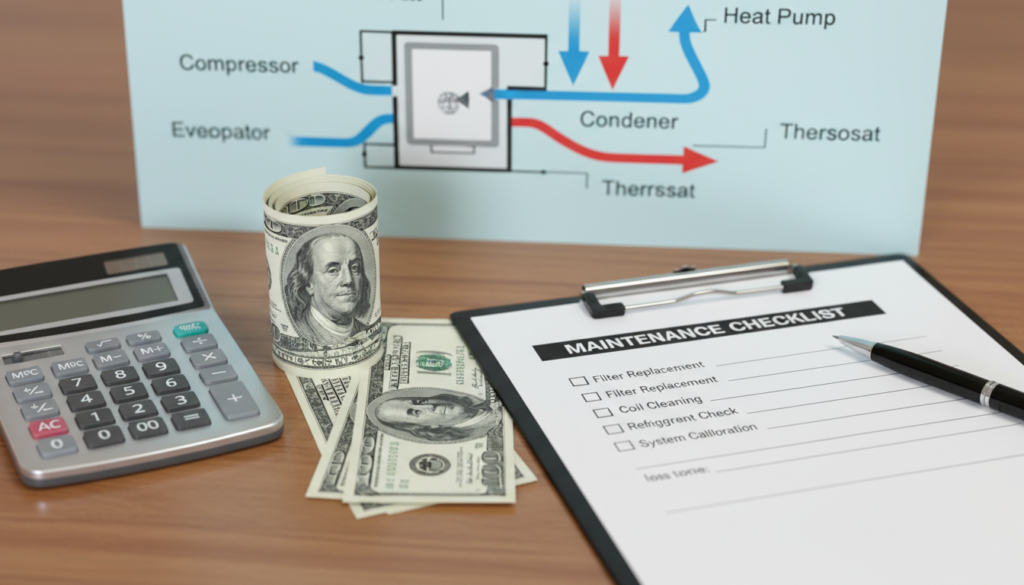
Scenario A: Regular Maintenance Year 1-2: $350 per year for spring and fall service = $700 Year 3-5: $375 per year as prices increase slightly = $1,125
Year 6-10: $400 per year plus one small repair ($300) = $2,300 Total 10-year maintenance cost: $4,125
This system runs efficiently the whole time. Energy bills stay steady at about $1,800 per year for heating and cooling. The unit lasts 15 to 18 years before needing replacement.
Scenario B: Repair-Only Approach
Year 1-2: $0 spent Year 3: Capacitor fails ($350 emergency repair) Year 5: Refrigerant leak ($800 repair) Year 7: Fan motor replacement ($950) Year 9: Compressor failure ($2,200 repair) Total 10-year repair costs: $4,300
But here’s what that scenario misses. Without maintenance, this heat pump loses efficiency every year. Dirty coils, low refrigerant, and poor airflow push energy bills up by 20 to 30 percent. That’s an extra $360 to $540 per year. Over 10 years, the wasted electricity costs $3,600 to $5,400.
The maintained system pays for itself through lower operating costs and longer life. The neglected unit might need complete replacement by year 10 or 12 instead of lasting 15-plus years.
Add it all up and the “save money by skipping maintenance” approach actually costs $3,000 to $5,000 more over a decade. That’s assuming you don’t hit any major emergency repairs with premium pricing.
When to Repair vs. When to Replace Your Heat Pump
Sometimes fixing an old system doesn’t make financial sense. Use the 50 percent rule as your guide. If the repair costs half or more of what a new heat pump installation would run, and your system is over 10 years old, replacement usually makes more sense.
A new heat pump costs $3,500 to $7,500 installed depending on size and efficiency rating. So if you’re looking at a $2,000 compressor replacement on a 12-year-old unit, you’re better off investing that money in new equipment.
Age matters a lot in this decision. Heat pumps typically last 10 to 15 years with good care. Systems approaching that age have more parts ready to fail. Fix one thing and another component breaks next month.
Here’s a quick decision guide:
| System Age | Repair Cost | Best Move |
|---|---|---|
| Under 5 years | Any amount | Repair (likely covered by warranty) |
| 5-10 years | Under $800 | Repair and maintain |
| 5-10 years | $800-$1,500 | Consider new unit efficiency |
| 10-15 years | Over $1,000 | Lean toward replacement |
| Over 15 years | Over $500 | Replace the system |
New heat pumps also bring better energy efficiency. Units installed before 2010 might have a seasonal energy efficiency ratio of 13 or 14. Modern systems hit 18 to 20 SEER or higher. That translates to 30 to 40 percent lower cooling costs and similar heating savings.
Federal tax credits currently offer up to $2,000 for qualifying high-efficiency heat pump installation. Some utility companies in Louisiana provide rebates too. These incentives can cover a big chunk of the price difference between repair and replacement.
How Lafayette’s Climate Affects Your Maintenance Needs
Living in south Louisiana puts unique stress on your heating and cooling equipment. High humidity year-round creates extra work for your system. Moisture in the air means your heat pump runs more to maintain comfortable indoor air quality and temperature.
Humidity affects your condensate drain. The evaporator coil pulls moisture from your air, and that water needs to drain away. In Lafayette’s climate, condensate lines can clog with algae and mold faster than in drier areas. A blocked drain backs water into your home or shuts down your system.
Pollen and dust also impact performance. Spring brings heavy pollen from oak trees and other plants. This stuff clogs your air filter faster and coats your evaporator coil. You might need to change filters monthly during peak pollen season instead of the standard 60 to 90-day interval.
Lafayette doesn’t deal with harsh winter frost like northern states, but we do get occasional freezes. Your heat pump switches to defrost mode when ice forms on the outdoor coil. If your reversing valve or defrost controls aren’t working right, you lose heating when you need it most.
The warm, humid climate is perfect for mold and bacteria growth in ductwork. Regular maintenance includes checking your ducts for these problems. Poor indoor air quality from moldy ducts can trigger allergies and respiratory issues.
Protecting Your Warranty and Investment
Most heat pump manufacturers require proof of annual professional maintenance to keep your warranty valid. Skip those tune-ups and you could void coverage worth thousands of dollars.
Read your warranty paperwork carefully. Most cover parts for 5 to 10 years and compressor for 10 years, but only if you maintain the system according to their schedule. That means at least one professional service visit per year. For heat pumps, twice per year is what manufacturers really want to see.
Save every service invoice and keep detailed records. You need documentation showing:
- Date of service
- Technician name and certification number
- Company performing the work
- Specific services completed
- Any refrigerant added
- Parts replaced
- Before and after performance readings
Take photos of major work being done. If you ever need to file a warranty claim, having proof of proper maintenance and professional installation makes the process smooth. Without documentation, the manufacturer can deny your claim even if you did everything right.
Some homeowners try to save money with DIY maintenance. You can handle certain tasks like changing filters and clearing debris from around your outdoor unit. But warranty requirements specifically call for professional service by a licensed hvac technician. DIY work doesn’t count for warranty purposes.
Smart Ways to Lower Your Heat Pump Costs
Maintenance plans offer better value than paying for individual service calls. Most hvac companies in Lafayette charge $150 to $200 per visit if you call for one-time service. Sign up for an annual plan and you get both visits for $300 to $400 total, plus extra benefits.
Plan members typically get priority scheduling when you do need repairs. During busy summer months when everyone’s air conditioning breaks, you move to the front of the line. Many companies also discount repair work by 10 to 20 percent for plan members.
Timing your service calls saves money too. Schedule maintenance in spring (April or May) and fall (September or October). These shoulder seasons have lower demand. Some companies offer special pricing during slow periods. You’ll also get better appointment times and more attention from technicians who aren’t rushing to the next emergency call.
You can handle some maintenance tasks yourself to reduce wear between professional visits:
- Change your air filter every 30 to 90 days
- Keep outdoor unit clear of grass clippings, leaves, and debris
- Straighten any bent fins on the condenser
- Make sure vents inside aren’t blocked by furniture
- Listen for unusual noises and report them early
- Check your thermostat batteries twice per year
Don’t attempt refrigerant work, electrical repairs, or internal component service. These jobs require EPA certification, specialized tools, and safety equipment. One mistake can damage expensive parts or create dangerous situations.
Get quotes from at least three different hvac companies before committing to repairs or maintenance plans. Prices vary quite a bit across Lafayette. Make sure each quote includes the same services so you’re comparing apples to apples.
Look for licensed contractors with good reviews and proper insurance. The cheapest price often means cut corners. A company charging $50 less per visit might skip important inspection steps or hire inexperienced techs.
Questions Homeowners Ask About Heat Pump Service
How often does my heat pump really need maintenance?
Twice per year is the right answer for most homes. Your system works year-round unlike a furnace or standalone air conditioner. Spring service prepares for cooling season. Fall maintenance gets heating mode ready. Each visit catches problems before they cause breakdowns.
Can I skip maintenance if my system seems fine?
This is how most major repairs happen. Your heat pump can lose 20 percent efficiency without obvious symptoms. By the time you notice weak airflow or higher electricity bills, you’re already paying extra every month. Small problems like dirty coils or low refrigerant get worse over time. The $300 you save skipping service turns into a $1,200 repair bill later.
What’s the difference between a tune-up and maintenance?
These terms mean the same thing in most cases. Always ask exactly what’s included before you book service. A complete visit should cover all the items in our maintenance checklist earlier in this article. Some companies offer “basic” tune-ups that just change filters and check a few things. That’s not enough.
Will maintenance really make my heat pump last longer?
Industry data shows maintained systems last 15 to 18 years on average. Neglected equipment often fails by year 10 or 12. Regular service reduces wear and tear on your compressor, the most expensive component. Clean coils mean less strain on the system. Proper refrigerant levels prevent compressor damage. Small fixes during maintenance prevent cascade failures where one broken part damages others.
How do I know if a repair quote is fair?
Get three estimates for any repair over $500. Make sure each quote itemizes parts and labor separately. Check online reviews for the companies. Ask if they charge diagnostic fees and whether that fee applies to the repair cost if you hire them. Prices should fall within 15 to 20 percent of each other for the same work.
Should I repair my 12-year-old heat pump or replace it?
Use the 50 percent rule. If the repair costs more than half of what new heat pump installation would run, replacement makes better financial sense for systems over 10 years old. Also factor in efficiency. New equipment can cut your operating costs by 30 to 40 percent. Over the next 5 to 10 years, those energy savings help pay for the new unit.
Do I need to be home during maintenance?
Most homeowners prefer to be there for the first visit with a new company. Your technician can explain what they’re doing and answer questions. After you establish a relationship, many companies will service your system while you’re at work if you’re comfortable giving them access.
What if I need emergency repairs?
Find an hvac company in Lafayette that offers 24/7 emergency service before you need it. Keep their number handy. Emergency calls cost more, usually 25 to 50 percent extra for after-hours work. Maintenance plan members often get reduced or waived emergency fees.
Can a new thermostat really improve efficiency?
Modern programmable and smart thermostats help a lot. They prevent your system from running when nobody’s home. Some models learn your schedule automatically. Others let you adjust settings from your phone. Proper thermostat use can cut heating and cooling costs by 10 to 15 percent according to the Department of Energy.
Taking Action to Protect Your Comfort and Investment
Your heat pump represents a major investment in your home comfort. In Lafayette’s year-round climate, you count on that system every single day. Regular maintenance isn’t an optional expense. It’s the only proven way to avoid breakdowns, control operating costs, and get full value from your equipment.

Think about it like this: you change oil in your car every few thousand miles because engine damage costs thousands to fix. Your heat pump deserves the same attention. Two service visits per year cost $300 to $500. That’s way less than one emergency repair during the coldest or hottest day of the year.
The numbers back this up. Maintained systems run 10 to 25 percent more efficiently. That saves $200 to $400 per year on electricity bills. Regular service prevents 85 percent of major repairs. The average heat pump lasts 5 to 7 years longer with proper care.
Start by scheduling your spring and fall maintenance appointments. Most hvac companies in Lafayette offer convenient online booking or simple phone scheduling. Ask about maintenance plans that include both visits plus service discounts.
Keep detailed records of every service visit. Your warranty coverage and future repair costs depend on proving you maintained the system properly. Save invoices, take photos, and store everything together where you can find it.
Budget $400 to $750 per year for routine maintenance and filter changes. Set aside another $1,000 to $1,500 in an emergency fund for unexpected repairs. By year 5 of your system’s life, start saving for eventual replacement too.
Don’t wait for problems to force your hand. A well-maintained heat pump keeps your family comfortable, your energy bills reasonable, and your stress level low. That peace of mind is worth more than the service cost.
For professional heat pump maintenance and repair service in Lafayette and surrounding areas, visit Fontenot’s AC or call to schedule your seasonal tune-up. Our certified technicians provide complete hvac services to keep your heating and cooling system running efficiently year-round.
Sources and additional information:
- U.S. Department of Energy efficiency guidelines: energy.gov/energysaver
- EPA refrigerant regulations and certification: epa.gov/section608
- Air Conditioning Contractors of America standards: acca.org