

When your furnace fails on the coldest night of winter, panic-buying could cost you thousands more than necessary. You’re suddenly faced with emergency service calls, limited contractor availability, and pressure to make quick decisions about a major home investment.
Most homeowners get caught off guard by furnace replacement costs. They focus only on the equipment price tag and miss the bigger financial picture. Think of budgeting for a furnace replacement like buying a car. You wouldn’t just look at the sticker price, would you? You’d consider fuel efficiency, maintenance costs, and those hidden fees.
In this guide, you’ll discover how to budget for furnace replacement services effectively, learn the real costs of furnace replacement, understand when to repair versus replace, uncover hidden expenses, and develop a realistic long-term budget. You’ll also find proven strategies to maximize your investment through rebates, timing, and smart contractor selection.
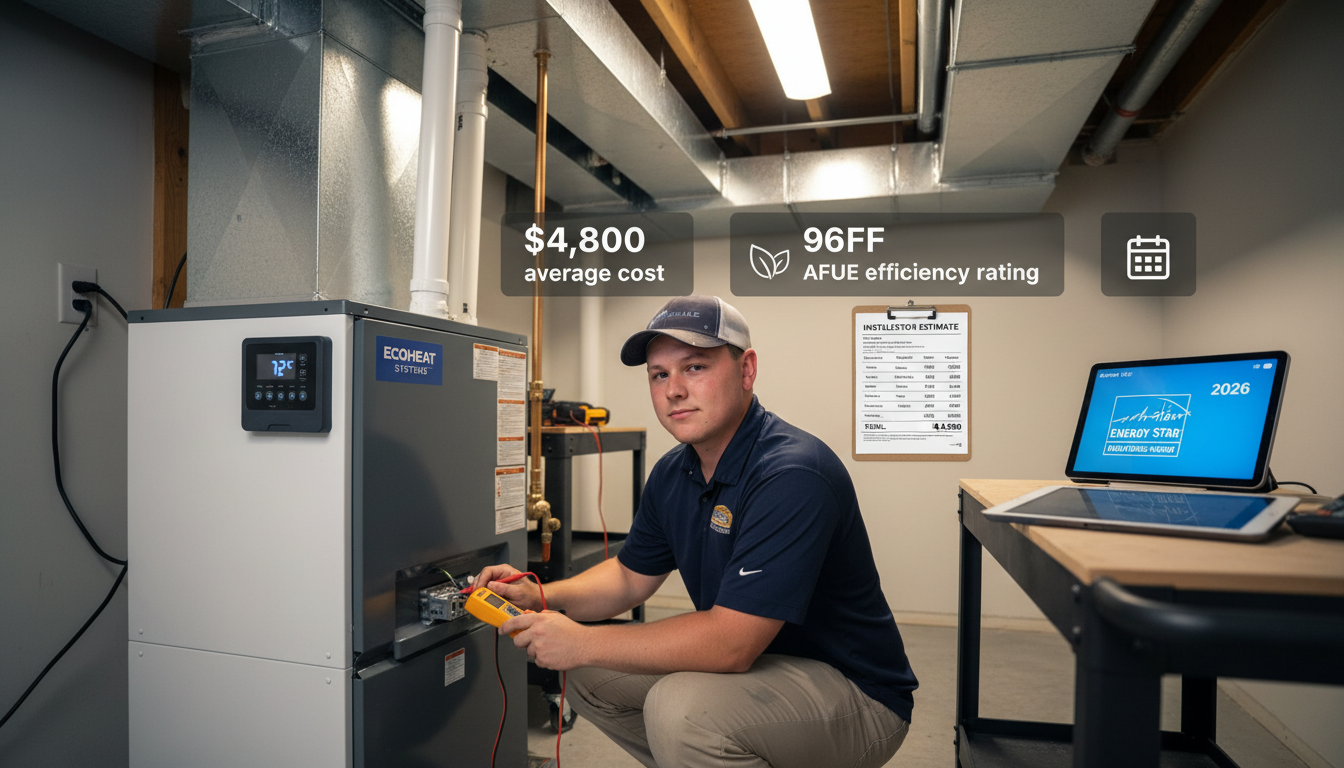
Quick Answer: Average furnace replacement costs $4,800, ranging from $2,800 to $12,000 depending on type, efficiency, and installation complexity. Most homeowners in Lafayette should budget $4,500 to $10,000 for a quality installation.
The Real Cost: Complete Breakdown by Furnace Type
Understanding furnace replacement costs starts with knowing your options. Different furnace types come with vastly different price points.
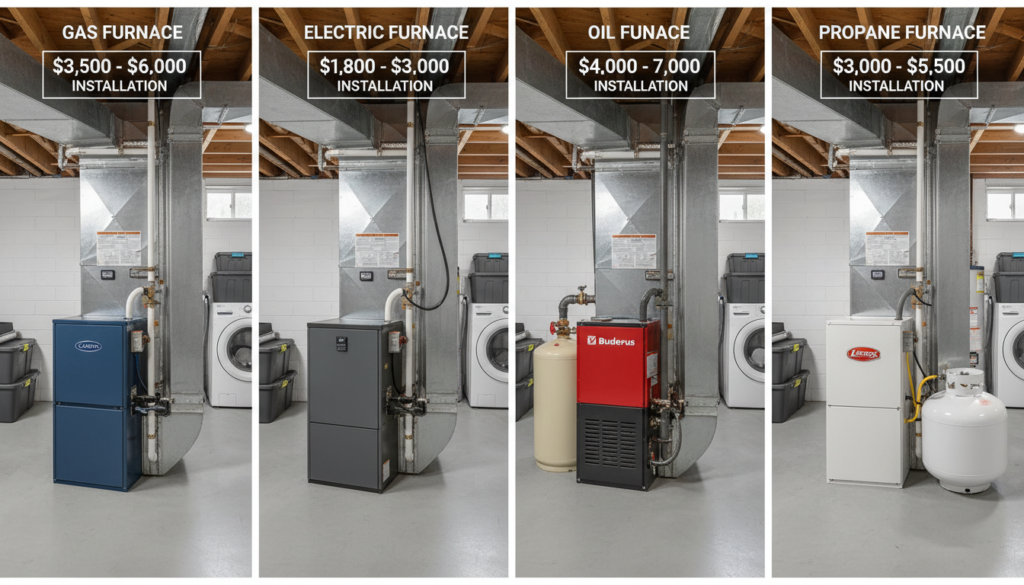
National Average Cost Ranges (2025-2026)
Here’s what you can expect to pay:
- Gas Furnace: $3,800 to $10,000 (most popular choice)
- Electric Furnace: $2,000 to $7,000 (lowest upfront cost)
- Oil Furnace: $6,000 to $10,000+ (regional availability)
- Propane Furnace: $3,000 to $14,200 (varies by location)
According to the U.S. Energy Information Administration, natural gas remains the most cost-effective heating fuel in most regions.
The “Big Three” Cost Buckets
Every furnace replacement budget should account for three main expense categories:
Bucket 1: Equipment & Materials (50-60% of total cost)
Your furnace’s efficiency rating directly impacts the equipment price:
- Standard efficiency (80-89% AFUE): $1,400 to $2,000
- Mid-efficiency (90-95% AFUE): $2,000 to $3,700
- High-efficiency (96%+ AFUE): $2,800 to $6,200
AFUE stands for Annual Fuel Utilization Efficiency. A 95% AFUE rating means 95% of your fuel converts to heat, while only 5% escapes through venting.
Bucket 2: Labor & Installation (25-35% of total cost)
Professional installation isn’t optional. Improper installation voids warranties and creates safety hazards:
- Average hourly rate: $75 to $150
- Installation time: 4 to 10 hours
- Typical labor cost: $800 to $2,650
Bucket 3: Permits, Accessories & Modifications (15-20% of total cost)
- Building permits: $50 to $500
- Old furnace removal: $60 to $500
- Smart thermostat: $150 to $500
- Humidifier or air purification: $200 to $800
- Ductwork modifications: $300 to $5,600
Professional HVAC contractors like Fontenot’s Air Conditioning & Heating include these details in comprehensive quotes.
Repair vs. Replace: The Financial Decision Framework
Not every furnace problem requires a complete replacement. Smart homeowners use clear financial rules to make this decision objectively.
When to Replace Instead of Repair
The $5,000 Rule
Multiply your repair cost by your furnace’s age. If the result exceeds $5,000, replacement makes more financial sense.
Example: A $400 repair on a 15-year-old furnace equals $6,000. This signals replacement time.
The 50% Rule
If your repair cost exceeds 50% of a new furnace’s price, choose replacement.
Age and Efficiency Indicators
Consider replacement when your furnace shows these signs:
- Age of 15 to 20+ years
- Efficiency rating below 80% AFUE
- Three or more repairs in two years
- Energy bills rising 20% or more
The Efficiency ROI Logic
High-efficiency furnaces cost more upfront but deliver substantial savings:
- High-efficiency models (96%+ AFUE) cost $800 to $1,500 more initially
- Annual energy savings: $250 to $400
- Payback period: 5 to 8 years in cold climates
- Ten-year savings: $2,500 to $4,000
According to ENERGY STAR, upgrading from 80% to 95% efficiency can reduce heating bills by up to 20%.
Safety Red Flags Requiring Immediate Replacement
Some issues demand immediate replacement:
- Yellow flame instead of blue (indicates incomplete combustion)
- Frequent carbon monoxide detector alerts
- Visible cracks in the heat exchanger
- Strong gas odors (emergency situation)
Hidden Costs and Budget Traps to Avoid
Most homeowners underestimate their total furnace replacement cost because they miss these hidden expenses.
Emergency Surge Pricing
Winter furnace failures come with premium price tags:
- Emergency replacements: 20-25% labor premium
- Expedited equipment fees: $200 to $500 extra
- Limited contractor availability
Solution: Plan proactively when your furnace reaches 12 to 15 years old.
Complexity Factors That Increase Costs
High-Efficiency Installation Requirements
Modern high-efficiency furnaces need specialized venting:
- PVC venting system: $300 to $600
- Condensate drain installation: $150 to $400
- Additional electrical work: $100 to $300
Existing Infrastructure Challenges
Your home’s current systems might need upgrades:
- Ductwork modifications: $500 to $3,000
- Electrical panel upgrade: $500 to $2,000
- Gas line capacity increase: $300 to $1,000
- C-wire installation for smart thermostats: $100 to $250
The 2028 Regulation Impact
Federal efficiency mandates are changing the furnace market. Starting in 2028, new regulations require 95% minimum efficiency for gas furnaces in northern states. This requirement is driving up current prices.
Fuel Type Conversion Costs
Switching from one fuel source to another adds significant expense:
- Fuel conversion costs: $500 to $2,000+
- New fuel line installation required
Key Factors That Impact Your Total Budget
Several variables affect your final furnace replacement cost.
1. Size and Heating Capacity (BTU Requirements)
Proper furnace sizing directly impacts efficiency, comfort, and equipment lifespan. Bigger isn’t better.
Home Size Guidelines:
- 1,500 square feet: 45,000 to 90,000 BTU
- 2,000 square feet: 60,000 to 120,000 BTU
- 2,500 square feet: 75,000 to 150,000 BTU
Demand a professional Manual J Load Calculation. Contractors using quick “rule of thumb” sizing often get it wrong.
2. Energy Efficiency Rating (AFUE)
Standard Efficiency (80-89% AFUE)
- Lowest purchase price
- Higher monthly heating bills
- Best for mild climates
Mid-Efficiency (90-95% AFUE)
- Balanced upfront and operating costs
- Good value for moderate climates
High-Efficiency (96%+ AFUE)
- Highest initial investment
- Lowest operating costs
- Best ROI for cold climates
3. Brand Selection Impact
Premium Brands (Carrier, Trane, Lennox)
- Better warranties (10+ years on parts)
- Advanced features and technology
Mid-Range Brands (Goodman, Rheem, Amana)
- Best overall value proposition
- Solid performance and reliability
Budget Brands
- Suitable for mild climates
- Good for rental properties
4. Geographic Location Variables
Where you live affects your total project cost:
- Labor rates vary by region
- Climate impacts equipment sizing
- Local building codes differ
- Seasonal demand affects pricing
5. Staging Technology
Single-Stage: Always runs at 100% capacity, least expensive
Two-Stage: Operates at 65% or 100% capacity, better efficiency
Modulating: Adjusts from 40% to 100% capacity, most efficient
Long-Term Financial Planning: Total Cost of Ownership
Smart budgeting looks beyond the installation invoice. The total cost of ownership includes everything you’ll spend over your furnace’s lifetime.
The 10-Year Budget Reality
Example TCO Comparison (10-Year Projection):
| Furnace Type | Install Cost | Energy Costs | Maintenance | Total 10-Year Cost |
| Standard 80% AFUE | $4,500 | $15,000 | $2,000 | $21,500 |
| High-Efficiency 96% AFUE | $8,000 | $9,000 | $2,000 | $19,000 |
The high-efficiency furnace saves $2,500 over ten years despite costing $3,500 more initially.
Maintenance Plan Financial Analysis
Annual maintenance plans typically cost $150 to $500. Coverage usually includes:
- Two tune-ups per year
- Priority service scheduling
- Discounts on repairs
- Extended labor warranty
Ongoing Costs to Budget
Monthly:
- Filter changes every 1 to 3 months
Annually:
- Professional tune-up: $70 to $200
- Carbon monoxide detector testing
Every 3 to 5 Years:
- Comprehensive ductwork cleaning
Home Resale Value Impact
A new, efficient furnace adds value when selling your home. Keep all installation records, warranty paperwork, and maintenance logs to show potential buyers.
Smart Budgeting Strategies to Maximize Your Investment
These proven strategies help you get the best value for your furnace replacement budget.
1. Strategic Timing for Best Pricing
Best Times to Replace:
- Spring (April to May)
- Fall (September to October)
Off-Season Advantages:
- 10-20% lower prices
- Better contractor availability
- Stronger negotiating position
2. Leverage Rebates and Incentives
Federal Tax Credits (2025-2032):
- Energy-efficient furnaces (97%+ AFUE): Up to $600
- Heat pump transitions: Up to $2,000
State and Local Programs:
- Utility company rebates: $100 to $1,500
Check the Database of State Incentives for Renewables & Efficiency for programs in your area.
Manufacturer Rebates:
- Seasonal promotions: $100 to $500
- Bundle discounts: Save 15-25% on labor
3. Get Multiple Detailed Quotes
Contact 3 to 5 licensed contractors for comprehensive estimates.
Request These Details:
- Itemized cost breakdown
- Specific equipment specifications
- Manual J Load Calculation results
- Complete warranty details
- Installation timeline
Red Flags to Avoid:
- Quotes 50% or more below competitors
- Missing permit costs
- High-pressure tactics
- Vague pricing
4. Financing Options Analysis
0% APR Promotions: 12 to 18 months from manufacturers
Contractor Financing: Typical rates: 4-9% APR
Home Equity Loans: Lower interest rates for established homeowners
5. Bundle to Save
Replace your furnace and air conditioner together:
- Save 15-25% on combined labor costs
- Matched system efficiency benefits
- Single installation disruption
Reliable HVAC companies like Fontenot’s Air Conditioning & Heating can evaluate both systems.
Working with Contractors: What to Expect
Choosing the right contractor matters as much as selecting the right equipment.

Essential Contractor Credentials
Verify these qualifications:
- Proper state licensing
- Current liability insurance
- Workers’ compensation coverage
- Industry certifications (NATE, EPA)
- Better Business Bureau rating
Installation Timeline
Assessment and Quotation: 60 to 90 minutes
Decision and Scheduling: 3 to 7 days
Installation Day: 4 to 10 hours (typically single day)
Critical Questions to Ask
- “Will you perform a Manual J Load Calculation?”
- “What’s included in your warranty coverage?”
- “Who obtains the permits?”
- “What happens if issues arise after installation?”
- “Can you provide an itemized cost breakdown?”
Contract Must-Haves
- Complete equipment specifications
- Total cost breakdown
- Warranty terms for equipment and labor
- Permit and disposal responsibility
- Payment schedule
Frequently Asked Questions
How much does it cost to replace a furnace in 2025?
Most homeowners spend $4,800 on average, with total costs ranging from $2,800 to $12,000. Gas furnaces typically cost $3,800 to $10,000, while electric furnaces range from $2,000 to $7,000.
Should I repair or replace my 15-year-old furnace?
Use the $5,000 rule: multiply the repair cost by your furnace’s age. If the result exceeds $5,000, replacement makes more financial sense. A 15-year-old furnace approaching its expected lifespan should typically be replaced.
What is the most cost-effective furnace type?
Gas furnaces offer the best combination of upfront cost and operating efficiency in most regions. They cost $3,800 to $10,000 installed and provide lower monthly heating bills than electric options.
Can I install a furnace myself to save money?
No. Professional installation is required by building codes, necessary to maintain warranty coverage, and essential for safety. Improper installation creates carbon monoxide hazards and voids all manufacturer warranties.
What rebates are available for furnace replacement in 2025?
Federal tax credits provide up to $600 for energy-efficient furnaces with 97%+ AFUE ratings. Many utility companies offer additional rebates of $100 to $1,500. Manufacturer promotions can add another $100 to $500 in savings.
How long does furnace installation take?
Most installations complete in 4 to 10 hours, typically finishing in a single day. Complex projects involving ductwork modifications or electrical upgrades might require two days.
What size furnace do I need for my home?
Furnace sizing requires a professional Manual J Load Calculation. As a rough guideline, 1,500 square feet needs 45,000 to 90,000 BTU, while 2,000 square feet requires 60,000 to 120,000 BTU.
Is a high-efficiency furnace worth the extra cost?
High-efficiency furnaces (96%+ AFUE) cost $800 to $1,500 more initially but save $250 to $400 annually on energy bills. The payback period is 5 to 8 years, with total savings of $2,500 to $4,000 over ten years.
Your Action Plan
Smart furnace replacement starts with realistic budgeting and careful planning.
Key Takeaways:
- Budget realistically between $4,500 and $10,000 for quality installation
- Account for hidden costs including permits and modifications
- Think long-term by calculating total cost of ownership
- Leverage off-season timing to save 10-20%
- Maximize available incentives through federal credits and rebates
Your 60-Day Roadmap:
Weeks 1-2: Evaluate your current furnace condition, research replacement options, and calculate your realistic budget.
Weeks 3-4: Request detailed quotes from 3 to 5 licensed contractors. Verify credentials and confirm Manual J Load Calculations.
Weeks 5-6: Compare total cost of ownership calculations, apply for available rebates, and secure financing if needed.
Weeks 7-8: Schedule installation during off-season for best pricing, complete the project, and register your warranty.
Think of your furnace budget as a financial roadmap for the entire journey, not just the first step. Account for the equipment, installation, modifications, and ongoing maintenance. Plan for the complete 15-year ownership experience, not just the installation day.
A well-planned furnace replacement protects your family’s comfort, reduces energy costs, and increases your home’s value.
Need professional help? Contact Fontenot’s Air Conditioning & Heating for free, detailed estimates from licensed HVAC professionals serving Lafayette and surrounding areas. Our team provides comprehensive quotes with itemized costs and transparent pricing so you can budget with confidence.