Why Is My Heater Blowing Cold Air? 11 Causes & Fixes
Search
Recent Posts
Tags
Follow Us on
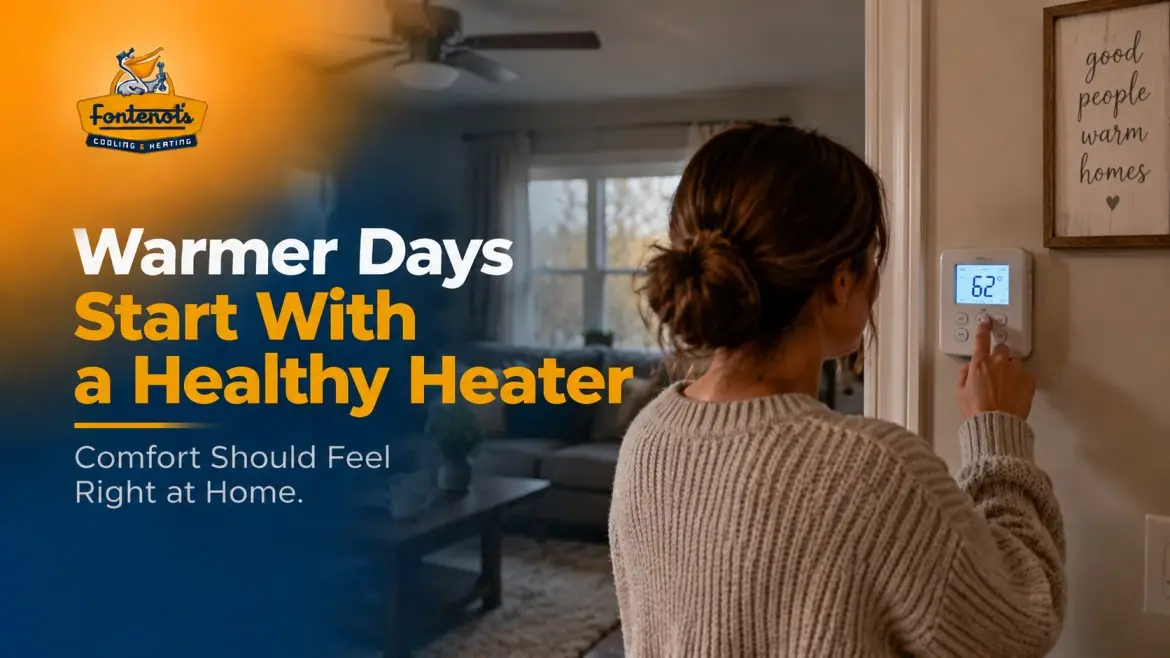
Why is my heater blowing cold air? It often points to a dirty filter or wrong thermostat mode. It can also mean an ignition problem inside the furnace. Heat pumps often blow cool air during a normal defrost cycle. If cold air lasts more than a few minutes, check the thermostat and filter first. Call a technician if it continues
Key Takeaways
- A dirty air filter is the most common cause of a heater blowing cold air. Checking it takes about five minutes.
- Heat pumps blow cool air for 5 to 15 minutes during a normal defrost cycle. This is not a malfunction.
- A cracked heat exchanger or a gas odor is an emergency. Turn off the system and call a technician right away.
- Most furnace repairs cost between $100 and $600. A cracked heat exchanger often means the whole unit needs replacing.
- Regular maintenance can cut heating costs by 10 percent or more. It also helps catch problems early.
You turn up the heat, and cold air blows out instead. That moment feels alarming, especially on a freezing night. In most cases, the cause is simple and fixable within minutes. In some cases, it signals a problem that needs a licensed technician fast.
Fontenot’s Air Conditioning & Heating technicians in Lafayette diagnose this exact complaint every winter. Furnaces, electric heaters, and heat pumps each blow cold air for different reasons. Knowing your system type narrows the list fast. This guide walks through every common cause, from a simple filter to a cracked heat exchanger.
You will learn how to tell normal cold air from a real problem. You will find symptom by symptom fixes for eleven common causes. You will also see repair costs and a quick DIY checklist. You will learn the exact signs that mean stop and call a professional.
Why Is My Heater Blowing Cold Air? A Quick Overview
Ever notice your heater kicks on but the air feels colder than the room? Cold air from a heater is not always bad news. Some cold air is part of normal operation. Other cold air points to a component that has failed.
When Cold Air Is Normal (Startup Cycle, Heat Pump Defrost)
Every heater has a short delay before warm air arrives. This is normal and does not mean a problem exists.
Furnaces need 30 to 90 seconds to warm the heat exchanger before the blower turns on. During that window, you may feel cool or room temperature air. This protects the system from blowing unheated air.
Heat pumps behave differently. In cold weather, frost builds up on the outdoor coil. The system pauses heating and runs a defrost cycle to melt it. This works much like the automatic defrost cycle in a refrigerator. It clears ice so the system keeps working efficiently. During defrost, indoor vents can blow cool air for 5 to 15 minutes. This is a normal part of how heat pumps work, not a malfunction.
The cold air should clear within a few minutes. If warm air returns after that, your system is working as designed.
When Cold Air Indicates a Real Problem
Cold air becomes a concern when it does not resolve. A furnace that runs but never warms up has a real issue.
So does a heat pump stuck in defrost mode. The same applies if it blows cold air in mild weather.
Watch for these warning signs:
- Cold air continues for more than 15 minutes
- The blower runs constantly but the air never warms
- You smell gas, notice burning odors, or hear unusual noises
- The system short cycles, turning on and off repeatedly
Any of these signs points to a mechanical or electrical fault. The next sections break down the most common causes.
Gas Furnace, Electric Furnace, and Heat Pump: Why System Type Matters
Quick Overview of Each System
Not every heater works the same way. The cause of cold air differs by system type, as the table below shows.
| System Type | How It Heats | Common Cold-Air Culprit |
|---|---|---|
| Gas Furnace | Burns natural gas or propane | Dirty flame sensor, ignition failure, gas supply issue |
| Electric Furnace | Electric resistance coils | Thermostat setting, blower motor, tripped breaker |
| Heat Pump | Moves heat from outdoor air | Defrost cycle, low refrigerant, reversing valve |
Gas furnaces burn natural gas or propane to heat air. They rely on an igniter or pilot light, a gas valve, and a heat exchanger. A blocked or malfunctioning part in this chain often causes cold air.
Electric furnaces heat air using electric resistance coils. They have fewer parts than gas furnaces. Most problems trace back to the thermostat, blower motor, or a tripped breaker.
Heat pumps move heat from outdoor air into your home instead of burning fuel. They rely on refrigerant, a reversing valve, and a defrost cycle. Cold air from a heat pump often relates to this refrigeration process.
Why Diagnosis Differs by System Type
A gas furnace and a heat pump can both blow cold air, but for different reasons. This matters when you troubleshoot.
For example, a dirty flame sensor stops a gas furnace from igniting. That same part does not exist on a heat pump. A frozen outdoor coil, however, is a heat pump issue. You will never see it on a gas furnace.
Knowing your system type helps you skip causes that do not apply. It also helps a technician diagnose the problem faster over the phone.
Common Reasons Your Heater Is Blowing Cold Air
Match your symptom pattern to the causes below to narrow down the fix.
Incorrect or Faulty Thermostat
Symptoms, Cause, and Fix
Symptoms: The heater runs, but air feels cool or room temperature. The display may show a mode that does not match what you set.
Cause: The thermostat may be set to “Fan On” instead of “Auto.” This pushes unheated air through the vents between heating cycles. A miscalibrated sensor, dead batteries, or a wiring fault can also cause this.
Fix: Set the fan to “Auto” and confirm the mode is on “Heat.” Replace the batteries if the display looks dim. If the thermostat still misreads the temperature, it likely needs recalibration or replacement.
Dirty Air Filter
Symptoms, Cause, and Fix
Symptoms: Weak or cool airflow, a musty smell, and a furnace that runs longer than usual.
Cause: A clogged filter blocks airflow across the heat exchanger. This can trip a safety switch that shuts off the burners while the blower keeps running. Think of the filter like a clogged straw. Air that should move freely gets forced through a smaller opening. The whole system strains to compensate.
Fix: Check the filter and replace it if it looks gray or clogged. ENERGY STAR recommends checking filters monthly and replacing them at least every three months. Set a recurring reminder so this does not happen again.
High-Limit or Fan Limit Switch Problems
Symptoms, Cause, and Fix
Symptoms: The furnace shuts off quickly after starting. The blower may also run nonstop even after you turn off the heat.
Cause: The high-limit switch protects the heat exchanger from overheating. A dirty filter, a blocked duct, or a failing switch can trigger it too early. This cuts heat production while the fan keeps blowing.
Fix: Clear the immediate cause, usually a dirty filter or blocked vent. If the switch trips with a clean filter and open vents, it may be faulty. A technician can test and replace it.
Dirty Flame Sensor or Ignition/Pilot Problems
Symptoms, Cause, and Fix
Symptoms: The furnace tries to start, you hear clicking, then it shuts down without heat. Older units with a pilot light may show a light that will not stay lit.
Cause: A dirty flame sensor cannot detect that gas has ignited. The system then shuts the gas valve for safety. A weak igniter or a pilot light disrupted by a draft causes a similar shutdown. In the field, this is one of the most common winter service calls we see. It often follows a summer of sitting unused.
Fix: This repair involves gas components and flame safety, so it needs a licensed technician. Never attempt to relight a pilot light if you smell gas.
Gas Supply Problems
Symptoms, Cause, and Fix
Symptoms: The furnace will not ignite at all, or it starts and then cuts out repeatedly.
Cause: A closed gas valve or a tripped shutoff can stop the burners from lighting. Low gas pressure causes the same problem. This means the blower may run and distribute unheated air.
Fix: Confirm the gas valve at the furnace is fully open. If other gas appliances in your home are also affected, contact your gas utility. Do not attempt repairs on gas lines yourself.
Clogged Condensate Drain
Symptoms, Cause, and Fix
Symptoms: The furnace shuts down on its own, sometimes with water pooling near the unit. This mostly affects high-efficiency furnaces.
Cause: High-efficiency furnaces produce condensation that drains through a small tube. Algae, dirt, or a kink in the line can clog it. Many systems have a safety switch that shuts down heat when the drain backs up.
Fix: Check for visible water near the unit and inspect the drain line for kinks. Clearing minor clogs is possible with a wet-dry vacuum. A technician should handle the safety switch and any deeper blockage.
Blocked Airflow or Leaky Ductwork
Symptoms, Cause, and Fix
Symptoms: Some rooms stay cold while others heat normally. Vents may feel weak even when the furnace is running.
Cause: Closed vents, blocked registers, and gaps in ductwork all reduce warm air reaching your rooms. Heated air escapes into attics, crawl spaces, or walls before it reaches you.
Fix: Open and clear every vent in the home. Look for visible duct damage in accessible areas like the attic or basement. A technician can pressure test the ductwork and seal any leaks.
Blower Motor Failure
Symptoms, Cause, and Fix
Symptoms: Weak airflow, a rattling noise, or no air movement can all occur. This happens even though the furnace seems to run.
Cause: A worn bearing, failing capacitor, or burnt-out motor keeps the blower from moving air properly.
Fix: This repair means opening the furnace cabinet and testing electrical parts. That job needs a licensed technician. Angi’s 2026 cost data puts blower motor repairs between $150 and $450. Full replacement can run up to $2,000.
Control Board Problems
Symptoms, Cause, and Fix
Symptoms: The furnace behaves unpredictably. It may not respond to the thermostat or cycle at odd intervals. It may also skip startup steps.
Cause: The control board manages every function of the furnace. A power surge, age, or a wiring fault can damage the board. This leads to skipped steps in the heating sequence.
Fix: Control board diagnosis requires specialized testing equipment. A technician can check for error codes and confirm whether the board needs replacement. This typically costs $200 to $600.
Pressure Switch or Draft Inducer Motor Failure
Symptoms, Cause, and Fix
Symptoms: The draft inducer fan runs, but the furnace never ignites. It may also shut down shortly after starting.
Cause: The draft inducer motor clears exhaust gas before ignition. The pressure switch confirms this is happening. A failing motor, a blocked flue, or a stuck pressure switch often causes this. Each one stops the system at this safety check.
Fix: Check the flue pipe outside for blockages like debris, snow, or a bird’s nest. If the vent is clear, the pressure switch or inducer motor likely needs professional repair. This typically runs $200 to $1,500.
Cracked Heat Exchanger
Symptoms, Cause, and Fix
Symptoms: A strange smell, visible cracks or rust on the exchanger, or a sounding CO alarm. You may also notice soot around the furnace.
Cause: Heat exchanger: the metal part that moves heat from burning gas into your home’s air. Metal fatigue from repeated heating and cooling cycles can crack it over time. This is one of the more serious furnace problems. It can let combustion gases, including carbon monoxide, enter your home’s air supply.
Fix: Turn off the furnace immediately if you suspect a cracked heat exchanger. This is not a DIY repair. A technician must inspect it. In many cases, replacing the entire furnace makes more financial sense than repairing this single part.
Heat Pump-Specific Problems
Heat pumps face additional causes tied to refrigerant and the reversing valve.
Frozen Outdoor Coil
Symptoms: Visible ice on the outdoor unit, weak heating, or a defrost cycle that never ends.
Cause: Thin, normal frost clears during a short defrost cycle. Thick ice usually means restricted airflow or a failing defrost sensor. Low refrigerant can also keep the coil too cold.
Fix: Clear debris, snow, or plants blocking the outdoor unit. If thick ice returns quickly after melting, call a technician. Ask them to check the defrost controls and refrigerant level.
Low Refrigerant
Symptoms: Reduced heating output, longer run times, and ice on the coil outside of defrost cycles.
Cause: Refrigerant is the fluid that carries heat through a heat pump’s coils. It does not get used up during normal operation. Low levels almost always point to a leak somewhere in the system.
Fix: A technician must locate and seal the leak before adding refrigerant. Angi’s heat pump repair data shows refrigerant leak repairs typically run $300 to $1,200. The exact cost depends on severity.
Reversing Valve Failure
Symptoms: The heat pump gets stuck in cooling mode during winter. It may blow cold air instead of switching to heat.
Cause: The reversing valve directs refrigerant flow between heating and cooling. A stuck or failed valve leaves the system unable to switch modes correctly.
Fix: This is an internal, sealed-system repair that requires a licensed technician. Angi’s 2026 pricing data puts reversing valve replacement between $200 and $650.
Compressor Failure
Symptoms: The outdoor unit does not run, hums without starting, or trips the breaker repeatedly.
Cause: The compressor is the heart of a heat pump. Electrical faults, age, or long-term refrigerant problems can burn it out.
Fix: A technician must diagnose the compressor. They will confirm if it can be replaced or if you need a new system. Angi lists compressor replacement as the most expensive single heat pump repair. It typically runs $650 to $2,400.
Quick DIY Checklist Before Calling a Pro
Check Thermostat, Filter, Vents, and Circuit Breaker
Start with the fastest checks first. Most cold air complaints trace back to one of these four items.
- Confirm the thermostat is set to “Heat” and the fan is on “Auto”
- Pull the air filter and hold it to light. Replace it if you cannot see through it
- Walk through the home and open any closed or blocked vents
- Check your electrical panel for a tripped breaker feeding the furnace or air handler
These four checks take less than ten minutes combined. Together they solve a large share of cold air complaints.
Look for Furnace Error Codes
Many modern furnaces display a blinking code through a small window on the control board. This code points to the specific fault the system detected.
Write down the number and pattern of blinks before calling for service. Your furnace manual lists what each code means. Sharing this with a technician can speed up diagnosis.
Know When to Stop DIY and Call a Technician
Some repairs are safe for homeowners. Others involve gas, high voltage, or refrigerant and require a license to handle safely.
Stop and call a professional if you smell gas or see a cracked heat exchanger. The same goes for sealed refrigerant lines. Attempting these repairs yourself can be dangerous and may void your warranty.
Heater Repair Costs and Replacement Considerations
Typical Repair Costs by Component
Repair costs vary by part, labor rates, and how old your system is. The ranges below reflect national averages from Angi’s 2026 HVAC cost data.
| Component | Typical Repair Cost |
|---|---|
| Thermostat | $100 – $300 |
| Air filter | $1 – $35 |
| Flame sensor | $150 – $250 |
| Ignitor | $150 – $250 |
| Blower motor (repair) | $150 – $450 |
| Blower motor (replacement) | up to $2,000 |
| Gas valve | $200 – $600 |
| Control board | $200 – $600 |
| Draft inducer motor | $200 – $1,500 |
| Flue pipe | $400 – $800 |
| Heat exchanger (repair) | $100 – $200 |
| Heat exchanger (replacement) | $500 – $1,500 |
| Reversing valve (heat pump) | $200 – $650 |
| Refrigerant leak repair (heat pump) | $300 – $1,200 |
| Compressor replacement (heat pump) | $650 – $2,400 |
| Annual maintenance tune-up | $125 – $200 |
Factors That Affect Repair Costs
Several factors push repair costs up or down.
- System age. Parts for older furnaces can be harder to find and cost more
- Time of call. Emergency or after-hours service typically costs more than a scheduled visit
- Access. A furnace in a tight attic or crawl space takes longer to service
- Diagnosis complexity. Electrical and refrigerant issues often need more labor time than mechanical fixes
Ask for a written estimate before any repair over a few hundred dollars.
Repair vs. Replace Your Heating System
A simple rule helps here. If a repair costs more than half the price of a new system, replacement is smarter. This is especially true once the unit passes ten years old.
A cracked heat exchanger or a failed compressor often triggers this decision. Fontenot’s Air Conditioning & Heating can walk you through repair and replacement costs side by side. This helps you decide with confidence.
How to Prevent Your Heater From Blowing Cold Air
Replace Filters and Schedule Annual Maintenance
Prevention starts with the filter. ENERGY STAR recommends checking your filter every month and replacing it at least every three months. A clean filter protects the blower motor and heat exchanger from strain.
Annual maintenance catches small problems before they become expensive ones. According to the U.S. Department of Energy, regular maintenance can reduce heating and cooling costs by 10 percent or more.
Keep Vents Clear and Maintain Your Heat Pump
Keep furniture, rugs, and curtains away from every vent and return. Blocked airflow forces your system to work harder. It can trigger the same limit switch issues covered earlier.
If you own a heat pump, keep the outdoor unit clear of leaves and snow. Clear plant growth year-round too. This helps the coil defrost properly and reduces strain on the compressor.
Test Your Heater Before Winter
Run your heating system for a few minutes before the first cold snap of the year. This gives you time to catch a weak start or an odd smell. You can schedule repair while options are still flexible.
Waiting until the coldest night to test your system often means a longer repair wait.
When to Call a Professional HVAC Technician (Including Emergencies)
Emergency Red Flags (Gas Odor, CO Alarm, Burning Smell)
Some warning signs mean stop everything and act immediately.
- A rotten egg smell, which signals a natural gas leak
- A sounding carbon monoxide alarm
- Visible smoke, sparks, or a burning electrical smell
- Soot around the furnace cabinet
If you notice any of these, turn off the furnace right away. Leave the area if you smell gas or suspect carbon monoxide, then call for emergency service. The CDC reports 430 average annual carbon monoxide deaths in the U.S. from 1999 to 2010. Death rates were highest among older adults. A working carbon monoxide detector is one of the simplest ways to protect your home.
Issues That Require a Professional (Heat Exchanger, Electrical, Refrigerant)
Certain repairs should never be a DIY project. A cracked heat exchanger, high-voltage electrical faults, and sealed refrigerant lines all require licensed, specialized handling.
Attempting these repairs without training risks injury, carbon monoxide exposure, or further damage. A licensed technician also carries tools to test gas pressure, refrigerant charge, and electrical components safely.
Same-Day Emergency Repair in Lafayette, LA
If your heater is blowing cold air tonight, you do not have to wait for it. Fontenot’s Air Conditioning & Heating offers same-day emergency heater repair across the Lafayette, LA area. Our licensed technicians diagnose the exact cause and explain your options before any work begins. Visit our heating repair page to book a same-day appointment or call our team directly.
Conclusion
A heater blowing cold air is rarely a mystery once you know where to look. Sometimes it is a normal defrost cycle or startup delay. Other times, it points to a dirty filter or a failed switch. It could also mean a more serious issue like a cracked heat exchanger.
Working through the causes in order solves most cases without a service call. Start with the thermostat and filter. When a repair does need a professional, the cost guide above helps set expectations. Knowing the likely cause helps you make a confident decision. Fontenot’s Air Conditioning & Heating has diagnosed this exact problem in Lafayette homes for years.
If your heater is still blowing cold air after checking the basics, we can help. Our licensed technicians serve Lafayette and the surrounding area with same-day repair appointments. Reach out to Fontenot’s Air Conditioning & Heating today. We will get your home warm again.
Frequently Asked Questions
Why is my furnace blowing cold air but running?
This usually means the blower is working while the burners are not. A dirty filter, a tripped high-limit switch, or an ignition failure can all stop heat production. The fan keeps running regardless. Check and replace the filter first, then call a technician if cold air continues.
How long is it normal for a heat pump to blow cold air?
A heat pump can blow cool air for 5 to 15 minutes during a defrost cycle. This happens in cold weather to clear frost from the outdoor coil. If cold air lasts much longer, or happens outside of cold weather, something else is wrong. Low refrigerant or a stuck reversing valve are common causes.
Can a dirty air filter really cause cold air?
Yes. A clogged filter restricts airflow across the heat exchanger. This can trip a safety switch that shuts off the burners while the blower keeps running. This is one of the most common and easiest causes to fix. Replacing the filter usually solves it.
Is it safe to run my furnace if it smells like gas?
No. Turn off the furnace and leave the area. Call your gas utility or 911 from outside the home. Never attempt to relight a pilot light or inspect gas components yourself when you smell gas. This is always an emergency, not a DIY repair.
How much does it cost to fix a heater blowing cold air?
Costs range widely by cause. A thermostat or filter fix can cost under $35. A blower motor or control board repair often runs $150 to $600. A cracked heat exchanger or a compressor replacement can exceed $1,000. This may point toward full system replacement instead.
Should I repair or replace my heating system?
A simple rule helps here. If a repair costs more than half the price of a new system, replacement is smarter. This is especially true once the unit passes ten years old. A technician can compare exact costs for your specific system.