
Mold in Air Ducts: Health Risks and How to Fix It
Search
Recent Posts

Tags
Follow Us on
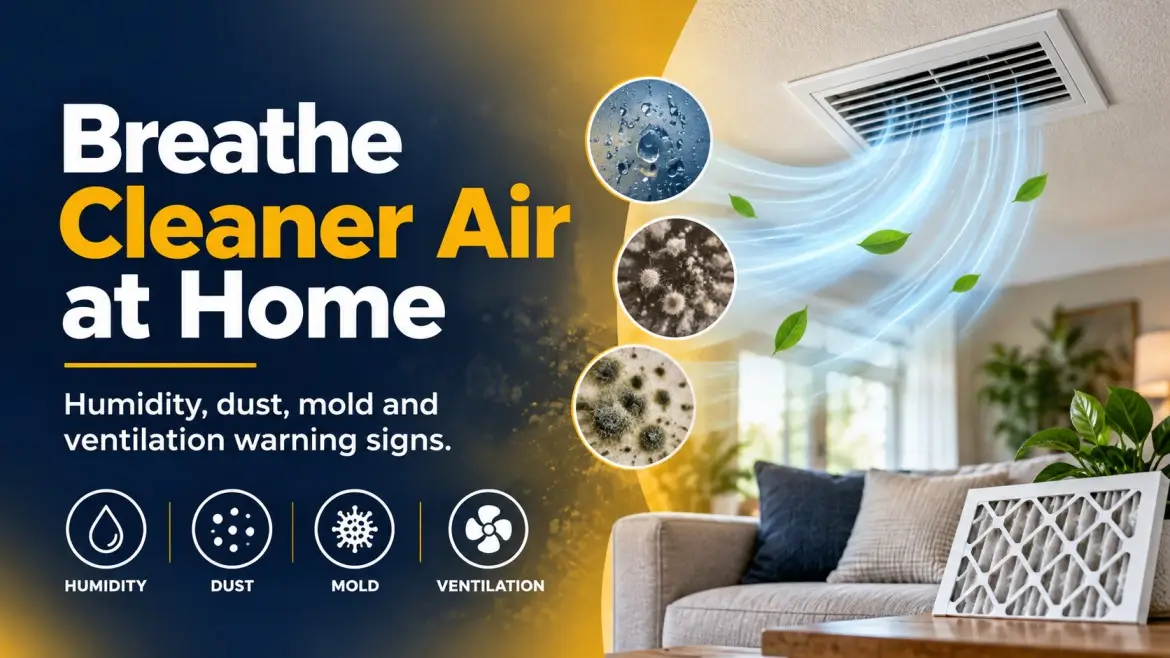
Mold in air ducts almost always points to a moisture problem in the HVAC system, not just dirty ductwork. Exposure can trigger coughing, congestion, and asthma symptoms in sensitive people. Cleaning alone rarely solves it. The moisture source has to be corrected, and moldy porous materials such as fiberglass duct liner need replacement rather than cleaning.
Key Takeaways
- Moisture control is the actual fix. The EPA advises keeping indoor relative humidity below 60 percent, ideally between 30 and 50 percent, and drying any wet materials within 24 to 48 hours.
- Porous duct materials cannot be cleaned. The EPA states that wet or moldy insulated ductwork should be removed and replaced, because cleaning will not prevent regrowth.
- Duct cleaning and mold remediation are different jobs. Cleaning removes debris. Remediation removes growth, contains the work area, and addresses the water problem behind it.
- Dark marks around a vent are often not mold. Only an expert, and sometimes a lab, can confirm what a substance actually is.
- Budget realistically. Angi’s 2026 data puts air duct mold removal at roughly $600 to $2,000, with whole HVAC system remediation running $3,000 to $10,000 depending on scope.
A musty smell that shows up every time the air conditioner kicks on is hard to ignore. So is a dark ring creeping around a ceiling vent, or an allergy season that never seems to end indoors. In Lafayette and the surrounding Acadiana parishes, those symptoms come up often enough that homeowners reasonably wonder whether mold has taken hold in the ductwork.
Sometimes it has. Often the marks turn out to be dust or staining, and the real issue is humidity the system is not removing. This guide walks through what causes duct mold, how to tell it apart from ordinary dirt, what the health research actually supports, and what separates a routine duct cleaning from genuine mold remediation. It also covers when replacement makes more sense than cleaning, and what the work typically costs.
What Causes Mold to Grow in Air Ducts?
Mold needs three things to establish itself: spores, an organic food source, and moisture. Spores are already present in every home, drifting in through doors, windows, and on clothing. Dust supplies the food. That leaves moisture as the one variable a homeowner can genuinely control, which is why the EPA describes moisture control as the key to mold control.
Excess Moisture and Condensation
Duct surfaces get cold when the air conditioner runs. When cold metal meets humid surrounding air, condensation forms, the same way a glass of iced tea sweats on a summer afternoon. Ducts routed through unconditioned attics and crawl spaces are especially exposed, since the air around them can be far warmer and wetter than the air inside the house.
Damaged, compressed, or missing duct insulation makes this worse by allowing cold spots on the duct exterior. Gaps in a vapor barrier let humid air reach surfaces that should stay dry. Inside the ducts, condensation can form when very humid return air meets chilled interior surfaces.
System behavior matters too. An air conditioner that is significantly oversized for the home tends to satisfy the thermostat quickly and shut off. Short run times cool the air but remove less moisture, which can leave a house that feels cool and clammy at the same time. Proper equipment selection depends on a load calculation that accounts for insulation, windows, air leakage, and duct performance, not square footage alone.
High Indoor Humidity in Lafayette and South Louisiana
Lafayette sits in a humid subtropical climate zone, with no meaningful dry season and dew points that regularly climb above 65 degrees from late spring into early fall. Outdoor moisture that high pushes indoor humidity up every time a door opens or a duct leaks.
The practical target is straightforward. The EPA recommends keeping indoor relative humidity below 60 percent, and ideally between 30 and 50 percent. Above 60 percent, organic surfaces with a little dust on them become viable places for mold to start.
Homes in South Louisiana often drift above that range during mild stretches in spring and fall, when temperatures are pleasant, and the air conditioner barely runs. The house is not hot, so nothing feels wrong, but the system is not dehumidifying either. A simple hygrometer, generally a $10 to $50 instrument at most hardware stores, gives you an actual number instead of a guess.
Duct Leaks, HVAC Water Leaks, and Drainage Problems
Leaks on the return side of a duct system pull unconditioned air in from wherever the ducts run. In an Acadiana attic during August, that means hot, moisture-laden air entering the system continuously. The result is a system fighting a load it was never designed to carry, and duct interiors that stay damper than they should.
Water problems inside the equipment matter just as much. A clogged condensate drain line can back up and overflow the drain pan, soaking the cabinet and anything below it. A slow roof leak above a duct run can wet insulation for months before anyone notices a ceiling stain. The EPA specifically advises keeping air conditioning drip pans clean and drain lines unobstructed as a mold prevention measure.
Timing is what decides the outcome. If wet materials are dried within 24 to 48 hours, mold in most cases will not grow. Past that window, growth becomes considerably more likely.
Dust and Organic Debris Buildup
Sheet metal itself is not food for mold. The dust that settles on it is. Household dust contains skin cells, fabric fibers, pollen, pet dander, paper fragments, and other organic material, all of which mold can consume once moisture is present.
Clean, dry metal ductwork rarely develops a mold problem. Ductwork carrying a heavy dust load and periodic condensation is a different situation. Filters that go unchanged for months, gaps around the filter slot that let unfiltered air bypass the filter entirely, and construction or renovation debris left in the system all raise the amount of organic material sitting inside the ducts.
Where Can Mold Grow in an HVAC System?
Homeowners tend to picture mold deep inside the duct runs. In practice, growth usually starts wherever moisture concentrates, and that is often closer to the equipment than to the far end of a branch duct.
Supply and Return Air Ducts, Vents, and Registers
Supply registers are among the first places growth becomes visible, because the metal grille is the coldest exposed surface in the room. Humid room air contacting that cold grille produces condensation, and the register sits in the one spot in the house you actually look at.
Return ducts collect a different set of problems. Returns located in or near bathrooms, laundry areas, or kitchens pull moisture-heavy air directly into the system. Returns in closets and hallways tend to accumulate lint and dust faster than supply runs.
Evaporator Coils, Air Handlers, and Condensate Drain Pans
The evaporator coil is the wettest part of a cooling system by design. Its job includes condensing moisture out of the air, which is why a drain pan and drain line sit beneath it. That combination of constant moisture and captured dust makes the coil, blower wheel, plenum, and drain pan the most common locations for HVAC microbial growth.
These components sit behind service panels and are not homeowner-accessible in any safe sense. Opening an air handler exposes electrical connections and moving parts, so inspection here belongs to a qualified technician.
Fiberglass Duct Liners and Insulation
Fiberglass duct liner and duct board are porous. Once mold penetrates the fibers, surface cleaning does not reach the growth inside the material. The EPA is direct about this: if insulated air ducts get wet or moldy, the insulation cannot be effectively cleaned and should be removed and replaced.
There are also no EPA-registered biocides approved for treating porous duct materials. That is not a technicality. It means no chemical treatment can be applied to a contaminated fiberglass liner and reasonably be expected to prevent regrowth. The EPA, NADCA, and NAIMA all recommend replacing wet or moldy fiberglass duct material.
How Mold Spreads to Other Areas of the Home Once Established
A duct system is a distribution network. When the blower runs, it moves whatever is inside the ducts into every room the system serves. Growth that begins at a wet drain pan can seed spores throughout the house over weeks of normal operation.
If you have good reason to believe the system is contaminated, avoid running it until it has been inspected. That single decision limits how far the problem travels. It is also worth remembering that duct mold is frequently a symptom of a wider building moisture issue, such as a roof leak, plumbing leak, or crawl space problem, rather than a self-contained HVAC failure.
What Are the Signs of Mold in Air Ducts?
Musty or Earthy Odors When the HVAC Runs
The most telling pattern is timing. If a musty, earthy smell appears within a minute of the blower starting and fades after the system shuts off, the odor source is likely inside the airstream. A musty smell that lingers constantly, regardless of whether the system is running, points more toward a room, closet, or crawl space.
Heat pumps sometimes produce a distinct sour odor during the first few minutes of operation, particularly on changeover between heating and cooling. This is commonly linked to buildup on the coil and does not automatically indicate mold, though it does indicate the coil deserves a look.
Visible Mold or Dark Growth Around Vents
Growth on or immediately around a register grille is worth investigating, especially if it has texture rather than lying flat like a film of dust. Look for clustered patches with irregular edges, sometimes fuzzy, in shades of black, green, grey, brown, or white.
Much of a duct system is not accessible for visual inspection. The EPA makes a useful point here: if a service provider tells you mold exists in your system, ask them to show it to you.
Allergy and Respiratory Symptoms That Worsen Indoors
Pay attention to the pattern rather than the symptom itself. Symptoms that improve within hours of leaving the house and return after a few hours back inside suggest something in the indoor environment. Year-round symptoms, rather than symptoms tied to pollen season, point in the same direction.
Symptoms alone never confirm mold. Dust mites, pet dander, pollen tracked indoors, and cleaning products produce overlapping complaints. What symptoms do justify is a closer look at the system and the home’s moisture conditions.
How Can You Tell Mold From Dust in Air Vents?
What Mold Typically Looks and Smells Like
Mold usually has dimension. It sits on the surface with visible texture, forms in irregular patches rather than an even coating, and often follows a moisture pattern such as a drip line, a seam, or a cold spot. Colors vary widely, and color alone identifies nothing useful.
Odor is the more reliable signal. Mold produces volatile compounds with a characteristic musty, earthy, basement-like smell. Dust has essentially no odor.
How Dust and Dirt Differ From Mold
Dust accumulates as a relatively even grey or tan layer, concentrated on the leading edges of grille louvers where air passes. It wipes away cleanly with a damp cloth and leaves the surface underneath unchanged. It does not smell.
A useful field distinction: dust sits on a surface, while mold grows into it. If a spot wipes off completely and the surface below is clean and dry, you are almost certainly looking at dirt.
| Observation | Likely dust or staining | Possibly mold |
|---|---|---|
| Texture | Flat, even film | Raised, fuzzy, or speckled |
| Pattern | Evenly distributed on grille edges | Irregular patches, often near a seam or damp spot |
| Odor | None | Musty or earthy |
| After wiping | Removes fully, surface clean | Discoloration remains or returns |
| Location clue | Any vent in the house | Vents near baths, laundry, or the air handler |
Why Dark Spots Around a Vent Are Not Always Mold
The dark halo on the ceiling around a supply register is one of the most misdiagnosed marks in a house. It is frequently soot and fine particulate, from candles, cooking, fireplaces, or vehicle exhaust, deposited on the ceiling as conditioned air washes across it. Installers sometimes call this ghosting or air washing. It is a filtration and airflow issue, not a biological one.
A visual guess is not a diagnosis. The EPA notes that although a substance may look like mold, a positive determination can be made only by an expert and may require laboratory analysis to confirm. For around $50, some microbiology laboratories will analyze a sample lifted on a strip of clear household tape and tell you whether it is mold or something that merely resembles it.
What Are the Health Risks of Mold in Air Ducts?
Health information about mold is worth handling carefully, in both directions. Some marketing overstates the danger. Some homeowners dismiss real symptoms. The evidence-based position is that damp and moldy environments may cause a range of health effects, or none at all, depending on the person.
Allergic Reactions and Allergy Flare-Ups
Allergic reactions to mold are common and can be immediate or delayed. Typical complaints include a stuffy or runny nose, sneezing, and red or itchy eyes. For someone with an existing mold allergy, a contaminated duct system means repeated exposure every time the blower cycles.
Coughing, Wheezing, and Other Respiratory Symptoms
In 2004, the Institute of Medicine found sufficient evidence linking indoor mold exposure to upper respiratory tract symptoms, cough, and wheeze in otherwise healthy people. That finding is important because it applies to people without any diagnosed allergy or respiratory condition.
Asthma Symptoms and Attacks
The same review found sufficient evidence linking indoor mold exposure to asthma symptoms in people who already have asthma. Mold can act as a trigger, and people with asthma or a mold allergy may have severe reactions. In a home where someone manages asthma, unresolved duct moisture is worth treating as a priority rather than a maintenance item.
Sinus, Throat, and Skin Irritation
Mold exposure can irritate the eyes, skin, nose, throat, and lungs in both mold-allergic and non-allergic people. Reported symptoms include a sore throat, burning eyes, and skin rash. Symptoms beyond the allergic and irritant categories are not commonly reported from inhaling mold indoors.
Who May Be More Sensitive to Mold Exposure?
Certain groups warrant more caution. People with asthma, people allergic to mold, individuals with chronic lung disease, and people who are immune-compromised face higher risk, and those with weakened immunity or chronic lung conditions may develop lung infections from mold exposure.
If anyone in the household has persistent symptoms you suspect are connected to the home, talk to a healthcare professional. An HVAC company can identify and correct moisture and airflow problems. Diagnosing a medical condition is outside that scope.
How Is Mold in Air Ducts Inspected?
Inspecting Vents, Registers, and Accessible Ductwork
A reasonable inspection starts where the evidence is visible. Registers come off so the boot and the first section of duct behind them can be examined. Accessible duct runs in attics, garages, and crawl spaces get checked for damaged insulation, disconnected joints, crushed flex duct, and water staining on the exterior.
Register-level findings tell you something, but not everything. A clean grille does not rule out growth further inside the system.
Checking the Air Handler, Evaporator Coil, and Drain Pan
This is the part of the inspection that usually settles the question, because it is where moisture concentrates. A technician opens the equipment to look at the evaporator coil, blower wheel, drain pan, supply plenum, and the condensate drain line and its trap.
Standing water in the pan, slime or biofilm in the drain, a coil packed with debris, or a saturated filter cabinet all point to conditions that support growth. Static pressure and airflow readings can also reveal restrictions that contribute to coil icing and abnormal moisture.
Identifying the Moisture Source
This is the step that determines whether the problem returns. Cleaning a duct system without finding the water source produces a temporary result. The EPA is explicit that if the conditions causing mold growth are not corrected, growth will recur.
Sources worth ruling out include duct leakage in humid spaces, failed or missing duct insulation, condensate drainage problems, roof and plumbing leaks above duct runs, crawl space moisture, oversized equipment with short run times, blocked returns, and indoor humidity that stays above 60 percent.
When Mold Testing or Professional Inspection Is Appropriate
This may be the most misunderstood part of the process. The CDC does not recommend routine mold testing, and there are no health-based standards for mold in indoor air. Spore counts cannot be interpreted in terms of health risk, so a number on a report does not tell you whether anyone will get sick.
The practical guidance from public health agencies is consistent: if you can see mold growth, sampling is usually unnecessary, because you already know it needs to be removed and the moisture corrected. Testing earns its cost in narrower situations, including confirming whether an unidentified substance is mold, investigating suspected hidden growth when odors and symptoms persist without a visible source, documenting conditions for insurance or a real estate transaction, and verifying results after remediation.
Professional inspection is a different matter and is usually worth it whenever the equipment interior needs to be evaluated, when odors persist, or when growth keeps coming back after cleaning.
Air Duct Cleaning vs. Mold Remediation: What Is the Difference?
These two services get marketed as though they were interchangeable. They are not, and confusing them is one of the more expensive mistakes a homeowner can make.
What Routine Air Duct Cleaning Removes
Duct cleaning is a debris removal service. Using agitation tools and a negative-pressure vacuum, a contractor pulls settled dust, lint, pet hair, and construction debris out of the duct runs and registers. Some providers include the blower, coil, and drain pan.
It has a legitimate role. The EPA identifies substantial visible mold on hard-surface ducts, vermin infestation, and ducts clogged with debris that is actually being released into living space as conditions worth considering cleaning for. The same guidance notes that duct cleaning has never been shown to prevent health problems, and that studies have not conclusively demonstrated that particle levels in homes go down after cleaning.
What Professional Mold Remediation Addresses
Remediation is a containment and removal process. The affected area is isolated so spores do not migrate during the work, negative air pressure and HEPA filtration are used, contaminated porous materials are removed and discarded rather than cleaned, and the moisture source is corrected as part of the job.
The scale distinction most guidance uses is around 10 square feet of growth. Larger areas, or contamination involving the HVAC system, generally warrant a professional remediation approach.
| Routine duct cleaning | Mold remediation | |
|---|---|---|
| Goal | Remove settled dust and debris | Remove growth and stop recurrence |
| Containment | Not typically required | Containment and negative air pressure |
| Porous materials | Cleaned or left in place | Removed and replaced |
| Moisture source | Not addressed | Central to the scope |
| Verification | Visual | Visual, plus clearance testing in some cases |
Why Cleaning Alone May Not Stop Mold Growth
Cleaning removes what is there today. It does not change the conditions that put it there. If a condensate drain still backs up, if return ducts still pull humid attic air, or if indoor humidity still sits above 60 percent, growth returns on the same schedule it did before.
Mold that comes back after cleaning is information, not bad luck. It means the water source was never found. Prior to any cleaning, retrofitting, or replacing of ductwork, the underlying cause has to be corrected, or the problem will likely recur.
Can You Remove Mold From Air Ducts Yourself?
What Homeowners Can Safely Address
There is a limited set of things a homeowner can reasonably handle. Register grilles can be unscrewed, washed with detergent and water, dried completely, and reinstalled. Small areas of growth on hard, non-porous surfaces, generally under about 10 square feet, can be cleaned with detergent and water and dried thoroughly.
If you do that work, wear protective equipment: gloves, goggles, and an N-95 respirator. Skip the bleach. Public health guidance does not recommend using biocides such as bleach to remove mold, and bleach on a porous surface leaves the growth inside the material while removing the stain that told you it was there.
Everything else on the safe list is preventive rather than remedial. Change the filter, keep supply and return vents unblocked, monitor indoor humidity with a hygrometer, and watch for water around the air handler.
Why DIY Cleaning Can Spread Contaminants
Aggressive cleaning inside ductwork without proper equipment tends to make things worse. Brushing or vacuuming duct interiors with a standard shop vacuum aerosolizes spores and blows fine particulate straight back into the room through the vacuum exhaust. Running the HVAC system during or after a cleanup attempt distributes whatever was disturbed to every room on the system.
Reaching into a duct run also means working near the equipment. Air handler cabinets contain live electrical connections and a blower assembly. That is not a place to be improvising with a flashlight and a brush.
When Professional Remediation Is the Safer Option
Bring in a professional when the growth covers more than about 10 square feet, when porous materials such as fiberglass liner or duct board are contaminated, when growth is inside sealed equipment, when contamination followed sewage backup or flooding, when someone in the home has asthma or a compromised immune system, or when the problem has already returned after a previous cleaning.
What Happens During Professional Air Duct Mold Remediation?
Scope varies by contractor and by the extent of contamination, but a properly run project generally follows a recognizable sequence.
Inspection and Moisture Assessment
Work starts with defining the boundaries of the problem and finding the water. This includes inspecting duct runs and equipment interiors, taking moisture readings, checking condensate drainage, and evaluating the building conditions feeding humidity into the system. The findings determine everything that follows.
Containment and Protection of the Home
The work area is isolated so the process does not distribute spores through the house. That typically means sealing off the affected zone, covering registers not being worked on, establishing negative air pressure with HEPA-filtered air scrubbers, protecting floors and furnishings, and keeping the HVAC system shut down during the work.
HEPA Vacuuming and Mechanical Cleaning
Hard surfaces are cleaned mechanically rather than chemically. Brushes and air whips agitate the surfaces while a high-powered vacuum with HEPA filtration captures what is dislodged. Registers, boots, plenums, and accessible equipment components are cleaned individually.
Treatment or Replacement of Contaminated Materials
Here, the material type decides the approach. Bare sheet metal can be cleaned and, where appropriate, treated with an EPA-registered product labeled for that use. Contaminated porous materials come out. Wet or moldy fiberglass liner, duct board, and flex duct inner liner are removed and replaced, because no chemical treatment reliably prevents regrowth in porous material.
Encapsulating sealants deserve a note of caution. Most organizations concerned with duct cleaning, including the EPA, do not currently recommend routine use of sealants to encapsulate contaminants in ductwork. Sealants should never be applied over a wet liner, over actively growing mold, or over debris.
Final Inspection and Verification
The project closes with a walkthrough of the cleaned system, confirmation that the moisture source has been corrected, and in some cases post-remediation clearance testing. Verification testing typically adds a few hundred dollars but is the only objective confirmation that the work achieved what it was supposed to.
When Does Moldy Ductwork Need to Be Replaced?
Mold in Metal vs. Flexible vs. Fiberglass-Lined Ducts
The material determines whether cleaning is even a viable option.
Bare sheet metal is non-porous and generally cleanable. Growth sits on the surface, mechanical cleaning reaches it, and appropriate treatment can be applied to the hard surface.
Fiberglass-lined duct and duct board are porous. Mold penetrates the fibers, cleaning does not prevent regrowth, and no EPA-registered biocides exist for porous duct materials. Wet or moldy fiberglass duct material should be replaced.
Flexible duct falls in between and usually lands on the replacement side. It has a thin plastic inner liner over a wire helix wrapped in insulation. The corrugated interior traps debris, the liner tears easily during aggressive cleaning, and once the insulation layer is wet or contaminated, cleaning is not a realistic option. Flex duct is also comparatively inexpensive to replace.
When Cleaning Is Possible and When Replacement Is Better
Cleaning tends to be the reasonable path when the ducts are metal, the affected area is limited, the ductwork is otherwise sound and properly sized, and the moisture source has been identified and corrected.
Replacement makes more sense when porous materials are contaminated, when growth is extensive across the system, when the duct system is already leaking badly or poorly designed, when contamination has returned after a previous cleaning, or when the ducts are old enough that repeated cleaning costs approach the cost of new ductwork. Replacement also creates the opportunity to correct sizing, sealing, and insulation problems that were contributing to condensation in the first place.
How Much Does Air Duct Mold Removal Cost?
National figures are useful for setting expectations and useless as a quote. Prices vary by region, by the extent of contamination, and by what turns out to be causing the moisture. Treat the numbers below as a starting frame for budgeting.
Mold Inspection and Testing Costs
Professional mold testing generally runs in the range of $300 to $700 depending on scope and the number of samples collected. Post-remediation clearance testing typically adds a few hundred dollars.
For simply identifying whether a substance is mold, the EPA notes that some microbiology laboratories will analyze a tape-lift sample for around $50. In many cases, a thorough visual inspection and moisture assessment is enough to establish scope, without any sampling at all.
Mold Remediation and Duct Cleaning Costs
According to Angi’s 2026 cost data, removing mold from air ducts typically costs $600 to $2,000. Routine air duct cleaning, as a preventive service rather than remediation, generally runs $275 to $500.
When contamination extends through the HVAC system rather than just the duct runs, the range moves up considerably, to roughly $3,000 to $10,000 depending on system type and how far the contamination has spread. Furnace and air handler remediation falls toward the lower part of that band, while central air conditioning systems with extensive duct networks fall toward the upper part. Across all locations in a home, the national average for mold remediation sits around $2,368, with most projects landing between $1,200 and $3,750.
Repairing the moisture source is a separate line item. A condensate drain clearing is a modest repair. A duct replacement, a roof repair, or a system that needs to be resized is not.
Factors That Affect the Total Cost
- Extent of contamination and how many duct runs are affected
- Duct material, since porous materials require replacement rather than cleaning
- Whether the air handler, coil, and blower are involved
- Accessibility of the ductwork, with tight crawl spaces and attics adding labor
- The cost of correcting the underlying moisture source
- Containment requirements and whether clearance testing is included
- Whether any building materials such as drywall or insulation need replacement
One caution when comparing bids. A noticeably cheaper quote often reflects a narrower scope, such as skipping containment, omitting the moisture repair, or leaving out post-remediation verification. Ask each contractor to specify what is included rather than comparing totals alone.
How Do You Prevent Mold From Returning to Your Air Ducts?
Keep Indoor Humidity Under Control
Aim for indoor relative humidity between 30 and 50 percent, and below 60 percent at minimum. Measure it rather than estimating, since a house can feel fine at 65 percent.
In this climate, controlling humidity often takes more than the thermostat. Options include whole-home dehumidification, ventilation equipment that manages incoming air, and correcting the duct and airflow problems that keep a system from dehumidifying properly. Fontenot’s indoor air quality services include humidity control, filtration, purification, and ventilation equipment, along with air testing for contaminants.
Also vent the moisture producers. Bathroom fans, kitchen exhaust, and clothes dryers should all discharge outdoors, not into an attic.
Fix HVAC and Duct Leaks Promptly
Sealing return-side leaks is one of the higher-value corrections available in a humid climate, because those leaks pull moisture into the system continuously. Damaged or missing duct insulation should be repaired for the same reason, since bare duct in an attic invites condensation.
For water events, the 24- to 48-hour window governs. Anything wet that dries within that period usually will not grow mold. Beyond it, the odds shift.
Keep Condensate Drains and Drain Pans Clear
The EPA lists clean drip pans and clear, freely flowing drain lines among its standard mold prevention measures, and it is one of the most consistently neglected items on a residential system.
Watch for water pooling around the air handler, a system that shuts down on its own because a float safety switch tripped, or visible sludge in the drain pan. Condensate drain service is standard on a professional maintenance visit.
Replace Filters and Schedule Routine HVAC Maintenance
Filters generally need changing every one to three months depending on household conditions, pets, and allergy sensitivity. A clogged filter restricts airflow, which can drive coil temperatures down toward icing and create abnormal moisture inside the equipment.
Beyond filters, seasonal service is what catches drainage problems, refrigerant issues, and airflow restrictions before they turn into moisture problems. Fontenot’s HVAC maintenance plan includes two visits per year to review, clean, test, and maintain the system. In a climate this humid, two visits a year is a reasonable rhythm.
When Should You Call a Local HVAC Professional for Mold?
When Mold Is Visible or Keeps Returning
Confirmed growth on hard duct surfaces, or growth that reappears after a previous cleaning, warrants a professional evaluation. Recurrence in particular is a signal that the water source was never identified, and no amount of additional cleaning will change that.
When Porous Duct Materials Are Contaminated
If your system uses fiberglass-lined duct, duct board, or flex duct, and the material is wet or shows growth, cleaning is not the answer. That material needs to come out and be replaced, which is HVAC work rather than a cleaning service.
When Mold-Related Symptoms Persist
When people in the home have ongoing respiratory or allergy symptoms that improve away from the house, it is worth having the system and the home’s moisture conditions evaluated, even without visible growth. Much of a duct system cannot be seen without opening it. Pair that with a conversation with a healthcare provider about the symptoms themselves.
Frequently Asked Questions About Mold in Air Ducts
How Long Does Air Duct Mold Removal Take?
Scope decides the timeline. A limited cleaning of accessible hard-surface ductwork is often a one-day job. A project involving containment, replacement of contaminated flex duct or liner, and correction of the moisture source commonly runs several days. Add time if clearance testing is part of the scope, since results take a day or more to come back.
Is Air Duct Cleaning Enough to Remove Mold?
Not on its own. Cleaning removes what is present on hard surfaces, but it does not address porous materials that mold has penetrated, and it does not correct the moisture that allowed growth. The EPA is clear that if the conditions causing mold growth are not corrected, growth will recur.
Should Moldy Air Ducts Be Replaced?
It depends on the material. Bare sheet metal ducts can usually be cleaned and treated. Insulated ducts whose insulation has gotten wet or moldy should be removed and replaced, since that material cannot be effectively cleaned. Flexible duct with a contaminated inner liner or wet insulation is also usually replaced rather than cleaned.
Can Mold Grow in Air Ducts Without Being Visible?
Yes. Most of a duct system is not accessible for visual inspection, and growth frequently starts at the evaporator coil, drain pan, or inside plenums behind service panels. A persistent musty odor when the system runs, with no visible source in the living space, is a reasonable prompt for a professional inspection.
How Can I Stop Mold From Coming Back?
Control the moisture. Keep indoor relative humidity between 30 and 50 percent, seal duct leaks and repair damaged duct insulation, keep the condensate drain line and pan clear, dry any water intrusion within 24 to 48 hours, change filters on schedule, and keep up with seasonal maintenance. If growth returns despite all of that, the water source has not been found yet.
Conclusion
Mold in air ducts is a moisture problem wearing a biology costume. The growth is the visible part. The condensation, the duct leak, the backed-up drain line, or the indoor humidity sitting above 60 percent is the part that actually needs fixing. That is why cleaning alone so often produces a result that lasts one season.
Three things are worth carrying away. First, confirm what you are actually looking at, because dark marks around a vent are frequently dust or soot rather than mold. Second, understand your duct material, since bare metal can usually be cleaned while wet, while moldy porous material needs replacement. Third, insist that whoever does the work identifies and corrects the moisture source, or you will be having the same conversation again next year.
If you have noticed a musty smell when the system runs, visible growth around a vent, or allergy symptoms that ease when you leave the house, a professional inspection is the sensible next step. Fontenot’s Air Conditioning & Heating has served Lafayette, Broussard, Youngsville, and the surrounding Acadiana communities since 2007 and can evaluate your ductwork, air handler, coil, and condensate drainage, test your air for contaminants, and identify the moisture conditions behind the problem.
Call (337) 789-6070 to schedule a duct and indoor air quality inspection. Services are available seven days a week from 7 a.m. to 8 p.m., and you can learn more about the full range of heating, cooling, and air quality services available across Acadiana.