Signs You Need AC Replacement in Lafayette, LA
Search
Recent Posts

Tags
Follow Us on
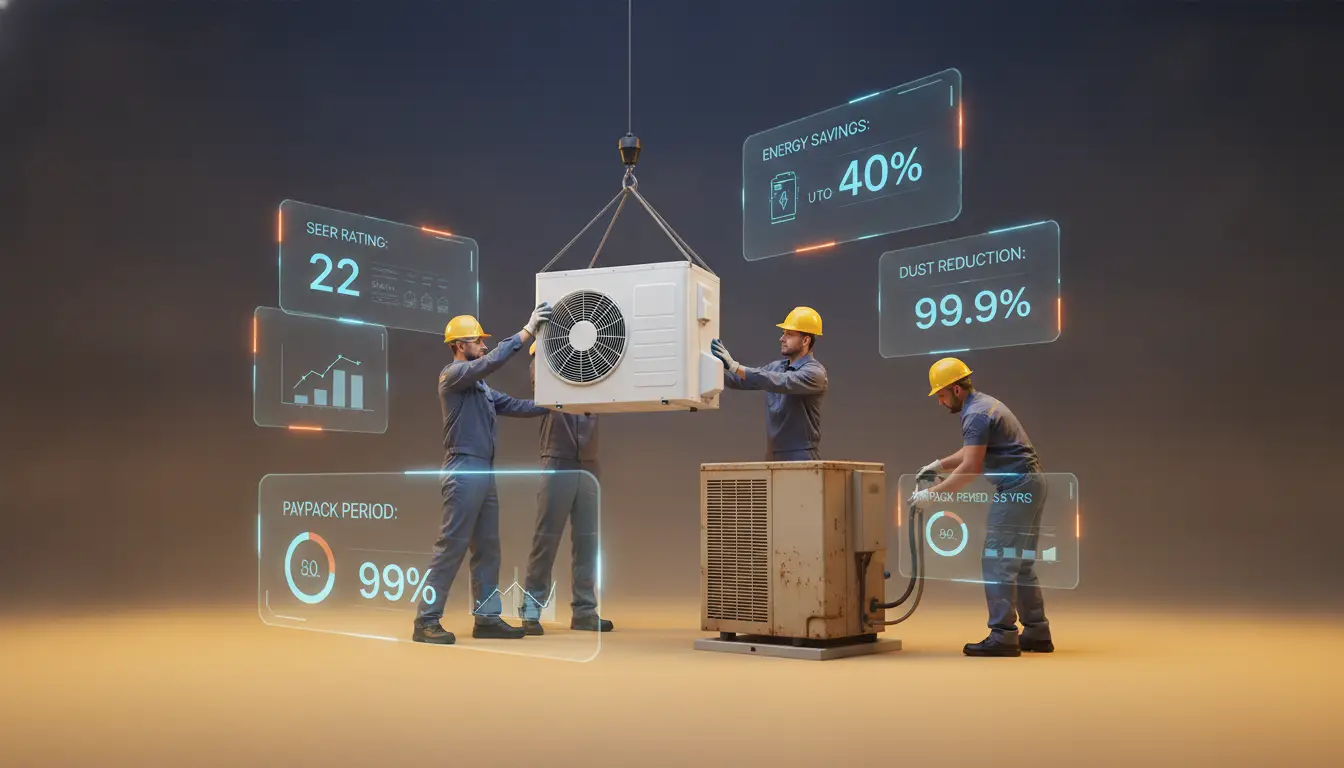
The most common signs you need AC replacement include a system over 10 to 15 years old, repeated breakdowns, rising energy bills, R-22 refrigerant use, uneven cooling, and repair costs exceeding 50% of a new unit’s price. In Lafayette’s intense heat and humidity, these warning signs often appear sooner than national averages suggest.
Key Takeaways
- AC systems in Lafayette, LA, typically wear out faster than the national average due to extended cooling seasons that can run 8 to 9 months per year.
- If your repair estimate exceeds 50% of what a new system costs, replacement almost always saves you more money over the next five years.
- R-22 refrigerant systems are no longer legal to produce or import in the U.S. A leak means expensive workarounds or full replacement.
- Replacing before your AC fails completely gives you time to compare systems, get accurate quotes, and avoid emergency installation fees.
- Modern high-efficiency systems with SEER2 ratings of 15 or above can cut cooling costs by 20 to 40% compared to older, failing equipment.
Your air conditioner is working harder every day, but it’s not cooling like it used to. You’ve noticed the electric bills climbing, heard new noises from the unit, and maybe called a repair tech twice this year already. At some point, those repair invoices stop being a fix and start being a warning.
As a homeowner in Lafayette, you’re dealing with one of the most demanding cooling climates in the entire country. Your AC doesn’t get a quiet off-season. It runs hard from spring through late fall, and that constant workload shortens its life faster than it would in a cooler region. Understanding the difference between a fixable problem and a failing system can save you thousands.
In this guide, you’ll find every major warning sign that points toward AC replacement, a clear framework for deciding between repair and replacement, and what to expect from a new system installation. Whether you’re in Lafayette, Broussard, Scott, Youngsville, Carencro, Maurice, or Milton, the information here applies directly to your home.
How Long Does an Air Conditioner Last in Lafayette, LA?
Average Lifespan of Residential AC Systems
The average lifespan of a residential central air conditioner is 15 to 20 years under normal operating conditions. However, that range assumes a moderate climate with a shorter cooling season. According to the U.S. Department of Energy, proper maintenance and sizing play a significant role in reaching the upper end of that range.
How Lafayette’s Long Cooling Season Accelerates AC Wear
Lafayette, LA sits in USDA Hardiness Zone 9a. Summer temperatures regularly reach 95 to 100 degrees Fahrenheit, and the humidity index pushes the heat index even higher. More critically, the cooling season here runs roughly 8 to 9 months per year compared to 4 to 5 months in cooler states.
That extended runtime means more compressor cycles, more refrigerant pressure stress, and faster wear on electrical components. An AC that might last 18 years in Ohio may reach the end of its useful life in just 12 to 14 years in south Louisiana.
Factors That Affect AC Longevity
- Installation quality: a poorly sized or incorrectly installed system fails sooner
- Annual maintenance history: skipping tune-ups accelerates part wear
- Refrigerant type: R-22 systems face mounting and servicing challenges
- Duct condition: leaking ducts force the system to overwork
- Filter maintenance: restricted airflow causes overheating and early compressor failure
Signs Age Is Affecting Your AC’s Performance
Once your system crosses the 10-year mark in a climate like Lafayette’s, age-related decline typically becomes visible. You may notice longer run times, higher utility bills, even in mild weather, and components that need attention more than once per season. These early signs often precede the larger failures described below.
Top Signs You Need AC Replacement
Is Your Air Conditioner More Than 10 to 15 Years Old?
System age is the single most reliable indicator that replacement is coming. A unit that’s 10 to 12 years old in Lafayette is already in the later stages of its usable life. Beyond 15 years, most systems are operating at significant losses in both efficiency and reliability. Even if it’s still running, it likely costs you far more per month than a modern replacement would.
Does Your System Use Outdated R-22 Refrigerant?
The U.S. Environmental Protection Agency (EPA) banned the production and import of R-22 refrigerant as of January 1, 2020. If your system was installed before 2010, it almost certainly uses R-22. Any refrigerant leak in an R-22 system now requires either expensive reclaimed refrigerant or full system replacement. This alone can make repair economically impractical.
Are Your Energy Bills Continuing to Rise?
A gradual increase in your monthly electricity bill, without a change in usage habits, almost always signals declining system efficiency. As components age and wear, the compressor works harder and longer to achieve the same cooling output. According to ENERGY STAR, a 10-to-15-year-old air conditioner can use up to 50% more electricity than a modern high-efficiency model to produce the same amount of cooling.
Are Frequent Repairs Becoming Expensive?
One repair per year may be normal for an aging system. Two or three repairs in a single cooling season are a red flag. Beyond the direct cost, repeated breakdowns suggest that multiple components are failing simultaneously. This pattern is a reliable sign that the system is nearing total failure, and the next repair call may be the most expensive one yet.
Does Your Home Have Uneven Cooling?
If some rooms feel comfortable while others stay warm no matter what you set the thermostat to, the problem may not be your ductwork. Uneven cooling across a home often points to a compressor losing capacity or a system that’s no longer powerful enough to maintain consistent pressure throughout the duct system. Duct sealing may help in some cases, but when the issue follows a pattern of other warning signs, the system itself is usually the root cause.
Is Warm Air Coming From Your Vents?
Warm air blowing from supply vents when the AC is running is one of the more obvious signs that something has gone seriously wrong. Common causes include a failed compressor, a refrigerant leak, or a frozen evaporator coil. While some of these issues are repairable, their likelihood increases sharply in older systems, and the cost to fix them often tips the scale toward replacement.
Is Airflow Weak or Restricted at the Vents?
Weak airflow, even after changing the air filter, often points to a failing blower motor, a collapsing duct, or a compressor that’s lost its ability to move refrigerant efficiently. Over time, weak airflow reduces cooling capacity throughout the home and makes every room feel less comfortable, especially during peak summer temperatures in the 90s.
Is Your AC Short-Cycling or Turning On and Off Frequently?
Short cycling is defined as when an air conditioner turns on, runs briefly, shuts off, and then starts again within a few minutes. This cycle is hard on the compressor, wastes electricity, and prevents the system from ever completing a full dehumidification pass. It’s often caused by an oversized system, low refrigerant, or a failing compressor. In older units, it typically indicates that a major component has reached the end of its life.
Does Your AC Frequently Trip the Circuit Breaker?
An air conditioner that trips the circuit breaker once may have experienced a power surge. One that does it repeatedly is drawing more electricity than it should, often because a motor or compressor is failing and straining the electrical circuit. This is a safety concern in addition to a performance issue, and it should be evaluated by a certified HVAC technician without delay.
Are There Strange Noises Coming From the Unit?
Normal air conditioners operate with a steady, low hum. Grinding, banging, squealing, rattling, or clicking sounds during operation all point to specific mechanical problems. Grinding often means a motor bearing is failing. Banging suggests a loose or broken component inside the unit. Squealing can indicate a belt or motor issue. Each of these noises, especially in an older system, typically points to a repair that may not be cost-effective to complete.
Are Unpleasant Odors Present During Operation?
A musty smell from your vents usually indicates mold or mildew growth inside the air handler or ductwork. A burning odor may point to overheating electrical components. In either case, the odor is a symptom, not the core problem. Older systems are more prone to these issues because worn components generate more heat and deteriorating insulation breaks down over time.
Has Your AC Lost Control of Indoor Humidity?
One function of a properly working AC system is dehumidification. As the refrigerant absorbs heat from the air, it also pulls moisture out. When a system loses this ability, it’s often because the refrigerant charge is off, the evaporator coil is deteriorating, or the system is short-cycling and never completing its humidity removal cycle. In Lafayette’s humid subtropical climate, poor humidity control makes a home feel uncomfortable even when the temperature seems acceptable.
Are There Refrigerant Leaks or Low Refrigerant Levels?
Refrigerant does not get used up during normal operation. If your technician finds that refrigerant levels are low, there is a leak somewhere in the system. Sealing small leaks and recharging is sometimes viable in newer systems. In older units, especially those using R-22, refrigerant leaks are one of the clearest signals that replacement is the more sensible path forward.
Are Your Evaporator Coils Freezing Up?
A frozen evaporator coil stops airflow completely and can damage the compressor. Freezing typically results from low refrigerant, a blocked filter, or a failing blower motor. At the same time, the immediate issue may be fixable, repeated freeze-ups in an aging system point to underlying problems that tend to worsen with each season.
Are There Signs Your AC Compressor May Be Failing?
The compressor is the most expensive component in an air conditioning system. Signs of compressor trouble include hard starting (the system struggles to turn on), loud clicking or banging when it cycles, and warm air despite the system running. Compressor replacement costs can range from $1,500 to $2,500 or more. In most cases, when the compressor fails in a system over 10 years old, replacing the entire system is the more cost-effective decision.
What Are the Warning Signs Your AC Could Fail Soon?
Increasing Frequency of Breakdowns
A system that breaks down once every year or two is showing normal wear. A system that breaks down multiple times within a single summer is signaling a more systemic problem. Each failure puts additional strain on the remaining components, which accelerates the next failure. Think of it as a chain reaction: once one major part goes, others follow quickly.
Longer Cooling Cycles
When an AC takes significantly longer to reach the set temperature than it did in previous years, it means the system is losing cooling capacity. The compressor is working harder, the refrigerant circuit is likely losing efficiency, and the overall output is declining. Longer cycles also mean longer run times, which further accelerates wear.
Reduced Comfort During Peak Summer Temperatures
Can you remember when your home felt noticeably cooler and more comfortable on a 98-degree day? If your current system struggles to keep up during the hottest afternoons, even when nothing seems mechanically wrong, declining efficiency is the likely cause. This pattern worsens each season as the system continues to age.
Declining Performance Despite Recent Repairs
If your AC still underperforms after a technician has serviced it and addressed specific problems, that’s a strong signal that the core issue is systemic decline rather than a fixable part failure. Repairs restore a degraded system to a slightly better version of itself; they do not restore it to like-new performance when the underlying equipment has aged past its useful life.
AC Repair vs. Replacement: How Do You Decide?
This is the most common question homeowners face, and the answer isn’t always clear. Here’s a structured way to approach it.
What Is the Rule of 5000?
The Rule of 5000 is a straightforward calculation used by HVAC professionals: multiply the age of the system (in years) by the estimated repair cost (in dollars). If the result exceeds 5,000, replacement is typically the better financial choice.
Example: Your system is 12 years old. The repair estimate is $500. Multiply 12 by 500, which equals 6,000. That exceeds 5,000, so replacement is likely the smarter investment in this case.
When Do Repair Costs Exceed 50% of Replacement Value?
A related benchmark: if a single repair costs more than 50% of what a new system would cost installed, replacement is almost always the better long-term decision. A new system comes with a manufacturer’s warranty, modern efficiency, and a full service life ahead of it. A repaired old system still has all its remaining aging components intact.
Repair vs. Replacement: Quick Reference
| Factor | Repair Makes Sense | Replacement Is Better |
| System age | Under 10 years | 10+ years old |
| Repair cost | Under 50% of replacement | 50%+ of replacement cost |
| R-22 refrigerant | No R-22 involved | System uses R-22 |
| Breakdown frequency | First or second repair | Repeated breakdowns |
| Efficiency rating | SEER2 close to current models | Low SEER, high energy bills |
| Comfort issues | Isolated problem | Whole-home uneven cooling |
When Does Repairing Your AC Make Sense?
Repair makes financial sense when the system is under 10 years old, the repair is a single isolated issue, the cost is well under 50% of replacement, and the system has been properly maintained. A young, well-maintained system that loses a capacitor or a contactor is a candidate for repair, not replacement.
When Is Replacement the Better Long-Term Investment?
Replacement makes sense when the system is 10 or more years old in the Lafayette climate, repair costs are climbing, the system uses R-22 refrigerant, or breakdowns are becoming a seasonal pattern. The long-term savings on energy bills alone often offset a significant portion of the replacement cost within three to five years.
Should You Replace Your AC Before It Stops Working?
What Are the Risks of Waiting for Total System Failure?
Waiting until your AC stops completely puts you in a reactive position. You lose the ability to compare quotes from multiple contractors. You lose the flexibility to schedule installation during a convenient time. And in Lafayette’s summer heat, you face the real discomfort and potential health risk of days without cooling while waiting for parts and scheduling a crew.
What Are the Benefits of Planning a Replacement in Advance?
A planned replacement gives you time to research systems, compare SEER2 efficiency ratings, get multiple quotes, and choose the right contractor without pressure. You can also plan around your budget and potentially time the purchase to take advantage of manufacturer rebates or utility company incentives for high-efficiency equipment.
Do Emergency Replacements Usually Cost More?
Yes. When a system fails in the middle of a heat wave, contractors are at peak demand. Emergency call-out fees apply. Equipment that’s in stock gets installed quickly, but premium pricing follows. A homeowner who plans ahead and schedules a replacement during a slower period, such as early spring or late fall, often saves several hundred dollars on total installation costs.
What Are the Hidden Costs of Keeping an Old Air Conditioner?
Higher Monthly Utility Bills
An aging AC system uses more electricity to deliver less cooling. That gap widens each year. According to ENERGY STAR, upgrading from a system with a SEER rating of 9 to a modern unit with a SEER rating of 16 or higher can reduce annual cooling costs by 30 to 40%. In Louisiana, where cooling costs are high, that difference adds up to hundreds of dollars per year.
Frequent Emergency Repair Expenses
Each emergency repair call typically costs between $150 and $600 or more, depending on the component. Three emergency calls in a year can cost as much as a significant portion of a new system’s installation price, with nothing to show for it except a marginally extended life in a system still headed for failure.
Reduced Home Comfort
An underperforming system affects your quality of life directly. Inadequate humidity control, rooms that never cool down properly, and inconsistent temperatures create a less livable home environment. That reduced comfort is a real cost, even if it doesn’t appear on a bill.
Increased Risk of Complete System Failure
The older a system gets, the more likely a total failure becomes, and the harder it is to predict when. A sudden failure in July or August in Lafayette is not just an inconvenience. It’s a health risk, especially for elderly residents, young children, or anyone with a respiratory condition.
Lower Energy Efficiency
Every year, an old system runs past its useful life, and its efficiency drops further. The energy wasted on running a deteriorating system represents money that could have been applied to a monthly payment on a new, more efficient unit. In most cases, the energy savings on a replacement pay for the new system’s cost over time.
What Are the Benefits of Replacing Your Air Conditioner?
How Do Modern High-Efficiency Systems Reduce Energy Costs?
Modern central air conditioners are required to meet updated federal efficiency standards. The new SEER2 (Seasonal Energy Efficiency Ratio 2) standard measures real-world efficiency more accurately than the older SEER rating. A system rated at 15 SEER2 or higher uses significantly less electricity per unit of cooling output than the 9 to 12 SEER units common in systems installed 15 or more years ago.
Will a New System Provide Improved Cooling Performance?
A properly sized new system cools your home faster, maintains set temperatures more consistently, and handles the high humidity of the Lafayette area more effectively. Many homeowners report that a new system makes the home feel cooler at the same thermostat setting compared to their old unit.
Can a New AC Provide Better Temperature Consistency?
Older, degraded systems lose the ability to maintain steady temperatures across different rooms. A new system with proper sizing and modern variable-speed technology can deliver consistent comfort in every room, including those that felt warm before.
Does a New System Improve Indoor Air Quality?
Modern systems include improved filtration options and better humidity control. Proper dehumidification reduces conditions that allow mold and dust mites to thrive. This is particularly important in Lafayette’s humid subtropical climate, where indoor humidity management directly affects air quality and respiratory health.
Is a New AC System Quieter?
Modern compressors and variable-speed blowers operate at lower noise levels than equipment from 15 or 20 years ago. If your current system runs loudly enough to be heard from multiple rooms, the difference with a new unit will be immediately noticeable.
Does Replacement Reduce Repair and Maintenance Costs?
A new system comes with a manufacturer’s warranty, typically covering parts for five to ten years and the compressor for up to ten years. That warranty coverage significantly reduces your out-of-pocket risk during the most expensive years of any HVAC system’s life.
How Much Does AC Replacement Cost in Lafayette, LA?
What Factors Affect Replacement Costs?
AC replacement costs vary based on the size of your home, the type of system selected, the efficiency rating, and the complexity of the installation. In the Lafayette area, total replacement costs for a standard central air conditioner typically range from $3,500 to $8,000 or more, depending on these variables.
- Home square footage and number of zones
- SEER2 efficiency rating of the selected unit
- Whether ductwork modifications are needed
- Permits and inspection fees
- Removal and disposal of the old unit
How Do System Size and Efficiency Affect Costs?
A larger home requires a higher-capacity system, which costs more. A higher SEER2 rating also increases the upfront cost of the equipment but reduces monthly energy bills. The right balance between upfront cost and long-term savings depends on how long you plan to stay in your home and your average monthly electricity costs.
What Do Labor, Installation, and Additional Equipment Add to the Cost?
Labor and installation typically represent 40 to 50% of the total replacement cost. Additional costs may include a new air handler or furnace if the indoor unit also needs replacement, a new thermostat, refrigerant line modifications, and any electrical panel upgrades needed to support the new system.
Why Does Installation Quality Matter?
A correctly installed system performs better and lasts longer. Poor installation, including incorrect refrigerant charging, improper sizing, or substandard duct connections, can reduce the new system’s efficiency and lifespan significantly. This is why choosing a licensed, experienced HVAC contractor matters as much as choosing the right equipment. You can learn more about professional HVAC services by visiting Fontenot Air Conditioning & Heating HVAC services.
How Do You Choose the Right Replacement Air Conditioner?
What Are SEER2 Efficiency Ratings?
SEER2 (Seasonal Energy Efficiency Ratio 2) is the current federal standard for measuring central AC efficiency. The higher the SEER2 number, the more efficiently the system converts electricity into cooling. For the southern U.S. climate zone that includes Louisiana, the Department of Energy’s minimum standard is 15 SEER2. Higher-rated systems offer greater long-term savings but cost more upfront.
Should You Choose a Central Air Conditioner or a Heat Pump?
In Louisiana’s mild winters, a heat pump can serve as both a cooling system and a heating system, making it a cost-effective two-in-one option. A heat pump operates on the same refrigeration principle as a central AC but can reverse the cycle to provide heating when outdoor temperatures drop. For homeowners with electric heating, switching to a heat pump can reduce total energy costs for both seasons.
How Do You Select the Proper System Size?
System sizing is measured in tons of cooling capacity. One ton equals 12,000 BTUs of cooling per hour. A properly sized system is critical. An oversized system short-cycles and fails to dehumidify effectively. An undersized system runs constantly and still can’t maintain comfortable temperatures. Proper sizing requires a Manual J load calculation performed by a certified technician based on your home’s square footage, insulation, window area, and local climate data.
What Smart Features Do Modern Systems Offer?
Many new systems are compatible with smart thermostats that allow remote temperature control, usage tracking, and automated scheduling. Some systems include variable-speed compressors and blowers that adjust output based on real-time conditions, providing more consistent comfort and better efficiency than single-stage units.
Why Does Professional System Sizing Matter?
Buying a system based on a rough square-footage estimate without a proper load calculation is a common mistake. A system that’s too large for your home is actually worse than one that’s slightly too small, because oversized systems cycle too frequently and never remove enough humidity. Professional sizing protects your investment and your comfort.
What Should You Expect During an AC Replacement?
In-Home System Evaluation
A qualified technician visits your home to assess the current system, measure your ductwork, calculate cooling loads for your specific floor plan, and recommend an appropriately sized replacement. This evaluation is the foundation of a successful installation.
Removal of the Existing Unit
The old system is safely disconnected, refrigerant is recovered according to EPA regulations, and the existing equipment is removed and disposed of properly. Some contractors include equipment disposal in their installation pricing; confirm this during your quote process.
Installation of New Equipment
The new outdoor condenser and indoor air handler are installed and connected to the existing duct system. Refrigerant lines are connected, charged to manufacturer specifications, and checked for leaks. Electrical connections are verified and the system is powered on for the first time.
System Testing and Performance Verification
A thorough installation includes testing the supply and return airflow at multiple registers, verifying that refrigerant charge is correct, checking thermostat calibration, and confirming that the system reaches the set temperature within an expected timeframe. Ask your contractor to walk you through the results.
What Is the Typical AC Replacement Timeline?
In most cases, a standard AC replacement is completed in four to eight hours for a straightforward swap of existing equipment. Installations that require ductwork modifications, electrical panel upgrades, or other additional work may take longer. Your contractor should give you a realistic timeline before the work begins.
When Is the Best Time to Replace an AC System in Lafayette?
Should You Replace Before Peak Summer Heat?
The ideal window for AC replacement in Lafayette is between February and April, before the heaviest demand of summer. Scheduling during this period gives you access to contractors with more availability, potentially shorter lead times on equipment, and the peace of mind of having a reliable system in place before temperatures peak.
Are There Benefits to Off-Season Installation?
Some contractors offer off-season pricing or extended promotions during slower periods. You also benefit from less scheduling pressure, which means your installation is less likely to be rushed. Manufacturers sometimes offer better rebates during slower quarters as well.
How Do You Avoid Emergency Replacement Situations?
The best way to avoid an emergency replacement is to have your system evaluated professionally before it fails. If a technician identifies warning signs during a routine tune-up, you have the option to plan a replacement on your own terms rather than in the middle of a heat emergency.
Why Are Professional AC Assessments Important?
How Do Professionals Identify Underlying System Problems?
An experienced HVAC technician evaluates components that homeowners can’t easily inspect: refrigerant pressure, electrical draw, compressor output, evaporator coil condition, and ductwork integrity. Many system problems that seem minor from the outside become clear when a certified technician performs a full system evaluation.
How Do You Get Accurate Repair-or-Replace Recommendations?
A trustworthy HVAC contractor provides honest guidance based on the actual condition of your system, the cost of needed repairs, and the value of those repairs relative to the remaining life of the equipment. If a contractor recommends replacement, ask them to walk you through the specific reasons so you can make a fully informed decision.
How Do Professionals Ensure Proper Equipment Selection?
A licensed contractor performs load calculations, reviews your home’s existing ductwork, and recommends equipment that fits your specific situation. This process protects you from purchasing an incorrectly sized system and ensures that your investment delivers the performance and efficiency you’re paying for.
Schedule an AC Replacement Evaluation in Lafayette, LA
What Are the Signs It’s Time to Contact an HVAC Professional?
If your system is over 10 years old, you’ve had two or more repair calls this season, your energy bills have increased without explanation, your home feels consistently less comfortable than it used to, or your technician has mentioned concerns about compressor condition or refrigerant issues, those are direct signals to schedule a replacement evaluation. Don’t wait for a complete breakdown in the middle of July.
How Do You Get Expert Recommendations for Your Home?
The right recommendation comes from someone who can see your system in person, review your energy usage, and understand the specific cooling demands of your home layout. A phone conversation can give you general guidance, but a proper in-home evaluation gives you an accurate picture of where your system stands and what your options are.
How Do You Plan Your AC Replacement Before Summer Arrives?
Start by scheduling a professional evaluation through Fontenot Air Conditioning & Heating. Their team serves Lafayette, Broussard, Scott, Youngsville, Carencro, Maurice, and Milton, and can assess your current system, give you a detailed repair-vs-replacement analysis, and provide a clear quote for a new system if replacement is the right call. Planning early means you avoid summer rush scheduling and arrive at the hottest months with a reliable, efficient system already in place.
Conclusion
Recognizing the signs you need AC replacement early gives you the advantage of time, options, and a planned budget. From rising energy bills and R-22 refrigerant concerns to repeated breakdowns and compressor trouble, the warning signs are real, and they build on each other. In a climate as demanding as Lafayette’s, a failing AC doesn’t just affect your comfort; it affects your household budget and your family’s health during the hottest months of the year.
The decision between repair and replacement doesn’t have to be guesswork. Tools like the Rule of 5000 and the 50% cost benchmark give you a structured way to evaluate your options. A modern high-efficiency system can cut your cooling costs by 30 to 40%, and a planned replacement beats an emergency swap every time, in cost, in timing, and in the quality of the outcome.
At Fontenot Air Conditioning & Heating, we’ve helped homeowners throughout Lafayette and surrounding communities make confident decisions about their HVAC systems for years. We provide honest, no-pressure evaluations and can walk you through every factor involved in repair vs. replacement for your specific home. Contact us today to schedule your AC evaluation, request a free replacement estimate, or check whether you qualify for energy-efficient system upgrades. Don’t let a struggling system rob you of comfort this summer; we’re here to help you make the right call.
Frequently Asked Questions
How do I know if my AC needs to be repaired or replaced?
Use the Rule of 5000: multiply the system’s age in years by the repair cost. If the result is over 5,000, replacement is usually the better investment. Also consider whether the system uses R-22 refrigerant, how often it has broken down this season, and whether your energy bills have been steadily rising.
What is the average lifespan of an AC in Louisiana?
In Louisiana’s climate, most residential central AC systems last between 12 and 15 years with proper maintenance. The extended cooling season, which can run 8 to 9 months per year, places more stress on components than a milder climate would, reducing the lifespan compared to national averages of 15 to 20 years.
Is R-22 refrigerant still legal to use in my existing system?
You can still use reclaimed R-22 refrigerant in an existing system, but it cannot be newly manufactured or imported since the EPA ban took effect on January 1, 2020. Reclaimed R-22 is expensive and becoming harder to find. A refrigerant leak in an R-22 system is often the tipping point for replacement.
How much does AC replacement cost in Lafayette, LA?
AC replacement in the Lafayette area typically ranges from $3,500 to $8,000 or more, depending on the system size, SEER2 efficiency rating, installation complexity, and whether ductwork modifications are required. Getting multiple quotes from licensed contractors gives you the most accurate picture of your specific home.
Should I replace my AC before summer in Lafayette?
Yes. Replacing your AC in early spring, before peak summer demand, gives you better contractor availability, more time to compare options, and potentially better pricing. It also ensures your home has a reliable, efficient system in place before the hottest months arrive, avoiding the cost and stress of an emergency replacement in July or August.
What SEER2 rating should I look for in a new AC system in Louisiana?
The current federal minimum for the southern U.S. climate zone is 15 SEER2. Systems rated 16 SEER2 or higher deliver greater energy savings, which can be significant given Louisiana’s long cooling season. A higher-rated system costs more upfront but typically pays back the difference through lower monthly energy bills within a few years.