
If your AC drain pan is overflowing, you are not alone. This is one of the most common air conditioning problems homeowners in Lafayette, LA deal with, especially during the hot and humid summer months. When the drain pan fills up with water and starts to overflow, it can cause real damage to your home and it usually means something is wrong with your AC system that needs to be fixed.
At Fontenot Air Conditioning and Heating, we see this issue all the time. In this guide, we will walk you through everything you need to know what causes an overflowing AC drain pan, what warning signs to look for, how to fix it, and how to keep it from happening again.
What Is an AC Drain Pan and How Does It Work?
Before we get into the causes and fixes, it helps to understand what the AC drain pan actually does and why it matters.
Role of the AC Drain Pan in Removing Condensation
Your air conditioner does more than just cool the air — it also removes humidity from inside your home. When warm, humid air passes over the cold evaporator coils inside your indoor unit, moisture in the air condenses into water droplets. This is the same thing that happens when a cold drink sweats on a hot day.
That water drips off the coils and falls into the drain pan, which is a shallow tray located directly beneath the evaporator coil. From the drain pan, the water flows through a condensate drain line and exits the home through a drain outside or into a floor drain. As long as this process works smoothly, you will never notice it. But when something goes wrong, the pan fills up and overflows.
Primary vs Secondary Drain Pans in Residential Systems
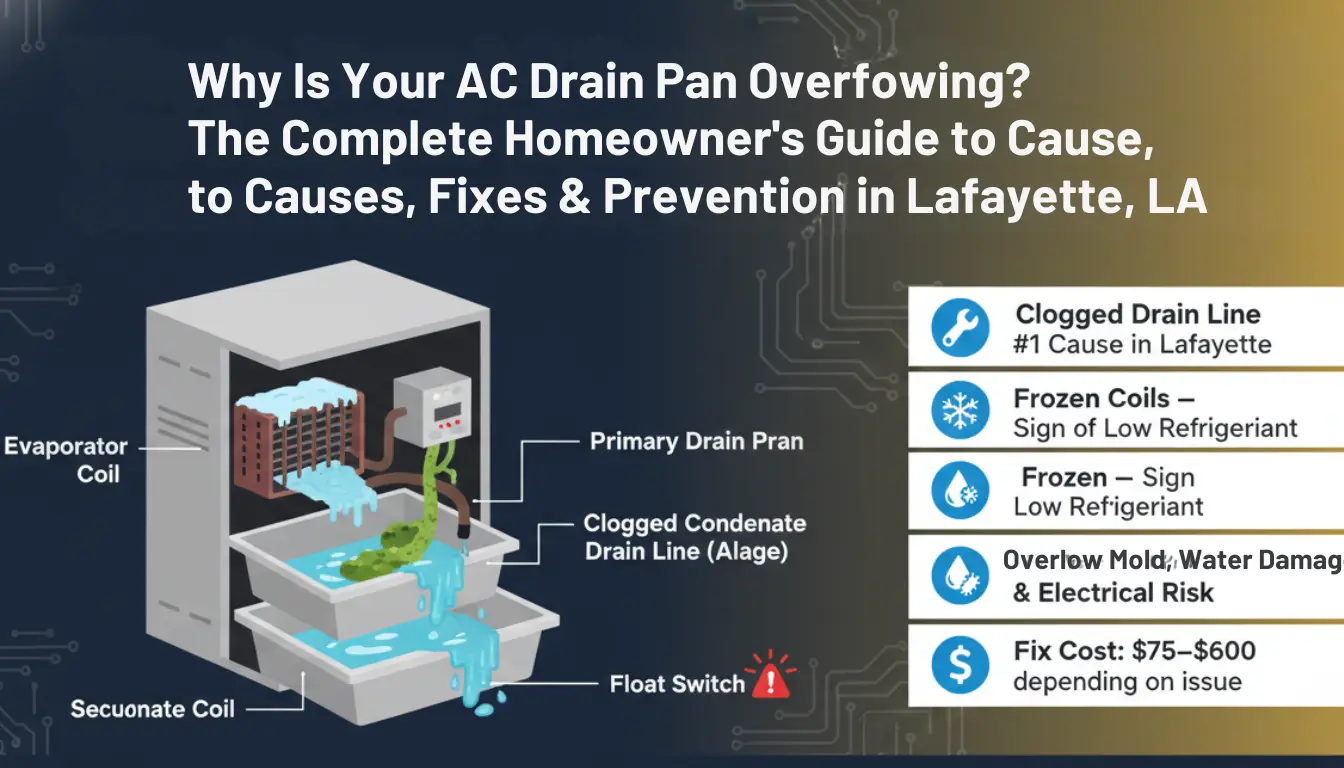
Most homes have two drain pans in their AC system. The primary drain pan is the one built into the indoor air handler unit. It sits directly beneath the evaporator coil and collects condensation during normal operation.
The secondary drain pan, also called the overflow pan, is an extra layer of protection. It sits under the entire air handler unit and is designed to catch water if the primary drain pan overflows. If you see water in your secondary pan, that is a clear sign that something has already gone wrong with your primary system. In attic installations, which are very common in Lafayette, the secondary pan is especially important because a leak up there can cause serious ceiling damage before you even notice it.
Why Is My AC Drain Pan Overflowing or Leaking Water
There are several reasons why an AC drain pan overflows or leaks water. Some causes are simple to fix, and some require professional help. Here are the most common ones:

Clogged Condensate Drain Line
This is by far the most common reason for an AC drain pan overflowing. Over time, algae, mold, dirt, and debris build up inside the condensate drain line. This buildup restricts water flow, and eventually the water has nowhere to go but back up into the drain pan and then over the sides.
In Lafayette, the high humidity and warm temperatures make algae growth in drain lines especially common. The drain line is basically a dark, moist tube a perfect place for algae to thrive. If you have not had your drain line cleaned in a year or more, this is likely the cause of your problem.
Frozen Evaporator Coils
When your evaporator coils freeze over, ice builds up on them. That might sound harmless, but when the system cycles off or the ice starts to melt, a large amount of water is released all at once. The drain pan cannot handle that much water so quickly, and it overflows.
Frozen coils are usually caused by restricted airflow from a dirty air filter or by low refrigerant levels. If you see ice on your indoor unit or the copper lines coming out of it, frozen coils are almost certainly part of your problem.
Low Refrigerant Levels
Refrigerant is what makes the cooling process work. When refrigerant levels are low usually because of a leak somewhere in the system the pressure inside the evaporator coil drops. This causes the coil to get much colder than it should, which leads to freezing. Once the ice melts, you get an overflow in the drain pan.
Low refrigerant is not something that gets fixed with a simple top-off. The leak needs to be found and repaired first. This is a job for a licensed HVAC technician.
Broken or Failing Condensate Pump
Some homes, especially those with AC units installed in basements or interior locations where gravity drainage is not possible, use a condensate pump to push water out of the drain pan through a line. If that pump breaks or fails, the water just sits in the pan until it overflows.
You can usually tell if the pump is the issue because you will hear it running, but water will still be backing up, or it will not run at all even though water is sitting in the pan.
Damaged or Rusted Drain Pan
Drain pans are usually made of metal or plastic. Metal pans can rust over time, and both types can crack or develop holes. When that happens, water leaks out of the pan itself rather than flowing properly through the drain line. This can be mistaken for an overflow but is actually a structural failure of the pan.
If you see rust stains or actual holes or cracks in the pan, it needs to be repaired or replaced.
Improper Installation or Drain Line Slope
The condensate drain line needs to slope downward so that water flows out naturally by gravity. If the line was installed incorrectly not enough slope, or even sloping the wrong direction — water will not drain properly, and the pan will fill up.
This is more common in older installations or in homes where work was done by someone who cut corners. If you have had this problem since the system was installed, improper installation may be the root cause.
Secondary Drain Line Blockage
Some systems have a secondary drain line as an emergency overflow path. If this backup line gets clogged, and the primary drain is also not working properly, you have a double failure on your hands. The result is water with nowhere to go.
Excess Condensation from High Humidity in Lafayette, LA
Lafayette, Louisiana, sits in a subtropical climate. The humidity here is extreme, often above 80 or 90 percent during the summer months. The more humidity in the air, the more condensation your AC system has to deal with. On especially hot and humid days, your system produces far more water than usual, and if anything else is even slightly off — a partial clog, a slight slope issue — it can push the system over the edge into an overflow.
Signs Your AC Is Leaking Water Inside the House
Sometimes the drain pan is overflowing, but you do not notice right away. Here are the signs to watch for:

Water Pooling Around Indoor Unit or Ceiling
The most obvious sign is standing water near your indoor air handler unit. If the unit is in an attic, you might first notice water stains or wet spots on your ceiling directly below the unit. Do not ignore ceiling stains — water in your attic or ceiling can cause serious structural damage quickly.
Musty Smell or Mold Growth Near Vents
Standing water in or around the drain pan creates the perfect environment for mold and mildew to grow. If you start smelling a musty, damp odor coming from your vents or near your indoor unit, that is a warning sign. Mold can spread quickly inside your ductwork and affect the air quality throughout your entire home.
AC System Shutting Off Due to Safety Switch
Many modern AC systems are equipped with a float switch, also called a safety shut-off switch, that automatically turns the system off when the water level in the drain pan gets too high. This protects your home from water damage. If your AC keeps shutting off unexpectedly, especially on hot and humid days, a full drain pan may be the reason.
Visible Rust, Cracks, or Standing Water in Drain Pan
If you can access your drain pan and you see rust stains, cracks, or actual water sitting in it, that tells you something is wrong. A small amount of water in the pan is normal, but it should be draining out. Water that sits there for days leads to rust, mold, and eventually overflow.
Why an AC Drain Pan Overflow Should Not Be Ignored
Some homeowners see a little water and figure it is not a big deal. That is a mistake. An overflowing AC drain pan is not just an inconvenience — it can lead to serious problems if left alone.
Water Damage to Walls, Ceilings, and Floors
Water does not stay in one place. It soaks into drywall, wood, insulation, and flooring. Even a slow drip over several days can cause significant water damage that is expensive to repair. In attic installations, water can saturate the ceiling drywall until it collapses.
Mold and Indoor Air Quality Issues
Mold thrives in moist environments. Once mold gets established in your HVAC system, it can spread through your ductwork and circulate mold spores throughout your home every time the air runs. This is a real health concern, especially for children, elderly residents, and anyone with allergies or asthma. Lafayette’s humidity already makes mold a year-round concern — a leaking AC system makes it much worse.
Electrical Hazards and System Shutdown
Your air conditioning system contains electrical components. If water from an overflowing drain pan reaches wiring, circuit boards, or the blower motor, it can cause short circuits, component failure, or even a fire hazard. This is another reason to take drain pan issues seriously and address them quickly.
Long-Term Damage to HVAC Components
Moisture inside your air handler can rust metal components, damage insulation, and shorten the life of your system overall. A problem that costs a couple hundred dollars to fix today could turn into a system replacement that costs several thousand dollars if you wait too long.
How to Identify the Cause of an Overflowing AC Drain Pan
Before you can fix the problem, you need to know what is causing it. Here is how to check:
Checking the AC Drain Line for Clogs
Locate where the condensate drain line exits your home — usually a small PVC pipe near the outdoor unit or exiting through a wall. Look to see if water is dripping from it while the AC is running. If no water is coming out during operation, the line is likely clogged.
Inspecting the Air Filter and Airflow Restrictions
Pull out your air filter. If it looks grey, clogged, or matted with dust, restricted airflow may be causing your coils to freeze. A dirty filter is one of the easiest problems to fix and one of the most commonly overlooked.
Looking for Ice on Evaporator Coils
Open the access panel on your indoor air handler and look for ice on the evaporator coils or on the refrigerant lines. If you see ice, turn off the cooling mode but leave the fan running on its own to help the ice melt. Then figure out why the coils froze in the first place — usually a dirty filter or low refrigerant.
Testing the Condensate Pump Operation
If your system uses a condensate pump, find the pump (usually a small white box near the indoor unit) and pour a little water into the reservoir. The pump should turn on automatically and pump the water out. If it does not run or runs but does not move water, the pump needs to be repaired or replaced.
Inspecting the Drain Pan for Cracks or Rust
Use a flashlight to inspect the drain pan closely. Look for rust spots, hairline cracks, or any deformation. Run your hand along the bottom to check for wet spots that would indicate a slow leak. If the pan is compromised, it needs to be replaced.
Immediate Steps to Take When Your AC Drain Pan Is Overflowing
Found water in or around your drain pan? Here is what to do right now:

Turn Off the AC System Immediately
The first thing you should do is turn your AC system off completely. This stops more water from being produced and gives you time to assess the situation without making things worse. If you have a safety float switch, the system may have already shut itself off automatically.
Remove Standing Water from the Drain Pan
Use towels, a wet-dry vacuum, or a turkey baster to remove any standing water from the drain pan. This prevents it from continuing to spill over and helps you get a clear look at the pan itself to check for damage.
Clear the Drain Line Using a Wet-Dry Vacuum
Find the drain line cleanout port — usually a capped PVC tee fitting near the air handler. Remove the cap and use a wet-dry vacuum to suction out the clog from the drain line. Hold the vacuum hose tightly against the opening and run it for a minute or two. You can also try from the outside end of the drain line. This often clears simple clogs right away.
Run the System in Fan Mode to Melt Ice
If you suspect frozen coils, switch your thermostat to fan-only mode (not cool). This circulates room-temperature air over the coils and helps the ice melt without producing more condensation. Allow 30 to 60 minutes for the ice to fully melt before turning the cooling back on.
How to Fix an AC Drain Pan Overflowing
Once you have addressed the immediate situation, here are the actual fixes for the most common causes:
Unclogging the Condensate Drain Line
Pour a mixture of one cup of distilled white vinegar and one cup of warm water into the drain line cleanout port. Let it sit for 15 to 30 minutes to break down algae and buildup, then flush with plain water. You can also use a thin brush or a plumber’s snake for tougher clogs. For serious blockages, a professional HVAC technician at Fontenot Air Conditioning and Heating can use a commercial-grade flush to fully clear the line.
Replacing Dirty Air Filters to Restore Airflow
If your air filter is the cause of restricted airflow, replace it with a clean filter of the correct size and MERV rating for your system. After replacing the filter, let any ice on the coils melt completely before restarting the system in cooling mode.
Repairing or Replacing the Condensate Pump
If the condensate pump is failing, it usually needs to be replaced. These pumps are not expensive — typically in the $50 to $150 range for the part — but getting the right pump for your system and installing it correctly is important. A professional can do this quickly.
Sealing or Replacing a Damaged Drain Pan
Small cracks in a plastic drain pan can sometimes be sealed with waterproof epoxy or AC-rated sealant as a temporary fix. However, if the pan is heavily rusted or cracked, it should be replaced. Drain pan replacement is a job for a professional because it requires partially disassembling the air handler.
Correcting Drain Line Slope and Installation Issues
If the drain line does not have the right slope, this typically requires repositioning or re-routing the line. This is a professional repair that involves working with PVC pipe and ensuring proper angles for gravity drainage. Getting this right the first time matters — an improperly sloped line will just clog again faster.
How to Prevent AC Drain Pan Overflow in Lafayette, LA
The good news is that most AC drain pan overflows are preventable with regular maintenance. Here is what you should be doing:
Routine AC Maintenance for High Humidity Climates
In Lafayette, your AC works harder and longer than systems in drier climates. That means it needs more attention. Schedule professional AC maintenance at least once a year — ideally in the spring before the heavy summer heat hits. A good maintenance visit includes inspecting the drain system, checking refrigerant levels, cleaning coils, and making sure everything is in proper working order.
Regular Drain Line Cleaning and Flushing
Do not wait for a clog to form. Every month during the cooling season, pour a cup of white vinegar or a condensate drain treatment tablet into the drain line cleanout. This keeps algae and mold from building up in the first place. It takes about two minutes and can save you a much bigger headache down the road.
Installing a Float Switch or Safety Shut-Off
If your system does not already have a float switch, ask Fontenot Air Conditioning and Heating about having one installed. A float switch automatically shuts off your AC when the water level in the drain pan gets too high, preventing overflow before it starts. This is especially important for attic units where you might not notice a problem for days.
Monitoring AC Performance During Peak Summer Months
Pay attention to how your system is running during July and August — the peak of Lafayette’s heat and humidity. If you notice the system is working harder than usual, cycling on and off frequently, or producing less cooling, get it checked before a small issue becomes an overflow or a breakdown.
AC Drain Pan Overflow Repair Costs in Lafayette, LA
Wondering what you might spend to fix this problem? Here is a general idea of what repair costs look like in the Lafayette area.

Average Cost to Fix AC Leaking Water Issues
A simple drain line cleaning, done during a service call, typically runs between $75 and $200, depending on the severity of the clog and the time required. If the issue is more complex — like a damaged drain pan or a pump replacement — costs will be higher. Overall, most AC drain pan overflow repairs fall in the $100 to $600 range.
Cost of Drain Line Cleaning, Pump Repair, and Coil Issues
• Condensate drain line cleaning: $75 to $200
• Condensate pump replacement: $150 to $400, including labor
• Drain pan replacement or repair: $200 to $500
• Refrigerant recharge (after fixing a leak): $200 to $600 or more, depending on the refrigerant type and amount needed
• Evaporator coil cleaning or repair: $100 to $400
Factors That Affect HVAC Repair Pricing Locally
Prices vary depending on the age and type of your system, how accessible the components are (attic units are harder to work on), the severity of the problem, and the time of year. Emergency calls on weekends or during the peak summer season typically cost more. Getting regular maintenance done is almost always cheaper than emergency repairs.
Why AC Systems in Lafayette, LA, Are More Prone to Drain Issues
Louisiana is not like most of the country when it comes to climate — and that has a direct impact on your AC system.
High Humidity and Algae Growth in Drain Lines
The humidity in Lafayette creates ideal conditions for algae and mold to grow inside condensate drain lines. Algae thrive in warm, moist, dark environments — which is exactly what a drain line is during the cooling season. Without regular cleaning, it can take just weeks for significant algae growth to start restricting water flow.
Long Cooling Seasons Increasing System Wear
In many parts of the country, air conditioners run for four to five months a year. In Lafayette, they run for seven to eight months or more. That extended use accelerates wear on every component of the system, including the drain pan, drain line, pump, and coils. More runtime means more maintenance is needed to keep everything working properly.
Common Installation and Attic Unit Challenges
Many homes in the Lafayette area have their air handlers installed in attics to save indoor space. This is common and works fine when the system is properly maintained. But attic units are harder to access, which means homeowners often go longer without inspecting them. When a drain pan overflows in an attic, the water can cause significant ceiling damage before anyone notices.
When to Call an HVAC Professional in Lafayette, LA
Some AC issues are okay to handle yourself, but there are situations where you should call in a professional right away.
Recurring AC Leaking Water Problems
If your drain pan overflows repeatedly — even after you have cleaned the drain line yourself — there is a deeper issue that needs professional diagnosis. Recurring problems often indicate improper drain line slope, a system that is undersized for your home, or a structural issue with the drain pan that needs to be addressed properly.
Signs of Refrigerant or Coil Issues
If you suspect low refrigerant or frozen coils that are not caused by a dirty filter, call a professional. Working with refrigerant requires an EPA certification and specialized equipment. Trying to handle this yourself is not safe and is illegal without proper certification.
Drain Pan or Pump Failures
Replacing a drain pan or condensate pump involves working inside the air handler, which can be complex depending on your system. If you are not comfortable with HVAC components, it is better to have a trained technician handle this to avoid causing additional damage.
Emergency Situations with Indoor Water Damage
If you have active water damage — wet ceilings, soaked insulation, water near electrical panels — call Fontenot Air Conditioning and Heating immediately. These situations can escalate quickly and may also require a water damage restoration professional in addition to HVAC repair.
DIY vs Professional AC Drain Pan Repair
It is reasonable to want to handle some of this yourself. Here is how to think about what you can do and when to step back.
Safe Fixes Homeowners Can Perform
There are several things most homeowners can safely do on their own. Changing a dirty air filter is the most basic — do this every one to three months. Pouring vinegar into the drain line to prevent clogs is easy and safe. Removing standing water from the drain pan with a wet-dry vacuum or towels is also something you can do without any specialized tools. These preventive steps can make a big difference.
Risks of Delaying Professional Repairs
The longer you wait for a real repair, the more damage can occur. A slow leak becomes a big water damage bill. A partial clog becomes a full one. A cracked drain pan that is left alone gets worse. The cost of professional repair is almost always far less than the cost of the damage that builds up while waiting.
Benefits of Hiring a Local HVAC Technician
A local technician from Fontenot Air Conditioning and Heating knows Lafayette’s specific climate challenges, common installation setups in the area, and the AC problems that are most common here. Local knowledge matters — a technician who works in Lafayette every day will diagnose your problem faster and give you practical advice that fits your home and your environment. Beyond that, professional repairs come with warranties, which means if something is not right, it gets fixed.
Frequently Asked Questions About AC Drain Pan Overflowing
Is an overflowing AC drain pan dangerous?
Yes, it can be. An overflowing drain pan can cause water damage to your ceilings, floors, and walls. It can also create mold growth, which affects air quality. If water reaches electrical components, it can create an electrical hazard. It is not something to ignore.
Can I use bleach to clean my AC drain line?
Some people do use bleach, but it is not the best option. Bleach can be corrosive to some pipe materials and can kill beneficial bacteria if it reaches a septic system. Distilled white vinegar is a safer and more effective alternative for regular cleaning. For tough clogs or heavy buildup, a professional flush is more effective than either.
How often should I clean my AC drain line?
In Lafayette, we recommend cleaning or flushing your drain line at least once a month during the cooling season. Given the heat and humidity here, algae and mold grow faster than in drier climates. Once a year is not enough — monthly treatment is the better standard for this area.
Why does my AC keep filling the drain pan?
If the drain pan keeps filling up, it means water is being collected but not draining out properly. The most likely cause is a clog in the drain line. Other possibilities include a failing condensate pump, a partially blocked secondary drain line, or simply very high condensation production on extremely humid days, combined with any minor drain restriction.
How long does it take to fix an AC drain pan overflow?
A simple drain line cleaning can be done in under an hour. More involved repairs like pump replacement, drain pan replacement, or correcting an installation issue can take two to four hours. If there is also ice on the coils, you need to allow additional time for the coils to thaw before the full repair can be completed.
Conclusion
An AC drain pan overflowing is one of those problems that starts small and gets expensive fast if you let it go. The good news is that most causes are preventable with regular maintenance, and most repairs are straightforward when you catch them early.
In Lafayette, LA, the hot and humid climate means your AC works harder, and your drain system has more to deal with than in most parts of the country. That is why it is so important to stay on top of maintenance — especially your condensate drain line — and to call a professional at the first sign of trouble.
At Fontenot Air Conditioning and Heating, we have been helping Lafayette homeowners keep their AC systems running smoothly for years. Whether you need a drain line cleaning, a drain pan replacement, a condensate pump repair, or a full AC inspection, our team is here to help. Do not wait until you have water damage on your ceiling — give us a call today and let us make sure your system is in great shape before the next heatwave hits.
If you are experiencing other AC problems beyond a drain pan overflow, our comprehensive guide to common AC problems can help you understand what your system is telling you and what to do about it.