

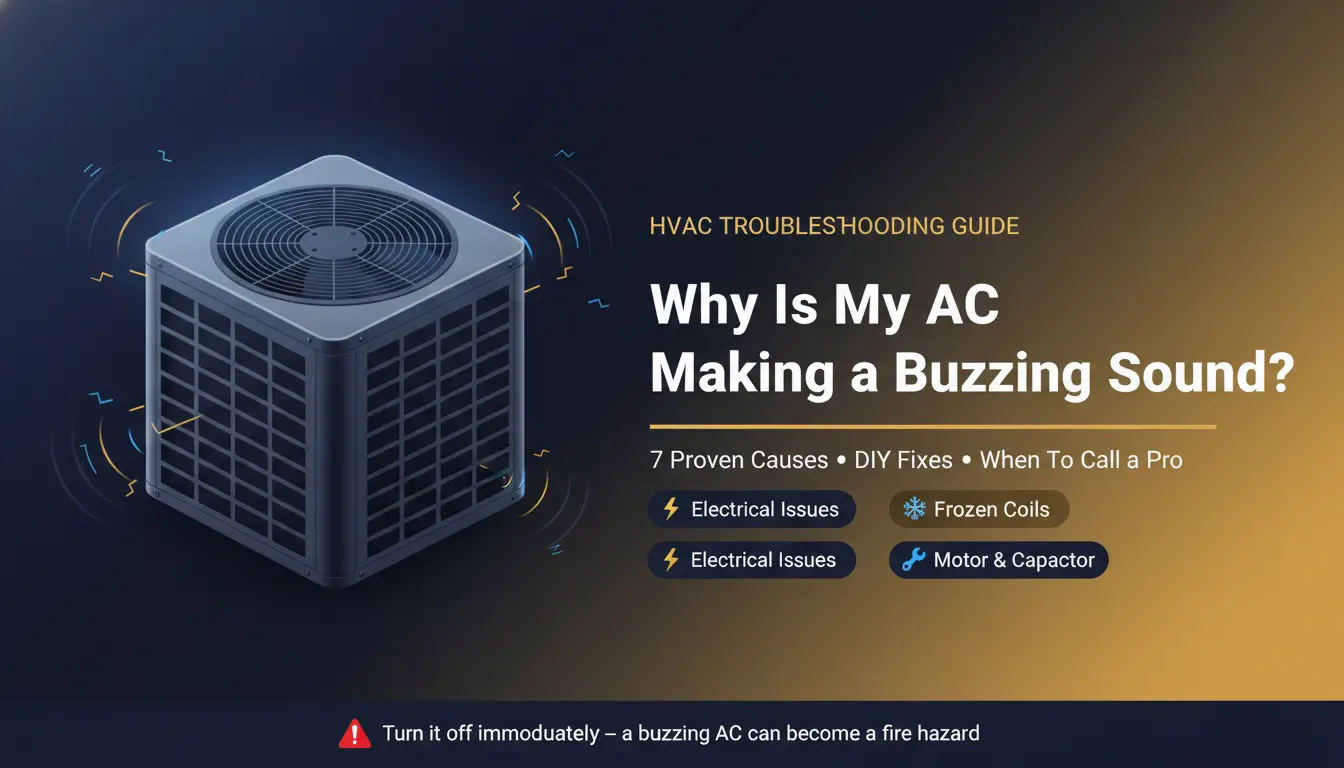
Is your AC making a buzzing sound? Don’t ignore it.
A buzzing air conditioner is one of the most common complaints we hear at Fontenot Air Conditioning & Heating. And in almost every case, that noise is your system trying to tell you something is wrong.
The good news? Most causes of an AC buzzing sound are fixable if you catch them early. The bad news? If you wait too long, a small buzzing problem can turn into a very expensive repair bill.
In this guide, I’ll walk you through exactly why your AC is making that noise, what you can do about it, and when it’s time to call a professional HVAC technician.
Why Is My AC Making a Buzzing Sound?
A faulty capacitor usually causes an AC buzzing sound, a failing contactor relay switch, or loose electrical wiring. Other common causes include a dying condenser fan motor, frozen evaporator coils, low refrigerant, or loose vibrating panels.
Here’s a quick breakdown of the most common causes:
- Failed capacitor– the most frequent cause
- Faulty contactor relay switch– creates a loud electrical hum
- Loose or damaged wiring can cause dangerous electrical arcing
- Dying condenser fan motor– grinding or buzzing when motor bearings fail
- Frozen evaporator coils– low hum from ice buildup
- Low refrigerant– hissing and buzzing combined
- Loose panels or bolts– vibration causes a rattling buzz
Turn off your AC immediately if you hear buzzing; running it further can cause serious damage or create a fire hazard.
7 Causes of AC Buzzing Sound
Let’s go through each cause in detail so you can figure out exactly what’s going on with your unit.
1. Faulty or Failed Capacitor
This is the number one cause of an AC buzzing sound, and we see it constantly in the field.
The capacitor is a small cylindrical component inside your outdoor unit that gives the motors the initial jolt of electricity they need to start. When it starts to fail, the motor struggles to kick on, and that struggle sounds exactly like a buzzing or humming noise.
What it sounds like: A steady electrical hum or buzz, often louder when the AC first tries to start. Sometimes the fan won’t spin at all, even though you can hear the unit trying.
Where to look: Inside the outdoor condenser unit, near the top.
Visual sign: A bulging or “puffy” top on the capacitor is a clear sign it has failed. A healthy capacitor has a flat top.
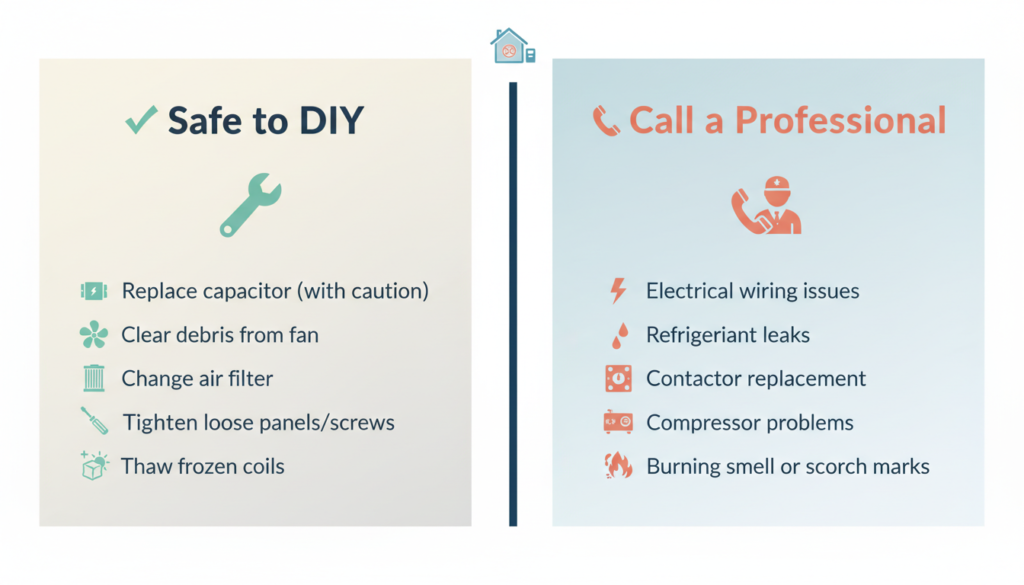
DIY or Pro? A capacitor replacement is one of the few electrical repairs an experienced DIYer can handle, but always discharge the old capacitor first. It stores a charge even when the power is off and can cause a serious shock. If you’re not comfortable with that, call a pro.
Urgency: High, a failed capacitor puts extra strain on your compressor, which is far more expensive to replace.
2. Bad Contactor Relay Switch
The contactor is the electrical switch that controls the flow of power to your compressor and condenser fan motor. When it gets dirty, worn, or starts to fail, it creates a loud electrical buzzing or humming sound.
What it sounds like: A loud, consistent electrical hum, almost like the sound of a live electrical wire. You might also hear a clicking noise right before or after the buzz.
Where to look: Inside the outdoor unit, near the capacitor.
Common causes: Age, pitting on the contact points, or a buildup of dirt and carbon deposits.
DIY or Pro? Contactor replacement is a straightforward job for an HVAC technician, but it involves working with live electrical components. We recommend calling a pro for this one.
Urgency: Medium-High, a failing contactor can eventually weld shut or fail to close, stopping your AC from running at all.
3. Loose or Faulty Electrical Wiring
This is the one we take most seriously. Loose wires inside an AC unit can cause electrical arcing, and arcing creates both a buzzing sound and a serious fire risk.
What it sounds like: An intermittent buzzing or crackling noise, almost like static electricity. It may come and go.
Where to look: Inside the electrical panel of your outdoor unit, and at the disconnect box on your wall.
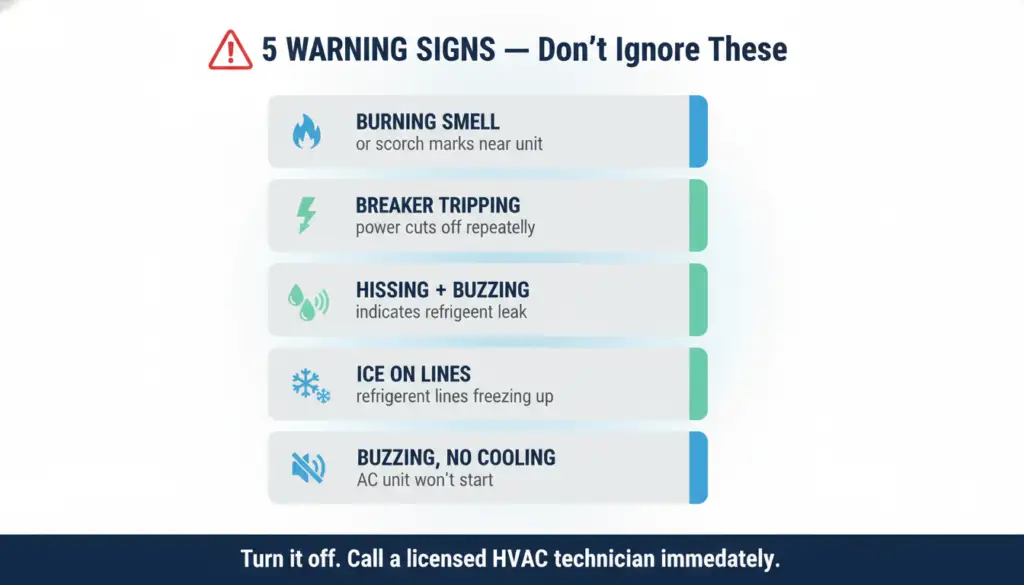
Warning signs: Burnt smell, scorch marks near wiring, or a breaker that keeps tripping.
DIY or Pro? Do not attempt this yourself. Loose or arcing wires require a licensed HVAC technician or electrician immediately.
Urgency: Very High, this is the one cause where we tell homeowners to turn the unit off at the breaker and don’t turn it back on until a professional has inspected it.
4. Dying Condenser Fan Motor
The condenser fan motor sits inside your outdoor unit and pulls air across the condenser coils to release heat. When the motor bearings start to wear out, they produce a grinding, humming, or buzzing noise, and the fan may spin slower than normal or stop entirely.
What it sounds like: A grinding buzz or a strained hum, especially when the unit first starts up. You might notice the fan blade moving more slowly than usual.
Where to look: The large fan on top of your outdoor condenser unit.
DIY or Pro? Fan motor replacement is a moderate-level repair. A skilled DIYer can do it with the right parts, but getting the exact replacement motor matters. We recommend professional installation to avoid compatibility issues.
Urgency: High, a fan that stops working causes the condenser to overheat, which can damage the compressor.
5. Frozen Evaporator Coils
When your AC’s evaporator coil freezes over, it can produce a low humming or buzzing sound. This happens when airflow is restricted, usually from a dirty air filter or when refrigerant levels are low.
What it sounds like: A low, steady hum coming from the indoor air handler unit. You might also notice reduced airflow from your vents or ice visible on the refrigerant lines.
Where to look: The indoor air handler, usually in a closet, attic, or basement. Ice on the copper lines is a dead giveaway.
What to do:
- Turn off the AC completely
- Let the coils thaw; this can take 2–24 hours
- Replace your air filter
- Turn it back on and monitor
If the coils freeze again after thawing and changing the filter, you likely have a refrigerant issue , which requires a pro.
DIY or Pro? The thaw-and-filter fix is DIY. If the problem returns, call a professional.
Urgency: Medium, frozen coils reduce efficiency and can lead to water damage if ignored.
6. Loose Panels or Vibrating Parts
Sometimes the fix is simpler than you think. AC units vibrate during normal operation, and over time that vibration can loosen screws, panels, and bolts , causing a rattling buzz that has nothing to do with the electrical components.
What it sounds like: A rattling or vibrating buzz that changes in intensity as the unit runs. It often sounds louder from the outside.
Where to look: The side panels of the outdoor unit, the screws around the access panel, and the base of the unit.
DIY or Pro? This is a straightforward DIY fix; just tighten any loose screws and panels. If the unit is vibrating excessively on its pad, foam vibration pads can help dampen the movement.
Urgency: Low, but fix it before vibration loosens more critical components.
7. Low Refrigerant
Low refrigerant is another culprit behind a buzzing or hissing AC sound. When refrigerant levels drop (always due to a leak, not normal consumption), the pressure changes inside the system create unusual noises.
What it sounds like: A hissing or gurgling sound combined with a light buzz. You may also notice the AC is blowing warmer air than usual.
Where to look: Check your refrigerant lines for oily residue; this is a sign of a leak.
DIY or Pro? Pro only. Refrigerant handling requires an EPA 608 certification. It’s illegal to purchase or handle refrigerant without one, and topping off a leaking system without fixing the leak is just throwing money away.
Urgency: High, low refrigerant causes the compressor to overwork and can lead to compressor failure.
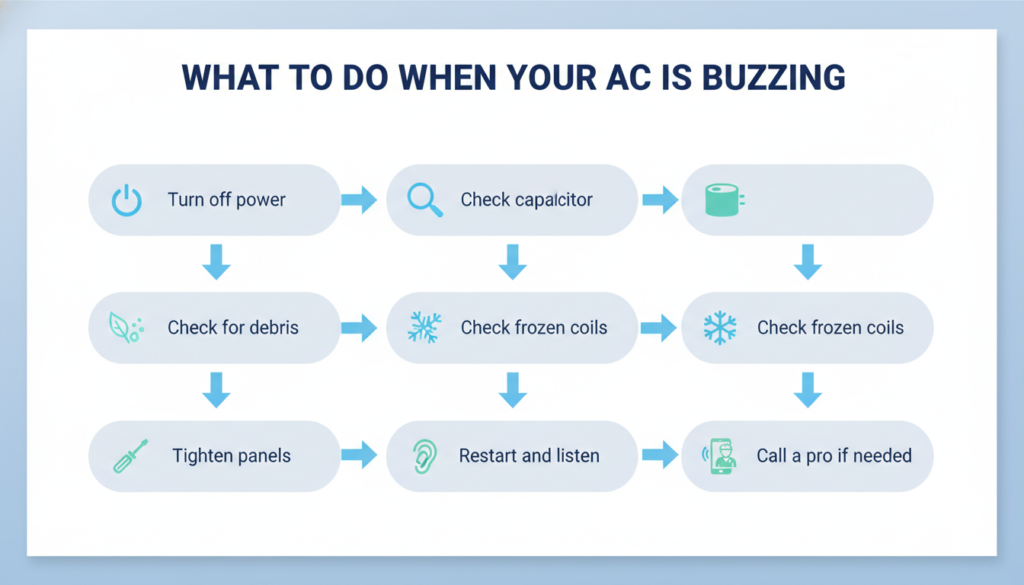
Step-by-Step: What To Do When Your AC Is Buzzing
Here’s the exact process we recommend to every homeowner who calls us about an AC noise problem:
Step 1: Turn off the power. Shut the AC off at the thermostat first, then go to your breaker panel and flip the AC breaker off too. Don’t skip the breaker; the thermostat alone doesn’t cut electrical power to the unit.
Step 2: Check the capacitor. With power fully off, open the access panel on the outdoor unit. Look at the capacitor; if the top is bulging or it looks swollen, that’s your answer. Discharge it safely before touching anything.
Step 3: Look for debris near the fan blades. Leaves, twigs, and dirt can get inside the outdoor unit and hit the fan blade while it spins, creating a buzzing noise. Clear out any debris you find.
Step 4: Check for frozen coils. Go to your indoor air handler. If you see ice on the copper refrigerant lines or the coil itself, let everything thaw completely and change your air filter before restarting.
Step 5: Tighten any loose screws and panels. Do a quick check around the outdoor unit for anything that looks loose or out of place.
Step 6: Restart and listen. After going through the above steps, restore power and listen carefully when the unit starts up. If the buzzing is gone, problem solved. If it persists, call a pro.
Step 7: Call Fontenot Air Conditioning & Heating if the noise continues, if you saw signs of electrical arcing, or if you’re not comfortable handling any of the above steps. Electrical problems and refrigerant issues are not DIY territory.
How to Tell If Your AC Is Low on Refrigerant
Low refrigerant is a common cause of both buzzing sounds and poor AC performance. Here’s how to tell if your system might be running low:
- Warm air from the vents, if your AC is running but blowing room-temperature or warm air, refrigerant levels may be low
- Hissing or bubbling sounds, these are signs of an active refrigerant leak
- Ice on the refrigerant lines, visible ice on the copper lines running from your outdoor unit, is a strong indicator
- Higher electricity bills, a system low on refrigerant works harder and uses more energy
- AC runs constantly but never cools properly; the system can’t reach the set temperature
One thing I want to be clear about: refrigerants don’t just “run out.” If your AC is low on refrigerant, it means there’s a leak somewhere in the system. Topping it off without fixing the leak will just have you in the same situation a few months later, and refrigerant isn’t cheap.
Refrigerant work requires an EPA 608 certification. This is not a DIY job. If you suspect a refrigerant leak, call a licensed HVAC technician.
Why Does My AC Sound Like It’s Surging?
A surging sound is slightly different from a constant buzz; it comes and goes in waves, almost like the system is repeatedly trying to power up and failing.
This pulsing or surging noise is usually caused by:
- Compressor issues, a compressor that’s struggling or starting to fail, can create a surging hum
- Capacitor problems, a weak capacitor causes the motor to repeatedly try and fail to start
- Refrigerant pressure fluctuations and inconsistent pressure inside the system create irregular sounds
If your AC sounds like it’s surging or pulsing rather than making a steady buzz, pay attention to how often it happens. If it’s surging every time the unit tries to start, the capacitor or compressor is the likely culprit. Either way, turn it off and get it checked before the problem gets worse.
The 3-Minute Rule for Air Conditioners
If you’ve turned your AC off, whether because of a buzzing sound or any other reason, wait at least 3 minutes before turning it back on.
Here’s why: when your AC shuts down, there’s still high-pressure refrigerant inside the compressor. If you restart the unit immediately, the compressor has to start against that high pressure, and that puts enormous strain on it. Over time (or sometimes immediately), this can cause compressor failure, which is one of the most expensive AC repairs there is, often running $1,000–$2,500 or more.
The 3-minute wait allows the refrigerant pressure to equalize throughout the system, so the compressor starts under normal conditions.
This is especially important if your AC was making a buzzing sound and you turned it off to investigate. Before you restart it, give it those 3 minutes. Your compressor will thank you.
Most modern thermostats actually have a built-in time-delay feature that automatically enforces this rule. But if you’re manually cycling the power at the breaker, keep an eye on the clock.
The $5,000 Rule for AC: Repair or Replace?
When your AC is making a buzzing sound and a technician gives you a repair quote, you need to decide whether it’s worth fixing. The $5,000 rule is a simple way to make that call.
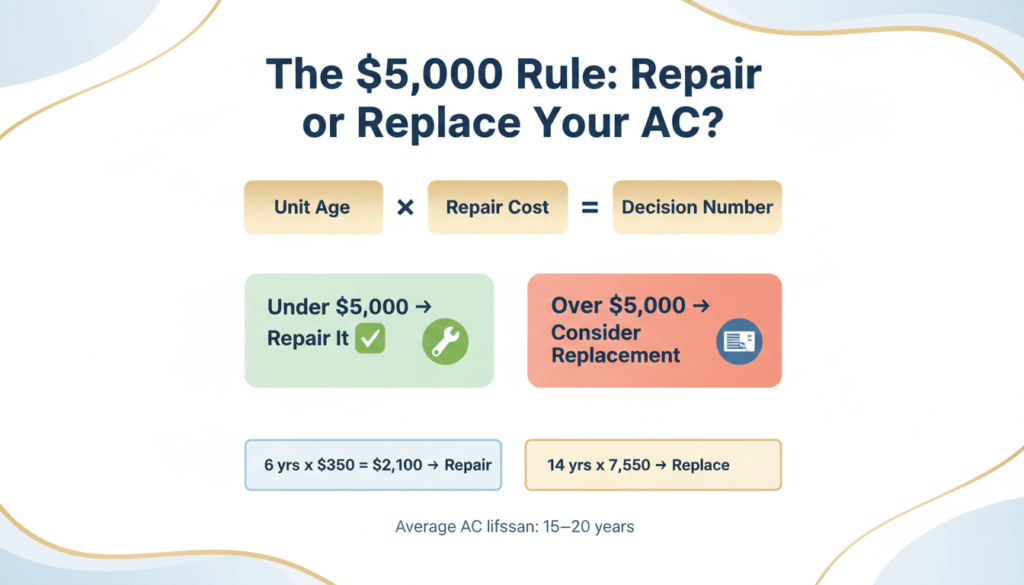
Here’s how it works:
Unit age × Repair cost = Decision number
- If the number is under $5,000 →, repair is likely worth it
- If the number is over $5,000 →, replacement is probably the smarter investment
Example:
- 6-year-old AC × $350 repair = $2,100 → Repair it
- 14-year-old AC × $550 repair = $7,700 → Start looking at new units
This rule accounts for the fact that an older unit is more likely to need additional repairs in the near future. Spending $600 to fix the fan motor on a 15-year-old system might just delay the inevitable, and you’ll have spent that money only to replace the unit a year later anyway.
The average lifespan of a central air conditioning system is 15–20 years with proper maintenance. If your unit is getting close to that range and needs a major repair, run the $5,000 calculation before making a decision.
At Fontenot Air Conditioning & Heating, we’ll always give you an honest recommendation on whether to repair or replace; we’re not in the business of selling you a new system you don’t need.
When To Call a Professional HVAC Technician
Some AC buzzing problems are safe to troubleshoot yourself. Others are not. Here’s when to put down the screwdriver and pick up the phone:
- The buzzing is coming from the electrical wiring, or the breaker keeps tripping
- You smell burning or see scorch marks near the unit
- The buzzing is accompanied by a hissing sound (possible refrigerant leak)
- The compressor makes a grinding noise
- The AC was buzzing and now won’t turn on at all
- You’ve checked everything and still can’t find the source
Electrical problems and refrigerant leaks are not DIY repairs. They require specialized tools, certifications, and experience. Attempting them without the right knowledge can damage the system further or hurt you.
Fontenot Air Conditioning & Heating serves homeowners across the area with fast, reliable HVAC diagnostics and repairs. If your AC is making a buzzing sound and you’re not sure what’s causing it, give us a call, and we’ll figure it out.
Frequently Asked Questions About AC Buzzing Sounds
u003cstrongu003eIs it safe to run an AC that is buzzing?u003c/strongu003e
No. Turn it off immediately. Running a buzzing AC can worsen the underlying problem and, in cases involving electrical issues, create a fire hazard.
u003cstrongu003eHow much does it cost to fix a buzzing AC?u003c/strongu003e
It depends on the cause. A capacitor replacement typically runs $150–$300. A contactor replacement is usually $200–$350. Fan motor repairs can range from $300–$600. Electrical wiring repairs vary widely depending on the extent of the damage.
u003cstrongu003eCan a dirty air filter cause AC buzzing?u003c/strongu003e
Indirectly, yes. A clogged filter restricts airflow, which leads to frozen evaporator coils, which can produce a low humming or buzzing sound. Changing your filter regularly, every 1–3 months, is one of the easiest ways to prevent AC problems. Check out our guide on [AC problems and how to prevent them] for more maintenance tips.
u003cstrongu003eMy AC makes a buzzing sound but won’t turn on. What’su003c/strongu003e wrong?
This is almost always a failed capacitor. The motor is trying to start, but can’t get enough power to kick on. Turn the unit off and call a technician; running it in this state will eventually burn out the motor.
u003cstrongu003eHow often should I have my AC serviced to prevent these problems?u003c/strongu003e
Once a year, ideally in spring before the cooling season starts. A professional tune-up catches failing capacitors, loose wiring, dirty contactors, and refrigerant issues before they turn into buzzing noises or breakdowns.
Final Thoughts
An AC buzzing sound isn’t something to put off until tomorrow. In most cases, it’s an early warning, and catching it early saves you money.
The most common causes are a failing capacitor, a bad contactor, or loose wiring. Start with the simple checks (debris, loose panels, frozen coils), and if the buzzing continues, don’t guess; get a professional to diagnose it properly.
At Fontenot Air Conditioning & Heating, we’ve seen and fixed every type of AC noise problem there is. Whether it’s a quick capacitor swap or a more involved electrical repair, we’ll get your system running quietly and efficiently again.
Have a buzzing AC? Don’t wait, contact Fontenot Air Conditioning & Heating today, and we’ll take care of it.