
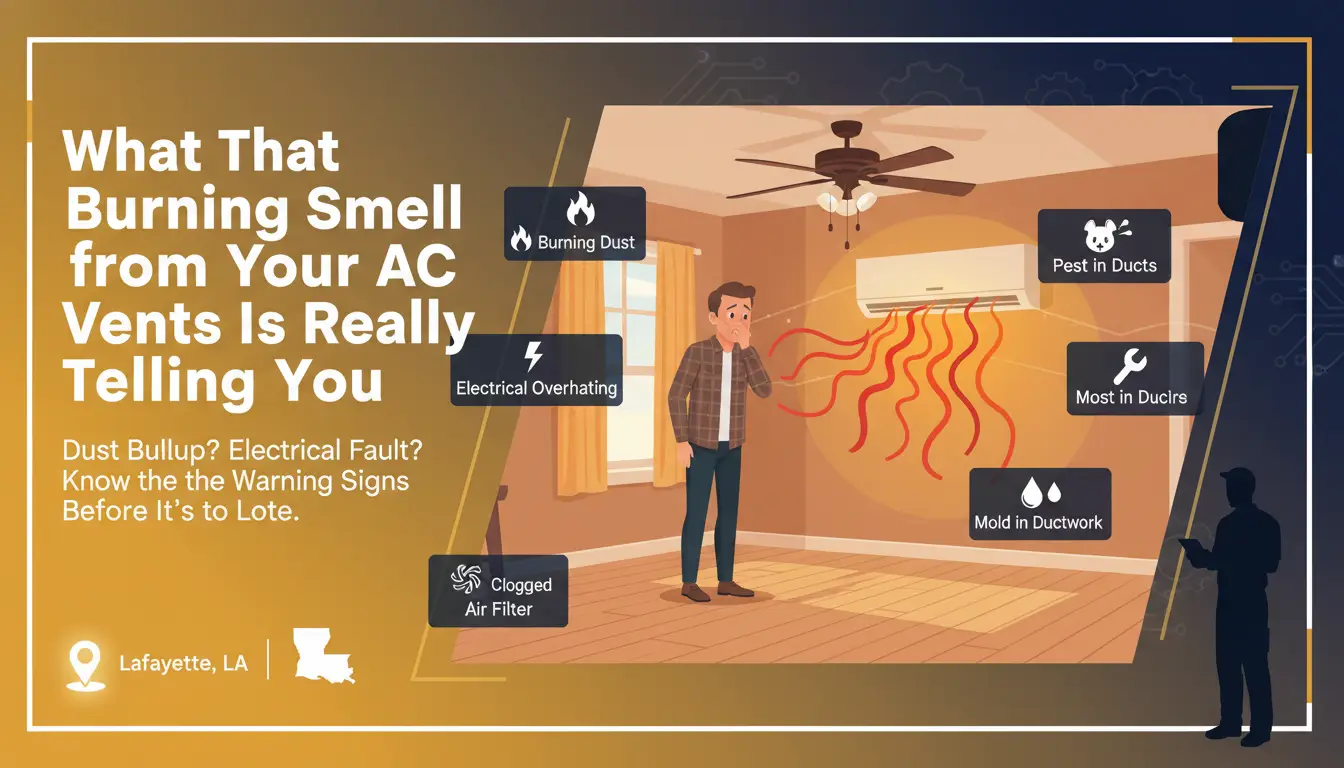
If you have ever walked into your home and noticed a strange burning smell from AC vents in house, you know how alarming that feeling can be. You are not alone. This is one of the most common concerns we hear from homeowners across Lafayette, LA. Whether it smells like burnt plastic, hot metal, or just dusty heat, your nose is telling you something important about your air conditioning system.
At Fontenot Air Conditioning and Heating, we have helped hundreds of Lafayette families figure out exactly what is causing that smell and how to fix it safely. This guide will walk you through everything you need to know, from the first moment you notice the odor to when it is time to pick up the phone and call a professional.
Why This Issue Is Common in Lafayette Homes
Lafayette, Louisiana, sits in one of the most humid and heat-heavy climates in the entire country. Your AC system does not get a break. It runs hard through long, brutal summers, and that constant workload puts real stress on every part of the system, from the motor and fan blades to the electrical wiring and air filters.
Unlike homes in cooler climates, where AC systems get months of rest, Lafayette homes run their systems almost year-round. That means dust, debris, and wear build up faster. It also means small problems that might go unnoticed elsewhere tend to show up sooner here.
How Local Climate and Home Conditions Affect AC Systems
The combination of high heat, heavy humidity, and frequent AC use creates a perfect environment for dust and moisture to collect inside your ductwork and on your system components. When you finally fire up the system after even a short break, all of that built-up debris gets heated and pushed through your vents.
Older Lafayette homes often have ductwork that was not sealed as tightly as modern standards require. That means outside air, insects, and even small rodents can get inside your ducts and leave behind materials that burn or smell when air flows over them. Homes with older HVAC equipment are also more likely to have worn electrical components that overheat and produce a metallic or burning smell.
Immediate Actions to Take If You Notice a Burning Smell from AC Vents in House
When you smell something burning from your AC vents, the most important thing you can do is stay calm and act quickly. Here is what to do right away.
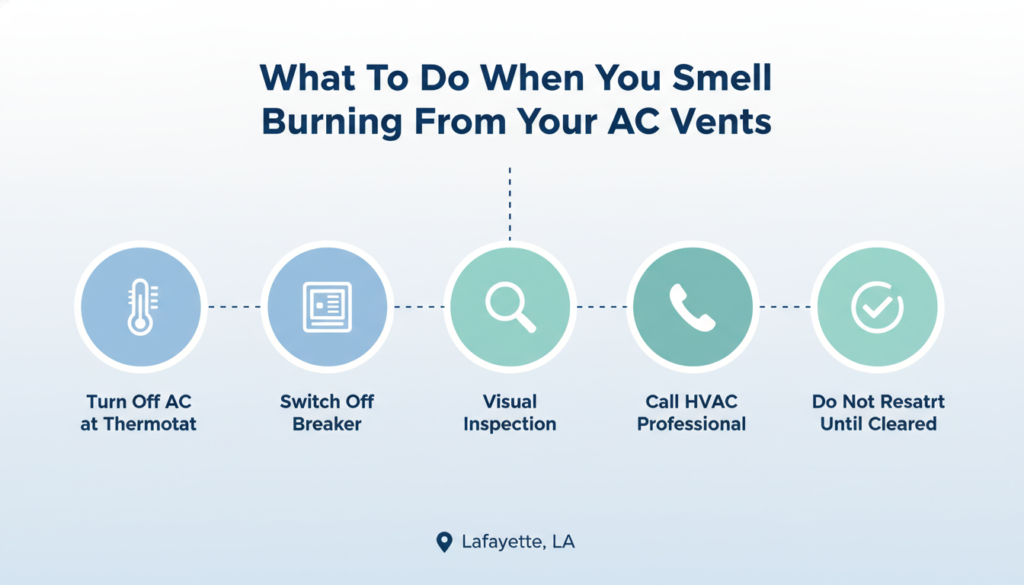
Shut Down the AC System Safely
The very first step is to turn off your air conditioner. Do not wait to see if the smell goes away on its own. Keeping the system running while something inside is burning or overheating can make the situation much worse and could even create a fire risk.
Turn Off Power at the Thermostat and Breaker
Turn your thermostat to the OFF position first. Then go to your home’s electrical panel and switch off the breaker for your HVAC system. This completely cuts power to the unit and removes any risk of electrical issues continuing while you investigate.
Perform a Quick Visual Inspection
Once the system is off and power is cut, take a look around your indoor air handler unit. Check for any visible scorch marks, melted plastic, or signs of smoke. Look at your air filter if you can access it easily. If you see anything that looks burned, melted, or charred, do not turn the system back on. Call an HVAC professional immediately.
Types of Burning Smells and What They Mean
Not all burning smells are created equal. The type of odor you are noticing can actually tell you a lot about what is going on inside your AC system.
Burning Dust Smell
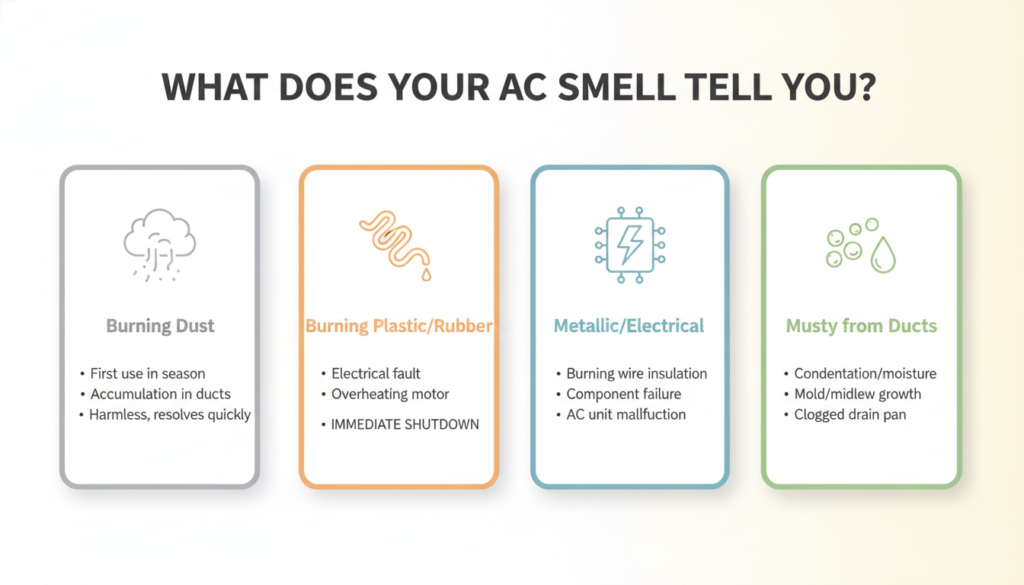
This is the most common and usually the least serious type of burning smell. It tends to happen at the start of the cooling season or after the system has not been used for a while. Dust settles on the heating elements, coils, and inside the ductwork. When the system kicks on, that dust gets burned off and pushed through the vents. The smell is often described as a dry, musty heat, similar to what you might notice when turning on an electric heater for the first time in winter.
Burning Plastic or Rubber Smell
This type of smell is more concerning. It usually points to a component inside the system that is overheating, melting, or has already melted. Common culprits include plastic wire insulation, rubber fan belts, or plastic housing near the motor. This smell should never be ignored.
Metallic or Electrical Smell
A sharp, metallic, or electrical odor often indicates that wiring, circuit boards, or motor windings are overheating or burning. This is a serious warning sign. Electrical problems in HVAC systems can lead to fires if they are not caught early.
Musty Burning Smell from Ducts
If the smell has a musty or damp quality mixed with heat, there may be mold or mildew inside your ductwork that is being disturbed by hot air. In Louisiana’s humid climate, this is more common than most homeowners realize.
Common Causes of Burning Smell from AC Vents
Understanding what is causing the smell helps you know how serious the situation is and what kind of fix you are looking at.
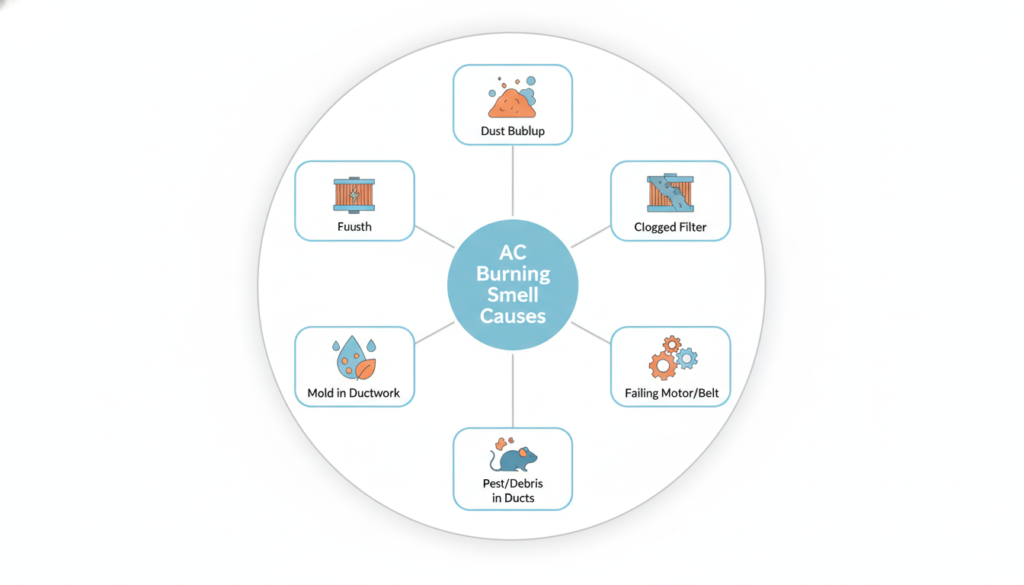
Dust Accumulation Inside the System
Over time, dust builds up on the evaporator coils, blower fan, and inside the ductwork. When the system heats up or runs at full capacity, this dust burns off and creates that familiar hot, dry smell. This is normal in small amounts, but heavy dust buildup can restrict airflow and cause the system to work harder than it should.
Dirty or Clogged Air Filter
A clogged air filter is one of the most common causes of burning smells and a wide range of other AC problems. When the filter is too dirty, air cannot flow freely through the system. This forces the motor to work harder, which causes it to overheat. A burning smell from a clogged filter is a warning that your system is under serious strain.
Electrical Problems and Overheating Components
Loose wiring, failing capacitors, a struggling motor, or a short circuit can all produce burning odors. These are not problems you can fix yourself. Electrical issues inside an HVAC system require a licensed technician who can safely diagnose and repair the problem.
Mechanical Failures in Motors or Belts
Older AC units, and even some newer ones, use fan belts that can wear down over time. When a belt starts to slip or fray, it produces a rubber burning smell. A failing blower motor can also overheat and create a similar odor. These are mechanical issues that get worse quickly if the system keeps running.
Debris, Pests, or Blockages in Ductwork
Insects, mice, and other pests sometimes get into ductwork and build nests or leave behind waste. When the system runs, those materials can burn and create a very unpleasant smell. Debris like leaves or insulation that has fallen into the ducts can do the same thing.
Is a Burning Smell from Your AC Dangerous?
The honest answer is that it depends on the cause. Some burning smells are nothing to worry about. Others are signs of a genuine safety hazard.
When It Is Harmless
A faint burning dust smell that goes away within 20 to 30 minutes of the system running is usually harmless. This typically happens at the start of a new season or after the system has been idle for a few weeks. As long as the smell clears up quickly and does not return, this is generally nothing to be concerned about.
When It Signals a Serious Hazard
If the smell is strong, persistent, or smells like burning plastic, rubber, or electrical components, it is a serious warning sign. Do not brush it off.
Fire Risks and Electrical Dangers
Electrical problems in HVAC systems are a leading cause of residential fires. When wiring overheats, insulation melts, or a motor burns out, the heat generated can ignite nearby materials. If you smell something electrical or see any signs of smoke, treat it as a potential fire hazard.
According to the U.S. Consumer Product Safety Commission, electrical failures and overheating are among the leading causes of home fires in the United States.
Health Risks from Air Contaminants
When plastic, rubber, or other synthetic materials burn inside your AC system, the fumes that get pushed through your vents can be harmful to breathe. This is especially dangerous for children, the elderly, or anyone with asthma or respiratory conditions. In Lafayette’s climate, where homes stay closed up for most of the summer, indoor air quality is not something to take lightly.
Step-by-Step Troubleshooting Guide for Homeowners
Before you call a professional, there are a few safe checks you can do yourself to help narrow down the problem.
Safe DIY Checks You Can Perform
First, turn off the system and check your air filter. If it is gray, clogged, or has not been changed in more than 30 to 60 days, replace it and see if that resolves the smell. Next, walk around your home and check all supply and return vents to make sure none of them are blocked by furniture, curtains, or rugs. Restricted airflow puts strain on the system. Take a look at the area around your outdoor unit and indoor air handler for any obvious signs of damage, scorch marks, or pest activity. Finally, check that all vents are open and clean.
What You Should Never Attempt Yourself
Do not open the electrical panel of your indoor air handler or outdoor condenser unit. Do not try to inspect or replace wiring, capacitors, or motor components on your own. If you smell burning and cannot quickly identify a simple cause like a dirty filter or blocked vent, stop troubleshooting and call a licensed HVAC technician. The risks of electrical shock or making the problem worse are not worth it.
How to Prevent Burning Smells from Your AC System
The good news is that most burning smell issues are preventable with regular care and maintenance.
Regular Air Filter Replacement
In Lafayette’s climate, most HVAC professionals recommend changing your air filter every 30 to 60 days during heavy-use seasons. If you have pets, the timeline should be closer to 30 days. A clean filter keeps airflow strong, reduces strain on the motor, and keeps dust from building up inside the system.
Routine HVAC Maintenance and Tune-Ups
Annual or biannual tune-ups with a licensed technician are the single best way to prevent problems before they start. During a professional tune-up, the technician inspects all electrical connections, cleans the coils, checks refrigerant levels, lubricates moving parts, and looks for signs of wear that could turn into bigger problems down the road.
Keeping Ducts Clean and Clear
Having your ductwork professionally cleaned every few years helps remove the dust, debris, and biological buildup that can cause musty or burning odors. It also improves your indoor air quality and makes your system more efficient.
Preventing Pest Intrusion
Seal any gaps or openings around your ductwork, especially in crawlspaces and attic areas. Ask your HVAC technician to check for signs of pest activity during routine visits. Keeping rodents and insects out of your ductwork prevents nesting materials and waste from creating burning smells and blockages.
When to Call an HVAC Professional in Lafayette, LA
Some situations call for immediate professional help. Knowing the difference between a wait-and-see situation and an emergency can protect your home and your family.
Signs You Need Immediate Professional Help
Call Fontenot Air Conditioning and Heating right away if you notice any of the following:
The burning smell is strong and does not go away after a few minutes. The smell has a sharp electrical or chemical quality. You see smoke, scorch marks, or melted components. Your circuit breaker keeps tripping when the AC runs. Your AC system is making unusual noises along with a burning smell. The smell returns every time you run the system, even after changing the filter.
What to Expect from an HVAC Inspection
When a technician from Fontenot arrives at your home, they will start by asking you about what you noticed and when. They will then perform a thorough inspection of your entire system, including the air handler, electrical components, ductwork, outdoor unit, and thermostat. They will test for electrical faults, check refrigerant levels, inspect the motor and fan assembly, and assess the condition of your ductwork. After the inspection, you will get a clear explanation of what they found and what it will take to fix it.
Cost to Fix Burning Smell Issues in Lafayette, LA
Repair costs vary depending on what is causing the problem and how much work is involved.
Average Cost for Common Repairs
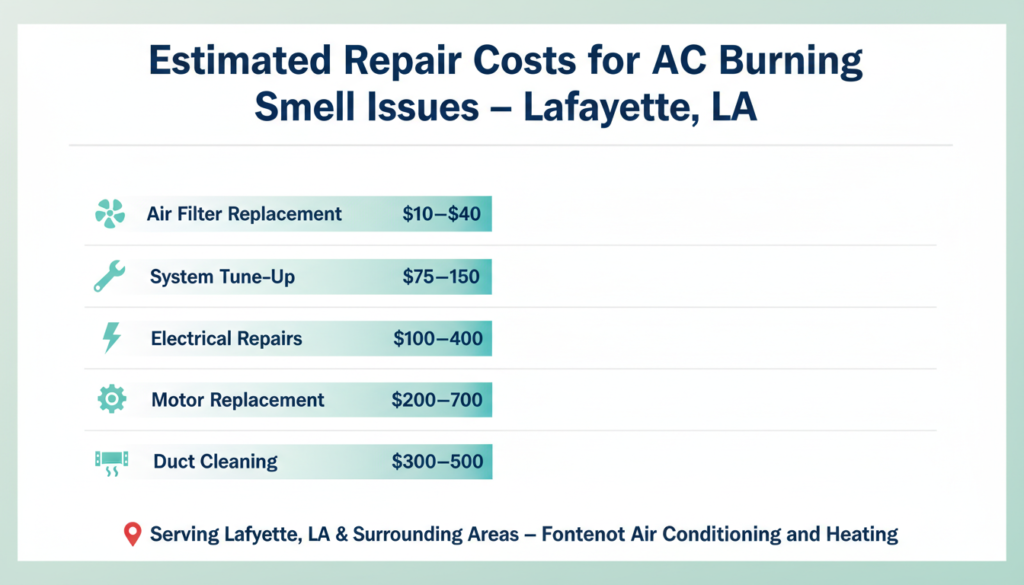
Replacing an air filter is the cheapest fix, typically just the cost of the filter itself, which runs between $10 and $40 depending on the type. A professional duct cleaning in the Lafayette area generally runs between $300 and $500 for a typical home. Motor replacement can range from $200 to $700, depending on the unit. Electrical component repairs, such as replacing a capacitor or fixing wiring, typically run between $100 and $400. A full system inspection and tune-up from a local HVAC company usually costs between $75 and $150.
Factors That Affect Repair Costs
The age and brand of your system, the complexity of the repair, the cost of replacement parts, and whether the work needs to be done on an emergency basis all affect the final price. Older systems that need multiple repairs at once may also require a conversation about whether repair or replacement makes more financial sense in the long run.
Emergency Checklist for AC Burning Smell Situations
Keep this checklist in mind if you ever face a serious burning smell from your AC vents.
Steps to Take During a Suspected Fire Risk
Turn off the AC at the thermostat immediately. Shut off power to the HVAC system at the breaker panel. Do not try to open or inspect the unit yourself. Get everyone out of the home if you see smoke or flames. Call 911 if you see fire or smoke. Contact Fontenot Air Conditioning and Heating for emergency HVAC service once the situation is safe.
When to Contact Emergency Services
If you see actual smoke or flames coming from your vents, air handler, or outdoor unit, call 911 first. Do not try to put out an electrical fire with water. Once the fire department has cleared the situation, your HVAC contractor can assess the damage and discuss next steps.
Frequently Asked Questions About Burning AC Smells
Why does my AC smell like burning when I turn it on?
The most common reason is dust that has settled on the heating elements, coils, or inside the ducts during a period of inactivity. When the system starts up, that dust burns off and creates a brief, musty heat smell. If the smell is stronger or smells like plastic or chemicals, something more serious may be going on.
How long should a burning dust smell last?
A normal burning dust smell should clear up within 20 to 30 minutes of the system running. If the smell persists longer than that or comes back every time you run the AC, you should have the system inspected by a professional.
Can a dirty air filter cause a burning smell?
Yes, absolutely. A clogged air filter restricts airflow through the system, which forces the blower motor to work harder than it was designed to. This extra strain can cause the motor to overheat and produce a burning smell. Replacing the filter is the first thing you should check.
Is it safe to run the AC with a burning smell?
No. You should turn the system off until you know what is causing the smell. Running an AC that has an electrical problem, a failing motor, or a blocked component can lead to further damage, higher repair costs, or a fire risk. When in doubt, shut it down and call a professional.
Who should I call in Lafayette, LA, for AC issues?
Fontenot Air Conditioning and Heating is a trusted name in Lafayette for residential HVAC service. Whether you are dealing with a burning smell from your AC vents, need a routine tune-up, or are facing an emergency repair, our team is ready to help. We know the local climate, we know the systems that Lafayette homes use, and we are committed to getting your home comfortable and safe as quickly as possible.
Fontenot Air Conditioning and Heating proudly serves Lafayette, LA, and the surrounding communities. If you are experiencing a burning smell from your AC vents in your house, contact us today for a professional inspection and fast, reliable service.