
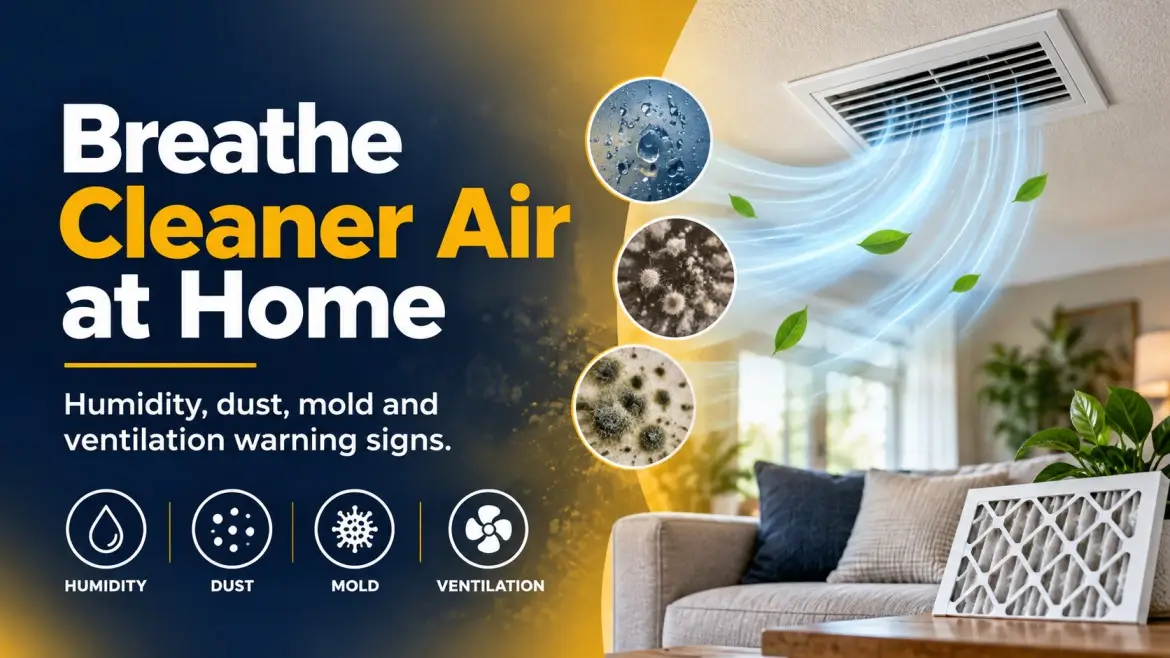
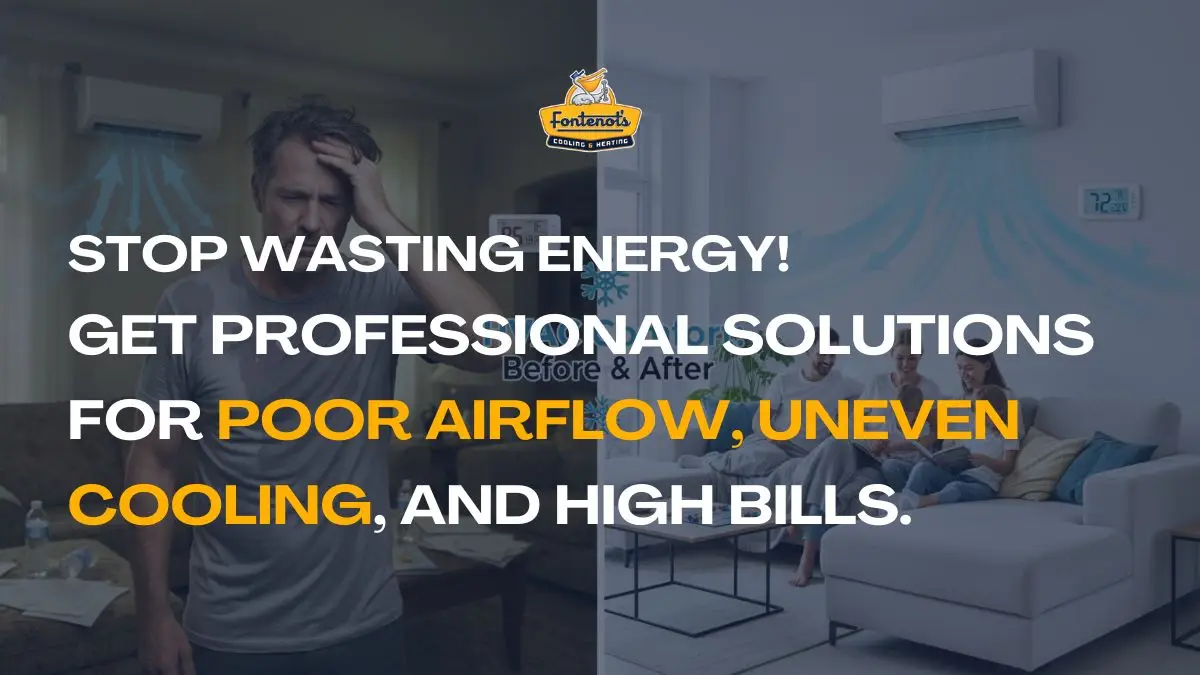
Achieving a perfectly comfortable home during peak heating or cooling seasons often seems like a mystery, full of uneven temperatures and high utility bills. However, the secret lies not just in your air conditioner, but in the efficiency of your home’s airflow. This guide dives deep into practical, high-impact strategies,from simple DIY fixes to professional intervention,that will ensure your HVAC system is delivering peak performance, improve airflow in house, eliminating stubborn hot and cold spots, and maximizing your AC’s efficiency.
The Critical Link Between Airflow and AC Efficiency
The comfort of your living space hinges on consistent air movement and effective ventilation. When airflow is restricted or poor, the living space can feel stuffy, and you will quickly notice uneven temperatures, often described as frustrating hot and cold spots.
This weak airflow forces your entire HVAC system to exert significantly more effort just to attempt to reach the set temperature, ultimately reducing its overall performance by as much as 15%. A direct consequence is weak air output coming from the vents.
The Core Benefits of Taking Action Now:
- Enhanced comfort: Eliminating temperature swings and stuffiness.
- Reduced energy bills: A system working efficiently uses less power.
- Extended HVAC system lifespan: Reduced strain means less wear and tear.
This deep dive focuses on synthesizing complex data into actionable insights, providing you with the necessary expertise to handle this critical aspect of home maintenance.
Identifying Airflow Issues: Signs Your System is Struggling
Recognizing the symptoms of compromised airflow is the first step toward finding a solution. Look for these key indicators that suggest your system is under duress due to ventilation problems:
- Insufficient Cooling: Despite turning the air conditioner down, you feel heat inside your home.
- Uneven Temperatures (Hot Spots): A definitive sign of poor conditioned air distribution is when certain rooms or areas are significantly warmer or colder than others.
- Weak Air Output: When you place your hand over a register, the air stream may feel faint, barely detectable, or simply lacking the intended velocity.
- Increased Dust: A surprising but accurate signal is a noticeable increase in dust settling on surfaces; this occurs because the filtration system struggles to manage air effectively when ventilation is poor.
- Pressure Imbalance: Unequal air pressure can manifest as noticeable drafts, or even doors rattling or shutting on their own within the house.
- Warm Air from Vents: If the AC is blowing air that feels genuinely warm, this may signal severe underlying airflow problems that require prompt attention.
High-Impact DIY Steps: The Foundation of Good Airflow (Focus: Quick, Regular Maintenance)
A. Master Your Filters (The #1 Airflow Killer)
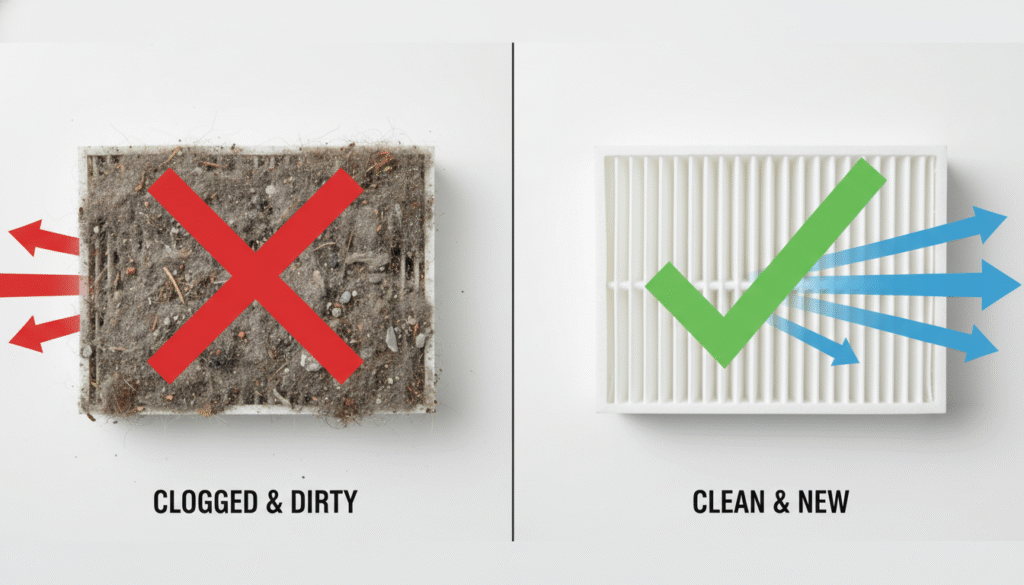
If you are experiencing restricted airflow, the most common and often simplest cause is a dirty or clogged air filter. A clogged filter drastically restricts the amount of air that can pass through the system, acting like a huge blockage.
Filter Maintenance Schedule and Impact:
| Maintenance Task | Frequency | Efficiency Impact | Upgrade Recommendation |
| Check Filter | Monthly, especially during periods of heavy use (summer or winter). | A dirty filter can reduce system efficiency and increase overall energy consumption by 5% to 15%. | Consider high-efficiency pleated filters (e.g., MERV 8–13) for better air quality. |
| Replace Disposable Filter | Every 1 to 3 months or approximately 90 days. | This practice prevents the most common cause of restricted air intake. | Ensure any upgraded filter is compatible with your HVAC unit to avoid inadvertently restricting airflow further. |
B. Clear and Adjust Vents and Registers
Properly managing the registers,both supply and return,is a practical step toward balancing your system that many homeowners overlook.
Actionable Steps for Register Management:
- Unblock Vents: Conduct a thorough inspection of all supply vents and return registers. They must not be blocked by common household items such as curtains, rugs, furniture, or any type of debris. A blocked vent means the conditioned air cannot reach the room it is intended for.
- Register Balancing (DIY Dampers): You can adjust floor or ceiling registers to perform a simple, practical balancing act. If a room is cooling too quickly, you can partially close the registers in that room. This action restricts the airflow slightly, thereby pushing more air volume and velocity toward rooms that are consistently hotter or further away from the air handler.
- A Critical Caution: While partial adjustment is helpful, you must avoid closing registers entirely. Closing too many vents, particularly in systems that are already restrictive or undersized, can cause serious problems, such as the evaporator coil freezing up. Always ensure at least 80% of your supply registers remain open.
C. Smart Thermostat Use and Placement

How you use your thermostat has a significant impact on both AC efficiency and airflow consistency. Proper setting minimizes the workload on your system.
Strategic Thermostat Settings:
- Summer Comfort Level: Experts recommend setting your thermostat to a comfortable yet efficient level, ideally 78°F when you are home during the summer.
- The Cost of Cold: Energy use increases substantially as you decrease the temperature. For every single degree cooler than 78°F, your energy consumption goes up by 8 percent.
- The 20-Degree Rule: Do not set the thermostat more than 20 degrees cooler than the outside air temperature. If the difference is too large, most AC units cannot handle the required workload and will run non-stop (known as short-cycling), which wastes energy and increases humidity indoors.
- Savings When Away: Upgrading to a programmable or smart thermostat allows you to set higher temperatures when the house is empty,specifically, setting it 7 to 10 degrees higher for a period of at least eight hours. This simple strategy can save you 5 to 15 percent on your monthly energy bills.
Thermostat Placement Matters:
The location of the thermostat significantly affects the accuracy of its readings. It is crucial to keep the thermostat away from heat sources. Direct sunlight, heat-generating appliances, or even close-by lamps can skew the temperature readings, causing the AC to believe the house is warmer than it truly is and consequently leading to unnecessary overcooling.
Stopping Air Loss: Ductwork and Home Sealing (Focus: Maximizing Conditioned Air Delivery)
The most common reason conditioned air fails to reach the intended rooms is that it leaks out long before it arrives. Stopping air loss focuses on the structure that moves the air (the ducts) and the structure that holds the air (the home envelope).
A. Seal and Insulate Ductwork

Ductwork is notoriously leaky, especially when running through unconditioned spaces like garages, attics, or crawlspaces. This represents a major energy waste.
The Extent of the Problem:
- Duct leaks are highly inefficient, causing up to 20% to 30% of conditioned air to be lost through holes and gaps before it reaches the vents.
Sealing and Insulation Techniques:
- Sealing Technique: To stop these significant losses, use duct sealant (mastic) or a specialized metal-backed (foil) tape to seal connections and gaps. Crucially, ordinary fabric-backed duct tape should not be used for sealing ductwork as it fails quickly.
- Insulate Exposed Ducts: Once the ducts are sealed, wrap any ductwork that runs through unconditioned areas with insulation to prevent temperature changes (heat gain in summer, heat loss in winter).
Schedule professional duct sealing and repair services
B. Improve Home Envelope Sealing
Even if your ducts are perfect, cold air can escape and hot air can infiltrate if your home’s envelope is compromised.
- Minimize Air Leaks: Stop cool air from escaping through cracks and gaps found around door frames, windows, the foundation, and attic hatches.
- Use the Right Tools: Use weatherstripping or door sweeps to address drafts around doors, and apply caulk effectively around windows to seal gaps.
C. Manage Heat and Humidity Indoors
Effective airflow optimization also involves reducing the overall cooling load imposed on your AC system.
Strategies to Minimize Cooling Load:
- Minimize Indoor Heat Gain: Avoid running heat-generating appliances, such as the dryer or oven, during the hottest parts of the day.
- Use Exhaust Fans: Run your kitchen and bathroom exhaust fans during and immediately after activities like cooking or showering. This action removes hot, moisture-laden air, significantly improving the ventilation and reducing the humidity the AC must handle.
- Close Windows and Doors: When the air conditioner is operating, ensure all external windows and doors are closed to prevent conditioned air from leaking out.
- Window Coverings: Solar heat gain through windows is a massive source of cooling inefficiency. During the afternoon, close shades, blinds, or curtains over south- and west-facing windows to block this heat, which otherwise forces the AC to run for extended periods.
Advanced Solutions for Uneven Temperatures and Low Flow (Focus: Troubleshooting Specific Room Issues)
When basic maintenance is complete but stubborn hot or cold rooms persist, advanced solutions are necessary to actively manipulate or boost air movement.
A. Utilizing Fans and External Ventilation
Fans are indispensable tools for circulation and creating localized comfort.
- Ceiling/Portable Fans: These devices circulate cool air within a space, creating a wind chill effect. In the summer, ceiling fans should be set to rotate counterclockwise to push air straight down. This effect makes the room feel up to 4 degrees cooler without having to drop the thermostat setting.
- Booster Fans and Smart Vents (AI-Driven Automation): These are targeted tools for specific problem areas.
- Booster Fans: Register insert fans or in-line duct booster fans can be installed to actively push air into rooms that are furthest from the main air handler, often struggling with consistently low flow.
- Smart Vents: Integrating smart vents, such as systems like Flare, offers dynamic balancing. These systems automatically monitor room temperature and adjust by opening or closing. This approach can solve persistent hot/cold spot issues dynamically, often providing a solution without the need for expensive, permanent zoning systems. The integration of AI-driven Automation in these devices helps optimize distribution.
- Exhaust/Attic Fans: Installing an attic fan helps draw hot, stagnant air out of the attic space and the home itself. This action relieves the overall cooling load on the HVAC system. Similarly, window fans can be used near open windows to either push stale indoor air out or pull cool outdoor air in, improving overall ventilation.
B. Register and Duct Configuration
Sometimes, the equipment itself is the limiting factor. Evaluating register quality and return air pathways can uncover critical bottlenecks.
- Upgrade Registers: Many homes are installed with inexpensive “stamped face” registers. Replacing these with higher-performing “bar-type” or “long throw” registers can dramatically increase the airflow delivered to that specific vent,potentially by up to 20%.
- Return Air Issues: One of the most critical overlooked areas is return air. When a room lacks sufficient or properly functioning return air vents,or if the doors are closed and air cannot transfer effectively via jumper ducts or transfer grilles,a negative pressure imbalance results. This imbalance severely restricts the overall system airflow and exacerbates hot spots.
C. Optimizing the Blower and Air Handler
The air handler is the heart of your system, and its settings control the speed and volume of air movement.
- Check Blower Speed: In older or multi-speed units, it is essential to confirm that the fan speed is set to the correct setting for cooling mode, which is typically High speed. A malfunctioning motor or blades coated with dust buildup can significantly reduce the amount of air being moved.
- Blower Settings (Auto vs. On/Circulate):
- Setting the fan to “Auto” means the fan only runs when the AC is actively cooling the air. This is generally the more energy-efficient choice.
- Setting the fan to “On” or “Circulate” causes the fan to run continuously, which actively helps maintain more even temperatures throughout the house. However, this continuous running may increase indoor humidity in climates with high moisture content.
System Health and Professional Intervention (Focus: Long-Term Efficiency and Diagnosis)
While DIY steps handle maintenance and quick fixes, long-term efficiency and solutions to deeply rooted airflow problems often require the expertise of a professional. These practices build Authority Signals and align with the principles of E-E-A-T (Expertise, Experience, Authoritativeness, and Trustworthiness) by relying on certified knowledge.
A. Schedule Regular Professional HVAC Maintenance

Regular maintenance is the bedrock of system health.
- Annual Tune-up: Schedule professional maintenance annually to ensure your AC unit operates at peak performance.
- Technician Tasks: During a tune-up, professionals perform crucial checks, including inspecting and cleaning sensitive components (like the condenser and evaporator coils and the fan). They also check safety mechanisms, measure voltage, and ensure that the refrigerant levels are properly maintained. This proactive service is essential for preventing serious problems and extending the lifespan of the entire system.
B. Professional Ductwork Diagnosis and Repair
Often, persistent hot rooms are not a user-error issue but rather a symptom of deeply ingrained ductwork problems. Many residential HVAC systems lack proper design and balancing from the outset, underscoring the fact that HVAC is a complex science.
Professional Diagnostic Steps:
- Underlying Issues: Hot rooms may be caused by undersized or physically compromised ducts (perhaps due to physical damage or critter intrusion).
- Air Balancing: Professional air balancing involves highly specialized testing to accurately identify the underlying causes of negative air pressure and uneven airflow. Technicians use specialized tools, such as anemometers and manometers, to precisely measure crucial metrics like static pressure, air velocity (measured in CFM/FPM), and overall air movement.
- Solutions for Long Runs: For rooms situated farthest away from the air handler (the most common culprits for poor airflow), a professional might recommend the installation of in-line dampers. These dampers are considered the “professional way” to permanently balance a system. Other solutions include installing return air pathways or, in extreme cases, suggesting a dedicated ductless mini-split system for highly isolated rooms.
C. Considering System Upgrades
When the current system cannot meet the demands of the home, an upgrade may be required.
- Zoning Systems: For large houses or structures that have complex additions where natural airflow is irregular, a zoned HVAC system offers a highly effective solution. Zoning allows for precise, independent temperature control in different areas of the home, dramatically improving efficiency and personalized comfort.
- System Replacement: If your existing AC unit has exceeded 10 to 15 years old or requires frequent, costly repairs, it is economically wise to consider replacing it. Look for a new, high-efficiency ENERGY STAR certified model.
- Installation Quality: A critical point of expertise is recognizing that even the best equipment can fail if installed incorrectly. Improper installation can reduce the system’s efficiency by up to 30 percent and shorten the equipment’s life dramatically. Always use certified professionals who can guarantee proper setup.
Schedule expert AC installation services in Lafayette
Conclusion: Maximizing Comfort and Savings
Achieving optimal AC efficiency and comfortable, balanced airflow is a layered process. It requires a deliberate combination of consistent, regular DIY cleaning and maintenance, alongside the strategic addressing of system bottlenecks like balancing issues and duct leaks.
The path to an efficiently cooled home is clear and defined by these actionable steps:
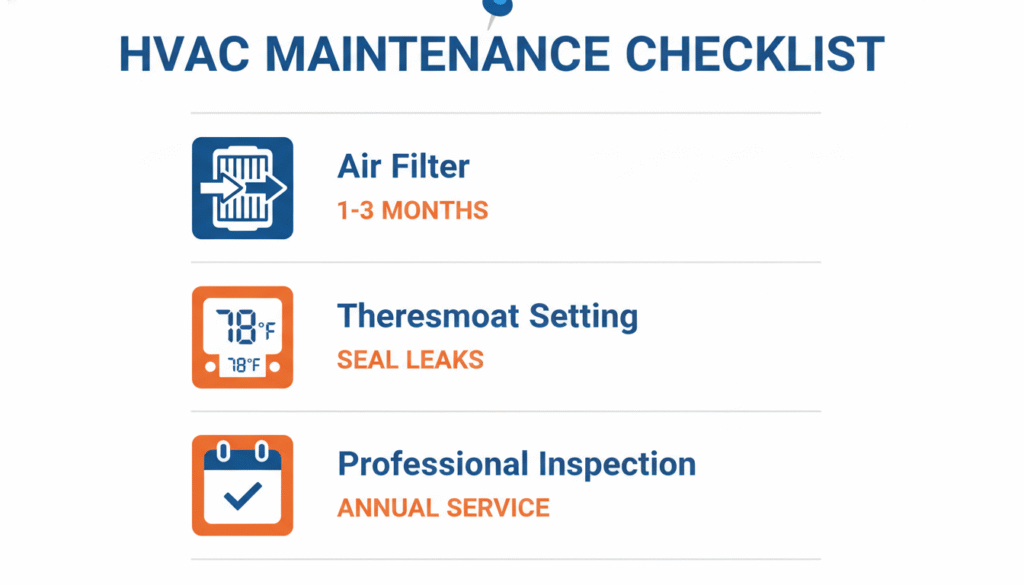
- Filters: Check and replace filters every 1 to 3 months.
- Thermostat: Set your system strategically, aiming for 78°F when home during the summer, and utilizing programmable settings to save 5-15 percent on energy bills when away.
- Sealing: Use mastic tape to seal duct leaks, preventing the loss of 20 to 30 percent of cooled air.
- Professional Care: Commit to scheduling annual maintenance to keep your complex equipment running at its peak.
By following these proactive guidelines, your HVAC system will deliver the necessary cool air efficiently, keeping you comfortable and potentially saving you hundreds on utility bills while extending the life of your valuable equipment. These next steps are crucial for immediate action: identify your needs, list the current pain points in your home, and consider requesting a professional demo or assessment if the DIY solutions fall short