Furnace Guide for Louisiana Homeowners: Repair, Maintenance, Costs & Warning Signs
Search
Recent Posts
Tags
Follow Us on
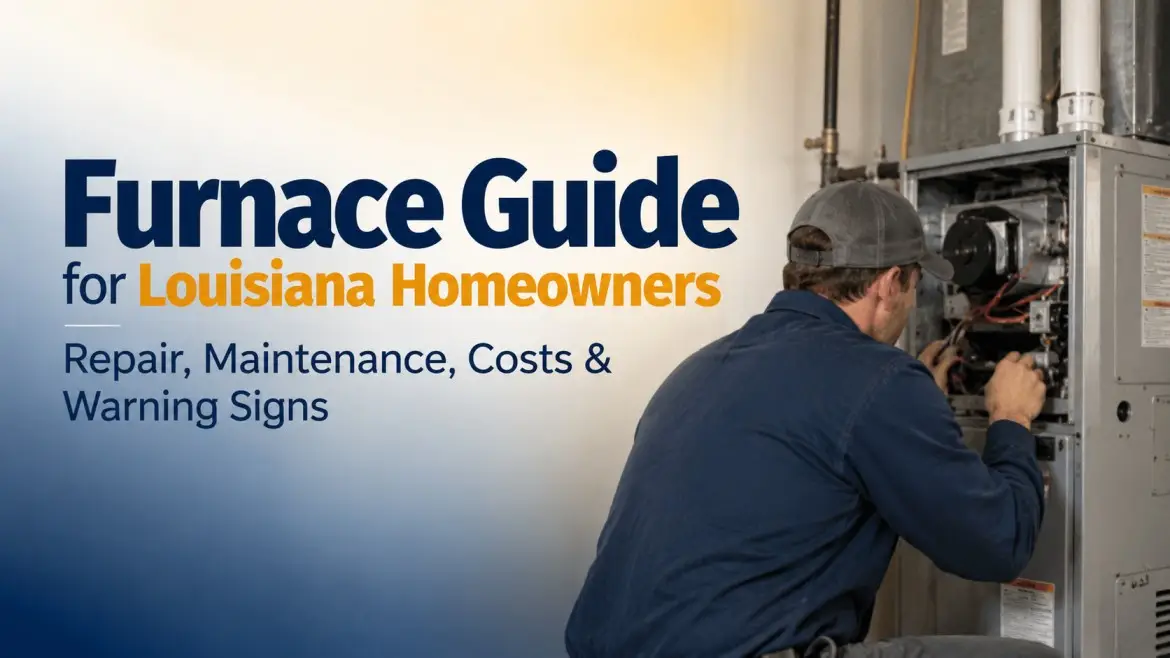
A furnace in a Louisiana home works less often than one in a northern state. It still has to run safely and reliably on the cold nights when you need it. This furnace guide covers how furnaces work, which type and efficiency level suit Acadiana’s mild winters, and what repair, maintenance, and replacement typically cost. It also explains which warning signs mean you should shut the system off and have a technician inspect it.
Key Takeaways
- Safety comes before cost. A gas smell, a sounding carbon monoxide alarm, or soot around the furnace means you should stop using it and get professional help. It is not something to troubleshoot yourself.
- Efficiency pays back more slowly in Louisiana. Your furnace runs relatively few hours each year, so a premium high-efficiency model saves less here than in cold climates. Compare the upfront cost against your realistic heating use.
- Sizing should come from a load calculation, not square footage. An oversized furnace short-cycles, heats unevenly, and wears out faster.
- Repair versus replacement is not a formula. Age, safety findings, repair history, efficiency, and whether your AC is also aging all belong in the decision.
- The federal 25C tax credit is gone. It no longer applies to equipment installed in 2026. Budget around current utility or manufacturer offers instead.
Most Acadiana homeowners don’t think about their furnace until the first cold front arrives in November or December. Then the system that sat idle through a long, humid summer is expected to fire up on the first try. That long idle stretch is part of why furnace ownership here looks different from what most national guides describe. Parts like ignitors and flame sensors can give trouble at the start of the season, and humidity and attic installations add their own considerations. Efficiency upgrades pay back on a different timeline too. This guide walks through each part of owning a furnace in South Louisiana, so you can recognize problems early, budget realistically, and ask better questions when a technician visits.
Understanding How a Home Furnace Works
How a Furnace Heats and Distributes Air
A furnace makes heat and a blower moves it through your home. In a gas furnace, the burners ignite and the flame heats a metal chamber called the heat exchanger. The air from your house passes over the outside of the heat exchanger and picks up that heat without mixing with combustion gases. The exhaust gases, which include carbon monoxide, leave the home through the flue or vent pipe.
An electric furnace skips combustion entirely. It passes household air over electric resistance heating elements, which work much like the coils in a toaster. Either way, warm air is pushed into the supply ducts and out through your vents. Cooler room air is pulled back through the return grilles to be heated again.
The Role of the Thermostat, Blower, and Ductwork
The thermostat starts the whole process. When the room temperature drops below your setting, it signals the furnace to begin a heating cycle. In a typical gas furnace, a small draft inducer fan starts first to clear the heat exchanger. The ignitor then lights the burners, and a flame sensor confirms the flame. Once the heat exchanger is warm, the blower motor starts moving air.
The ductwork decides how well that heat actually reaches each room. Leaky ducts in a hot attic, undersized returns, or crushed flex duct can make a healthy furnace seem weak. In most Louisiana homes, the furnace blower and ducts are shared with the central air conditioner. That means duct and airflow problems usually affect both heating and cooling.
Types of Furnaces for Louisiana Homes
Gas Furnaces
Natural gas furnaces burn fuel delivered by your gas utility. They produce strong, warm air and tend to have lower operating costs per unit of heat in many markets. They need proper venting, a gas supply line, and combustion safety checks. That makes installation more involved and makes annual inspection more important. In Acadiana, gas furnaces are common in homes that already have a natural gas connection for a water heater or range.
Electric Furnaces
Electric furnaces are simpler machines with no flame, gas valve, or flue. That generally means fewer safety concerns and a lower installed cost. Because they don’t burn fuel, electric furnaces produce no carbon monoxide and have no risk of gas leaks or backdrafting. The trade-off is operating cost. Resistance heat converts electricity to heat at a one-to-one ratio, so it uses more electricity than a heat pump to deliver the same warmth. It can also require a substantial electrical circuit.
Oil and Propane Furnaces
Oil furnaces are uncommon in South Louisiana. Propane furnaces sometimes appear in rural properties outside natural gas service areas. Propane works much like natural gas but is stored in an on-site tank, so you manage fuel deliveries. A furnace may also need a conversion kit to run on propane instead of natural gas. If you have a propane or oil system, the same combustion safety and venting principles apply.
How Fuel Type Affects Furnace Costs and Operation
Fuel type shapes both what you pay upfront and what you pay each winter.
| Furnace type | Upfront cost | Operating cost considerations | Safety and maintenance notes |
| Natural gas | Higher (venting, gas line, combustion components) | Depends on local gas rates; often lower cost per unit of heat | Needs combustion, venting, and CO safety checks |
| Electric | Lower | Resistance heat uses more electricity per unit of heat than a heat pump | No combustion; needs adequate electrical capacity |
| Propane | Moderate to high | Depends on delivered propane prices and tank arrangements | Same combustion concerns as natural gas |
| Oil | Moderate to high | Rare locally; fuel delivery and storage required | Requires regular burner service |
Louisiana’s electricity pricing narrows the gap between fuel types. One national cost analysis puts Louisiana’s residential electricity rate at about $0.11 per kWh, well below the national average. At that price, electric heating becomes more competitive over the full life of the system. Your actual comparison depends on your utility rates, how much you heat, and whether a heat pump is part of the picture.
Furnace Guide: Choosing the Right Heating System for a Louisiana Home
Do Louisiana Homes Need a Furnace?
Not every Louisiana home needs a traditional furnace, but every home needs dependable heat. Acadiana winters are generally short and mild. Cold fronts and occasional freezes still bring nights when a heating system is a matter of comfort and protecting your home, not a luxury. Many homes here heat with an electric heat pump. Others use a gas or electric furnace paired with a central air conditioner. The right answer depends on your existing equipment, whether you have gas service, your electrical capacity, and how you want the system to behave during a hard freeze.
How Louisiana’s Mild Winters Affect Furnace Selection
Because a furnace here runs only part of the year, a few priorities shift:
- Reliability after long idle periods matters. Components like ignitors, flame sensors, and blower motors sit unused for months, so a pre-season check is especially useful.
- Premium efficiency pays back slowly. Fewer heating hours mean smaller annual fuel savings, so the added cost of a top-tier model takes longer to recover.
- The blower works year-round. In most homes, the furnace blower also moves air for the AC through the long cooling season. Blower quality and settings can matter more than burner efficiency.
Furnace vs. Heat Pump vs. Dual-Fuel Systems
A furnace creates heat by burning fuel or through electric resistance. A heat pump moves heat from the outdoor air into your home, and it cools in summer as well. Because it moves heat rather than creating it, a heat pump can deliver more heat energy than the electricity it consumes in mild weather. That is one reason heat pumps are popular in the Gulf South. As temperatures drop, a heat pump’s capacity and efficiency decline, and it often relies on backup electric heat strips.
A dual-fuel system pairs a heat pump with a gas furnace. The heat pump handles mild weather, and the furnace takes over during colder snaps. For some Acadiana homes with gas service, this combination offers efficient everyday heating plus strong heat during a freeze.
Heat pumps and furnaces use different efficiency ratings. Heat pumps are rated by SEER2 for cooling and HSPF2 for heating, while furnaces use AFUE. These numbers aren’t interchangeable, so compare systems by estimated operating cost for your home rather than by rating alone.
How Humidity and Indoor Air Quality Affect Heating Comfort
Humidity doesn’t disappear in winter here. Damp, mild days between cold fronts can leave a home feeling clammy even when the thermostat reads correctly. A furnace dries the air somewhat while it runs, but it isn’t a dehumidifier. On mild, humid days, the system may not run enough to affect moisture at all.
Air filtration matters too, because the furnace blower circulates all of your home’s air in both seasons. A clogged or overly restrictive filter reduces airflow. Low airflow can make a furnace overheat and trip its safety controls. If allergies, dust, or lingering humidity are ongoing concerns, filtration and humidity control belong in the same conversation as your heating equipment.
Furnace Efficiency, AFUE, and Operating Costs
What Is an AFUE Rating?
AFUE stands for Annual Fuel Utilization Efficiency. The Department of Energy defines it as the ratio of useful heat output to energy input across a full heating season, expressed as a percentage. An 80% AFUE gas furnace turns about 80% of the fuel it burns into usable heat, and the rest leaves through the vent. You’ll typically find the rating on the unit’s yellow EnergyGuide label or in the manufacturer’s specifications.
Electric furnaces effectively deliver all of the electricity they use as heat inside the home. That doesn’t make them cheaper to run. AFUE measures how efficiently fuel becomes heat, not what that fuel costs.
Standard vs. High-Efficiency (Condensing vs. Non-Condensing)
Gas furnaces fall into two broad groups:
- Non-condensing (standard efficiency): These vent hot exhaust through a metal flue. The highest efficiency a non-condensing, non-weatherized gas furnace can reach is 80%, and 80% AFUE is also the current federal minimum for these furnaces.
- Condensing (high efficiency): Furnaces rated 90% AFUE or higher are called condensing furnaces. They pull extra heat out of the exhaust gases by condensing water vapor, heat that would otherwise escape up the vent. They produce acidic condensate that must drain properly and usually vent through plastic pipe.
This distinction is about to matter more. A DOE rule requires new non-weatherized gas furnaces to meet a minimum of 95% AFUE starting December 18, 2028. The D.C. Circuit Court of Appeals upheld that standard in November 2025 after a challenge from the gas industry. Separate legislation that would change how appliance standards are set has since been introduced in Congress, so check the current status if your timing depends on the 2028 date. The rule covers new equipment, not repairs, so parts for your existing furnace aren’t affected.
Condensing furnaces raise some installation questions in Louisiana. Many local homes have furnaces in attics. Switching from a standard to a condensing unit can mean new venting, a condensate drain route, and a plan to protect that drain during a hard freeze. A contractor should evaluate these before quoting.
How Furnace Efficiency Affects Energy Costs
Higher AFUE means less fuel per unit of heat. The dollar savings depend on how much you heat, local gas prices, your home’s insulation and air leakage, duct condition, and installation quality. Moving from 80% to 95% AFUE reduces gas use by about 15.8%, since the calculation is a ratio rather than a straight difference in percentage points. If your furnace runs only a modest number of hours each winter, 15.8% of a small gas bill is a small number. That’s why the upgrade math looks different in Lafayette than in Chicago.
How to Choose the Right Efficiency Level for Louisiana
For many Acadiana homes, the practical questions are:
- How much do you actually heat? Look at your winter gas bills versus summer bills. The difference roughly shows what heating costs you now.
- What will installation require? A condensing furnace may need new venting and condensate handling, especially in an attic.
- How long will you own the home? Longer ownership gives efficiency savings more time to add up.
- Is a heat pump or dual-fuel system a better fit? In a mild climate, heat pump efficiency often matters more than furnace AFUE.
A standard-efficiency furnace can be a reasonable choice for a lightly used system under the current rules. A high-efficiency or dual-fuel setup may make more sense for homes with larger heating loads, longer ownership plans, or a desire to reduce gas use. Ask for installed quotes on both options so the comparison uses real numbers.
How to Choose the Right Furnace Size
What Furnace BTU Capacity Means
Furnace capacity is measured in BTUs per hour, the amount of heat the furnace can deliver. A gas furnace usually lists both input BTUs (fuel burned) and output BTUs (heat delivered). The output figure reflects efficiency. Electric furnaces are often rated in kilowatts.
Why Proper Sizing Matters (How Contractors Calculate It)
The right size depends on how much heat your specific home loses on a cold design day, not just its square footage. Two houses of identical size can need very different furnaces depending on insulation, windows, orientation, air leakage, ceiling height, and duct location.
The industry-standard approach uses ACCA methods. Manual J calculates the home’s heating and cooling loads, and Manual S guides equipment selection to match those loads. Duct design is often evaluated under Manual D. Fontenot’s says its team performs load calculations when installing a new furnace so the unit is sized for the home. When comparing quotes from any contractor, ask how the size was determined.
Problems Caused by an Oversized or Undersized Furnace
Oversized furnaces are the more common mistake. They heat the air near the thermostat quickly and shut off before the rest of the house evens out. This short-cycling creates temperature swings and hot and cold rooms. It also adds wear on ignition components, can make blowers and ducts noisier, and may cost more to buy than needed.
Undersized furnaces run for long stretches and may not keep up during a cold snap. In Acadiana’s climate, a slightly smaller correctly calculated furnace is often less of a problem than an oversized one. The goal is a unit sized to the actual load.
Furnace Features and Heating Technologies
Single-Stage, Two-Stage, and Modulating Furnaces
- Single-stage: The burner is either fully on or off. It’s simple and generally the least expensive.
- Two-stage: The furnace runs on a lower setting most of the time and switches to full capacity when needed. The result is longer, gentler cycles and more even temperatures.
- Modulating: The burner adjusts in small increments to match demand closely. It offers the steadiest comfort at the highest price.
In a mild climate, a two-stage furnace often gives the most noticeable comfort gain for the money. The lower stage covers most Louisiana winter days without the blast-and-stop pattern of a single-stage unit.
Variable-Speed Blower Motors and Smart Thermostats
A variable-speed blower (often an ECM motor) adjusts airflow to what the system needs. Because the same blower serves your AC, it can help with quieter operation and better moisture removal during cooling, depending on system setup. For many Louisiana homes, that summer benefit matters as much as any winter benefit.
Smart and programmable thermostats can reduce wasted heating when you’re asleep or away. They’re only as good as their compatibility with your equipment. Staged furnaces, heat pumps, and dual-fuel systems need thermostats that can control them correctly.
Zoning, Air Filtration, and Humidity Control Options
Zoning uses motorized dampers and multiple thermostats to heat and cool areas separately. It can help in two-story homes or houses with rooms that never seem to match the rest. Zoning must be designed with the equipment’s airflow limits in mind.
Upgraded filtration can improve dust and allergen control, but higher-efficiency filters can also restrict airflow. Your system’s blower and ducts need to handle the filter you choose.
Humidity control, usually through a whole-home dehumidifier, addresses the moisture problems Louisiana homes face in the shoulder seasons and summer, which a furnace can’t fix on its own.
Key Furnace Components Homeowners Should Know
Thermostat and Controls
The thermostat tells the system when to run. Inside the furnace, a control board manages the heating sequence: inducer, ignition, flame confirmation, and blower timing. It also monitors safety switches. Many furnaces flash diagnostic codes through a small light on the control board. Those codes can give a technician a starting point, though they aren’t a complete diagnosis.
Heat Exchanger, Burners, Ignitor, and Flame Sensor
- Heat exchanger: This separates combustion gases from the air you breathe. Cracks or holes can allow combustion gases to escape, which is why it’s a central focus of safety inspections.
- Burners: These mix gas and air and produce the flame. Dirt, rust, or debris can cause uneven or poor combustion.
- Ignitor: Most modern furnaces use a hot surface ignitor instead of a standing pilot light. Ignitors are a common wear item.
- Flame sensor: This confirms that the burners actually lit. If it can’t detect a flame, often because of buildup on the sensor rod, the furnace shuts off the gas as a safety measure.
Blower Motor, Air Filter, and Flue/Venting System
The blower motor moves air through the furnace and ductwork for both heating and cooling. The air filter protects the blower and heat exchanger from dust and keeps airflow healthy. The flue or vent system, helped by the draft inducer motor, carries combustion gases safely outdoors. Venting problems are safety problems, so any damage, disconnection, or rust on vent piping deserves professional attention.
Common Furnace Problems and Warning Signs
Furnace Won’t Turn On, Ignite, or Stay Lit
A furnace that won’t start can have many possible causes. Some are simple, and some require testing. Before calling for service, you can safely check a few basics:
- Confirm the thermostat is set to Heat, set above room temperature, and has power or fresh batteries.
- Make sure the furnace’s power switch (it often looks like a light switch near the unit) is on.
- Check whether the breaker for the furnace has tripped. If it trips again after one reset, leave it off and call a technician.
- Look at the air filter. A badly clogged filter can cause overheating and safety shutdowns.
If the furnace tries to light and then shuts off within seconds, one possible cause is a dirty or failing flame sensor. Ignitor, gas supply, venting, and control problems can produce similar symptoms. Pinpointing the cause requires a technician to watch the ignition sequence and test components. Don’t repeatedly restart a furnace that keeps failing to light.
Furnace Blows Cold Air
Cold air from the vents can come from something as simple as a thermostat fan set to On instead of Auto. With that setting, the blower runs constantly, even between heating cycles. It can also point to an ignition failure, an overheating safety shutdown caused by poor airflow, or, on heat pump systems, a normal defrost cycle. If the fan setting isn’t the issue and the air stays cold, the furnace needs professional diagnosis.
Short-Cycling, Weak Airflow, or Uneven Heating
Short-cycling, where the furnace turns on and off frequently, can come from oversizing, a clogged filter, a poorly placed thermostat, or a safety limit switch reacting to overheating. Weak airflow often traces to filters, blocked returns, blower issues, or duct leaks and restrictions. Uneven heating is frequently a duct and airflow issue rather than a furnace-capacity issue.
These symptoms overlap, so avoid assuming one component has failed. A technician may measure temperature rise across the furnace, check static pressure in the ducts, and inspect the blower before recommending a repair.
Strange Noises or Rising Energy Bills Without Increased Usage
A soft whoosh when the burners light and the sound of moving air are normal. Loud banging at ignition can signal delayed ignition, which should be inspected promptly. Squealing or grinding can point to blower motor or inducer problems. Rattling may be loose panels or a failing motor.
Rising energy bills without a change in your habits can come from dirty components, duct leaks, a thermostat problem, or declining equipment performance. Because the furnace blower also runs during cooling season, blower and duct issues can show up on summer bills as well.
When Warning Signs Require Immediate Attention
Stop using the furnace and get help if you notice any of the following:
- A rotten-egg or sulfur smell (possible gas leak)
- A carbon monoxide alarm sounding
- Soot, scorch marks, or melted wiring around the furnace
- A burning electrical smell or visible smoke
- A lazy, yellow, or floating burner flame instead of a steady blue one
- Water leaking from a furnace in an attic near electrical components or ceilings
Burning dust smells are common for a short time when a furnace starts for the first time each season. A persistent or electrical burning smell is different and warrants shutting the system off.
Furnace Repair in Louisiana
How Much Does Furnace Repair Cost?
Most furnace repairs involve one component, so costs vary widely depending on what failed. As a local reference point, Fontenot’s furnace services page lists simple fixes at roughly $150–$300 and major repairs at $500–$1,500, with pricing given before work starts. Your actual price depends on the diagnosis, parts, and access to the unit.
Common Furnace Repairs and Their Costs
National cost guides give a sense of how individual repairs compare:
- Ignitor replacement: usually about $150–$250, though after-hours emergency calls can push it to $350–$500
- Draft inducer motor: about $200–$1,500 to repair or replace
- Limit switch: around $100–$375
- Gas valve: about $200–$800
- Control board: roughly $300–$650, depending on brand and installation complexity
- Electric furnace heating element: about $125–$400 per element; most electric furnaces have two to five
- Heat exchanger replacement: about $1,000–$3,000, and technicians usually replace rather than repair them because of carbon monoxide risk
Treat these as national reference points, not quotes. Labor rates, parts availability, and your specific equipment all affect the final number.
Factors That Affect Repair Costs
Several things move a repair price up or down:
- The specific part and brand. OEM parts often cost more than universal replacements.
- Access. Attic and crawlspace installations can add labor time.
- Timing. Nights, weekends, and holidays often cost more.
- Equipment age. Older furnaces can need harder-to-find parts.
- Warranty status. A parts warranty may cover the component but not labor.
- Related damage. A failed part can sometimes point to an underlying problem, such as an overheating motor caused by restricted airflow.
When you get a repair quote, ask what failed, how it was confirmed, and whether anything upstream contributed to the failure. For a heat exchanger finding in particular, it’s reasonable to ask the technician to show you the evidence.
Furnace Maintenance: Schedule, Tune-Up, and Costs
How Often Should a Furnace Be Serviced?
Once a year is the standard recommendation for furnace maintenance, and it matters most for gas and propane furnaces because of combustion safety. Electric furnaces have no combustion components but still benefit from a periodic check of the heating elements, electrical connections, and blower.
Best Time to Service a Furnace in Louisiana
Early fall, before the first real cold front, is the practical window in Acadiana. The furnace has usually sat unused since the previous winter while the blower worked all summer for the AC. A pre-season visit catches ignition and sensor issues before you need heat. It also avoids the scheduling rush that tends to follow the first cold snap.
What Does a Furnace Tune-Up Include?
A thorough gas furnace tune-up typically covers:
- Inspecting and cleaning burners and the flame sensor
- Checking ignitor condition and the ignition sequence
- Inspecting the heat exchanger for visible cracks, corrosion, or soot
- Testing safety controls such as limit switches and pressure switches
- Checking venting and the draft inducer
- Measuring gas pressure and verifying proper combustion
- Inspecting the blower, motor, and electrical connections
- Checking the condensate drain on high-efficiency furnaces
- Checking thermostat operation and system temperature rise
- Checking for carbon monoxide
Ask what a specific maintenance visit includes, because the scope varies between contractors.
Homeowner Basics (Filter Changes, Clear Vents)
A few low-risk habits help between professional visits:
- Check the filter monthly during heavy use and replace it as the manufacturer recommends. Louisiana systems run the blower through much of the year, so filters can load up faster than you’d expect.
- Keep supply vents and return grilles unblocked by furniture, rugs, or curtains.
- Keep the area around the furnace clear. Don’t store paint, gasoline, cleaning chemicals, or boxes near a gas furnace.
- Test your carbon monoxide alarms and replace batteries as recommended.
Leave burner cleaning, gas components, electrical parts, and anything inside sealed panels to a technician.
How Much Does Maintenance Cost, and Is It Worth It?
Maintenance is usually billed as a fixed-price visit or through an annual plan, and prices vary by company and system type. Fontenot’s offers furnace maintenance plans, so ask directly for current pricing and what each plan covers.
Whether maintenance is worth it depends less on guaranteed savings and more on what it catches. An annual inspection is your routine chance to find combustion and venting problems. It can also find worn ignitors before they fail on a cold night and keep manufacturer warranty requirements satisfied. Many manufacturers require documented maintenance to keep warranty coverage, so check your warranty terms.
Furnace Safety and Carbon Monoxide Protection
Gas Furnace Safety Basics
Every home with a gas or propane appliance should have working carbon monoxide alarms. Install them on every level of the home and near sleeping areas, following the alarm manufacturer’s instructions. Keep the furnace area clear of stored items, and never block combustion air openings. Don’t cover a furnace or run it with its panels removed, because the blower door is part of the safety design.
Signs of a Gas Leak or Carbon Monoxide Problem
Possible gas leak: a rotten-egg smell, hissing near gas lines, or a sudden strong odor near the furnace. Leave the home immediately. Don’t flip switches, use phones, or light anything inside. Once you’re outside, call your gas utility or 911.
Possible carbon monoxide problem: Carbon monoxide has no color or odor. Warning signs can include a sounding CO alarm, headaches, dizziness, nausea, or flu-like symptoms that improve when you leave the house. Soot around the furnace or excess condensation on windows near gas appliances can also be signs. If a CO alarm sounds or anyone has symptoms, get everyone outside to fresh air and call 911. Don’t go back in until responders say it’s safe.
Why Heat Exchanger Inspection Matters
The heat exchanger is the barrier between combustion gases and your home’s air. Over years of heating and cooling cycles, metal can crack or corrode, especially if the furnace has overheated from restricted airflow. A damaged heat exchanger doesn’t always produce obvious symptoms. That’s why inspecting it is a key reason for annual professional service. A technician may use visual inspection, cameras, and combustion testing to evaluate it.
When to Shut Down a Furnace and Seek Professional Help
Turn the furnace off at the thermostat and power switch and call for service if you see soot, scorch marks, a yellow or unstable flame, or water pooling around the unit. Do the same if you smell burning wiring or the furnace repeatedly trips a breaker. Don’t reset safety switches, bypass controls, or restart a furnace that keeps shutting itself off. Those shutdowns are the system protecting you. For emergencies, Fontenot’s states it offers 24/7 emergency furnace service, 365 days a year.
Furnace Installation and Replacement Costs
How Furnace Installation Works
A proper installation starts before the old unit comes out. The contractor should evaluate your home’s heating load, existing ductwork, venting, gas line, electrical supply, and how the furnace connects to your AC coil. Installation day typically includes removing the old furnace, setting the new unit, and connecting gas, electrical, venting, and condensate lines. It ends with startup and testing of combustion, temperature rise, and safety controls. A good installer will also walk you through the thermostat and filter access.
How Much Does Furnace Replacement Cost?
National figures give a starting range. Fixr puts average furnace replacement at about $4,800, with most homeowners paying $2,800–$7,500. For gas furnaces specifically, Angi reports a typical range of $3,800–$10,000, with some high-efficiency models reaching around $12,000.
One change for 2026: the federal 25C Energy Efficient Home Improvement Credit ended for equipment placed in service after December 31, 2025. Don’t count on that credit when budgeting. Check with your utility and equipment manufacturer for any current rebates or promotions.
Factors That Affect Installation Costs
- Fuel type and efficiency. Condensing gas furnaces cost more and may need new venting and drains.
- Capacity and staging. Two-stage and modulating units cost more than single-stage.
- Installation location. Attic installations can add labor and require specific drain and access considerations.
- Ductwork condition. Leaky or undersized ducts may need repair or modification.
- Gas and electrical work. An electric furnace can require a panel upgrade if your existing panel lacks capacity, which adds roughly $500–$2,000.
- Permits and inspections. These vary by jurisdiction.
- Thermostat and accessories. Filtration, zoning, or humidity equipment add cost.
What’s Included, and How Long Does It Take?
Quotes vary in scope, so compare them line by line. Check whether each quote includes old-unit removal, permits, venting changes, thermostat, duct modifications, and warranty registration. Fontenot’s says its replacements include removing the old system, installing the new one, and handling permits and inspections, with the old furnace removed at no extra charge.
A straightforward like-for-like furnace swap often takes a day. Jobs involving new venting, fuel conversions, ductwork, or a matched AC replacement can take longer. Ask your contractor for a realistic timeline for your specific job.
Furnace Lifespan and When to Replace It
Average Furnace Lifespan and Factors That Affect It
Most furnaces last 15 to 20 years with routine maintenance such as annual tune-ups, and electric furnaces can average 20 to 30 years with good care. Actual lifespan depends on installation quality, sizing, maintenance, filter habits, and airflow. Environment matters too. In Louisiana, the furnace cabinet and blower often run year-round for cooling, and humid attics can contribute to rust and corrosion over time.
Signs Your Furnace Needs Replacement, Not Repair
Replacement becomes worth discussing when you see:
- A confirmed cracked or failed heat exchanger
- Repeated repairs over consecutive seasons
- Significant rust or corrosion on the cabinet, burners, or venting
- Parts that are discontinued or hard to source
- Ongoing comfort problems that repairs haven’t solved
- A major failure on a furnace that is also old and inefficient
None of these alone automatically means replacement. They’re reasons to have a candid repair-versus-replace conversation.
How Age and Repair Costs Affect the Decision
Age is one factor, not the decision itself. A well-maintained 17-year-old furnace with a minor ignitor problem may be worth repairing. A 12-year-old furnace with a failed heat exchanger and a history of breakdowns might not be. Weigh these factors together:
| Factor | Leans toward repair | Leans toward replacement |
| Safety | No safety findings | Heat exchanger or venting failure |
| Repair history | First significant repair | Repeated repairs in recent seasons |
| Repair cost | Modest relative to the furnace’s remaining value | Large repair on an aging, inefficient unit |
| Parts | Readily available | Discontinued or hard to find |
| Comfort | Heats well when working | Chronic uneven heating or noise |
| AC condition | AC is newer and compatible | AC is also aging or failing |
| Ownership plans | Selling soon | Staying long-term |
Useful questions to ask your technician: What exactly failed? What condition is the rest of the furnace in? What are the likely next repairs? How would a new system change your comfort and operating costs?
Benefits of Replacing an Older Furnace
A new furnace can offer improved safety features, quieter operation, better comfort through staged heating and variable-speed blowers, and a fresh manufacturer warranty. Efficiency gains are possible, but their size depends on your old unit, your usage, and installation quality. If your ducts were leaky or undersized, a new furnace alone won’t fix that. The best replacement projects address the whole system.
Should You Replace Your AC at the Same Time?
In most Louisiana homes, the furnace and air conditioner work as one system. The furnace blower moves air across the AC’s indoor coil. Replacing both together allows properly matched equipment, a single installation, and coordinated warranties. Rated efficiency and warranty coverage can depend on using manufacturer-approved combinations.
Refrigerant is part of this decision. Under EPA rules, new residential split-system air conditioners now use lower-global-warming-potential refrigerants such as R-454B or R-32, rather than R-410A. Existing R-410A systems can still be serviced. If your AC is newer and working well, replacing only the furnace may be perfectly reasonable, provided the new furnace is compatible with your existing coil. If your AC is also aging, ask for quotes on both approaches.
Conclusion
Owning a furnace in Louisiana means planning for a system that sits idle for months and runs hard for a few cold weeks. It also shares a blower and ductwork with the AC you rely on most of the year. A few points carry the most weight:
- Treat gas smells, CO alarms, soot, and flame problems as reasons to stop and get help.
- Size equipment by load calculation.
- Weigh efficiency upgrades against how much you actually heat.
- Make repair-versus-replace decisions on the full picture rather than age alone.
A pre-season inspection is the simplest way to start the winter with confidence. If your furnace is showing warning signs or you’re weighing repair against replacement, Fontenot’s furnace services cover repair, maintenance, installation, and replacement for homes in Lafayette, Broussard, Youngsville, and other Acadiana communities. If you’re comparing a furnace with a heat pump or dual-fuel setup, the heating services overview covers those options. To schedule a furnace inspection or talk through replacement options, contact Fontenot’s Air Conditioning & Heating at (337) 789-6070.