Common Heating Problems in Louisiana: Causes, Warning Signs & What to Do
Search
Recent Posts
Tags
Follow Us on
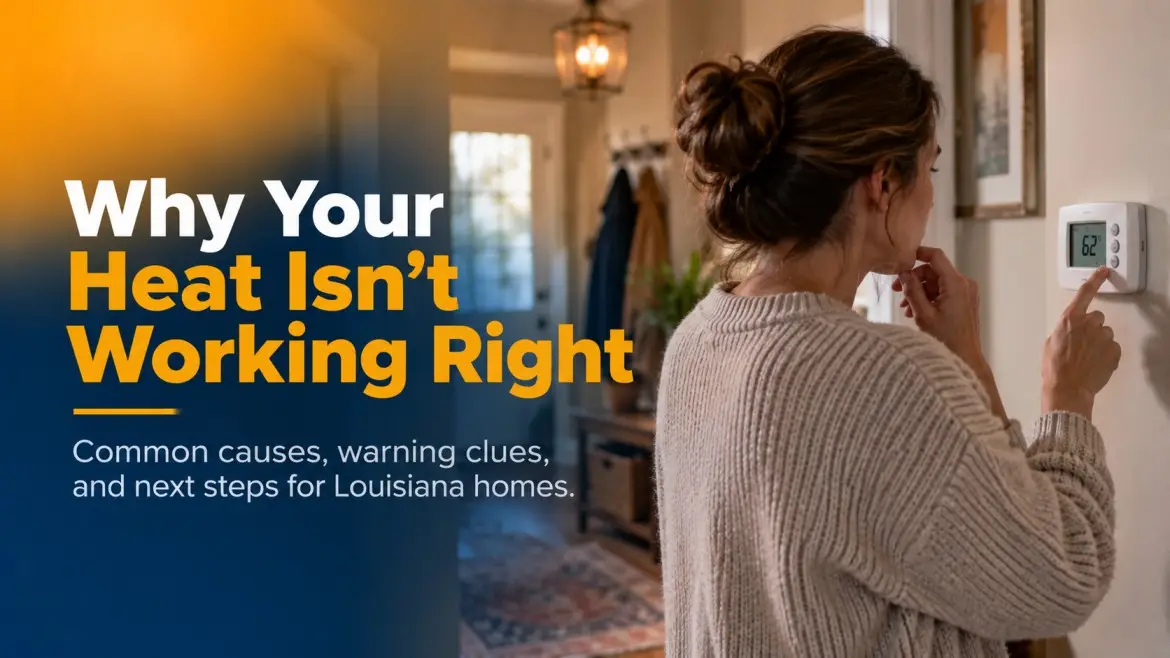
If your heater won’t turn on, won’t stay on, or isn’t putting out enough warm air, the cause is usually one of a handful of things: a thermostat or power issue, a dirty filter restricting airflow, an ignition or flame-sensor problem on a gas furnace, or a refrigerant/defrost issue on a heat pump. A few simple, safe checks can often narrow it down, but any smell of gas, burning, or a tripped safety control means it’s time to stop troubleshooting and call a technician.
Key takeaways:
- Start with the basics. Thermostat settings, breakers, the furnace switch, and the air filter cause a large share of “no heat” calls and take two minutes to check safely.
- Lukewarm air from a heat pump isn’t automatically a malfunction. Heat pumps typically deliver supply air in the 85–95°F range, noticeably cooler than the 120°F+ air a gas furnace produces, even when the system is working correctly.
- Some symptoms mean stop and call immediately: a gas odor, a burning or electrical smell, repeated breaker trips, or a carbon monoxide alarm are not DIY situations.
- Repeated resets are a warning sign, not a fix. A system that keeps shutting itself off is protecting itself from something; forcing it back on can hide a developing problem.
- Age alone doesn’t decide repair vs. replace. Repair history, safety, part availability, and comfort matter as much as the number on the birth certificate.
Louisiana winters are short, but they’re rarely gentle about it. A heating system that sits idle for months gets asked to work hard during a sudden cold snap, and that’s exactly when small issues tend to show up. This guide walks through what the most common heating problems usually mean, which checks are safe to try yourself, and when the smart move is to stop and call a professional. Whether you’re dealing with a gas furnace, heat pump, electric furnace, or ductless mini-split in the Lafayette, Broussard, or Youngsville area, the goal here is the same: help you understand what’s happening and what to do next.
⚠️ Safety first: gas smell, burning smell, or a CO alarm
If you smell gas, smell something burning or electrical, or your carbon monoxide alarm is sounding, do not troubleshoot the system. Leave the house (or get everyone to fresh air), and call your gas utility or 911 from outside if you suspect a gas leak. For a CO alarm, get to fresh air and call for emergency help before doing anything else. Don’t flip switches, don’t try to find the source, and don’t go back in until it’s confirmed safe. More detail on recognizing these situations is below, but the action is the same regardless of the cause: get out, then get help.
Heating Problem Quick-Diagnosis Chart
This table is a starting point, not a diagnosis. It’s meant to help you understand what a symptom commonly points to and whether it’s reasonable to check yourself; a technician may still find a different underlying cause once the system is inspected.
| Symptom | Likely Causes | Safe to DIY? | Urgency |
| Heater won’t turn on at all | Thermostat settings/batteries, tripped breaker, blown fuse, furnace switch off, gas valve closed | Yes: check thermostat, breaker, switch | Routine, unless no backup heat in cold weather |
| Blows cold or lukewarm air | Heat pump normal operation (85–95°F supply air), dirty filter, ignition failure, thermostat set to “fan” | Partially check thermostat mode and filter | Routine to time-sensitive |
| Runs but doesn’t heat enough | Dirty filter, undersized ductwork, low refrigerant, failing heating elements | Partially check/replace filter | Routine |
| Runs constantly, won’t shut off | Thermostat miscalibration, oversized/undersized system, stuck relay | No needs diagnosis | Time-sensitive (comfort + cost) |
| Short cycles (on/off repeatedly) | Dirty flame sensor, restricted airflow, overheating, failing control board | No needs diagnosis | Time-sensitive |
| Weak airflow from vents | Dirty filter, blocked vents/returns, duct restriction, failing blower | Partially check filter and vents | Routine |
| Uneven heating / cold spots | Duct leaks or sizing issues, zoning problems, insulation gaps | No needs inspection | Routine |
| Strange noises (banging, squealing, rattling) | Loose panels/ductwork, worn blower motor/bearings, ignition delay | No needs diagnosis | Time-sensitive |
| Burning, musty, or electrical odors | Dust burn-off (brief, at season start), wiring issue, mold in ducts | No, if smell persists or is electrical | Potentially urgent — see safety section |
| Water, ice, or pooling around unit | Frozen outdoor coil, condensate drain clog, defrost cycle failure | No — needs inspection | Time-sensitive |
| Heating bills suddenly higher | Reduced efficiency, duct leakage, aux/emergency heat running too much, thermostat issue | Partially — check thermostat mode | Routine |
Heating Problems by Symptom: Causes and What to Do
Heater Won’t Turn On at All
Start with the least complicated explanations. Confirm the thermostat is set to “Heat,” not “Cool” or “Off,” and that the temperature setpoint is actually above the current room temperature. If it’s a battery-powered thermostat, weak batteries can cause a blank or unresponsive screen. Next, check whether a standard circuit breaker for the system has tripped, and confirm the furnace’s power switch, often a light-switch-style toggle near the unit, is in the “on” position. For gas systems, make sure the gas valve supplying the furnace hasn’t been shut off.
If those basics check out and the system still won’t respond, the cause is likely something that requires inspection: a failed control board, a blown fuse inside the unit, a bad ignition component, or a safety switch that’s holding the system off intentionally. That’s the point to call for service rather than keep testing components.
Heater Blows Cold or Lukewarm Air
This is one of the most misread symptoms in Louisiana homes with heat pumps. A heat pump doesn’t generate heat by burning fuel; it moves heat from the outside air into your home, which means the air coming out of your vents is meant to feel warm, not hot. Supply air from a properly operating heat pump typically runs around 85–95°F, compared with 120°F or higher from a gas furnace. Air that feels lukewarm against your skin at 98.6°F body temperature can still be doing its job.
That said, lukewarm air isn’t always normal. If the air feels barely above room temperature, cycles between warm and cold, or the system is a gas furnace (which should produce noticeably hot air), something else may be going on: a dirty filter restricting airflow, an ignition problem lighting inconsistently, or,r on a heat pump, the system defaulting to backup heat or struggling with a refrigerant issue. If a filter check doesn’t resolve it, this calls for a technician.
Heater Runs but Doesn’t Produce Enough Heat
When the system runs and produces some heat but never quite reaches the thermostat setting, airflow restriction is a common starting point: a clogged filter, blocked vents, or a return air grille covered by furniture or rugs. Beyond airflow, undersized ductwork, a heat pump low on refrigerant, or heating elements that aren’t fully functioning can all leave a system working but underperforming. If a fresh filter and open vents don’t close the gap, the next step is a technician checking airflow, refrigerant charge (on heat pumps), or heating output directly.
Heater Runs Constantly and Won’t Shut Off
A system that never satisfies the thermostat and cycles into continuous operation is often either miscalibrated (the thermostat is reading the room temperature inaccurately), mismatched in size to the home’s heating load, or stuck due to a relay or control issue holding it on. Continuous running that isn’t matching a genuinely cold day is worth having looked at beyond the comfort issue; it typically means higher energy use than the system was designed for.
Heater Short Cycles
Short cycling turning on, running briefly, then shutting off repeatedly is different from constant running, and it’s usually a sign the system is protecting itself from something. Common contributors include a dirty flame sensor on a gas furnace (which can cause the system to sense a false ignition failure and shut down), restricted airflow causing the unit to overheat and trip a safety limit, or a failing control board. Short cycling puts extra wear on components with every start-up, so it’s worth having a technician diagnose the specific cause rather than letting it continue.
Weak Airflow From Vents
Weak or barely-there airflow usually starts with the filter. A clogged filter is one of the most common and easiest-to-fix causes of reduced airflow throughout a system. If a fresh filter doesn’t help, check that supply vents aren’t blocked by furniture, curtains, or rugs, and that return air grilles are clear. Airflow problems that persist after those checks often point to duct restrictions, a failing blower motor, or duct sizing issues that need a technician’s evaluation, particularly static pressure measurement.
Uneven Heating and Cold Spots
Rooms that never seem to reach the same temperature as the rest of the house often trace back to ductwork leaks along the supply run, an undersized duct feeding a distant room, or a return-air imbalance. In homes with additions or converted spaces, the original duct design may simply not have accounted for the extra square footage. Insulation gaps in walls, attics, or crawl spaces can compound the problem by letting heat escape faster than the system can replace it in that specific area. This is generally a diagnosis-and-inspection issue rather than something to troubleshoot from indoors.
Strange Noises: Banging, Booming, Squealing, or Rattling
Some noise at startup is normal; ductwork expanding as air warms is a common, harmless sound. But noises that are new, loud, or continue during operation are worth paying attention to:
- Banging or booming at ignition can indicate delayed ignition on a gas furnace, where gas builds up briefly before lighting.
- Squealing often points to a worn blower motor belt or bearing.
- Rattling can mean loose panels, ductwork, or a component working itself loose over time.
Delayed ignition in particular is a safety-relevant issue, since it involves a small gas buildup igniting all at once. Any banging on startup from a gas system is worth having inspected rather than ignored.
Burning, Musty, or Electrical Odors
A faint dusty smell for the first hour or so after the first cold-weather startup of the season is common; it’s usually dust burning off heating elements or a furnace’s heat exchanger that hasn’t run in months, and it typically clears on its own. A smell that lingers, gets stronger, or smells specifically like burning plastic, rubber, or electrical components is different and should not be ignored; it can indicate a wiring or motor issue. Musty odors are more often related to moisture or mold in ductwork or around a condensate drain than to the heating components themselves. Persistent burning or electrical smells warrant shutting the system off and calling for service; see the safety section below.
Water, Ice, or Pooling Around the Unit
On a heat pump, some frost on the outdoor unit during cold, humid weather is normal;l the system periodically runs a defrost cycle to clear it. Ice that builds up and doesn’t clear, or a heavy coating covering the coil, usually means the defrost cycle isn’t completing correctly. Standing water near an indoor unit is more often related to a clogged condensate drain line than to the heating function itself, but it still needs attention, since it can lead to water damage. Either situation is worth having a technician look at rather than chipping ice off the unit or ignoring the water.
Heating Bills Suddenly Higher Than Normal
A heating bill that jumps well beyond what a comparably cold month would normally cost has a few common explanations: reduced system efficiency from a lack of maintenance, duct leakage sending heated air into an attic or crawl space instead of your living area, or a heat pump auxiliary or emergency heat running more than it should. Auxiliary heat is a backup electric-resistance heat source that’s far less efficient than the heat pump’s normal operation, and it’s designed to supplement the system during very cold snaps or when the thermostat calls for a large temperature jump. If it’s running constantly rather than occasionally, that’s usually a sign something else needs attention. A technician can help identify which of these is driving the increase.
Problems Specific to Your Type of Heating System
Gas Furnace-Specific Problems
Ignition and Pilot Light Failure
Most furnaces built in the last couple of decades use electronic ignition rather than a standing pilot light, but either type can fail to light reliably. Causes range from a dirty or misaligned sensor to a failing ignitor component or a gas supply issue. This isn’t a DIY repair; it involves gas components and electrical parts that need proper testing.
Dirty Flame Sensor and Clogged Burners
The flame sensor confirms that the burner has actually ignited; if it’s coated with residue, it can falsely “see” no flame and shut the system down, even though ignition is happening normally. This is a common cause of short cycling. Clogged or dirty burners can cause uneven flame patterns, reduced heat output, or ignition delays. Cleaning these components involves accessing the burner assembly and should be handled by a technician.
Gas Valve and Gas Supply Issues
A gas valve that isn’t opening fully, a supply line issue, or low gas pressure can all prevent proper ignition or cause a furnace to run poorly. Gas pressure and valve adjustments require specialized tools and training; this is squarely in professional-diagnosis territory, not a homeowner check.
Cracked Heat Exchanger and Why It’s Serious
The heat exchanger separates the combustion process from the air that circulates through your home. A crack in it can allow combustion byproducts, including carbon monoxide, to mix with your breathing air. This is one of the more serious furnace problems and one reason CO detectors near sleeping areas matter. A cracked heat exchanger can’t be diagnosed by symptom alone; it requires a technician’s inspection with the proper tools, and it’s not something to guess about or delay.
Limit Switches, Control Boards, and Safety Lockouts
Furnaces have built-in safety switches designed to shut the system down if it detects an unsafe condition, such as overheating or airflow restriction. A system that keeps tripping into “lockout” is telling you something is wrong upstream, often restricted airflow or an overheating issue,e and repeatedly resetting it without addressing the underlying cause is a bad idea (more on that below).
Heat Pump-Specific Problems
Defrost Cycle Failure and a Frozen Outdoor Unit
Heat pumps periodically reverse into a brief defrost cycle to clear frost that naturally forms on the outdoor coil during cold, humid conditions common in Louisiana winters. If the defrost control, sensor, or reversing valve isn’t working correctly, frost can build into a solid layer of ice that blocks airflow across the coil and reduces heating capacity. A light, temporary frost coating is normal; a thick or persistent ice buildup is not.
Reversing Valve Stuck in Cooling Mode
The reversing valve is what allows a heat pump to switch between heating and cooling modes. If it sticks in the cooling position, the system will blow cold air even when set to heat, a different situation from the normal lukewarm heat-pump air described earlier. This requires a technician to diagnose and repair.
Auxiliary or Emergency Heat Running Constantly
As mentioned above, auxiliary (or emergency) heat is a backup electric-resistance heat source. It’s normal for it to kick in briefly during very cold weather or right after a large thermostat adjustment. It’s not normal for it to run continuously; that usually points to the heat pump’s primary heating function not keeping up, which can stem from a refrigerant issue, a failing compressor, or other mechanical problems that need diagnosis.
Low Refrigerant and Refrigerant Leaks
A heat pump low on refrigerant will struggle to move heat efficiently, which can show up as weak heating, longer run times, or ice buildup on the outdoor coil. Refrigerant issues require an EPA-certified technician handling refrigerant is not a homeowner task, and it’s illegal to release it into the atmosphere. It’s worth knowing that current EPA rules do not require you to replace a working R-410A system; older refrigerant is becoming more expensive to source as the industry transitions toward newer, lower-impact refrigerants in new equipment, but existing systems can still be serviced.
Electric Furnace and Heat Strip Problems
Failed Heating Elements and Sequencers
Electric furnaces and heat-strip systems rely on multiple heating elements that switch on in sequence rather than all at once, which helps manage the electrical load. If one or more elements fail, or the sequencer controlling them malfunctions, the system may run but produce noticeably less heat, or heat unevenly. This requires electrical testing to diagnose safely.
Loose Connections and Repeated Breaker Trips
Electric heating equipment draws significant current, and loose electrical connections can cause breakers to trip repeatedly or components to overheat. A breaker that trips once might be incidental; one that trips repeatedly on the same circuit is a sign of a real electrical issue and should not simply be reset again and again (see the section below on why that matters).
Ductless Mini-Split Problems
Blinking Indicator Lights and Error Codes
Most mini-split systems communicate problems through blinking light patterns or digital error codes on the indoor unit. These codes are manufacturer- and model-specific, so the count or pattern of blinks means different things across brands. If your unit is displaying an error, note the pattern or code and have a technician familiar with that manufacturer’s system interpret it rather than guessing.
Clogged Filter Screens and a Dirty Blower Wheel
Mini-split indoor units use washable filter screens that need regular cleaning more often than a typical central-system filter, since they’re usually visible and easy to remove. A clogged screen restricts airflow and reduces heating performance. Over time, the blower wheel behind the filter can also accumulate dust and buildup, which isn’t always reachable with a simple filter cleaning and may need a technician’s service.
A mini-split is a type of heat pump, so issues involving refrigerant, defrost cycles, or the reversing valve follow the same explanations covered in the heat pump section above.
Ductwork Problems That Affect Every System Type
Regardless of what type of heating equipment you have, if it relies on ductwork to distribute air, duct condition affects performance. Leaky, undersized, poorly sealed, or damaged ducts can cause weak airflow, uneven heating, and higher bills even when the heating equipment itself is working correctly. If you’re seeing duct-related symptoms cold rooms far from the unit, whistling at registers, or ducts you can see are damaged it’s worth having your ductwork specifically evaluated rather than assuming the equipment is at fault.
Are Heating Problems Dangerous? Warning Signs You Shouldn’t Ignore
Most heating problems are inconvenient, not dangerous. But a handful of situations involve real safety risk and call for immediate action rather than troubleshooting.
Carbon Monoxide: Symptoms, Alarm Response, and Risk Factors
Carbon monoxide (CO) is a colorless, odorless gas that can result from incomplete combustion in a gas furnace, including from a cracked heat exchanger, a blocked flue, or a burner that isn’t combusting properly. A yellow or flickering burner flame (instead of the typical blue flame) can be a visual sign of incomplete combustion and is worth having checked, though it’s not something to rely on as your only warning system.
Early CO exposure symptoms include headache, dizziness, nausea, confusion, or flu-like symptoms that improve when you leave the house an be easy to mistake for something else. If your CO alarm sounds, or you or others in the home experience these symptoms with no other explanation, get everyone to fresh air immediately and call for emergency help. Working carbon monoxide detectors near sleeping areas are one of the most important safety tools in any home with a fuel-burning furnace.
How to Recognize a Natural Gas or Propane Leak
Utilities add a distinctive sulfur or “rotten egg” odor to natural gas and propane specifically so leaks are noticeable, since the gas itself is naturally odorless. A hissing sound near a gas line or appliance, dead or discolored vegetation near an outdoor gas line, or that distinct smell are all signs to take seriously. If you suspect a gas leak, don’t operate light switches, appliances, or phones inside the home; leave immediately, and call your gas utility or emergency services from a safe distance.
Electrical and Fire Hazards
Repeated breaker trips, a burning or electrical odor, visible scorch marks, sparking, or a system that shows any sign of overheating are all electrical fire risk indicators. These aren’t symptoms to wait out or reset past; they call for shutting the system off and having a qualified technician inspect it.
When to Shut the System Off Immediately and Call for Emergency Service
In any of the following situations, shut the system off at the switch or breaker (only if you can do so without touching anything electrically live or suspect) and call for service right away:
- A gas smell, anywhere in the home
- A sounding carbon monoxide alarm, or CO-like symptoms in the household
- Visible smoke, sparking, or a strong electrical/burning odor that doesn’t clear
- A breaker that trips repeatedly when you try to restore power
None of these situations benefit from “waiting to see”; the safer move is always to stop, get to safety if needed, and call for professional help.
What to Do Before You Call: Safe DIY Checks
These checks are safe for most homeowners because they don’t involve opening the equipment, touching electrical components, or handling gas or refrigerant. If any of them turn up something beyond a simple fix, or if you’re not comfortable doing them, skip ahead and call for service.
Check Thermostat Settings, Mode, and Batteries
Confirm the system is set to “Heat” (not “Cool,” “Off,” or “Auto” if you specifically want heat running), the fan is set to “Auto” rather than “On” if you want it to cycle normally, and the setpoint is above the current room temperature. Replace batteries if the display is dim, blank, or unresponsive.
Check the Furnace Switch, Breaker, and Gas Valve
Locate the furnace’s power switch (often near the unit, resembling a standard light switch) and confirm it’s on. Check your home’s electrical panel for a tripped breaker associated with the heating system. For gas furnaces, confirm the gas shutoff valve on the line to the furnace is open.
Inspect and Replace the Air Filter
Pull the filter and hold it up to a light. If you can’t see light through it clearly, it’s restricting airflow and should be replaced. A dirty filter is one of the most common contributors to weak heat, poor airflow, and even short cycling from overheating.
Open Blocked Vents and Clear the Return
Walk through the house and make sure supply vents aren’t closed or blocked by furniture, rugs, or curtains, and that return air grilles have clear airflow. Closing vents in unused rooms is a common habit, but it can throw off the system’s airflow balance.
Check the Outdoor Unit for Ice, Debris, or Lost Power
For a heat pump, look at the outdoor unit for heavy ice buildup, leaves, or debris restricting airflow around it. Clear obvious debris if you can do so safely, but don’t attempt to chip away ice that can damage the coil. Confirm the outdoor unit has power (it typically has its own disconnect box nearby).
Reset the System and Why Repeated Resets Are a Bad Idea
Turning the system off at the thermostat or breaker for about a minute and then back on can clear a one-time glitch. What it shouldn’t become is a routine: if the system trips off again shortly after a reset, or you find yourself resetting it more than once for the same issue, that’s the system’s safety controls doing their job protecting it from an actual problem. Continuing to force it back on can allow a developing issue, like an overheating condition or an ignition problem, to get worse or create a safety risk. One reset is a reasonable troubleshooting step; a pattern of resets is a sign to call for service.
When to Stop Troubleshooting and What You Should Never DIY
Stop and call a technician if:
- The basic checks above don’t resolve the issue
- The system requires more than one reset for the same problem
- You smell gas, smoke, or anything electrical/burning
- You hear new or worsening banging, squealing, or grinding
- There’s ice, water, or visible damage you didn’t cause
And regardless of how confident you feel, don’t attempt to: open sealed refrigerant components, replace electrical parts like capacitors or control boards, adjust gas pressure or combustion settings, bypass a safety switch or limit control, or work on a heat exchanger or flue. These tasks require licensed, trained technicians with the right tools not because of overcaution, but because the failure modes involve gas, high voltage, or combustion byproducts.
Why Heating Problems Are So Common in Louisiana Homes
Mild Winters, Sudden Cold Snaps, and Systems That Sit Unused for Months
Acadiana’s winters are short, and heating systems here often sit idle for most of the year before being called into heavy use during a cold snap. Equipment that hasn’t run in months is more likely to reveal a dust-related odor, a sluggish ignition attempt, or a component that was already quietly wearing out. Sudden, sharp temperature drops also mean the system may be asked to run continuously right out of the gate, with little gradual ramp-up a pattern that tends to expose existing weak points quickly.
Humidity, Coastal Air, and Corrosion of Heating Components
South Louisiana’s humidity doesn’t take a winter break. Persistent moisture in the air contributes to corrosion on outdoor heat pump components and electrical connections over time, which can shorten the life of parts that would hold up longer in a drier climate. This is one reason routine maintenance and a periodic check of outdoor equipment matter in this region specifically.
Attic and Crawl-Space Equipment and Duct Heat Loss
Many Louisiana homes route ductwork and sometimes equipment itself through attics or crawl spaces that see significant temperature swings. Ducts running through an unconditioned attic lose heat to that space before it ever reaches your rooms, especially where insulation or sealing has degraded over time. This can look like a “weak heat” problem when the equipment itself is functioning normally.
Insulation Gaps in Older Homes
Older homes in the area often have insulation levels that predate current building practices, and gaps around windows, doors, and attic access points let conditioned air escape. This isn’t something a heating system repair can fix; it’s a building-envelope issue that affects how hard your system has to work regardless of its condition.
How to Prevent Common Heating Problems
The Pre-Season Checklist Before Louisiana’s First Cold Snap
Before the first real cold front of the season arrives, it’s worth doing a quick walkthrough: replace the filter if it’s due, confirm all supply vents and returns are open and unobstructed, clear leaves or debris from around the outdoor unit, and test that the system responds when you switch the thermostat to “Heat.” Catching an issue during a mild afternoon is far less stressful than discovering it during a cold snap.
Annual Professional Heating Maintenance: What’s Actually Included
A professional heating maintenance visit typically goes beyond what a homeowner can check,k inspecting and testing ignition components, checking flame sensors and burners, verifying safety controls and limit switches are functioning, checking electrical connections, and,d on heat pumps, checking refrigerant levels and the defrost cycle. This kind of inspection is designed to catch developing issues like a dirty flame sensor or a loose electrical connection before they cause a no-heat situation.
Filter Replacement Schedule by Filter Type
Standard 1-inch fiberglass or pleated filters generally need replacement every 30–60 days during heavy use, though homes with pets or higher dust levels may need more frequent changes. Thicker media filters (4–5 inch) commonly used in some systems can often go 3–6 months between changes. Mini-split filter screens are typically washable and benefit from cleaning more frequently,y often monthly during regular use, since they’re easy to access. Check your specific equipment’s documentation, since requirements vary by manufacturer and filter type.
Keeping the Outdoor Heat Pump Unit Clear Year-Round
A heat pump’s outdoor unit needs open airflow to work efficiently in both heating and cooling seasons. Keep at least a couple of feet of clearance around it, trim back vegetation, and clear leaves, pine straw, or debris regularly. This matters year-round in Louisiana, not just during winter, since a heat pump runs in both directions.
Repair or Replace? How to Decide
When Heating Repair Is the Right Call
Repair is often the more reasonable choice when the system is relatively young, has a limited repair history, the specific failure is well understood, the part is available, and the cost of repair is modest relative to the value of extending the system’s service life. A single, isolated issue a failed capacitor, a dirty flame sensor, a clogged filter is usually not a reason to consider replacement on its own.
Age, Condition, and Repair-History Red Flags
No single factor should decide a repair-vs.-replace decision on its own, but a few things are worth weighing together: how many repairs the system has needed recently, whether the same component keeps failing, whether replacement parts are becoming hard to source for that model, and how the system is performing overall beyond the immediate issue. A system with a clean repair history and one new problem tells a different story than one that’s needed several service calls in the past year or two.
Comparing Repair vs. Replacement Costs
Rather than applying a fixed percentage rule, it generally makes sense to weigh the specific repair estimate against what a comparable new system would cost, factor in how much useful life the repair is likely to buy you, and consider whether ongoing repairs are becoming a pattern rather than a one-time event. A technician who diagnoses the specific issue can give you the repair cost and help you understand what it addresses; that’s a more useful starting point than a generic rule of thumb.
Efficiency, Operating Costs, and What Louisiana Repairs Typically Run
Newer heating equipment is generally built to more efficient standards than equipment installed a decade or more ago, but actual energy savings after a repair or replacement depend on your specific system, ductwork condition, home insulation, and how the equipment is used, not on the equipment alone. Repair and replacement costs vary widely based on the specific problem, equipment type, and installation complexity, so it’s best to get a direct estimate for your situation rather than relying on a general number. For a closer look at what drives HVAC costs in this area, our heating services page covers what’s involved in more detail.
Heating Problem FAQs
Is it normal for a heat pump to blow air that doesn’t feel very hot?
Yes, within reason. Heat pumps typically produce supply air in the 85–95°F range, which feels warm but not hot compared to a gas furnace. If the air feels barely above room temperature or the system is cycling oddly, that’s worth checking further.
How often should I change my furnace filter in Louisiana?
Most standard filters need changing every 30–60 days during regular heating use, though homes with pets, dust, or allergy concerns may need more frequent changes. Check your specific filter type, since thicker media filters can go longer between changes.
Why does my heater smell like burning when I first turn it on for the season?
A brief dusty smell during the first startup of the season is common and usually clears within an hour as accumulated dust burns off the heating components. A smell that persists, gets stronger, or smells electrical is different and worth having checked.
Can I fix a heating problem myself?
Some checks are safe to do yourself: thermostat settings, breakers, filters, and clearing debris around outdoor units. Anything involving gas, refrigerant, electrical components inside the unit, or safety controls should be left to a licensed technician.
My furnace keeps shutting off and turning back on. Is that dangerous?
Short cycling isn’t necessarily an emergency, but it does mean something is causing the system to stop itself repeatedly, often airflow restriction or an ignition sensor issue. It’s worth having diagnosed rather than left alone, since it adds wear with every cycle.
How do I know if I need a repair or a whole new system?
There’s no single cutoff. A technician diagnosing the specific problem, combined with your system’s age, repair history, and how it’s performing overall, gives you a much clearer answer than an age or cost rule alone.
Conclusion: Getting Your Heat Back Fast in Louisiana
Most heating problems come down to a manageable list of causes: airflow restriction, thermostat or electrical basics, ignition issues, or, for heat pumps, defrost and refrigerant-related concerns. A few safe checks can often point you in the right direction, but symptoms involving gas, electrical smells, repeated resets, or safety-control trips call for a professional rather than more troubleshooting. If your heating system in the Lafayette, Broussard, Youngsville, or greater Acadiana area needs a closer look, Fontenot’s Air Conditioning & Heating provides residential and commercial heating repair, maintenance, and installation services, available 7 AM–8 PM, seven days a week. Reach out to schedule a diagnostic visit and get the specific cause and the right fix identified.