Expert HVAC Troubleshooting Guide | Fontenot Air Condition and Heating
It’s another sweltering Louisiana summer day, and your air conditioner is running but not cooling your Lafayette home. You can hear the unit humming outside, but the temperature inside keeps climbing. Sound familiar?
When your AC stops blowing cold air in Lafayette’s humid climate, it’s more than just uncomfortable; it can quickly become a health concern. The good news? Many cooling issues have simple fixes you can handle yourself before calling a professional.
In this guide, we’ll walk you through the 12 most common reasons why your air conditioner isn’t cooling, from quick DIY fixes to situations where you’ll need expert help from the team at Fontenot Air Condition and Heating.
Quick Answer: Why Your AC Isn’t Cooling
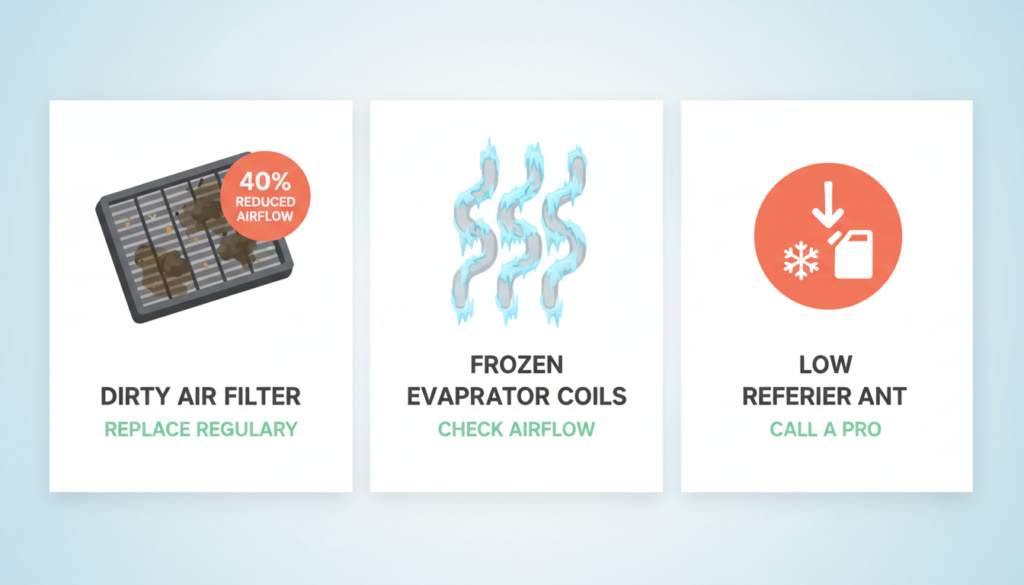
The three most common causes of an AC not cooling are:
1. Dirty air filter (blocks airflow and reduces cooling efficiency)
2. Frozen evaporator coils (caused by restricted airflow or low refrigerant)
3. Low refrigerant levels (usually from a leak in the system)
First step: Check your thermostat settings (set to COOL mode, temperature 5°F below room temperature) and inspect your air filter. These two simple checks solve about 40% of cooling problems.
5-Minute AC Diagnostic Checklist
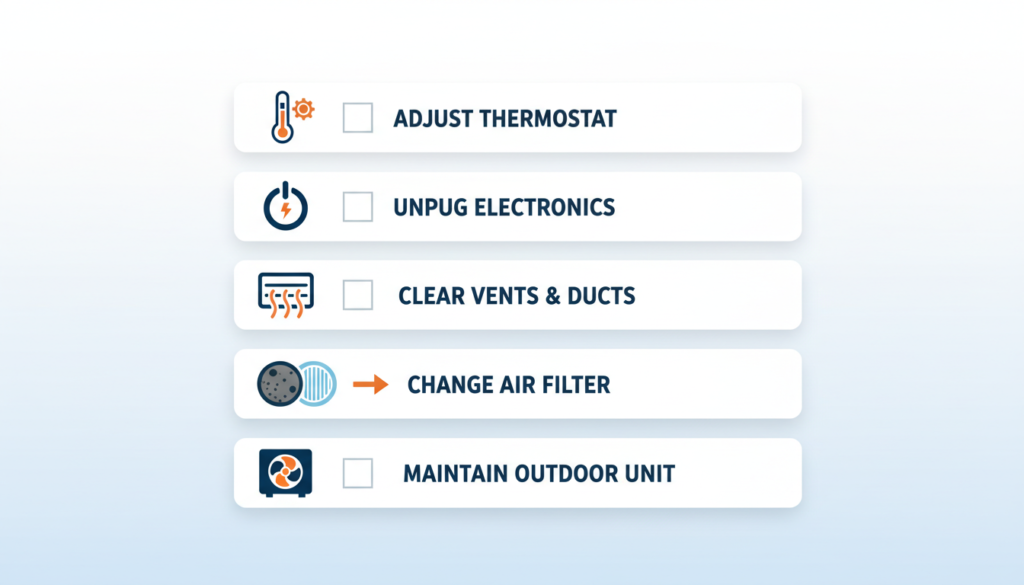
Before diving into complex troubleshooting, run through this quick checklist. These simple checks can save you a service call:
• Thermostat check: Is it set to COOL mode? Temperature at least 5°F below the current room temperature? Display working properly?
• Power check: Is your AC actually running? Check both the indoor unit and outdoor condenser. Listen for the compressor.
• Airflow check: Are all vents open? Feel each register for airflow. Weak or warm air indicates a problem.
• Filter check: When did you last change it? A clogged filter is the #1 cause of AC problems in Lafayette homes.
• Outdoor unit check: Is the condenser fan spinning? Any debris blocking the unit? Ice on the refrigerant lines?
12 Common Reasons Your AC Isn’t Cooling
Let’s explore each issue in detail, from the simplest DIY fixes to problems that require professional HVAC service.
1. Dirty or Clogged Air Filter (Most Common Issue)
A dirty air filter is hands-down the most common reason air conditioners stop cooling effectively. In Lafayette’s dusty climate, filters get clogged fast, especially during peak summer months when your AC runs constantly.
Why it happens: Your air filter traps dust, pollen, pet dander, and other airborne particles. When it gets too clogged, air can’t flow through properly. This restricted airflow means less air reaches your evaporator coils, reducing cooling capacity and potentially causing the coils to freeze.
How to check: Locate your air filter (usually in the return air vent or inside your air handler). Remove it and hold it up to a light. If you can’t see light through it, it’s too dirty and needs replacement.
DIY fix: Replace disposable filters or clean reusable ones. For most Lafayette homes, we recommend checking your filter monthly during summer and replacing it every 30-90 days, depending on usage and household conditions (pets, allergies, etc.).
• Professional help needed: No
• Cost: $15-$40 for replacement filters
2. Thermostat Problems
Sometimes the issue isn’t your AC at all; it’s the thermostat telling it what to do. A malfunctioning thermostat can make a perfectly good air conditioner seem like it’s not working.
Common thermostat issues:
• Set to HEAT instead of COOL (happens more often than you’d think!)
• Temperature set too high
• Dead batteries (for battery-powered models)
• Incorrect calibration (reading the wrong temperature)
• Loose wiring or connection issues
DIY fix: Double-check all settings. Replace batteries if applicable. If you have a programmable thermostat, make sure the schedule is correct. Try lowering the temperature significantly if the AC kicks on; you may just need recalibration.
• Professional help needed: Sometimes (for wiring issues or replacement)
• Cost: $0 for settings adjustment, $150-$300 for thermostat replacement
3. Frozen Evaporator Coils
Ice on your AC might seem counterintuitive, but frozen evaporator coils are a common problem that completely stops cooling. You might see ice buildup on the copper refrigerant lines or inside the air handler.
Why coils freeze:
• Restricted airflow (dirty filter, blocked vents, or blower fan issues)
• Low refrigerant levels
• Running AC when it’s too cold outside (below 60°F)
What to do immediately: Turn off your AC system completely and switch the thermostat fan to ON (not AUTO). This allows the ice to melt without the compressor running. It typically takes 24 hours for thick ice to fully melt.
Important: Running your AC with frozen coils can damage the compressor. Always let the ice melt completely before restarting.
• Professional help needed: Yes, if the coils refreeze after thawing (indicates refrigerant leak or other issues)
• Cost: $100-$600, depending on the underlying cause
4. Low Refrigerant (Refrigerant Leak)
Refrigerant is the lifeblood of your air conditioning system. It absorbs heat from your home and releases it outside. When refrigerant levels drop, your AC can’t cool effectively or at all.
Signs of low refrigerant:
• AC blowing warm or room-temperature air
• Ice on refrigerant lines or coils
• Hissing or bubbling sounds (active leak)
• Higher energy bills without increased cooling
Why DIY isn’t an option: Refrigerant handling requires EPA certification. It’s illegal for homeowners to purchase or add refrigerant themselves. Plus, simply adding refrigerant without fixing the leak just delays the inevitable and wastes money.
For Lafayette residents dealing with refrigerant issues, Fontenot Air Condition and Heating’s certified technicians can locate leaks, repair them properly, and recharge your system to manufacturer specifications.
• Professional help needed: Yes (always)
• Cost: $200-$1,500 (varies based on leak location and refrigerant type)
5. Dirty Condenser Coils (Outdoor Unit)
Your outdoor condenser unit works hard to release heat from your home. When the condenser coils get covered in dirt, leaves, pollen, or cottonwood fluff (common in Lafayette), they can’t release heat efficiently.
Visual inspection: Look at your outdoor unit. Can you see the metal fins clearly, or are they caked with dirt and debris? If the unit looks dirty, it probably needs cleaning.
DIY cleaning (safe method):
4. Turn off the power to the unit at the disconnect box
5. Remove large debris (leaves, grass clippings) by hand
6. Gently spray the coils with a garden hose from inside to outside
7. Never use a pressure washer it can damage the delicate fins
When to call professionals: If coils are heavily caked with dirt, bent fins need straightening, or you’re uncomfortable working around electrical components, schedule professional coil cleaning.
• Professional help needed: Optional (recommended for deep cleaning)
• Cost: DIY $0 / Professional cleaning $75-$200
6. Faulty Compressor
The compressor is the heart of your AC system, pumping refrigerant through the system and pressurizing it to release heat. When it fails, your AC won’t cool at all.
Signs of compressor failure:
• Loud banging, clanking, or grinding noises from the outdoor unit
• AC blowing warm air with the outdoor unit running
• Circuit breaker trips repeatedly
• System won’t start at all
Compressor failure is serious and almost never a DIY repair. It often occurs in older systems (10+ years) and may mean it’s time to consider system replacement rather than repair, especially if the unit is out of warranty.
• Professional help needed: Yes (always)
• Cost: $1,200-$2,800 for compressor replacement (often cheaper to replace entire outdoor unit)
7. Condenser Fan Motor Issues
The condenser fan pulls air through the outdoor coils to release heat. If the fan isn’t working, heat can’t escape, and your AC will struggle to cool or shut down on safety limits.
How to check: With the AC running, look at your outdoor unit. Is the fan spinning? You should see and hear it clearly. If the compressor is running (humming sound) but the fan isn’t spinning, you have a fan problem.
Common causes:
• Failed fan motor
• Bad capacitor (helps motor start)
• Debris jamming the fan blades
• Professional help needed: Yes
• Cost: $150-$650, depending on whether it’s the capacitor or motor
8. Blocked or Leaking Ductwork
Even if your AC is working perfectly, you won’t feel cool air if it’s escaping through leaky ducts or getting blocked before it reaches your rooms.
Signs of duct problems:
• Some rooms cool fine while others stay warm
• Weak airflow from certain vents
• Unusually high energy bills
• Dusty home despite regular cleaning
Simple inspection: If you have accessible ductwork in your attic or crawlspace, look for disconnected sections, visible gaps, or crushed ducts. In Lafayette homes, attic heat can worsen duct leakage problems.
• Professional help needed: Yes (for repairs and sealing)
• Cost: $300-$1,000+ depending on extent of repairs needed
9. Improperly Sized AC Unit
An AC that’s too small will run constantly and never quite cool your home. An oversized unit will cool quickly but shut off before removing humidity, leaving you with a cold, clammy feeling.
Signs of sizing problems:
• Short cycling: Unit turns on and off every 5-10 minutes (oversized)
• Constant running: Never shuts off even when the set temperature is reached (undersized)
• High humidity: Home feels damp even when cool (oversized)
Unfortunately, there’s no fix except replacing the unit with properly sized equipment. A professional load calculation considers your home’s square footage, insulation, window placement, and Louisiana’s climate to determine the right size.
• Professional help needed: Yes (for assessment and replacement)
• Cost: N/A for diagnosis; system replacement runs $3,000-$7,000+
10. Electrical Problems (Breaker, Capacitor, Contactor)
Electrical issues can prevent your AC from running at all or cause intermittent failures that seem mysterious.
DIY-safe check: Check your electrical panel for tripped breakers. AC systems typically have two breakers, one for the air handler (indoor unit) and one for the condenser (outdoor unit). Reset any tripped breakers by switching them fully OFF, then back ON.
Professional-only repairs:
• Capacitor failure: Gives motors the jolt they need to start. Common failure point.
• Contactor problems: Acts as a relay to power the compressor and fan.
• Wiring issues: Loose connections, corroded wires, or damaged cables.
Warning: If breakers trip repeatedly, don’t keep resetting them. This indicates a serious problem that needs immediate professional attention.
• Professional help needed: Yes (except for simple breaker reset)
• Cost: $150-$500 for most electrical repairs
11. Clogged Condensate Drain Line
Your AC removes moisture from the air as it cools. This condensation drains through a PVC pipe. In Lafayette’s humid climate, drain lines can clog with algae, mold, and debris.
Signs of drainage problems:
• AC shuts off unexpectedly (safety float switch activated)
• Water pooling around the indoor unit
• Musty odors from vents
DIY cleaning method:
8. Turn off the AC
9. Locate the drain line (usually a PVC pipe near the outdoor unit)
10. Pour 1 cup of white vinegar or bleach down the drain access point
11. Let sit for 30 minutes, then flush with water
• Professional help needed: Optional (if DIY cleaning doesn’t work or for preventive maintenance)
• Cost: DIY $0 / Professional cleaning $75-$250
12. System Age and Wear
Sometimes an AC isn’t cooling well simply because it’s worn out. Air conditioners typically last 10-15 years with proper maintenance. In Lafayette’s harsh climate with long cooling seasons, systems often wear out faster.
Signs it’s time to replace:
• Age 12+ years with declining performance
• Frequent repairs (more than 2-3 per year)
• Rising energy bills despite similar usage
• Uses R-22 refrigerant (phased out, expensive to refill)
• Repair costs exceed 50% of replacement cost
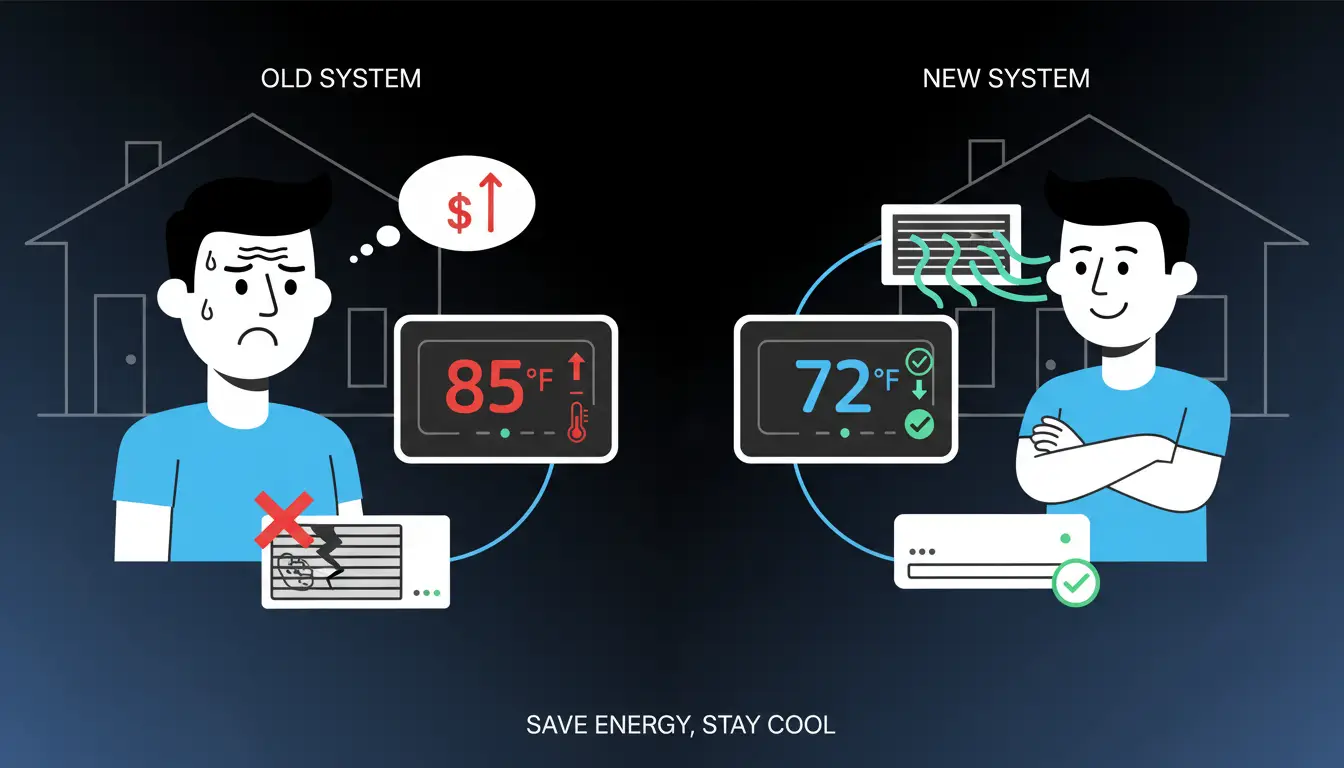
Modern AC units are significantly more efficient (14+ SEER vs. older 8-10 SEER units). The energy savings alone can offset replacement costs over time.
• Professional help needed: Yes (for replacement)
• Cost: Complete system replacement: $3,000-$7,000+ (higher efficiency models $5,000-$10,000)
Step-by-Step DIY Troubleshooting
Follow these steps in order. Each step takes just a few minutes and could solve your cooling problem without calling for service.
Step 1: Check Your Thermostat (2 minutes)
• Verify it’s set to COOL mode (not HEAT or OFF)
• Set temperature at least 5°F below current room temperature
• Check fan setting (AUTO is normal; ON runs constantly)
• Replace batteries if you have a battery-powered model
Step 2: Inspect the Air Filter (3 minutes)
• Locate filter (return vent or air handler)
• Remove and hold up to the light to see through it
• Replace if dirty or clogged (keep the correct size on hand)
Step 3: Check Circuit Breakers (1 minute)
• Go to the electrical panel
• Look for two AC breakers (one for the indoor unit, one for the outdoor)
• If tripped, switch fully OFF then ON (don’t just flip to ON)
Step 4: Clear the Outdoor Unit (5 minutes)
• Remove leaves, grass clippings, and debris from around the unit
• Ensure 2-foot clearance on all sides
• Trim back plants and vegetation
Step 5: Check All Vents and Registers (3 minutes)
• Walk through the home and ensure all vents are open
• Remove furniture, curtains, or objects blocking airflow
• Feel for airflow should be strong and cool
Step 6: Look for Ice Buildup (2 minutes)
• Check copper refrigerant lines going into the house
• Open the air handler panel if accessible
• If you see ice: turn off AC completely for 24 hours to thaw
When to Call Fontenot Air Condition and Heating
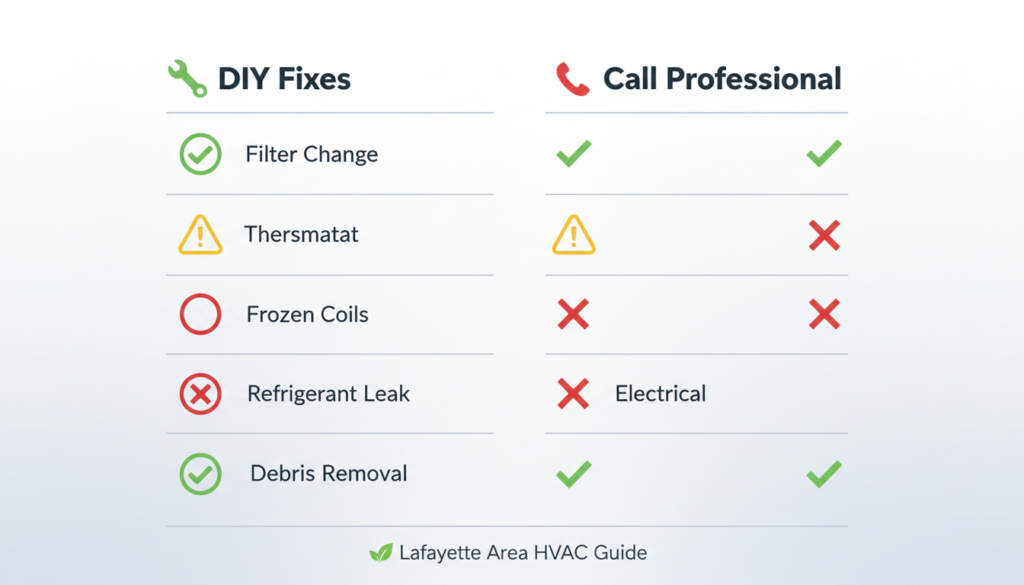
Some AC problems are beyond DIY fixes and need professional attention. Here’s when to pick up the phone:
Call Immediately If:
• No power after checking breakers: Electrical issue needs diagnosis
• Strange noises: Grinding, squealing, banging, or rattling sounds indicate mechanical problems
• Burning smell: Could indicate an electrical fire risk. Turn off immediately
• Ice on refrigerant lines: Indicates a refrigerant leak or airflow problem
• Water leaking inside: Can cause water damage and mold growth
• Complete system failure: Won’t turn on at all
Schedule Service Soon If:
• Weak airflow throughout the home
• Inconsistent cooling between rooms
• Unexplained spike in energy bills
• Short cycling (turning on/off every few minutes)
• System age 10+ years with declining performance
AC Repair Cost Estimates (Lafayette Area)
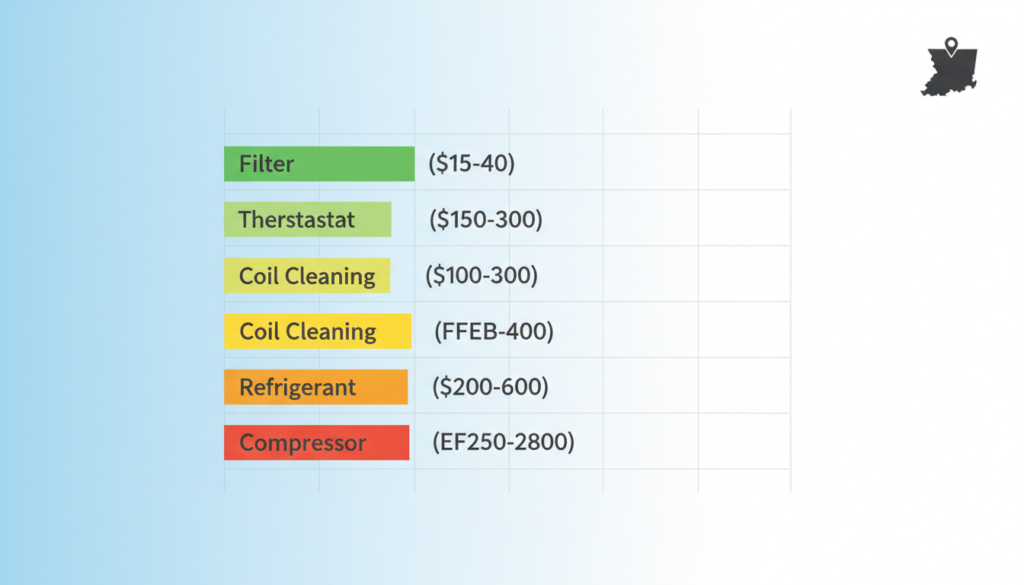
Here’s what you can expect to pay for common AC repairs in the Lafayette area as of 2026:
| Repair Type | Cost Range | DIY? | Urgency |
| Filter replacement | $15-$40 | Yes | Low |
| Thermostat replacement | $150-$300 | Sometimes | Low |
| Condensate drain cleaning | $75-$250 | Possible | Medium |
| Capacitor replacement | $150-$400 | No | High |
| Coil cleaning (professional) | $100-$400 | Optional | Medium |
| Refrigerant recharge | $200-$600 | No | High |
| Fan motor replacement | $300-$650 | No | High |
| Evaporator coil replacement | $600-$2,000 | No | High |
| Compressor replacement | $1,200-$2,800 | No | Critical |
| Complete system replacement | $3,000-$10,000+ | No | Variable |
Cost-saving tip: Many Lafayette HVAC companies, including Fontenot Air Condition and Heating, offer seasonal maintenance plans ($75-$200/year) that can catch problems early and prevent expensive emergency repairs.
Preventive Maintenance: Keep Your AC Running Strong
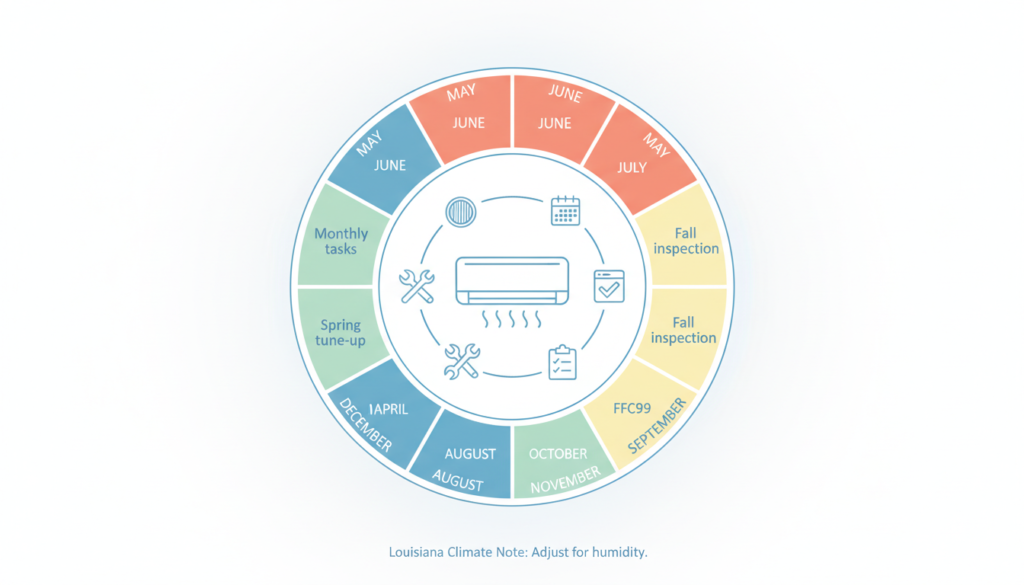
The best way to avoid an AC not cooling is regular maintenance. Here’s a practical schedule for Lafayette homeowners:
Monthly Tasks (May through September):
• Check and replace the air filter if needed
• Verify thermostat is working correctly
• Clear debris from the outdoor condenser unit
Twice Yearly (Spring and Fall):
• Professional tune-up: Schedule before cooling season begins (March/April)
• Coil inspection and cleaning: Both indoor evaporator and outdoor condenser coils
• Refrigerant level check: Ensures optimal cooling capacity
• Electrical connection tightening: Prevents failures and improves safety
• Condensate drain cleaning: Prevents clogs and water damage
Annual Professional Inspection Should Include:
• Complete system performance test
• Ductwork inspection for leaks
• Blower motor and fan checks
• Thermostat calibration
• Energy efficiency assessment
Frequently Asked Questions
Why is my AC running but not cooling?
The most common causes are a dirty air filter restricting airflow, frozen evaporator coils from poor circulation or low refrigerant, or a refrigerant leak preventing proper heat transfer. Start by checking your filter and thermostat settings, then look for ice buildup on the refrigerant lines.
How long should it take for my AC to cool my house?
A properly functioning AC should noticeably cool your home within 15-20 minutes and reach your set temperature within 1-3 hours, depending on outside temperature, home size, and insulation. If it’s taking significantly longer or never reaching the set temperature, there’s likely a problem.
Can I fix my AC not cooling by myself?
Some issues you can definitely handle yourself: changing the air filter, adjusting thermostat settings, resetting breakers, clearing debris from the outdoor unit, and checking that all vents are open. However, refrigerant issues, electrical problems beyond breakers, and compressor or fan motor failures require professional HVAC technicians.
How much does it cost to fix an air conditioner that’s not cooling?
Costs range dramatically based on the problem. A DIY filter change costs $15-$40, while professional repairs range from $75 for drain cleaning up to $2,800 for compressor replacement. Most common repairs (capacitor, coil cleaning, refrigerant recharge) fall in the $150-$600 range.
Should I turn off my AC if it’s not cooling properly?
Yes, if you see ice buildup on the coils or refrigerant lines, or if you hear unusual grinding or banging noises. Turn it off immediately to prevent compressor damage. For other issues like weak cooling, you can keep it running while you troubleshoot, but don’t let it struggle for days; call a professional.
What’s the difference between AC not cooling and AC not blowing cold air?
These are often the same problem described differently. If your AC is not blowing cold air, it’s not cooling. However, there’s a distinction: if there’s no airflow at all (not even warm air), the problem is likely with the blower fan rather than the cooling system itself.
How often should I have my AC serviced in Lafayette?
For Lafayette’s climate with long, hot summers, we recommend professional AC service twice a year, once in early spring before the cooling season and once in fall. At a minimum, get annual service before summer begins. Regular maintenance can prevent 80% of AC breakdowns.
Stay Cool This Summer with Fontenot Air Conditioning and Heating
When your AC stops cooling in Lafayette’s brutal summer heat, every hour counts. While many cooling problems have simple DIY solutions like changing a dirty filter or adjusting thermostat settings, others require the expertise of trained HVAC professionals.
Remember the basics: check your filter monthly during summer, keep your outdoor unit clear of debris, and schedule preventive maintenance before cooling season begins. These simple steps can prevent the majority of AC problems before they start.
If you’ve worked through the troubleshooting steps in this guide and your air conditioner still isn’t cooling properly, or if you’ve identified a problem that needs professional attention, Fontenot Air Condition and Heating is here to help Lafayette homeowners get back to comfortable living quickly.
Our experienced technicians understand the unique challenges of cooling homes in Louisiana’s climate. We provide honest assessments, transparent pricing, and reliable repairs to keep your family comfortable all summer long.
Don’t suffer through another sweltering Louisiana day. Contact Fontenot Air Condition and Heating today for fast, professional AC repair service in Lafayette and surrounding areas.