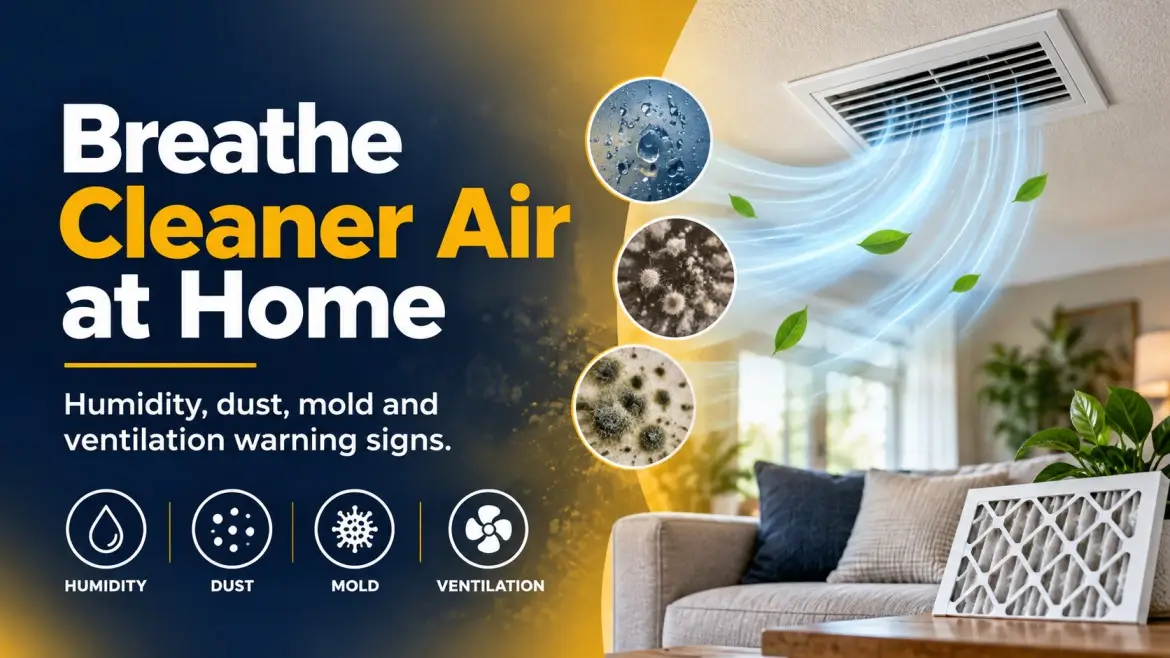

Mold is more than just a visible blight; it is a type of fungus that reproduces by releasing microscopic spores into the air. To properly combat this unwelcome guest, we must first understand what it needs to thrive. The U.S. Environmental Protection Agency (EPA) has clearly identified three essential conditions for mold development: moisture, food (such as organic material or dust), and oxygen.
Since mold needs damp, humid environments to breed, the air in your home is constantly a battleground against moisture intrusion. The growth cycle is alarmingly rapid: mold spores can settle and flourish within a mere 24–48 hours when these conditions are met.
Furthermore, indoor temperatures, especially those that feel comfortable to us are perfect for fungal proliferation, as mold grows best in temperatures between 60°F and 80°F (15.5°C to 26.6°C). These factors demonstrate why an HVAC system, designed to handle air and moisture, often becomes an unintentional incubator for these microscopic threats.
Mold Challenges in Broussard’s Unique Climate
For homeowners in Broussard, LA and surrounding Acadiana parishes, the battle against mold is particularly challenging. Louisiana’s subtropical climate, with average humidity levels exceeding 75% year-round and temperatures frequently in the ideal mold-growth range of 77°F-82°F during summer months, creates perfect conditions for AC mold development. The combination of sweltering summers and mild, damp winters means your HVAC system works overtime—and faces mold threats nearly 12 months a year.
According to Louisiana Department of Health data, homes in humid climates like Broussard’s can accumulate up to 5-10 gallons of condensate per day during peak summer months—all of which flows through your AC system. Without proper maintenance, this moisture becomes a breeding ground for over 1,000 species of mold commonly found in Louisiana homes.
Why AC Systems Are Highly Susceptible to Infestation
While mold requires moisture, food, and ideal temperatures to grow, the air conditioning unit itself is uniquely equipped to provide all three. AC units naturally provide a dark, damp habitat, making them prime targets for fungal spores.
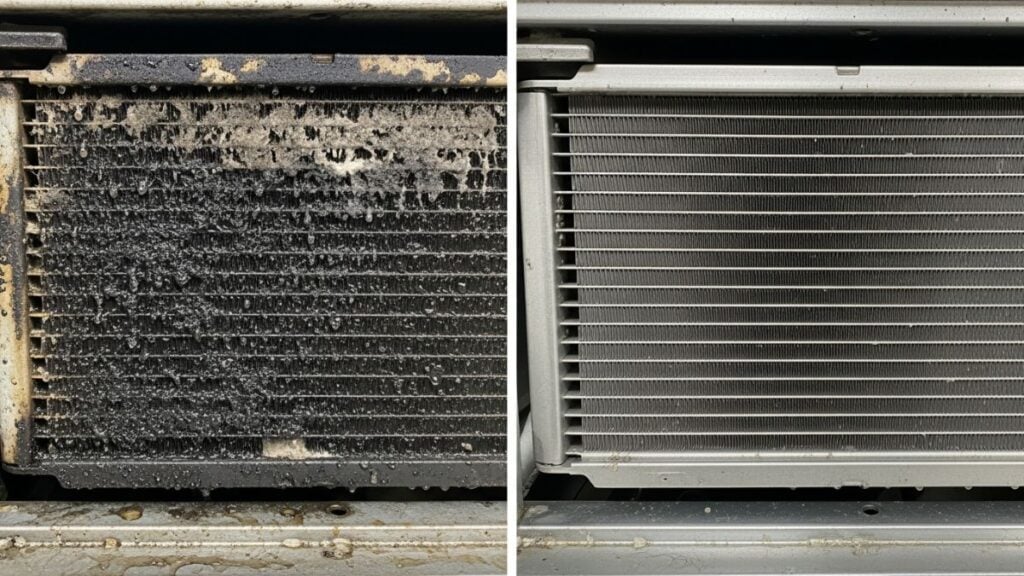
The core reason for this vulnerability is the cooling process itself. As warm, humid air from your home passes over the cold evaporator coils, condensation occurs, creating pervasive moisture throughout the system. This water then combines with accumulated dirt, dust, and organic particles found on coils and filters, which serve as a perfect food source for the mold.
This cycle of moisture and organic material leads to several common mold hotspots within the AC system:
Evaporator coils: These coils are perpetually cool and damp, making them one of the most common areas for microbial growth.
Condensate drain pans and drain lines: Standing water or clogs in these lines can cause immediate mold growth and lead to overflow, increasing overall indoor humidity.
Air filters and ductwork: Filters trap dirt and dust, which mold feeds on. If mold colonizes the ductwork, it can spread throughout the entire building structure.
AC cabinet insulation/liners: Insulation can retain moisture, becoming a breeding ground for mold and mildew within the unit’s cabinet.
The Dangers of Air Conditioner Mold (Health and Financial Risks)
Ignoring mold growth in your air conditioning system is dangerous, leading to both severe health problems for occupants and significant financial drain on your home infrastructure.
Severe Health Risks Caused by Spore Circulation
Do not underestimate the danger of mold spores circulating throughout your home. Mold releases toxins that primarily target the respiratory system. Exposure to these airborne spores can trigger a range of severe health issues.
Common symptoms caused by mold exposure include:
- Allergic reactions
- Breathing issues, coughing, and wheezing
- Nasal congestion and sneezing
- Itchy skin
For sensitive populations, such as those with asthma or compromised immune systems, mold exposure can significantly worsen existing symptoms. Perhaps the most serious threat is that a moldy AC unit does not contain the problem; it actively spreads spores throughout the entire home via the ductwork, contaminating the entire indoor environment. This is why, according to expert insight, running an air conditioner when mold is present is not recommended, as it compromises air quality and may cause respiratory distress.
Financial and Operational Impact on the AC System
While health concerns are paramount, neglecting AC mold will also impact your finances. Mold buildup restricts airflow on essential components like coils and filters, forcing the unit to work harder to cool your home. This restriction reduces system efficiency and will inevitably lead to higher energy bills.
The damage can escalate quickly:
- Mold can clog the condensate drain, resulting in standing water, increased indoor humidity, and potential water leakage
- Severe infestations can invade delicate electrical parts, diminishing operational efficiency and potentially necessitating costly repairs or even full system replacement
If you’ve noticed unexplained increases in your energy bills, contact Fontenot’s AC repair services for a diagnostic inspection.
It is important to note a crucial financial insight regarding cleanup: mold damage is typically covered by home insurance only if the damage stems from an event specifically included in the policy, such as appliance-related flooding. Therefore, preventative maintenance is often the most economically sound strategy.
Recognizing the Signs of Mold Infestation
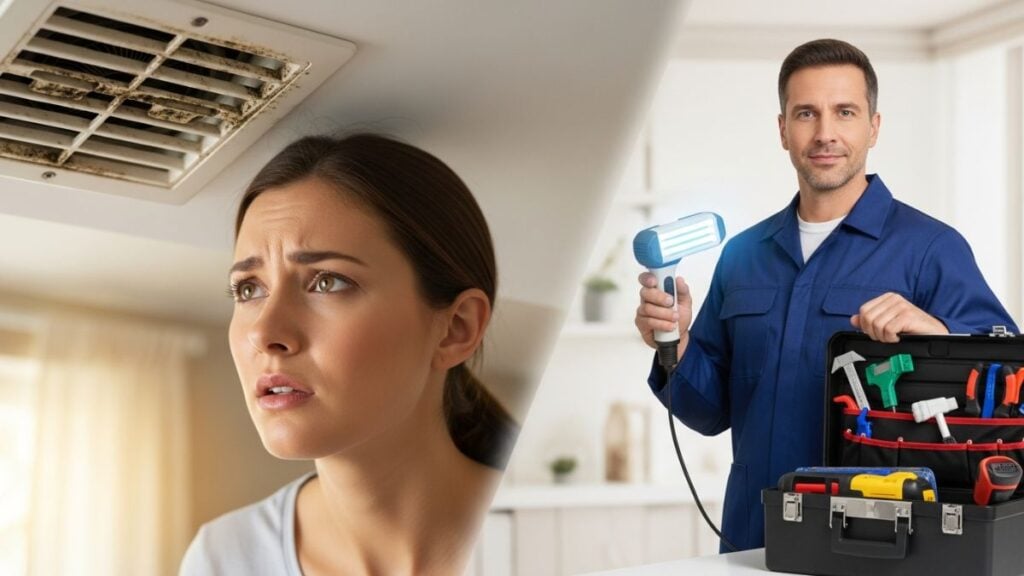
Mold is not always visible when it begins its life cycle deep inside your air conditioning system. Because the fungus thrives in the dark, intricate corners of your HVAC unit, learning to recognize the subtle, early signals is essential for quick intervention. Knowing these indicators can save you significant repair costs and prevent airborne spores from compromising your home’s air quality.
Here are the most common signs that indicate mold or mildew growth in your AC system:
Musty Smell From the Air Conditioner: This is frequently the first and most unmistakable indication of mold or mildew. Homeowners often describe this as a damp or musty odor, sometimes referred to as “dirty sock syndrome”. These foul smells are actually the gases (mVOCs, or microbial volatile organic compounds) produced by the active mold growth process.
Visible Mold Growth: If you see any odd color patches or growths on or near the vents, filters, or the unit itself, it is an alarming sign. Mold colors can be surprisingly diverse, ranging from black, gray, and white to even green, red, orange, brown, or purple.
Increased Room Humidity/Condensation: The primary function of an AC unit is to cool and dehumidify the air. If indoor humidity levels rise significantly while your air conditioner is running, it may suggest that mold proliferation is blocking system components, thereby hindering the essential dehumidification process.
Unexplained Health Issues: A sudden onset of illness, such as persistent coughing, sneezing, or nasal congestion, or exacerbated allergy and respiratory symptoms, concurrent with AC usage is a key red flag. The AC system may be circulating toxins released by the mold spores throughout the dwelling.
The AC Service Blueprint: Professional Prevention Strategies
Preventing mold growth is not a one-time cleaning job; it requires a proactive partnership with certified HVAC experts. When focusing on prevention, professional air conditioning services move beyond simple cooling to address the core conditions that allow mold to flourish: moisture, darkness, and food sources.
Regular Inspections and Maintenance
Engaging a certified HVAC expert for regular inspection is crucial to maintaining a mold-free living space. Routine maintenance is the backbone of humidity control, as it keeps the system running efficiently and promotes optimal airflow.
A knowledgeable HVAC contractor provides comprehensive care that targets potential mold habitats:
- Checking the condensate drain pan and drain line for standing water or clogs
- Thoroughly cleaning the evaporator coil
- Looking for signs of excessive indoor humidity
For optimal defense against fungal growth, experts recommend scheduling routine maintenance at least once per year. In very humid coastal environments where moisture is a constant battle, biannual checks are often advised.
In Broussard and the Greater Lafayette area, where humidity rarely drops below 60% even in winter, Fontenot’s Air Conditioning & Heating recommends biannual maintenance visits—ideally in early spring (March-April) before cooling season begins and again in fall (September-October) to address any mold issues that developed during heavy summer use. Fontenot’s offers comprehensive annual maintenance agreements designed specifically for Louisiana’s challenging climate.
Critical Maintenance Tasks
Professional service encompasses several non-negotiable tasks essential for mold mitigation. By performing these actions, technicians eliminate both the moisture and the organic material (food) that mold requires to survive.
Cleaning and Replacing AC Filters: This simple step is vital. Replacing filters every 45 to 90 days, as advised by the U.S. Department of Energy maintenance recommendations, is essential for keeping air clean. For environments with excellent air quality standards, filters should be cleaned even more frequently—every two weeks—especially during periods of high pollution.
Ensuring Proper Drainage: Standing water in the AC system is a direct invitation for mold. HVAC professionals routinely check and clear the condensate drain line to prevent clogs and subsequent water leakage. They also ensure the drain pan is correctly sloped and meticulously cleaned to eliminate residual moisture.
Disinfecting Components: HVAC professionals utilize specialized, EPA-approved disinfectants to thoroughly clean the unit. This includes ducts and ventilation parts that are hard for homeowners to reach.
Applying Mold Inhibitors: As a preventative layer, professionals can apply a chemical treatment designed specifically to ward off the growth of mold and mildew within the cooling system components.
Addressing System Gaps
Two frequently overlooked areas that professional services can address are the duct system and the unit’s overall capacity.
Duct Cleaning and Sealing: Because mold spores spread via air movement, regular duct cleaning prevents spores from circulating and removes debris that mold feeds on. Furthermore, leaky ducts should be sealed or replaced. Unsealed leaks allow moist, humid outdoor air and airborne spores to be pulled directly into the system, contributing significantly to indoor humidity and mold risk. Fontenot’s professional duct cleaning and sealing services remove accumulated debris and prevent humid outdoor air infiltration.
Correct AC Sizing: A critical, technical check performed by HVAC services is unit sizing. An improperly sized unit—often one that is oversized—presents a high mold risk. These units cool the air too quickly without running for enough time to properly dehumidify the air. This process creates cool, damp air that actively encourages mold growth. If you suspect your AC unit is oversized, Fontenot’s professional AC sizing and installation services can evaluate and recommend the optimal system for your home’s square footage and Louisiana’s humidity levels.
Specialized HVAC Technologies for Enhanced Mold Prevention
While routine cleaning and maintenance are foundational to a mold-free environment, certain specialized HVAC technologies offer an enhanced layer of defense, especially crucial in consistently humid regions like Broussard and Acadiana.
Humidity Control Beyond Standard AC
Air conditioners inherently dehumidify the air as part of the cooling process. However, this dehumidification may be insufficient, particularly in highly humid climates or if the installed unit is improperly sized (often oversized).
To ensure optimal mold prevention, moisture levels must be actively managed. Experts advise monitoring indoor humidity with a hygrometer to confirm levels remain within the recommended, mold-inhibiting range of 30% to 50%.
For superior moisture management, professional services often recommend the installation of whole-house dehumidifiers. These systems integrate directly into the HVAC system to consistently maintain optimal moisture levels. This continuous control is vital during shoulder seasons (spring and fall) when outside humidity is high but cooling demand is low, a period when standard AC units might not run long enough to adequately dehumidify. Fontenot’s offers comprehensive indoor air quality solutions, including whole-home dehumidifier installation integrated with your existing HVAC system.
UV Light Purification Systems
One of the strongest technological defenses against fungal growth is the installation of UV-C light technology, as supported by ASHRAE (American Society of Heating, Refrigerating and Air-Conditioning Engineers) research studies.
HVAC professionals typically install these specialized lights near the evaporator coils or inside the ductwork. The primary benefit of this system is biological:
- UV lights kill mold spores, bacteria, and other airborne contaminants on contact
- They function by destroying the contaminants’ DNA, rendering them inactive
UV lights are particularly useful in humid environments, as they continuously kill mold and bacteria directly on the evaporator coils, the wettest parts of the system most prone to microbial growth. Installing this technology is a strong preventative measure that reduces the reliance on chemical disinfectants.
Professional Mold Removal: When to Call the Experts
While preventative maintenance significantly reduces the risk of mold, infestations can occasionally take hold, especially if high humidity or a system issue has gone unnoticed. When this happens, homeowners must resist the urge to handle the problem alone.
Why Mold Removal Requires a Professional
Due to the intricate nature of AC systems and the potential health hazards associated with active mold, it is essential to rely on a qualified and experienced HVAC professional or a specialized mold remediation company.
Mold is microscopic. Professionals are equipped with the knowledge and tools necessary to handle these tiny, invisible spores. Trying to clean mold yourself, particularly visible growth inside ductwork or on major unit components, risks merely dispersing millions of spores throughout the rest of your home. This spore dispersion can lead to far wider contamination and severe respiratory issues.
At Fontenot’s Air Conditioning & Heating, our EPA-certified technicians follow strict mold remediation protocols and use hospital-grade HEPA filtration systems to safely remove mold without cross-contamination. We also address the root causes—whether it’s oversized equipment, drainage issues, or inadequate dehumidification—to prevent recurrence.
DIY Warning: While minor, small patches of surface mold may sometimes be addressed by homeowners using simple solutions (such as bleach or hydrogen peroxide mixes), visible mold growth deep inside ducts or on AC unit components requires expert cleaning and specialized remediation protocols to prevent dangerous spore spread and ensure recurrence does not happen.
Steps Professionals Take for Remediation
When you hire a professional for mold removal, they follow a systematic process designed to eliminate the mold source and ensure the environment is safe:
Detailed Inspection: The process begins with a thorough inspection to pinpoint the exact locations and full spread of the mold within the air conditioner and the associated ductwork. Schedule a mold inspection with Fontenot’s certified technicians to assess your system and receive a detailed remediation plan.
Containment Protocols: Professionals implement strict protocols to prevent the dispersion of spores during the removal process. This prevents mold that is being cleaned out from contaminating unaffected areas of the home.
Air Filtration: During cleanup, specialists use air scrubbers and HEPA filters to capture airborne mold spores, which significantly improves indoor air quality.
AC Mold Removal: Specialized cleaning solutions and equipment are employed to meticulously clean mold from all affected areas of the AC unit and ducts.
Addressing Root Cause: Crucially, after the mold is physically removed, the professional ensures the root cause—such as continuous high humidity, water leaks, or drainage issues—is completely fixed. If the underlying cause is not resolved, the mold will inevitably return.
Partnering with Fontenot’s Air Conditioning & Heating for a Mold-Free Home
Since 1985, Fontenot’s Air Conditioning & Heating has been protecting Broussard families from the hidden dangers of AC mold growth. Our certified HVAC technicians understand the unique challenges posed by Louisiana’s humid climate and provide comprehensive mold prevention services tailored to Acadiana’s weather patterns.
Our mold prevention maintenance includes:
- Thorough evaporator coil cleaning and inspection
- Condensate drain line clearing and treatment
- Humidity level testing and dehumidification recommendations
- UV light installation for continuous mold prevention
- Ductwork inspection and sealing
Don’t let mold compromise your family’s health or your system’s efficiency. Fontenot’s Air Conditioning & Heating serves Broussard, Lafayette, Youngsville, Carencro, and surrounding communities with same-day emergency service and flexible maintenance plans.
Schedule Your Mold Prevention Inspection with Fontenot’s Today
Protect your Broussard home from mold-related health risks and costly AC repairs. Call Fontenot’s Air Conditioning & Heating at (337) 330-6104 or schedule online for:
✓ Comprehensive 23-Point AC Inspection
✓ Mold Detection & Prevention Assessment
✓ Same-Day Emergency Service Available
✓ Financing Options for Major Repairs
✓ 100% Satisfaction Guarantee
Serving Broussard, Lafayette, Youngsville, Carencro, and all of Acadiana since 1985.
Frequently Asked Questions
Can Air Conditioner Mold Spread to Other Parts of My Home?
Yes, absolutely. Mold spores circulating through the ductwork can easily spread and settle on various surfaces throughout the dwelling, including walls, ceilings, and furniture. If mold in the AC system is left untreated, it can lead to larger contamination issues that affect the entire structure of the home.
Can Mold in My Air Conditioner Affect My Energy Bills?
Yes, mold buildup in the system significantly restricts airflow on coils and filters. This obstruction forces the unit to use more energy to cool the home, thereby reducing the system’s efficiency and potentially causing your energy costs to rise.
Are Certain Types of AC Units More Prone to Mold?
Yes, some units are more susceptible than others. Older units, in particular, tend to retain more moisture due to factors like poor drainage, inefficient airflow, or clogged components. Additionally, window and portable air conditioners are often more susceptible to mold growth because they tend to collect excess condensation.
Does Running My AC Constantly Help Prevent Mold?
Running the air conditioner consistently can help control indoor humidity, which is beneficial for reducing mold growth. However, this strategy is only effective if the AC unit is the correct size. If the system is oversized, it may cool the air too quickly without running long enough to properly dehumidify the space, which can ironically increase the risk of mold.
How Often Should I Have My AC System Inspected for Mold in Broussard, LA?
Given Broussard’s humid subtropical climate, we recommend biannual inspections—once in early spring (March-April) before the cooling season and once in fall (September-October). This schedule addresses mold issues before they become serious and ensures your system is prepared for Louisiana’s demanding summer months.
What Is the Cost of Professional Mold Remediation for AC Systems?
The cost varies depending on the severity of the infestation and the extent of contamination. Minor surface mold treatment may cost a few hundred dollars, while extensive ductwork remediation can range from $1,000 to $5,000 or more. Prevention through regular maintenance is far more cost-effective than remediation. Contact Fontenot’s for a free inspection and detailed estimate.
Ready to protect your Broussard home from AC mold? Contact Fontenot’s Air Conditioning & Heating today for your free mold prevention consultation.