


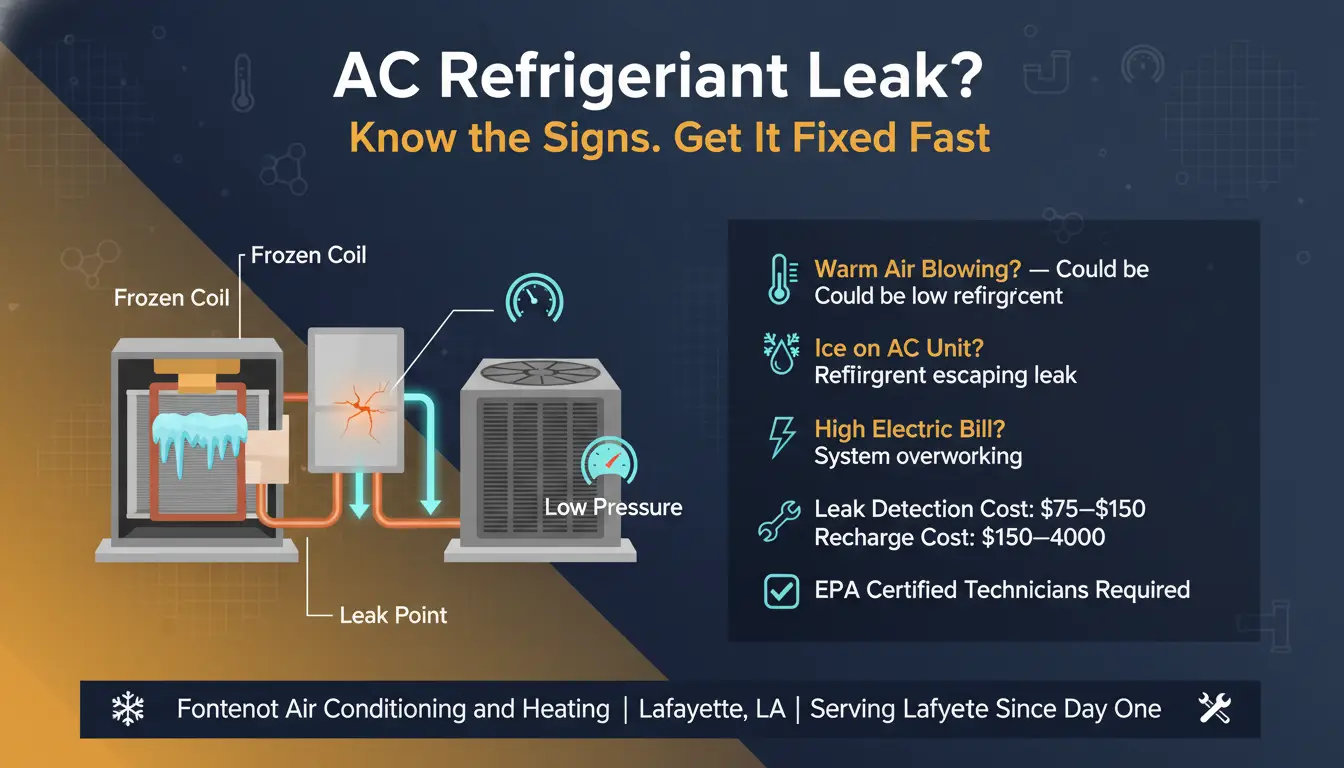
If your air conditioner is not cooling your home the way it should, you might have an AC refrigerant leak. This is one of the most common air conditioning problems homeowners face in Lafayette, LA, and it is also one that should never be ignored.
Refrigerant is the chemical your AC system uses to absorb heat from inside your home and release it outside. When it leaks, your system loses its ability to cool properly. You end up with warm air blowing through your vents, higher energy bills, and a compressor that works twice as hard just to keep up.
At Fontenot Air Conditioning and Heating, we help Lafayette homeowners find and fix refrigerant leaks fast. Whether your system has a small pinhole leak or a damaged coil, our certified HVAC technicians have the tools and experience to get your AC running right again.
What Is an AC Refrigerant Leak?
How Refrigerant Helps Your Air Conditioner Cool Your Home
Your air conditioner does not actually create cold air. Instead, it removes heat from the air inside your home using refrigerant. This chemical cycles between the indoor evaporator coil and the outdoor condenser unit, absorbing heat indoors and releasing it outside. Without the right refrigerant level, this process breaks down and your home stops cooling properly.
What Happens When Refrigerant Leaks Out
When refrigerant leaks out of the system, the pressure inside the refrigerant lines drops. Your AC cannot absorb enough heat, so warm air keeps circulating through your home. The evaporator coil can freeze over, the compressor starts overworking, and eventually, the whole system can fail if the problem is not fixed.
You can learn more about how refrigerants affect the environment and why proper handling matters by reviewing the EPA guidelines on refrigerant handling
Why AC Refrigerant Leaks Should Not Be Ignored
A refrigerant leak does not fix itself. The longer you run your AC with low refrigerant, the more stress you put on the compressor. Compressor replacement is one of the most expensive AC repairs, sometimes costing more than the unit itself. Catching a refrigerant leak early saves you money and extends the life of your system.
Signs of an AC Refrigerant Leak
Reduced Cooling and Longer Run Times
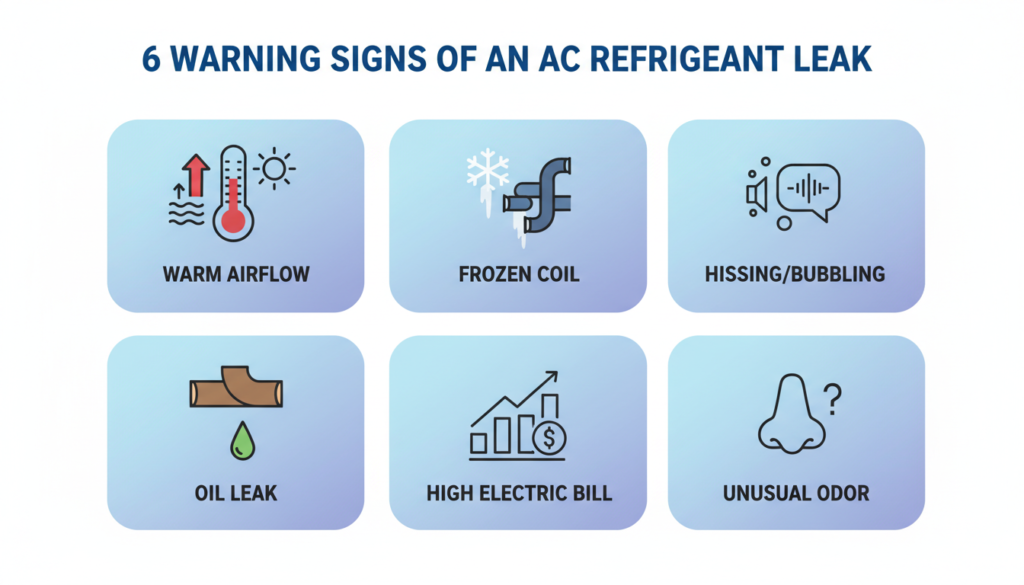
One of the first signs of a refrigerant leak is that your home just does not get as cool as it used to. Your AC runs for longer cycles trying to reach the set temperature, but the indoor air stays warm or muggy. If this sounds familiar, low refrigerant could be the reason.
Frozen Evaporator Coil
When refrigerant levels drop too low, the evaporator coil gets too cold and moisture in the air freezes around it. You might notice ice building up on the indoor unit or refrigerant lines. A frozen coil can block airflow completely and cause water damage when it thaws.
Hissing or Bubbling Sounds
A hissing sound coming from your AC unit often means refrigerant is escaping through a crack or hole in the lines. A bubbling sound can indicate that air or moisture has entered the refrigerant circuit. Either sound is a good reason to call a technician right away.
Oil Residue on Refrigerant Lines
Refrigerant and compressor oil travel through the system together. When there is a leak, you may notice a greasy or oily residue along the refrigerant lines, near the coil, or around the service ports. This is a visible sign that refrigerant has been escaping from that area.
Higher Energy Bills
A system running low on refrigerant has to work harder and run longer to cool your home. That extra effort shows up on your electric bill. If your energy costs have gone up but your usage has not changed, a refrigerant leak may be to blame.
Unusual Odors Coming From the System
Some refrigerants have a faint sweet or chemical smell when they leak. If you notice an unusual odor coming from your vents or near the indoor unit, it is worth having a technician check the system for leaks.
Common Causes of AC Refrigerant Leaks
Formicary Corrosion in Evaporator Coils
Formicary corrosion is caused by a reaction between copper, moisture, and certain chemicals found in household products like cleaning sprays and air fresheners. This reaction slowly eats tiny pinholes into the copper evaporator coil, which is one of the most common causes of refrigerant leaks in residential AC systems.
Leaking Service or Schrader Valves
Service valves and Schrader valves are access points used when charging or checking refrigerant levels. Over time, the seals on these valves can wear out and start to leak. This type of leak is often slow and easy to miss without proper testing equipment.
Damaged Copper Refrigerant Lines
The copper tubing that carries refrigerant between your indoor and outdoor units can develop cracks from vibration, physical damage, or age. Even small cracks allow refrigerant to escape gradually over time.
Loose Line Set Connections
The connections where the refrigerant lines meet the indoor and outdoor units can loosen over time due to vibration and thermal expansion. A loose fitting is a common leak point that a technician can usually detect and tighten or reseal.
Vibration and Poor Installation Issues
If an AC system was not installed properly, the refrigerant lines may be routed in a way that causes constant vibration or friction. Over time, this wears down the tubing and leads to leaks. Poor installation is a preventable cause that highlights why hiring a qualified HVAC company matters from the start.
Common Locations Where AC Refrigerant Leaks Occur
Indoor Evaporator Coil Leaks
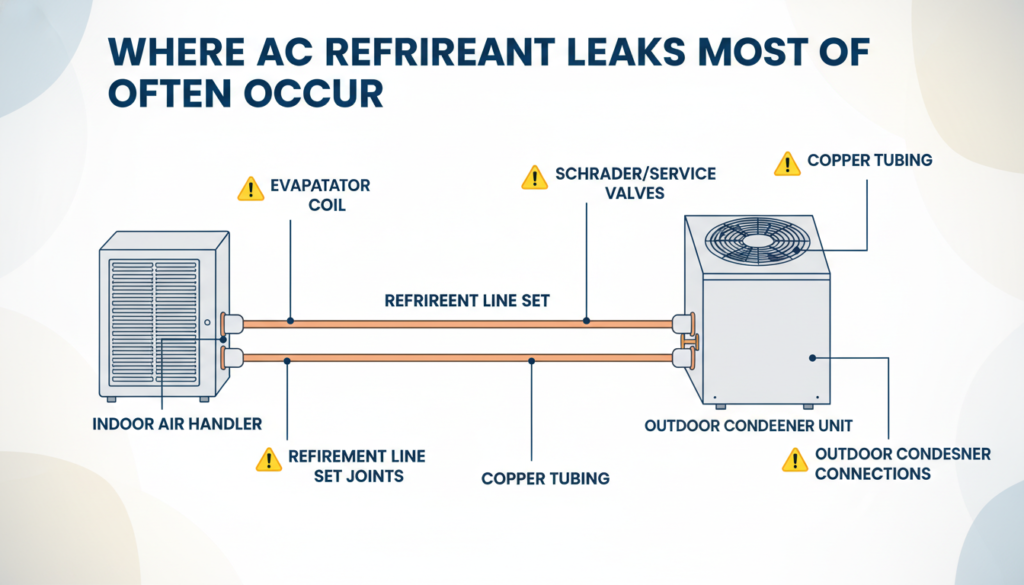
The evaporator coil is the most common location for refrigerant leaks, especially in older systems. Because the coil is made of copper and sits in a humid environment, it is vulnerable to corrosion. A leaking evaporator coil often requires either repair or full replacement.
Outdoor Condenser Connections
The outdoor condenser unit has several connection points where refrigerant lines attach. These fittings can develop leaks from vibration, weather exposure, or physical damage. Debris, lawnmower impacts, and storm damage can also cause leaks in this area.
Refrigerant Line Set Joints
Anywhere the copper refrigerant lines are joined together is a potential leak point. Brazed joints can crack over time due to stress or improper installation. These leaks can be hard to find without proper detection tools.
Service Ports and Valve Leaks
The Schrader valves and service ports used during maintenance and refrigerant charging are common leak points. A loose or worn valve core can allow refrigerant to slowly escape even when the system appears to be running normally.
How Lafayette, LA Climate Can Contribute to Refrigerant Leaks
Humidity and Corrosion Risks
Lafayette, LA has some of the highest humidity levels in the country. All that moisture accelerates corrosion on metal components, especially copper coils and refrigerant lines. Homes here are more likely to develop formicary corrosion and other moisture-related issues than homes in drier climates.
Heat Stress on AC Components
Summers in Lafayette are long, hot, and brutal. Your AC system runs almost constantly from late spring through early fall. All that heat puts constant thermal stress on refrigerant lines, fittings, and coils. Expansion and contraction from temperature swings can loosen connections and create small cracks over time.
Seasonal Wear From Heavy Cooling Demand
Because Lafayette homeowners rely on their AC systems so heavily, the equipment wears out faster than it would in cooler parts of the country. Components that might last 15 years in a mild climate may show signs of wear in 10 years here. Regular maintenance is especially important in this area.
How to Tell If Your AC Refrigerant Leak Is Getting Worse
Weak Airflow and Rising Indoor Temperatures
If your AC used to cool your home within a reasonable time but now struggles even on moderate days, the refrigerant leak may be getting worse. A bigger leak means less refrigerant in the system and even less cooling capacity.
Ice Buildup on Indoor Components
Increasing ice buildup on the evaporator coil or refrigerant lines is a sign that refrigerant levels are critically low. At this stage, the system may stop cooling entirely and running it further could damage the compressor.
Short Cycling or Constant Operation
A system with a worsening refrigerant leak may start short cycling, meaning it turns on and off frequently without completing a full cooling cycle. On the other hand, it may run continuously without ever reaching the thermostat setting. Both patterns indicate something is seriously wrong.
Warning Signs of Compressor Damage
If you hear grinding, clanking, or loud humming from the outdoor unit, the compressor may already be under stress from running low on refrigerant. Compressor damage caused by low refrigerant is expensive and sometimes not worth repairing, especially in older systems.
AC Refrigerant Leak vs Other Air Conditioner Problems
Refrigerant Leak vs Dirty Air Filter
A dirty air filter restricts airflow and can cause cooling problems similar to a refrigerant leak. The difference is that changing a filter is free and easy. If your AC improves right after you change the filter, that was the issue. If the problem continues, have the refrigerant levels checked.
Refrigerant Leak vs Frozen Evaporator Coil Issues
A refrigerant leak can cause a frozen evaporator coil, but it can also happen because of restricted airflow from a dirty filter or blocked return vent. If the coil freezes after a filter change and airflow correction, refrigerant is likely the cause.
Refrigerant Leak vs Compressor Failure
Both low refrigerant and a failing compressor can result in poor cooling. However, compressor failure often comes with loud mechanical noises, tripped breakers, or the outdoor unit not running at all. A refrigerant issue tends to show up more gradually with reduced cooling and higher bills.
Refrigerant Leak vs Thermostat Problems
If your thermostat is not reading the temperature correctly or is not communicating properly with the system, your AC might seem like it is not cooling. Check the thermostat settings and replace the batteries before calling for service. If everything looks fine on the thermostat, a refrigerant leak becomes more likely.
What to Do If You Suspect an AC Refrigerant Leak
Turn Off the Air Conditioner Immediately
If you notice ice on your AC, hear hissing sounds, or smell an unusual odor, the safest thing to do is turn the system off. Running an AC with a known refrigerant leak puts unnecessary strain on the compressor and can turn a manageable repair into a full system replacement.
Avoid Running the System With Low Refrigerant
Some homeowners try to push through the summer with a leaking system because the repair feels costly. This almost always makes things worse. Running a system with low refrigerant causes compressor wear that adds hundreds or thousands of dollars to the repair bill.
Call a Professional HVAC Technician
Refrigerant handling requires EPA certification. You cannot legally purchase refrigerant or recharge an AC system without it. A licensed HVAC technician from Fontenot Air Conditioning and Heating can locate the leak, repair it properly, and recharge the system to factory specifications.
Decide Whether Repair or Replacement Makes More Sense
Depending on the age of your system, the location of the leak, and the type of refrigerant your unit uses, repair may or may not be the most cost-effective option. A good technician will give you an honest evaluation of both choices.
How HVAC Technicians Detect AC Refrigerant Leaks
Soap Bubble Leak Testing
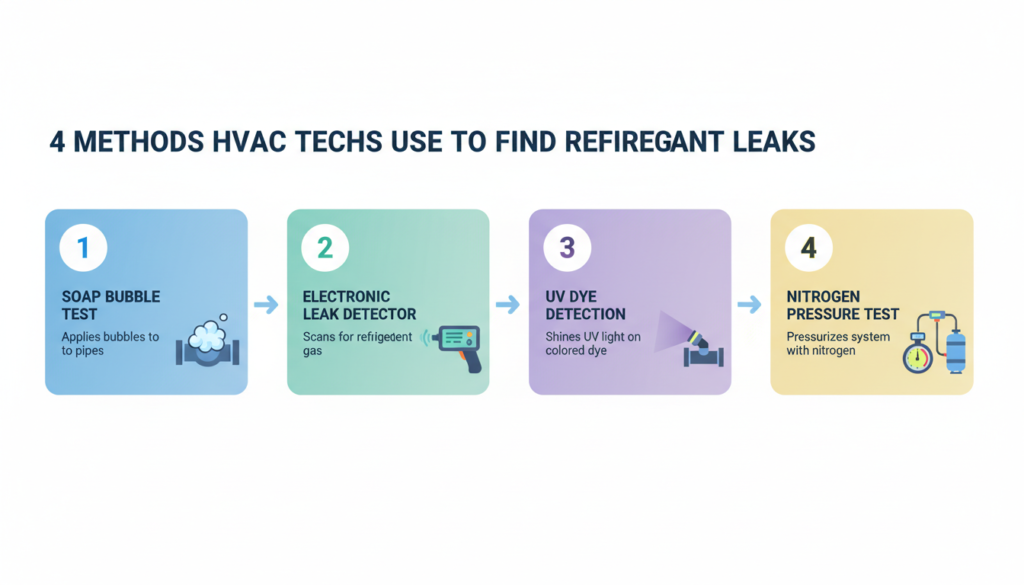
Soap bubble testing involves applying a soapy solution to connections, valves, and joints. If refrigerant is escaping, it causes bubbles to form at the leak point. This method works well for larger leaks that are easy to locate but may miss small pinhole leaks.
Electronic Leak Detection Tools
Electronic leak detectors are handheld devices that sense refrigerant vapor in the air. A technician passes the detector along the refrigerant lines and components, and the device alerts when it detects a concentration of refrigerant. This is one of the most reliable methods for finding small leaks.
UV Dye Leak Detection
UV dye is injected into the refrigerant system and circulates with the refrigerant. When a leak is present, the dye seeps out and glows under ultraviolet light. This method is especially useful for finding slow or intermittent leaks that are hard to catch with other methods.
Nitrogen Pressure Testing
Nitrogen pressure testing involves pumping dry nitrogen into the refrigerant circuit and monitoring the pressure over time. If the pressure drops, it confirms a leak somewhere in the system. This method is also used after repairs to confirm the system is sealed before recharging with refrigerant.
How AC Refrigerant Leaks Are Repaired
Repairing the Leak Source
The first step in any proper refrigerant leak repair is fixing the actual source of the leak. Depending on the location, this may involve tightening a fitting, replacing a valve, sealing a joint, or repairing a section of copper tubing. Skipping this step and simply adding refrigerant is not a real fix.
Replacing Damaged Coils or Components
If the evaporator coil has multiple pinhole leaks from corrosion, repair may not be practical. In these cases, the entire coil needs to be replaced. Similarly, badly damaged refrigerant lines or corroded components may need full replacement rather than patching.
Recharging the Refrigerant System
Once the leak is repaired and the system has been pressure-tested to confirm it is sealed, a technician will recharge the system with the correct type and amount of refrigerant. The system is then tested to make sure it is cooling properly and operating at the right pressure levels.
Why Adding Refrigerant Alone Is Not a Fix
Simply adding refrigerant to a leaking system is like adding oil to a car with an oil leak and calling it fixed. The refrigerant will continue leaking out, you will continue losing cooling capacity, and the compressor will eventually fail. EPA regulations also prohibit knowingly releasing refrigerant into the atmosphere without addressing the source of the leak.
How Much Does AC Refrigerant Leak Repair Cost in Lafayette, LA
Cost of Leak Detection
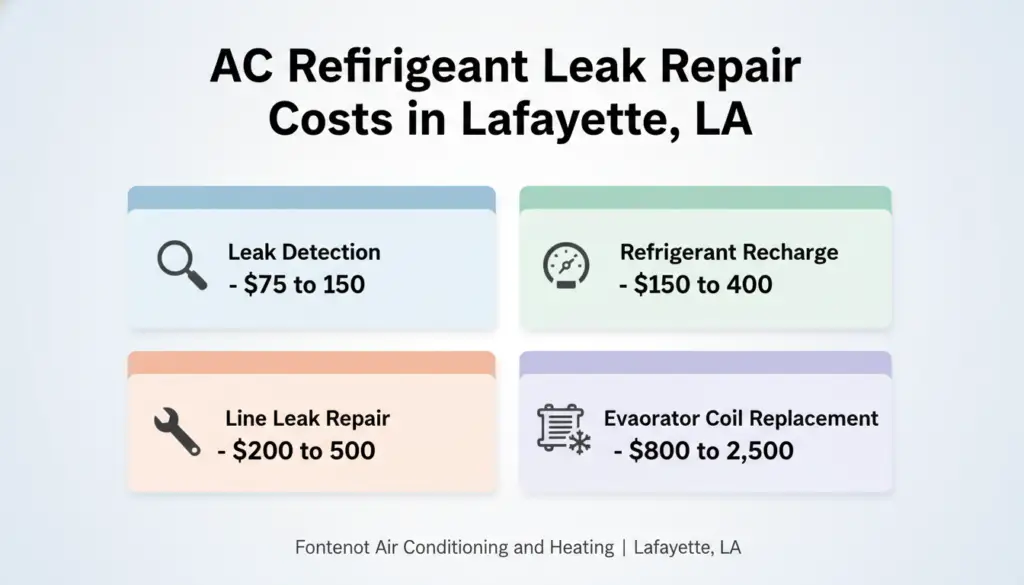
Leak detection in Lafayette, LA typically ranges from $75 to $150 depending on the complexity of the system and the methods required. Some HVAC companies include leak detection as part of a diagnostic service call fee.
Cost of Refrigerant Recharge
The cost to recharge refrigerant depends on the type of refrigerant and how much is needed. R-410A systems generally cost between $150 and $400 to recharge. Older R-22 systems cost significantly more because R-22 refrigerant has been phased out and is much harder to source.
Cost to Repair Refrigerant Line Leaks
Repairing a leak in the refrigerant lines typically costs between $200 and $500. The price depends on where the leak is, how accessible it is, and whether any tubing needs to be replaced.
Cost to Replace an Evaporator Coil
If the evaporator coil is damaged beyond repair, replacement costs in Lafayette, LA usually range from $800 to $2,500 depending on the coil size and the unit brand. Labor and refrigerant recharge are typically included in that estimate.
Factors That Affect Repair Pricing
Several things can affect the final cost of refrigerant leak repair, including the age of the system, the type of refrigerant, the location of the leak, the extent of damage, and whether any other components need to be replaced at the same time. Getting a clear written estimate before the work begins is always a good idea.
Repair or Replace an Air Conditioner With a Refrigerant Leak
When Repairing a Leak Makes Sense
If your AC system is less than 10 years old, still uses R-410A refrigerant, and the leak is in an accessible and repairable location, fixing the leak is usually the right call. The system still has useful life left, and the repair cost will likely be much lower than buying a new unit.
When Replacing the System Is the Better Option
If your system is more than 12 to 15 years old, has had multiple refrigerant leaks, or the repair involves replacing major components like the evaporator coil and compressor, replacement often makes more financial sense. A new system will also be more energy-efficient and come with a manufacturer warranty.
Repair vs Replace for Older R-22 Systems
R-22, also known as Freon, was phased out in 2020 and can no longer be manufactured or imported. If your older system uses R-22 and develops a refrigerant leak, the cost of sourcing R-22 refrigerant alone can make repair impractical. In most cases, upgrading to a new R-410A or R-454B system is the better long-term investment.
Types of Refrigerant That May Be Leaking
R-410A Refrigerant Systems
R-410A is the refrigerant used in most residential AC systems installed between 2010 and 2023. It is more efficient than R-22 but still needs to be handled by a certified technician. R-410A systems are currently being phased out in favor of lower-emission alternatives, but parts and refrigerant are still widely available.
Older R-22 Air Conditioning Systems
R-22 refrigerant was the standard for residential AC systems for decades before being phased out due to its ozone-depleting properties. Systems still running on R-22 are typically 15 years old or older. Recharging these systems is expensive because reclaimed R-22 is the only legal supply left on the market.
New Refrigerant Changes and Compatibility Concerns
Newer AC systems are being built to use R-454B or R-32 refrigerant, which have a lower global warming potential than R-410A. These refrigerants are not interchangeable with older types, so it is important to know what refrigerant your system uses before any service work is performed. Your Fontenot Air Conditioning and Heating technician will always verify the correct refrigerant type before recharging your system.
Can You Prevent AC Refrigerant Leaks?
Schedule Routine AC Maintenance
Annual AC tune-ups are the best way to catch small leaks before they turn into big problems. During a maintenance visit, a technician will check refrigerant pressure, inspect coils, check all connections, and look for early signs of corrosion or wear.
Prevent Corrosion on Refrigerant Components
In a humid climate like Lafayette, protecting copper components from corrosion is especially important. Some technicians apply protective coatings to evaporator coils to slow formicary corrosion. Improving indoor air quality and reducing VOC-heavy products near the air handler can also help.
Check Connections and Line Sets Regularly
Having a technician inspect the refrigerant line set connections and service ports during every maintenance visit helps catch loose fittings before they become full leaks. This is a quick check that adds almost no time to a service call but can prevent costly repairs.
Benefits of Annual Leak Inspections
A dedicated leak inspection once a year gives you early warning of any developing issues. It also keeps your system operating at peak efficiency, which means lower energy bills and a longer lifespan for your equipment.
Is It Illegal to Add Refrigerant Without Fixing a Leak?
Refrigerant Handling and EPA Requirements
Yes. Under EPA Section 608 regulations, it is illegal to knowingly release refrigerant into the atmosphere. Technicians are required to recover refrigerant before making repairs and must not vent it. Only EPA-certified technicians can purchase and handle refrigerants like R-410A and R-22.
Environmental Risks of Refrigerant Leaks
Refrigerants contribute to ozone depletion and climate change when released into the atmosphere. R-22 is particularly harmful to the ozone layer, while R-410A has a very high global warming potential. This is one of the reasons EPA regulations require proper handling and leak repair rather than just topping off the system.
Why Certified HVAC Technicians Are Required
Hiring an EPA-certified technician protects you legally and ensures the work is done correctly. At Fontenot Air Conditioning and Heating, all of our technicians hold the proper certifications and follow EPA guidelines on every job.
AC Refrigerant Leak Repair in Lafayette, LA
When to Call for Emergency AC Leak Repair
If your AC has completely stopped cooling, ice is visible on the unit, you hear loud hissing or mechanical sounds, or you smell refrigerant, call for emergency service right away. Running the system in this condition can destroy the compressor within hours.
What to Expect During Professional Leak Repair
When you call Fontenot Air Conditioning and Heating for a refrigerant leak repair, a technician will start with a thorough diagnostic to locate the leak. Once found, the leak source will be repaired or the damaged component replaced. The system will then be pressure-tested and recharged with the correct refrigerant. Before leaving, the technician will test the system to make sure it is cooling properly and answer any questions you have.
Choosing a Local HVAC Company in Lafayette, LA
When choosing an HVAC company for refrigerant leak repair in Lafayette, look for EPA certification, local experience, honest pricing, and solid reviews from homeowners in the area. Fontenot Air Conditioning and Heating has been serving the Lafayette community with reliable, professional AC service backed by real expertise in the local climate.
Frequently Asked Questions About AC Refrigerant Leaks
u003cstrongu003eCan I Run My AC With a Refrigerant Leak?u003c/strongu003e
You can, but you should not. Running an AC system with low refrigerant causes the compressor to work harder than it was designed to. Over time, this leads to compressor failure, which is the most expensive repair in an AC system. The sooner you get the leak fixed, the less damage your system will take.
u003cstrongu003eIs Refrigerant Exposure Dangerous?u003c/strongu003e
In small amounts from a household AC system, refrigerant exposure is generally not considered life-threatening. However, in an enclosed space with a large leak, refrigerant can displace oxygen and cause dizziness, nausea, or breathing difficulty. If you smell a strong chemical odor coming from your AC, ventilate the area and call a technician.
u003cstrongu003eHow Long Does Refrigerant Leak Repair Take?u003c/strongu003e
Most refrigerant leak repairs take between two and four hours depending on the location of the leak and whether any components need to be replaced. If a coil replacement is needed, the job may take longer or require a follow-up visit depending on parts availability.
u003cstrongu003eDoes Homeowners Insurance Cover Refrigerant Leaks?u003c/strongu003e
Most standard homeowners insurance policies do not cover HVAC maintenance issues like refrigerant leaks unless they are caused by a covered peril such as a fire or storm. Some home warranty plans do cover refrigerant leak repairs. Check your policy details or call your insurance provider to find out what is covered.
u003cstrongu003eHow Often Do AC Refrigerant Leaks Happen?u003c/strongu003e
There is no set timeframe for how often leaks occur, but older systems and systems in humid, high-demand environments like Lafayette are more likely to develop leaks over time. Systems with copper evaporator coils in homes where household chemicals are frequently used are also at higher risk. Annual inspections help catch leaks early before they become serious.
Conclusion
An AC refrigerant leak is not something you want to put off. It starts with reduced cooling and higher energy bills, but if left alone, it can lead to a frozen coil, compressor damage, and a full system breakdown right in the middle of a Lafayette summer.
The good news is that most refrigerant leaks are repairable when caught early. With the right technician and the right approach, your system can be back to full performance without replacing the whole unit.
At Fontenot Air Conditioning and Heating, we make AC refrigerant leak repair simple and straightforward. Our certified technicians serve homeowners throughout Lafayette, LA with honest diagnostics, quality repairs, and refrigerant service done by the book. If you think your system has a leak, do not wait. Call Fontenot Air Conditioning and Heating today and let us take care of it.