
Best AC Units for Louisiana’s Hot & Humid Climate
Search
Recent Posts
Tags
Follow Us on
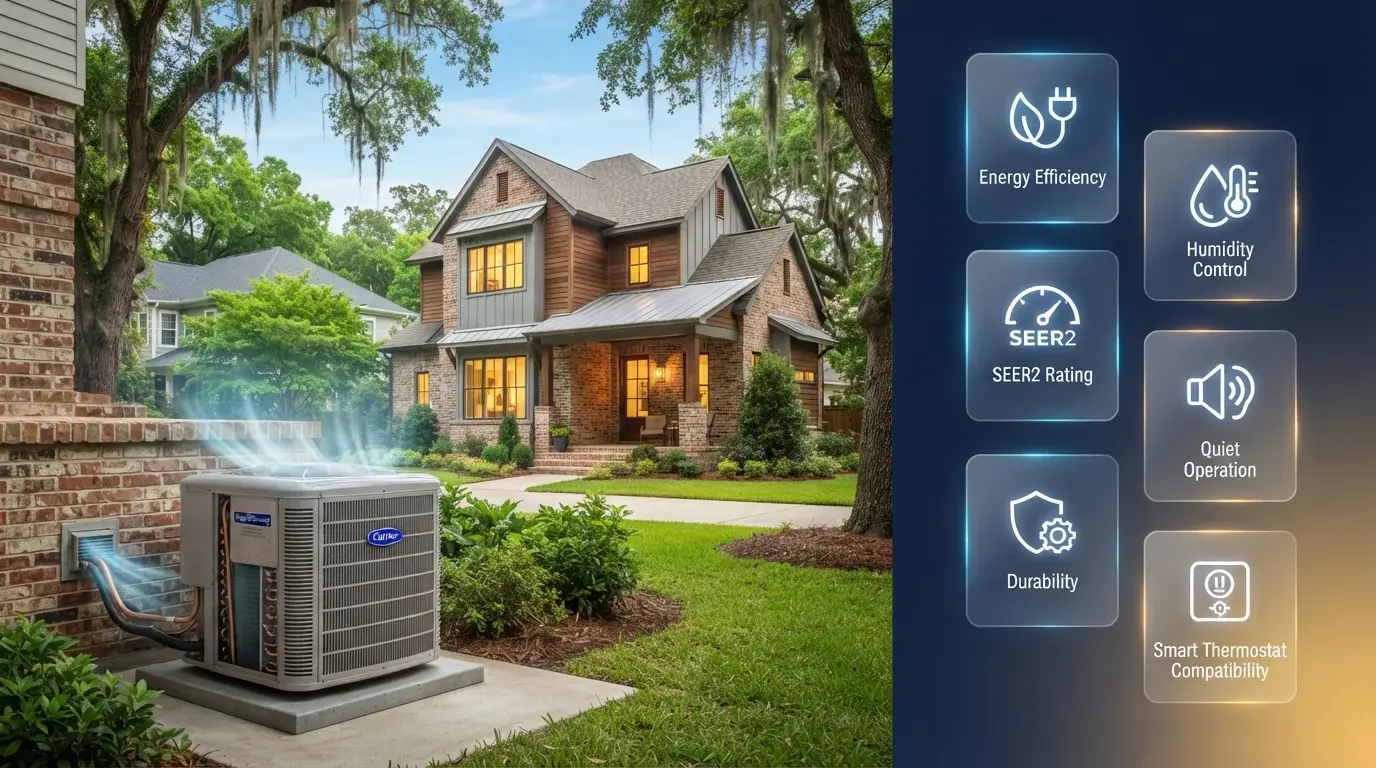
The best AC units for Louisiana’s hot and humid climate are high-SEER2 systems with variable-speed compressors and enhanced dehumidification, such as central air conditioners, heat pumps, and ductless mini-splits. These systems remove moisture better than standard equipment. Corrosion-resistant coils protect units near the Gulf Coast. Proper sizing through a Manual J calculation matters more than brand name.
Key Takeaways
• Louisiana’s combination of high heat and heavy humidity means standard AC units often fail to keep homes comfortable, even when the temperature reads correctly on the thermostat.
• A SEER2 rating of 16 or higher, paired with a variable-speed compressor, gives Louisiana homeowners the best balance of cooling power and long-term energy savings.
• Coastal homes near Lafayette, Broussard, and Youngsville need corrosion-resistant coils and cabinets to survive salt air exposure without early breakdowns.
• A Manual J load calculation, not square footage alone, determines the correct AC size and prevents the short-cycling that causes humidity problems indoors.
• Federal tax credits can offset a meaningful part of the cost of a new high-efficiency AC system installed in 2025 and 2026.
Louisiana summers push every air conditioner to its limit. The heat climbs into the mid-90s, and the humidity often sits above 70 percent for months at a time. A unit that works fine in Ohio or Colorado can struggle badly here. You need equipment built for Gulf Coast conditions, not a system pulled from a national buying guide that ignores climate.
As a licensed HVAC consultant working across Lafayette, Broussard, Scott, Youngsville, Carencro, Maurice, and Milton for more than 15 years, I have seen what happens when homeowners choose the wrong system. Undersized units run constantly and still feel damp inside. Oversized units cool the air fast but never run long enough to pull out the moisture. The right choice depends on more than price or brand recognition.
In this guide, you will learn which AC types perform best in Louisiana’s climate, which features actually matter for humidity control, and how much you should expect to pay in 2026. You will also see the sizing and maintenance steps that protect your investment for the next 15 to 20 years.
Why Louisiana’s Climate Demands a Specialized AC System
Louisiana homes face a harder cooling challenge than most of the country. The best AC units for Louisiana’s hot and humid climate must manage moisture, not just temperature. A thermostat reading of 72 degrees means little if the indoor air still feels sticky.
Key Takeaways
• Standard AC sizing charts built for dry climates often lead to the wrong equipment choice here.
• Humidity control, not just temperature drop, should guide every purchase decision.
• Coastal salt air shortens the lifespan of unprotected outdoor units.
High Humidity + High Temperatures The Double Challenge
Air conditioners cool a home in two ways. They lower the temperature, and they remove moisture from the air as it passes over the evaporator coil. In dry states, the temperature drop does most of the comfort work. In Louisiana, moisture removal matters just as much.
When a system is too large for the space, it cools the air quickly and shuts off before it can pull out enough humidity. The result is a home that feels cold and clammy at the same time. This problem happens more often than homeowners realize, especially with older three-ton or four-ton systems installed without a proper load calculation.
Long Cooling Seasons and Heavy AC Usage
Louisiana’s cooling season stretches from April through October in most years, and window units or central systems in South Louisiana frequently run through much of November too. That means your AC unit works far harder than one in a northern state. Components wear out faster, and energy costs add up quickly.
This extended runtime makes durability and efficiency ratings more important here than almost anywhere else in the country. A unit rated for moderate use elsewhere may face near-constant demand in Lafayette Parish.
Coastal Salt Air and Corrosion Risks
Homes within roughly 20 to 30 miles of the Gulf Coast face another challenge: salt-laden air. Salt particles settle on outdoor condenser coils and cabinets, speeding up corrosion. Over time, this corrosion can cause refrigerant leaks and early system failure.
Manufacturers now offer coastal-rated coil coatings and cabinets built from corrosion-resistant materials. According to Carrier’s coastal equipment guidelines, uncoated aluminum coils near saltwater can show visible corrosion within just a few years, while coated coils typically last much longer.
Ideal Indoor Humidity Levels for Louisiana Homes
Most HVAC professionals recommend keeping indoor relative humidity between 40 and 50 percent. Above 60 percent, homes become more prone to mold growth, musty odors, and dust mite activity, according to guidance from the Environmental Protection Agency (Source: EPA, 2024).
A well-matched AC system, sized correctly and equipped with strong dehumidification, keeps your home in that ideal range even during Louisiana’s wettest months. This sets the stage for choosing the right type of system, which we cover next.
Types of AC Units Best Suited for Louisiana Homes
Not every AC type performs the same way in high humidity. Some systems handle moisture removal better than others, and some fit certain home layouts more naturally than a central system.
Key Takeaways
• Central air remains the most common and cost-effective choice for whole-home cooling in Louisiana.
• Heat pumps add efficient mild-winter heating on top of strong summer cooling.
• Ductless mini-splits work well for additions, garage conversions, and homes without existing ductwork.
Central Air Conditioners
A central air conditioner uses an outdoor condenser and an indoor air handler connected through ductwork to cool an entire home. This remains the most popular choice across Fontenot Air Conditioning & Heating’s service area, largely because most homes already have compatible ductwork installed.
Modern central systems with variable-speed technology run longer at lower capacity, which pulls significantly more moisture from the air than older single-stage units.
Heat Pumps
A heat pump works like a central air conditioner in summer but reverses the cycle to provide heating in winter. Louisiana’s mild winters make heat pumps an efficient choice, since they rarely need backup electric heat strips except during occasional cold snaps.
Heat pumps with strong dehumidification modes perform especially well in South Louisiana, where winter heating needs are modest compared to summer cooling demand.
Ductless Mini-Split Systems
A ductless mini-split system cools individual rooms or zones without central ductwork. These systems suit sunrooms, garage conversions, and older Acadian-style homes where running ducts would be difficult or expensive.
Many mini-splits include dedicated dehumidification settings that remove moisture without dropping the room temperature too low, which makes them a strong option for Louisiana’s humid shoulder seasons.
Packaged AC Systems
A packaged AC system combines the compressor, condenser, and air handler into one outdoor unit, often installed on a rooftop or a concrete pad beside the home. These units work well for homes without space for an indoor air handler, such as manufactured homes or properties on raised foundations.
Packaged units require slightly more attention to weatherproofing in coastal areas, since more components sit outside and face direct sun and salt air exposure. Choosing between these types often comes down to your home’s existing infrastructure, which leads to the features that separate a good unit from a great one.
Key Features That Define the Best AC Units for This Climate
Brand name matters less than the specific features built into a system. These features determine how well a unit handles Louisiana’s heat, moisture, and coastal air.
Key Takeaways
• Variable-speed compressors and blowers remove far more humidity than single-stage equipment.
• A SEER2 rating of 16 or higher balances upfront cost with long-term energy savings.
• ENERGY STAR® certification and corrosion-resistant coils both matter for coastal Louisiana homes.
Compressor Types: Single-Stage vs. Two-Stage vs. Variable-Speed
Single-stage compressors: run at one speed, full power or off, and cycle frequently in humid weather. Two-stage compressors: offer a low and a high setting, improving comfort over single-stage models. Variable-speed compressors: adjust output continuously to match the exact cooling and dehumidification needs of the moment.
For Louisiana’s climate, variable-speed compressors generally deliver the best humidity control, since they can run at a low, steady speed for hours instead of short, powerful bursts.
Variable-Speed Blower Motors
A variable-speed blower motor moves air more gradually across the evaporator coil, giving the system more contact time to absorb moisture. Standard blower motors move air at one fixed speed, which limits dehumidification even on an otherwise efficient system.
Pairing a variable-speed blower with a variable-speed compressor typically produces the best overall humidity performance available in a residential system today.
Smart Humidity Control
Some modern thermostats and AC systems include a dedicated humidity sensor and dehumidification mode, separate from the standard cooling cycle. This feature lets the system run longer at lower capacity, specifically to pull moisture from the air, even when the temperature is already near the setpoint.
For homes near the coast or in low-lying areas prone to dampness, this feature often makes a bigger comfort difference than a slightly higher SEER2 rating alone.
High SEER2 Ratings (What’s Recommended for Louisiana)
SEER2 measures cooling efficiency under updated federal testing standards introduced in 2023. For Louisiana’s long, demanding cooling season, most HVAC professionals recommend a minimum SEER2 rating of 15.2, with 16 to 18 offering a stronger long-term value for homes that run AC nearly year-round.
Higher SEER2 ratings, generally 20 and above, deliver additional savings but come with a higher upfront cost, so the right choice depends on your budget and how long you plan to stay in the home.
ENERGY STAR® and AHRI Certification
ENERGY STAR® certification confirms a system meets federal efficiency benchmarks verified through independent testing (Source: ENERGY STAR, 2024). AHRI certification confirms that the specific combination of outdoor and indoor components has been tested together as a matched system.
Always ask your contractor whether the exact equipment combination carries AHRI certification. A high-efficiency condenser paired with a mismatched air handler often performs far below its rated efficiency.
Corrosion-Resistant Coils
Homes in Broussard, Youngsville, and other communities closer to the coast benefit significantly from coated or corrosion-resistant coils. These coatings protect the coil fins from salt exposure, rain, and general humidity, extending the outdoor unit’s usable lifespan.
This single feature often separates a system that lasts 15 years from one that needs coil replacement after only 6 or 7 years in a coastal environment.
Quiet Operation
Variable-speed systems generally run more quietly than single-stage units, since they spend most of their time at lower, gentler speeds rather than cycling on and off at full power. Sound ratings are measured in decibels, and many modern outdoor units now operate in the mid-50s to low-60s decibel range, comparable to a normal conversation.
For homes with outdoor living spaces, patios, or units placed near bedroom windows, this quieter operation makes a noticeable everyday difference.
Best AC Units for Louisiana (Top Picks by Category)
Based on climate performance, humidity control, and reliability in Gulf Coast conditions, these categories represent the strongest options available for Louisiana homeowners in 2026. Specific model availability and pricing vary, so confirm current specifications with your contractor before purchase.
Key Takeaways
• Variable-speed systems from major manufacturers consistently lead in humidity control performance.
• Mid-tier two-stage systems offer strong value for homeowners on a moderate budget.
• Ductless mini-splits from established manufacturers provide flexible, zone-specific cooling.
Best Overall Variable-Speed Central AC Systems
Variable-speed central systems from manufacturers such as Carrier, Trane, and Lennox generally represent the best overall category for Louisiana homes. According to manufacturer specifications, these systems combine SEER2 ratings of 17 or higher with continuous humidity control, making them well-suited to long, humid cooling seasons.
Best Premium Pick High-End Variable-Speed Systems
Premium tiers, such as Carrier’s Infinity series or Trane’s XV series, add features like communicating thermostats and enhanced dehumidification modes. These systems cost more upfront but often include stronger warranties and the most advanced comfort controls on the market.
Best Budget-Friendly Two-Stage Systems
Two-stage systems from manufacturers such as Goodman or Rheem’s mid-tier lines provide a meaningful step up from basic single-stage equipment without the premium price tag. These units still improve humidity control noticeably over entry-level systems.
Best for Humidity Control Systems with Dedicated Dehumidification Modes
Look for systems specifically marketed with enhanced dehumidification or “humidity control” modes, often found in mid-to-premium lines from Trane, Carrier, and Lennox. These modes let the system prioritize moisture removal independently of the cooling cycle.
Best Ductless Mini-Split Mitsubishi Electric and Daikin Systems
Mitsubishi Electric and Daikin both offer well-regarded ductless mini-split lines with strong dehumidification settings, according to published manufacturer data. These systems work especially well for additions, sunrooms, and older homes without central ductwork.
Best Energy-Efficient Option: High-SEER2 Variable-Speed Heat Pumps
For homeowners prioritizing long-term energy savings, variable-speed heat pumps with SEER2 ratings above 18 offer some of the lowest operating costs available, combining efficient summer cooling with mild-winter heating in one system. This naturally raises the question of how heat pumps compare directly to standard central air.
Heat Pump vs. Central AC: Which Is Better for Louisiana?
Both systems can perform well in Louisiana, but they suit slightly different priorities.
Key Takeaways
• Heat pumps add efficient winter heating that standard AC systems cannot provide.
• Both system types can reach similarly high SEER2 ratings and humidity performance.
• Long-term value depends on your home’s heating needs and how long you plan to stay.
Cooling & Humidity Performance
In cooling mode, heat pumps and central AC systems work identically, since they use the same refrigeration cycle. A variable-speed heat pump and a variable-speed AC unit at the same SEER2 rating will generally deliver comparable humidity control.
Energy Efficiency
Heat pumps can be more efficient overall because they handle both heating and cooling with one electric system, avoiding the need for a separate gas furnace or electric resistance heat strips in most Louisiana winters.
Mild Winter Heating Advantage
Louisiana rarely sees extended freezing temperatures, which plays to a heat pump’s strength. Heat pumps lose efficiency in very cold weather, but South Louisiana’s winters rarely get cold enough for that to matter much.
Which Offers Better Long-Term Value
For most homes in Lafayette, Broussard, Scott, and surrounding areas, a heat pump often provides better long-term value, since it replaces both a furnace and an AC unit with one efficient system. Homes with existing gas furnaces in good condition may still prefer central AC to avoid replacing working equipment early.
How to Choose the Right AC Size
Size matters more than almost any other single decision in this process.
Key Takeaways
• Square footage alone should never determine AC size in Louisiana’s humid climate.
• A Manual J load calculation accounts for insulation, windows, orientation, and occupancy.
• Oversized units cause short cycling, which worsens indoor humidity problems.
Why Proper Sizing Matters (Oversized vs. Undersized Risks)
An oversized AC unit cools a home quickly but shuts off before removing enough humidity, leaving the air feeling clammy. An undersized AC unit runs constantly, struggles to reach the target temperature, and wears out faster from nonstop operation.
Neither mistake is cheap to fix later, which is why sizing deserves careful attention before installation, not after.
Manual J Load Calculation
A Manual J load calculation is an industry-standard method, developed by the Air Conditioning Contractors of America, for determining the exact cooling capacity a home needs. It accounts for square footage, insulation levels, window placement, ceiling height, and even the direction your home faces.
Never accept a sizing estimate based on square footage alone. Ask your contractor directly whether they perform a full Manual J calculation before recommending equipment.
Matching Air Handler and Evaporator Coil
The outdoor condenser must be matched with a properly sized indoor air handler and evaporator coil to perform as rated. A mismatched combination can reduce efficiency by a significant margin and void manufacturer warranties in some cases.
This is where AHRI certification, mentioned earlier, becomes especially important during installation.
AC Costs in Louisiana
Cost varies based on system type, size, brand tier, and installation complexity.
Key Takeaways
• Total installed cost for a central AC system in Louisiana typically ranges from $5,000 to $12,000.
• Higher SEER2 ratings raise upfront cost but lower monthly energy bills over time.
• Federal tax credits can reduce the net cost of qualifying high-efficiency systems.
Equipment + Installation Cost Ranges
A standard central AC replacement in Louisiana typically costs between $5,000 and $9,000 installed, while premium variable-speed systems with enhanced humidity control often range from $9,000 to $14,000, depending on home size and ductwork condition. Ductless mini-split systems generally run $3,000 to $6,000 per zone installed.
Estimated Annual Energy Costs by SEER2 Rating
A home cooled by a 13 SEER2 system might spend noticeably more annually on cooling than an identical home with a 16 SEER2 system, according to typical efficiency comparisons from the U.S. Department of Energy (Source: DOE, 2024). The exact savings depend on home size, insulation, and local electricity rates.
Federal Tax Credits and Rebates
Homeowners installing qualifying high-efficiency AC systems may be eligible for federal tax credits under the Energy Efficient Home Improvement Credit, according to current guidance from the IRS (Source: IRS, 2024). Availability and amounts change periodically, so confirm current eligibility with your tax professional and contractor before purchase.
Maintenance Tips to Maximize AC Performance in Humid Climates
Even the best AC unit needs consistent maintenance to perform well in Louisiana’s climate year after year.
Key Takeaways
• Monthly filter checks prevent airflow restriction and reduce dehumidification performance.
• Condensate drain maintenance prevents water damage and mold growth indoors.
• Annual professional tune-ups catch small problems before they become expensive repairs.
Filter Changes and Coil Cleaning
Check your air filter monthly during peak cooling season and replace it every 1 to 3 months, depending on the filter type and household conditions. A clogged filter restricts airflow, which reduces both cooling and dehumidification performance.
Schedule professional coil cleaning at least once a year, since dirty coils lose their ability to absorb heat and moisture effectively.
Preventing Condensate Drain Clogs
Louisiana’s humidity means your AC system produces a large volume of condensate water during the summer months. Algae and debris can clog the condensate drain line, causing water backup and potential damage to ceilings or walls.
Ask your technician to flush the condensate line during every seasonal tune-up, and consider a drain line safety switch that automatically shuts off the system if a clog occurs.
Protecting Units from Coastal Corrosion
Rinse outdoor coastal units with fresh water every few weeks during summer to remove salt buildup, especially after storms. Keep vegetation trimmed at least two feet away from the unit to maintain proper airflow around the coils.
Annual Professional Tune-Ups
Schedule a professional tune-up each spring before peak cooling season begins. A qualified technician checks refrigerant levels, electrical connections, and overall system performance, catching small issues before they turn into costly breakdowns during the hottest part of the year.
Common Mistakes to Avoid When Buying an AC Unit
Even well-intentioned homeowners make avoidable mistakes when replacing an AC system.
Key Takeaways
• Choosing size based on square footage alone almost always leads to humidity problems.
• Skipping the Manual J calculation is one of the most common and costly mistakes.
• Hiring an unlicensed installer can void warranties and create safety risks.
Choosing Size Over Humidity Performance
Bigger is not automatically better in Louisiana. An oversized unit prioritizes fast temperature drops over the slower, steadier operation that removes humidity effectively.
Prioritizing Price Over SEER2/Reliability
The cheapest system upfront often costs more over its lifetime through higher energy bills and shorter equipment life. Compare SEER2 ratings and warranty terms alongside price before deciding.
Skipping Manual J Calculation
Some contractors size systems quickly using rough square footage estimates instead of a full load calculation. Always ask directly whether Manual J was performed, and request to see the results.
Hiring an Unqualified Installer
Installation quality affects performance as much as the equipment itself. Verify that your contractor holds a current Louisiana HVAC license and carries proper insurance before signing any agreement.
Conclusion
Choosing the best AC units for Louisiana’s hot and humid climate comes down to a few key factors: strong dehumidification performance, an appropriate SEER2 rating, corrosion resistance for coastal homes, and correct sizing based on a real Manual J calculation. Variable-speed central systems, efficient heat pumps, and ductless mini-splits all have a place depending on your home’s layout and existing infrastructure.
Cost matters too, but the cheapest option upfront rarely delivers the best value over 15 to 20 years of Louisiana summers. A slightly higher investment in a variable-speed, corrosion-resistant system typically pays off through lower energy bills, fewer repairs, and a more comfortable home. Fontenot Air Conditioning & Heating has helped homeowners across Lafayette, Broussard, Scott, Youngsville, Carencro, Maurice, and Milton make this decision with confidence for years.
We recommend starting with a professional consultation and a full Manual J load calculation before choosing any system. We offer free AC replacement estimates and same-day assessments for homeowners ready to move forward. Contact us today to schedule your consultation and get a cooling system built for Louisiana’s climate, not a national average.
Frequently Asked Questions
What SEER2 rating is best for Louisiana homes?
Most HVAC professionals recommend a minimum SEER2 rating of 15.2 for Louisiana, with 16 to 18 offering stronger long-term value. Homes running AC nearly year-round often benefit from the extra efficiency, even with a higher upfront cost.
Is a heat pump or central AC better in Louisiana?
Both work well, but heat pumps often provide better overall value in Louisiana since they handle both heating and cooling efficiently. Homes with a working gas furnace may still prefer central AC to avoid replacing functional equipment.
How often should I replace my AC unit in Louisiana?
Most AC systems in Louisiana’s climate last 12 to 15 years with regular maintenance, somewhat shorter than the national average due to heavy usage and coastal exposure. Corrosion-resistant models near the coast can extend that lifespan.
Why does my AC feel cold, but my home still feels humid?
This usually means your unit is oversized and shuts off before removing enough moisture from the air. A Manual J load calculation and a properly sized, variable-speed system typically solve this problem.
How much does a new AC unit cost in Louisiana?
A standard central AC replacement typically costs $5,000 to $9,000 installed, while premium variable-speed systems range from $9,000 to $14,000. Ductless mini-splits generally cost $3,000 to $6,000 per zone.
Do I need a special AC unit if I live near the coast?
Yes. Homes within about 20 to 30 miles of the Gulf Coast benefit from corrosion-resistant coils and cabinets designed to withstand salt air, which extends the outdoor unit’s lifespan significantly.