
AC Tune-Up vs. Full Service: Which Does Your AC Need?
Search
Recent Posts
Tags
Follow Us on
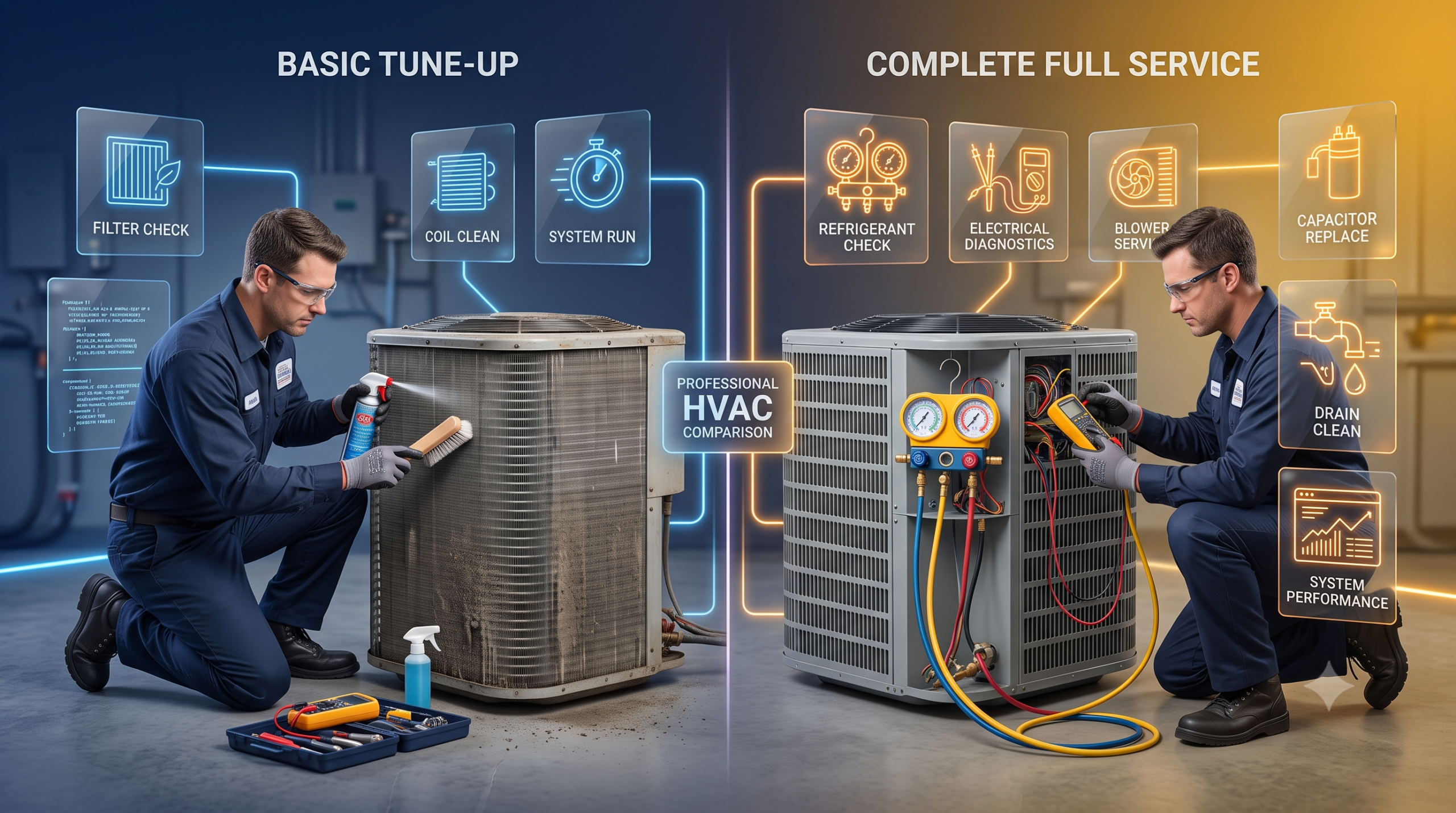
An AC tune-up vs full service comes down to depth. A tune-up is a quick inspection and light adjustment that keeps a healthy system running well. A full service adds deep coil cleaning, drain line flushing, and diagnostic testing for systems showing wear or reduced airflow.
Your AC feels warm, your energy bill jumped, and you are not sure what to book. Homeowners across Lafayette face this every spring. Two services get thrown around, tune-up and full service, and the names sound almost the same.
I have serviced hundreds of systems across Acadiana, and the confusion is real. Most homeowners book whichever service sounds cheaper, then wonder why the problem comes back a month later.
In this guide, you will learn exactly what each service includes, what it costs, and how Louisiana’s climate changes the math. By the end, you will know which one your system needs right now.
AC Tune-Up vs. Full Service at a Glance
Key Takeaways
- A tune-up is light maintenance, a full service is deep cleaning plus diagnostics.
- Tune-ups run $89 to $150 and take about 60 to 90 minutes.
- Full service runs $200 to $450 and takes 2 to 4 hours.
- Louisiana humidity makes full service more valuable here than in dry climates.
- Skipping both raises energy bills and shortens the life of your unit.
Here is the short version before we dig into the details.
Quick Comparison of Cost, Time, and Best Use Cases
| Feature | AC Tune-Up | AC Full Service |
|---|---|---|
| Typical cost | $89 to $150 | $200 to $450 |
| Time on site | 60 to 90 minutes | 2 to 4 hours |
| What gets cleaned | Filter, exterior coil rinse | Coils, drain pan, blower wheel |
| Diagnostics included | Basic visual and electrical check | Full electrical and airflow testing |
| Best for | Healthy systems, routine upkeep | Systems 5+ years old or showing symptoms |
| Recommended frequency | Once or twice a year | Every 1 to 2 years, or as needed |
Why Understanding the Difference Matters
Key Takeaways
- Booking the wrong service wastes money and does not fix the real problem.
- A tune-up will not solve issues that need deep cleaning or diagnostics.
- Matching the service to your system’s condition protects your investment.
Protecting Your HVAC Investment and Avoiding Unnecessary Costs
Your AC system is one of the most expensive parts of your home. Replacing it early because of neglect costs far more than any maintenance visit.
A tune-up costs less, but it will not remove years of built-up dirt. If you keep booking tune-ups on a system that actually needs a full service, you are throwing money at the wrong fix.
On the other hand, a healthy new system does not need a full service every year. That is money you could save for the next visit.
Improving Comfort, Efficiency, and System Reliability
A properly maintained AC cools faster and runs quieter. Dirty coils and clogged filters force the system to work harder, which raises your energy bill.
According to the U.S. Department of Energy, keeping filters clean and airflow unrestricted is one of the simplest ways to help a cooling system run efficiently (Source: energy.gov). That single habit prevents most of the strain that leads to breakdowns.
Reliability matters most in July, when a breakdown means a hot house and a wait for a technician. Booking routine AC maintenance in Lafayette lowers that risk significantly.
What Is an AC Tune-Up?
Key Takeaways
- A tune-up is preventive maintenance, not a deep clean or a repair.
- It covers filters, refrigerant levels, electrical safety, and moving parts.
- Most tune-ups finish in 60 to 90 minutes for $89 to $150.
- Best for systems under 5 years old with no performance complaints.
Purpose of an AC Tune-Up
A tune-up exists to catch small problems before they become expensive ones. Think of it like an oil change for your car. It is fast, affordable, and keeps a healthy system healthy.
Technicians are not tearing anything apart during a tune-up. They are inspecting, testing, and adjusting the parts that keep your AC safe and efficient.
What an AC Tune-Up Includes
A standard tune-up checklist covers six main areas.
Air Filter Inspection
The technician checks your filter for dirt and airflow restriction. A clogged filter is the single most common cause of weak airflow, so this step matters more than it sounds.
Refrigerant Level Check
Low refrigerant means your AC cannot absorb heat properly. The technician checks pressure levels and looks for obvious signs of a leak, though a full leak search belongs to the full service.
Electrical Component Inspection
Loose wiring, worn contactors, and weak capacitors cause most AC breakdowns. This quick check catches the parts most likely to fail during peak summer heat.
Thermostat Calibration
A miscalibrated thermostat makes your home feel wrong even when the AC works fine. The technician confirms it reads temperature accurately and cycles the system correctly.
Moving Part Lubrication
Motors and bearings wear out faster without lubrication. A quick oiling reduces friction, noise, and the strain that shortens motor life.
Condensate Drain Inspection
The technician checks that your condensate drain flows freely. A blocked drain causes water damage and can trip a safety switch that shuts your AC down.
Typical Cost and Service Time
Expect to pay $89 to $150 for a standard tune-up. Most visits wrap up in 60 to 90 minutes, so it fits into a lunch break.
When an AC Tune-Up Is Recommended
Book a tune-up if your system is under 5 years old, cools evenly, and has no strange noises or smells. It is also the right call once or twice a year for routine upkeep, ideally before the cooling season starts.
What Is an AC Full Service?
Key Takeaways
- A full service is a deep clean plus diagnostics, not routine upkeep.
- It removes buildup that a tune-up cannot reach, especially on coils and drains.
- Expect $200 to $450 and 2 to 4 hours on site.
- Best for systems 5+ years old, or any system showing performance problems.
Purpose of an AC Full Service
A full service restores performance that has already been lost. It goes past inspection into real cleaning and troubleshooting, so it fixes problems a tune-up can only spot.
This service makes sense once dirt, dust, or wear has built up enough to affect cooling. That usually happens gradually, which is why many homeowners do not notice until the system struggles.
What an AC Full Service Includes
A full service adds five deeper steps on top of everything in a tune-up.
Chemical Cleaning of Evaporator and Condenser Coils
Coils collect dust, pollen, and grime over time. A chemical cleaning strip that builds up so the coil can transfer heat the way it was designed to.
Drain Pan and Condensate Line Cleaning
The technician flushes the entire drain line, not just the visible section. This clears algae and sludge that a basic inspection would miss.
Blower Component Cleaning
A dirty blower wheel pushes far less air than a clean one, even if the motor is fine. Cleaning it restores airflow through your whole duct system.
Electrical Performance Testing
Beyond a visual check, the technician tests amp draw, voltage, and capacitor performance under load. This catches weak parts before they fail completely.
Refrigerant Leak Detection and Diagnostics
If the refrigerant is low, the technician searches for the actual leak source using specialized tools. This step goes well past the basic pressure check in a tune-up.
Typical Cost and Service Time
A full service typically costs $200 to $450, depending on system size and access. Plan for 2 to 4 hours on site.
When an AC Full Service Is Recommended
Choose a full service if your system is 5 years or older, has not had deep cleaning before, or shows weak airflow, high bills, or musty odors. It is also the smart move at the start of every second or third cooling season.
AC Tune-Up vs. Full Service: Detailed Comparison
Key Takeaways
- Full service cleans coils and drains; a tune-up mainly inspects and adjusts.
- A full service takes roughly 2 to 3 times longer than a tune-up.
- Older systems benefit more from full service, younger systems from tune-ups.
- Full service typically restores more airflow and lowers energy use further.
Cleaning Level and Diagnostic Depth
A tune-up rinses the exterior coil and swaps or checks the filter. A full service chemically cleans both coils, the drain pan, and the blower wheel.
Time Required and Cost
You are paying for depth, not just time. A full service costs more because it removes buildup that a tune-up physically cannot reach.
Recommended Frequency and Best System Age
| System Age | Recommended Service | Frequency |
|---|---|---|
| 0 to 4 years | Tune-up | Once a year |
| 5 to 10 years | Full service | Every 1 to 2 years |
| 10+ years | Full service | Every year, with closer monitoring |
Expected Results
A tune-up keeps a healthy system healthy. A full service can noticeably improve airflow, lower your energy bill, and quiet down a system that has grown loud.
Why Louisiana’s Climate Makes AC Maintenance More Important
Key Takeaways
- High humidity speeds up coil buildup and mold risk in Acadiana homes.
- Louisiana’s long cooling season adds thousands of extra run hours per year.
- Spring service before peak heat prevents mid-summer breakdowns.
High Humidity and Coil Buildup
Lafayette’s humidity is not like a dry Southwest summer. Moist air sticks to coils and traps dust faster, which speeds up the grime buildup that a full service removes.
That same humidity also creates ideal conditions for mold and algae in the drain line, another reason coil and drain cleaning matter more here than in drier states.
Longer Cooling Seasons Increase System Wear
Acadiana homeowners often run their AC from March through October. That is a much longer season than most of the country sees, and it means more wear on every part of the system.
More run hours mean more chances for a small issue to grow into a bigger one. Regular service catches those issues while they are still cheap to fix.
Why Lafayette Homeowners Should Schedule Spring Service
Booking a service in spring, before the real heat arrives, gives you time to fix anything found before you need the AC most. It also avoids the summer rush when technicians are booked solid.
What Isn’t Included in Either Service?
Key Takeaways
- Neither service covers major repairs, part replacement, or refrigerant recharge.
- Ductwork cleaning and repair is a separate, specialized service.
- Any issue found during maintenance gets quoted separately before work begins.
Major Repairs and Component Replacement
If a technician finds a failing motor, compressor, or capacitor, that repair is quoted separately. Maintenance visits are for inspection and cleaning, not part replacement.
Refrigerant Recharge
Both services check refrigerant levels, but adding refrigerant costs extra. A recharge only makes sense after the leak causing the loss has been found and sealed.
Ductwork Repairs and Cleaning
Your ducts are a separate system from your AC unit. Duct cleaning or sealing needs its own visit and its own set of tools.
Signs Your AC Needs More Than a Tune-Up
Key Takeaways
- Weak airflow and warm air point toward a full service, not a tune-up.
- Rising bills or short cycling usually mean a deeper buildup or a real fault.
- Ice on the coil or water leaks need attention right away.
- New rattles, squeals, or odors are your system asking for help.
Weak Airflow or Warm Air From Vents
If air barely trickles out of your vents, a tune-up will not fix it. That usually means a dirty blower wheel or a clogged coil, both full-service problems.
High Energy Bills or Frequent Cycling
A sudden jump in your electric bill, with no change in habits, often points to reduced efficiency from buildup. Frequent on-and-off cycling is another red flag.
Frozen Evaporator Coil or Water Leaks
Ice on the coil or water pooling near your indoor unit signals a real problem, not routine wear. Turn the system off and call a technician the same day.
Strange Noises or Odors
Grinding, squealing, or a musty smell means something is wearing out or growing where it should not. These symptoms almost always call for a full service.
DIY Maintenance vs. Professional Service
Key Takeaways
- Homeowners can safely handle filter changes and basic outdoor cleanup.
- Refrigerant, electrical testing, and coil chemicals require a licensed technician.
- DIY upkeep between visits stretches the life of professional service.
What Homeowners Can Safely Do vs. When to Call a Technician
You can safely handle a few small tasks yourself between visits. Anything involving refrigerant, electrical parts, or chemical coil cleaner needs a licensed technician.
- Safe to DIY: Replace or clean the air filter every 1 to 3 months.
- Safe to DIY: Clear leaves and debris away from the outdoor unit.
- Safe to DIY: Rinse the outdoor coil gently with a garden hose.
- Call a technician: Refrigerant checks, electrical testing, and coil chemical cleaning.
- Call a technician: Any burning smell, tripped breaker, or water leak.
Common Misconceptions About AC Tune-Ups and Full Service
Key Takeaways
- A tune-up does not deep-clean your whole system.
- New systems still need routine maintenance from year one.
- A full service will not fix every possible HVAC problem.
- Regular tune-ups reduce, but do not eliminate, the need for a full service.
A Tune-Up Cleans the Entire System
This is the most common myth I hear from homeowners. A tune-up rinses the outdoor coil and checks the filter. It does not chemically clean the evaporator coil or drain line.
New AC Systems Don’t Need Maintenance
A new system still collects dust and still needs its electrical parts checked. Skipping maintenance in the early years can quietly void your manufacturer’s warranty.
A Full Service Fixes Every HVAC Problem
A full service cleans and diagnoses, but it does not replace failed parts. If your compressor is dying, no amount of cleaning will bring it back.
Regular Tune-Ups Completely Eliminate the Need for Full Service
Tune-ups slow down the buildup; they do not stop it completely. Even a well-maintained system benefits from a full service every couple of years.
Conclusion
Key Takeaways
- Match the service to your system’s age and symptoms, not the price tag.
- Healthy, younger systems usually need a tune-up.
- Older systems or systems showing symptoms usually need a full service.
The AC tune-up vs full service decision really comes down to your system’s age and how it has been running. A young, trouble-free system needs a tune-up. An older system, or one showing weak airflow, high bills, or strange noises, needs a full service.
Louisiana’s humidity and long cooling season make this decision more important here than in most states. We see coils and drain lines build up faster in Acadiana than almost anywhere else we have worked.
If you are not sure which service your system needs, we can help you decide. Fontenot Air Conditioning & Heating serves Lafayette, Broussard, Scott, Youngsville, Carencro, Maurice, and Milton with honest, same-day assessments. Call us today, and we will tell you straight which service fits your system, not just the one that costs more.
Frequently Asked Questions
Is an AC tune-up worth it every year?
Yes, for most systems. A yearly tune-up catches small electrical and airflow issues before they turn into breakdowns, and it usually costs far less than a single repair.
Can I skip the full service if I get a tune-up every year?
Not indefinitely. Tune-ups slow down the buildup but do not remove it. Most systems still need a full service every 1 to 2 years, especially in humid climates like Lafayette.
How do I know if my AC needs a full service instead of a tune-up?
Weak airflow, rising energy bills, musty odors, or a system older than 5 years are the clearest signs. A technician can confirm during a quick inspection.
Does a full service include fixing a refrigerant leak?
It includes finding the leak through diagnostics. Sealing the leak and recharging refrigerant is a separate repair, quoted once the leak location is confirmed.
How long does an AC full service take?
Most full services take 2 to 4 hours, depending on system size, access, and how much buildup the technician finds on the coils and drain line.
What is the best time of year to schedule AC maintenance in Lafayette?
Spring, before the peak cooling season starts. It gives time to fix anything found and avoids the summer scheduling rush across Acadiana.