


You just walked into your living room and noticed a puddle of water forming beneath your air conditioning unit. If you’re experiencing an AC leaking water in your Lafayette home, you’re not alone. This is one of the most common air conditioning problems we see here in South Louisiana, especially during our hot and humid summers.
The good news? Most water leaks can be fixed quickly when you know what’s causing them. In this guide, we’ll walk you through everything you need to know about why your AC is dripping water, how to identify the problem, and what you can do to fix it.
Important: If you notice water leaking from your AC unit, turn it off immediately at the thermostat and circuit breaker to prevent water damage and avoid potential electrical hazards.
Understanding Why Your AC Produces Water (It’s Normal… Sometimes)
Before we dive into problems, let’s talk about how your air conditioning system naturally creates water. This will help you understand when a leak is normal and when it signals a real issue.
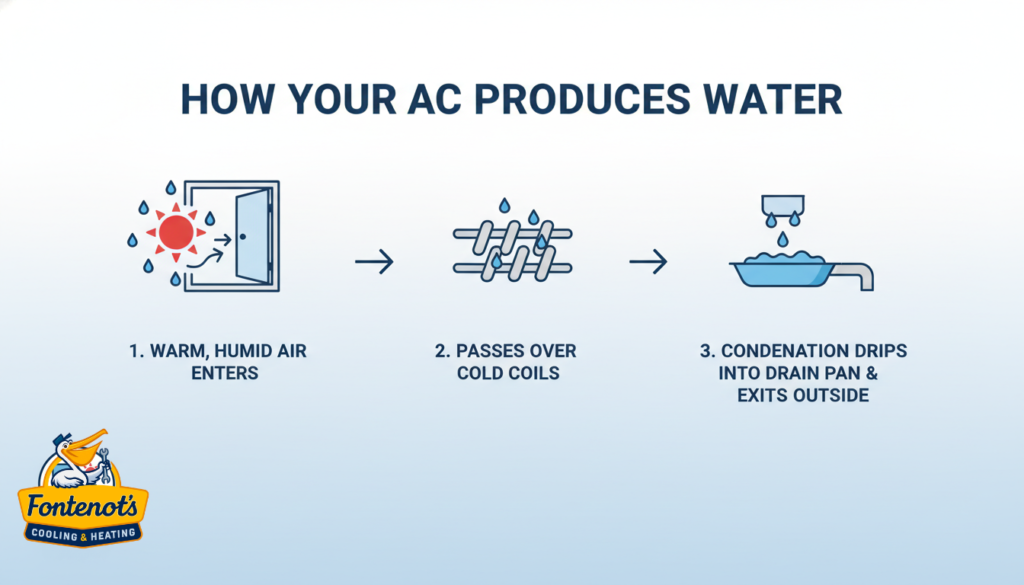
Your AC doesn’t just cool the air in your Lafayette home,, it also removes moisture from it. Here’s how the process works:
When warm, humid air from your home passes over the cold evaporator coils inside your AC unit, condensation forms (just like water droplets form on a cold glass of sweet tea on a hot Louisiana afternoon). This moisture drips into a condensate drain pan beneath the coils, then flows through a drain line that carries it outside your home.
Under normal conditions, this water should exit your home without you ever noticing it. You might see a small amount of water dripping from the outdoor condensate line, and that’s perfectly fine. In Lafayette’s humid climate, your AC can produce quite a bit of condensation, sometimes several gallons per day during peak summer months.
However, when water starts pooling inside your home, overflowing from the drain pan, or creating puddles around your indoor unit, that’s a clear sign something isn’t working correctly.
Top 7 Reasons Your Air Conditioner Is Leaking Water
Let’s look at the most common causes of AC water leaks and what each one means for your system.
1. Clogged Condensate Drain Line (Most Common Cause)
This is hands-down the number one reason we get calls about AC water leaks in Lafayette. Your condensate drain line is a PVC pipe that carries water away from your unit. Over time, this pipe can become blocked with dirt, algae, mold, dust, and debris.
When the drain line gets clogged, water backs up into the drain pan and eventually overflows, causing leaks inside your home.
Signs your drain line is clogged:
- Water pooling around your indoor AC unit
- Musty odor coming from the air vents
- AC shuts off automatically (if you have a float switch safety feature)
- Visible standing water in the drain pan
Why it happens: Lafayette’s high humidity creates the perfect environment for algae and mold to grow inside your drain line. Our hot climate means your AC runs constantly during summer months, producing more condensation and increasing the chance of blockages.
Severity Level: Moderate can be a DIY fix if caught early, but may require professional cleaning for stubborn clogs.

2. Frozen Evaporator Coil
When your evaporator coil freezes over with ice, it might seem strange (after all, you’re trying to cool your home, not create an ice box). But a frozen coil is actually a serious problem that leads to water leaks.
Here’s what happens: As the ice on the coil melts, it produces more water than your drain pan can handle, causing overflow and leaks.
Why coils freeze:
- Restricted airflow (often from dirty air filters)
- Low refrigerant levels
- Closed or blocked air vents in your home
- Problems with the blower fan
- Running your AC when outdoor temperatures drop below 60°F
Visible signs of frozen coils:
- Ice formation on the copper refrigerant lines
- Reduced cooling performance
- AC is running constantly, but not cooling your home
- Unusual hissing sounds
Severity Level: High. This issue requires professional attention. Running your AC with frozen coils can damage the compressor, leading to expensive repairs.
3. Dirty Air Filter
This might seem too simple to cause a major problem, but a dirty air filter is often the culprit behind AC water leaks. When your air filter becomes clogged with dust, pet hair, and airborne particles (which accumulate quickly in our Lafayette climate), it restricts airflow to your evaporator coil.
Without proper airflow, the coil gets too cold, freezes over, and then melts, creating excess water that overflows the drain pan.
How often to replace your filter: In Lafayette’s climate, you should change your AC filter every 30-60 days during peak cooling season (May through September). If you have pets, run your AC constantly, or notice excessive dust, check it monthly.
Severity Level: Low. Thiss is an easy DIY fix that can prevent bigger problems down the road.
4. Damaged or Rusted Drain Pan
Your drain pan sits beneath the evaporator coil and catches all the condensation your AC produces. Over time, especially in older AC units (typically 12-15+ years old), this pan can crack, rust, or develop holes.
When the drain pan is damaged, water leaks through the cracks instead of flowing into the drain line.
Signs of drain pan failure:
- Visible rust or corrosion on the pan
- Cracks or holes in the pan
- Water pooling around the base of your indoor unit
- Your AC is more than 12 years old
What to check: Look at the drain pan beneath your indoor unit. If you see standing water that isn’t draining, or if the pan itself looks deteriorated, it likely needs replacement.
Severity Level: Moderate requires professional replacement of the drain pan.
5. Low Refrigerant Levels
Refrigerant is the lifeblood of your air conditioning system. When refrigerant levels drop (usually due to a leak in the system), it causes a pressure drop that makes your evaporator coil freeze. As we discussed earlier, frozen coils lead to excess water and leaks.
Signs of low refrigerant:
- Ice buildup on refrigerant lines orthe evaporator coil
- The AC is blowing warm air
- Hissing or bubbling sounds from the AC unit
- Higher energy bills without increased usage
- AC takes longer to cool your home
Important note: Refrigerants don’t get “used up” like gasoline. If levels are low, it means there’s a leak somewhere in your system. Simply adding more refrigerant without fixing the leak is a temporary (and expensive) band-aid.
Severity Level: High requires professional HVAC diagnosis and repair. Handling refrigerant requires EPA certification.
6. Broken Condensate Pump
If your air handler is located in your attic or basement (common in Lafayette homes), you likely have a condensate pump that pushes water up and out of your home through the drain line.
When this pump fails, water can’t be pumped out properly, causing it to back up and overflow from the drain pan.
How to test your condensate pump:
- Locate the pump (usually a small box connected to your AC unit)
- Pour a small amount of water into the reservoir
- The pump should automatically activate and pump the water out
- If nothing happens, the pump may be broken
Signs of pump failure:
- Gurgling sounds from the pump
- Water overflowing from the condensate pump reservoir
- AC shuts off (if connected to a safety float switch)
Severity Level: Moderate. Thee pump will need professional replacement, but it’s a relatively straightforward repair.
7. Improper Installation
If you have a relatively new AC system that’s leaking water, poor installation could be the problem. Air conditioning units must be perfectly level for water to drain properly. If the unit is tilted the wrong way or the drain line has an incorrect slope, water won’t flow where it should.
Installation issues that cause leaks:
- Indoor unit not leveThe drainin line sloped upward instead of downward
- Drain line not properly connected
- Undersized drain pan for your system’s capacity
Severity Level: Moderate requires professional correction, often covered under installation warranty.
Other Less Common Causes
While the seven causes above account for most AC water leaks, here are a few other possibilities:
- Disconnected drain line: The PVC pipe may have come loose from the drain pan
- Extreme humidity: During particularly humid Louisiana weather, your AC might produce more condensation than usual
- Cold weather operation: Running your AC when outdoor temps fall below 60°F can cause coil freezing
How to Identify Where Your AC Is Leaking
Understanding where the water is coming from can help you diagnose the problem faster. Here’s what to look for:
Inside your home:
- Water puddles around the indoor air handler
- Water stains on the ceiling (if the unit is in the attic)
- Dripping from air vents
- Moisture on walls near the AC unit
- Standing water in the drain pan
Outside your home:
- Excessive water near the outdoor condensate drain line (more than usual)
- No water dripping from the drain line when it normally does
- Water is pooling around the outdoor unit
Other warning signs:
- Musty or moldy smell from vents (indicates water buildup somewhere in the system)
- Reduced cooling performance
- Unusual sounds (dripping, gurgling, hissing)
- AC cycling on and off frequently
Is It Dangerous to Run an AC That’s Leaking Water?

Short answer: No, don’t run your AC if it’s leaking water. Here’s why:
Water damage to your home: Even a small leak can cause significant damage over time. Water can:
- Damage drywall and ceiling materials
- Warp wood floors and furniture
- Stain carpets and create odors
- Weaken structural elements in your attic or walls
Electrical hazards: Water and electricity don’t mix. A leaking AC near electrical components creates a shock hazard and potential fire risk.
Mold and mildew growth: In Lafayette’s humid climate, mold grows incredibly fast in damp conditions. Water from AC leaks creates the perfect breeding ground for mold, which can:
- Damage your home’s structure
- Causes respiratory problems and allergies
- Create persistent musty odors
- Require expensive mold remediation
Component damage: Running your AC with a water leak often means running it with frozen coils, low refrigerant, or other issues that can damage your compressor one of the most expensive components to replace.
Our recommendation: Turn off your AC at the thermostat and circuit breaker as soon as you notice a leak. Wipe up any standing water, and call a professional HVAC technician to diagnose and fix the problem.
How to Fix AC Water Leaks: Step-by-Step Solutions
Now let’s talk about solutions. Some fixes you can handle yourself, while others require professional help.

Immediate Steps to Take
When you first notice your air conditioner leaking water, take these actions right away:
- Turn off your AC at the thermostat and the circuit breaker to prevent further water damage and electrical hazards
- Soak up standing water using towels, a wet/dry vacuum, or a mop to prevent water damage to floors and walls.
- Check your air filter and replace it if it’s dirty (this is the easiest potential fix)
- Inspect visible components like the drain pan and drain line for obvious problems.
- Document the problem with photos for your HVAC technician or insurance, if needed.
DIY Fixes You Can Try
If you’re comfortable with basic maintenance, here are some fixes you can attempt on your own:
Unclog the drain line (most effective DIY solution):
- Locate your condensate drain line (usually a PVC pipe near your indoor unit)
- Find the drain line access point (often has a small cap or opening)
- Use a wet/dry vacuum to suction out the clog:
- Attach the vacuum hose to the end of the drain line (outside your home)
- Create a tight seal with duct tape if needed
- Run the vacuum for 2-3 minutes
- Check if water flows freely
- Flush with vinegar:
- Pour 1 cup of distilled white vinegar into the drain line access point
- Let it sit for 30 minutes to kill algae and mold
- Flush with water
- This maintenance step can be done every 3-6 months to prevent future clogs
Replace your air filter:
- Turn off your AC
- Locate the filter (usually in the return air vent or at the air handler)
- Note the size printed on the filter frame
- Remove the old filter
- Insert a new filter with the airflow arrow pointing toward the blower
- In Lafayette, use a MERV 8-11 filter for best performance without restricting airflow
Clear the drain pan:
- Locate the drain pan beneath your evaporator coil
- Remove any standing water with a towel or wet/dry vacuum
- Clean the pan with warm,, soapy water
- Check for cracks or damage while cleaning
Inspect the outdoor drain line:
- Go outside and find where your condensate line exits your home
- Remove any visible blockages from the opening
- Make sure water can flow freely
When to Call a Professional HVAC Technician
Some AC water leak problems require professional expertise and specialized equipment. Call Fontenot Air Conditioning and Heating if you experience:
Frozen evaporator coils: If you see ice on your coils or refrigerant lines, turn off your AC immediately and call us. The coil needs to thaw completely (which can take 24 hours), and we’ll need to diagnose why it froze in the first place.
Low refrigerant levels: Refrigerant leaks require EPA-certified technicians to locate the leak, repair it, and recharge the system to proper levels. Never attempt to add refrigerant yourself.
Drain pan replacement: If your drain pan is cracked, rusted, or damaged, it needs professional replacement. This often requires accessing internal components of your air handler.
Condensate pump failure: Replacing a condensate pump requires proper installation to ensure it activates correctly and pumps water efficiently.
Persistent clogs: If you’ve tried unclogging the drain line yourself but water still backs up, professional equipment and expertise are needed.
Installation or leveling issues: Correcting installation problems requires specialized knowledge to ensure your system operates safely and efficiently.
How to Prevent AC Water Leaks (Maintenance Tips for Lafayette Homeowners)
Prevention is always easier and cheaper than repairs. Here’s how to keep your AC from leaking water in the first place.
Regular Maintenance Schedule
Monthly tasks:
- Check and replace the air filter every 30-60 days during the cooling season (May-September in Lafayette)
- Visually inspect for water around your indoor and outdoor units
- Clear debris from around your outdoor condenser unit
Every 3-6 months:
- Pour 1 cup of vinegar down your condensate drain line to prevent algae buildup
- Check that water is draining properly from the outdoor drain line
- Inspect the visible drain pan for standing water
Annually (before summer hits):
- Schedule professional AC maintenance with Fontenot Air Conditioning and Heating
- Have your entire system inspected, cleaned, and tuned up
- Replace your drain pan if your unit is 12+ years old
- Test your condensate pump (if you have one)
- Check refrigerant levels
- Clean evaporator and condenser coils
Why Professional Maintenance Matters in Lafayette
Living in South Louisiana means your AC works harder than units in most other parts of the country. Our combination of extreme heat and high humidity puts tremendous strain on air conditioning systems.
Here in Lafayette, AC units can run 2,000-3,000 hours per year,which iss like running your system non-stop for 3-4 months straight. This intense workload, combined with our humid climate that promotes algae and mold growth, makes regular professional maintenance absolutely essential.
Benefits of annual AC tune-ups:
- Catch small problems before they become expensive repairs
- Extend the lifespan of your AC system
- Improve energy efficiency (lower utility bills)
- Prevent unexpected breakdowns during the hottest days of summer
- Maintain your manufacturer’s warranty (many require proof of annual maintenance)
- Ensure safe operation
At Fontenot Air Conditioning and Heating, our certified technicians understand the unique challenges Lafayette homeowners face. We provide thorough inspections and maintenance specifically designed for our local climate conditions.
Install a Float Switch for Extra Protection
Consider having a safety float switch installed in your drain pan. This inexpensive device:
- Automatically shuts off your AC when the water level gets too high
- Prevents overflow and water damage
- Alerts you to drainage problems before they cause major issues
- Can save you thousands in water damage repairs
Understanding Different Types of AC Water Leaks
Not all AC water leaks are the same. Here’s how to understand what you’re seeing:
AC Leaking Water Inside the House
When you see water inside your home, it’s almost always a drainage problem. The most common causes are:
- Clogged condensate drain line backing up into your home
- Damaged or overflowing drain pan
- Frozen evaporator coil melting
- Disconnected drain line
- Failed condensate pump
Immediate concern: Water inside your home can quickly damage flooring, walls, and ceilings. It also creates a breeding ground for mold in our humid climate.
What to do: Turn off your AC immediately, clean up the water, and call Fontenot Air Conditioning and Heating for fast service.
AC Leaking Water Outside
Some water outside near your condensate drain line is completely normal. Your AC might produce several gallons of water per day in Lafayette’s humid conditions.
Normal outdoor drainage:
- Small, steady drip or stream from the drain line
- Increases during very hot or humid days
- Clear water (not dirty or discolored)
Abnormal outdoor drainage:
- Excessive water pooling around your outdoor unit
- Water where it shouldn’t be (from places other than the drain line)
- Continuous heavy flow (more than seems normal)
The 24-hour rule: If you notice a lot of water outside but your home is cooling properly,, and there’s no water inside, monitor it for 24 hours. Excessive water production can happen on extremely humid days. However, if it continues or you notice reduced cooling, call for service.
Window AC Units Leaking Water
Window units have their own special considerations:
Installation angle is critical: Window AC units must tilt slightly backward (toward the outside) so condensation drains properly. If your unit is level or tilts forward, water will leak into your home.
Drain holes can clog: Most window units have small drain holes at the back. These can become blocked with dirt and debris, causing water to back up and leak inside.
Quick fix: Check that your window unit is angled correctly and clear any blocked drain holes with a small wire or pipe cleaner.
Common Questions About AC Water Leaks
Can I use my AC if it’s leaking water?
No, you should turn off your AC immediately if you notice water leaking inside your home. Running a leaking AC can cause water damage to your home, create electrical hazards, promote mold growth, and damage expensive AC components like the compressor.
How often should I clean my AC drain line?
For Lafayette homeowners, we recommend flushing your condensate drain line with vinegar every 3-6 months. During peak summer months (June-August), when your AC runs constantly, monthly maintenance is even better. Professional drain line cleaning during annual maintenance helps prevent serious clogs.
Why is my AC leaking water only at night?
If your AC leaks water primarily at night, it’s often because temperatures drop in the evening, which can cause:
- The evaporator coil gets colder and potentially freezes
- Increased humidity as temperatures drop
- The ice that formed during the day is melting at night when the AC cycles off
This pattern often indicates restricted airflow from a dirty filter or a refrigerant issue.
How much water is draining from my AC is normal?
In Lafayette’s humid climate, your AC can produce 5-20 gallons of water per day during peak summer, depending on:
- Size of your AC unit
- How much you run it
- Humidity levels
- How well your home is insulated
You should see a steady, small stream from your outdoor condensate drain line. Excessive water or water inside your home is never normal.
Will homeowners” insurance cover AC leak damage?
It depends on your policy and what caused the leak. Most standardhomeowners”s insurance policies cover sudden and accidental water damage,, but may not cover damage from:
- Lack of maintenance
- Gradual leaks
- Normal wear and tear
Check your specific policy and document any damage with photos. Preventing leaks through regular maintenance is much better than filing a claim.
Can a dirty filter really cause AC water leaks?
Absolutely. A dirty air filter is one of the most common causes of AC water leaks. When airflow is restricted, your evaporator coil gets too cold and freezes. As the ice melts, it produces more water than your drain pan can handle, causing overflow and leaks.
In Lafayette’s climate with high airborne particles and humidity, filters get dirty faster. Replace yours every 30-60 days during the cooling season.
How do I know if my condensate pump is broken?
Test your condensate pump by pouring a small amount of water into the pump reservoir. A working pump should:
- Activate automatically when water reaches a certain level
- Pump the water out through the discharge line
- Turn off when the water is removed
If the pump doesn’t activate, makes unusual noises, or fails to remove the water, it’s likely broken and needs replacement.
What’s the difference between indoor and outdoor AC leaks?
Indoor leaks (water inside your home) indicate a problem with your drainage system clogged line, damaged pan, frozen coil, or failed pump. These require immediate attention.
Outdoor leaks (water near your outdoor unit or from the condensate drain line) are usually normal. Your AC is supposed to drain water outside. Only excessive amounts of water coming from unusual locations indicate problems.
When to Call Fontenot Air Conditioning and Heating
You don’t have to handle AC water leaks alone. Our experienced technicians are here to help Lafayette homeowners with fast, reliable service.
Call us immediately if you notice:
- Water is leaking inside your home from your AC
- Ice formation on your evaporator coil or refrigerant lines
- Persistent drain line clogs that DIY methods can’t fix
- Reduced cooling performance, along with water leaks
- Unusual sounds (hissing, gurgling, bubbling) from your AC
- Musty or moldy odors from your air vents
- Your AC is short-cycling (turning on and off frequently)

Take Action Before the Problem Gets Worse
An AC leaking water might seem like a minor inconvenience, but in Lafayette’s climate, it can quickly become a major problem. Water damage, mold growth, and system failure can all result from ignoring even a small leak.
The good news is that most water leaks are preventable with regular maintenance and quick action when problems arise.
Remember, in Lafayette’s demanding climate, your air conditioning system is essential for comfort and health. Taking care of it through regular maintenance and addressing problems quickly will save you money, stress, and discomfort in the long run.
For common AC problems, including water leaks, cooling issues, and system failures, visit our [main AC problems resource page] where you’ll find comprehensive information about all types of air conditioning issues Lafayette homeowners face.