
The heat is relentless, and suddenly, your air conditioner groans—then stops working entirely. A broken AC unit is stressful, yes, but when it happens in the middle of a searing hot afternoon, late at night, or over a long weekend, it quickly transforms from an inconvenience into a genuine household crisis.
Defining an AC emergency is simple: it is a situation where you cannot safely wait for normal business hours to address the problem. These failures often involve complete system breakdowns, dangerous safety hazards, or significant discomfort that poses risks to vulnerable individuals in the home.
Why rush? Postponing service in these critical situations can be incredibly costly. Delaying intervention often leads to greater damage inside the system, resulting in more complex and expensive repairs down the line. Worse, ignoring certain red flags carries potential safety risks, such as electrical fires. Early detection and swift intervention are key not only to restoring comfort but also to maintaining the health of your system and avoiding those expensive major repairs.
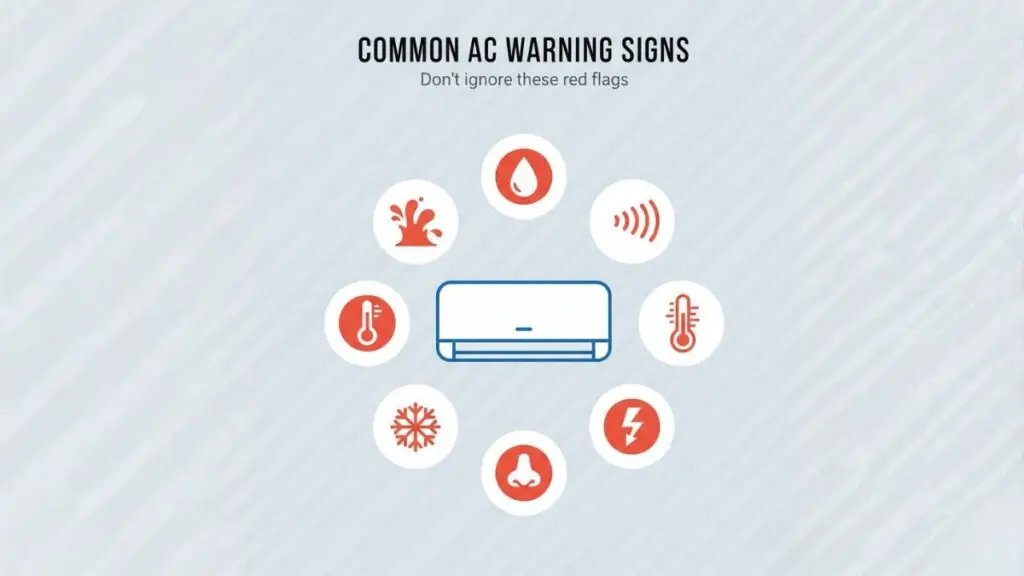
5 Critical Emergency Warning Signs Needs Emergency Air Conditioning Services
The issues listed in this section are not minor glitches; they are immediate threats to system integrity or household safety. When you encounter these signs, they should prompt a quick, decisive 24/7 call to a professional service. These are the scenarios where waiting even a few hours can turn an expensive repair into a complete system replacement or, worse, create a dangerous environment.
Dangerous Electrical Issues (Safety Hazard)
Electrical malfunctions are serious and can quickly become major hazards.
- Key Symptoms:
- The AC breaker keeps tripping repeatedly.
- Flickering or dimming lights when the AC is running.
- A burning smell or electrical odors coming from the unit or vents.
- Urgency & Causes: These issues pose potential safety hazards, with the risk of an electrical fire being the worst-case scenario. If safe to do so, you must shut down the system immediately and call for emergency repair.
Complete Cooling Failure or Warm Air Output
When the system cannot perform its primary function, especially during high temperatures, it becomes an emergency.
- Key Symptoms:
- The AC unit fails to turn on or provide any response.
- The AC is running but is blowing only lukewarm or warm air.
- The system struggles to keep the home at the desired setting, unable to keep up with the temperature demands.
- Urgency & Causes: Going without cooling during high heat can be dangerous, leading to heat stroke and dehydration, particularly for elderly adults, children, and pets. This severe failure usually signals a major internal issue like a compressor burnout, severe refrigerant leaks, or critical electrical problems.
Loud, Unusual, or Violent Noises
Your AC system should generally operate quietly. Any sudden, intense noises are warnings that mechanical parts are failing.
- Key Symptoms:
- Grinding, banging, clanging, or squealing sounds.
- Rattling noises indicating loose parts bouncing around inside the unit.
- Urgency & Causes: These sounds act as “warning sirens” that indicate broken, loose parts, or failing components like motors and bearings. Ignoring these signals can lead to immediate further damage to other components and potentially cause a complete system breakdown.
Water, Refrigerant, or Ice Leaks
While a small amount of condensate water pooling outside is normal, excessive moisture or ice formation is not.
- Key Symptoms:
- Visible pooling water or excessive moisture around the indoor or outdoor unit.
- Ice or frost forming on the indoor evaporator coils.
- Urgency & Causes: Leaks can cause extensive moisture damage and promote mold growth. Refrigerant leaks are highly concerning because refrigerant is harmful to the environment and is expensive to replace. Ice formation restricts airflow and stifles the cooling process, eventually leading to system failure.
Foul or Burning Odors
The presence of strong odors necessitates immediate investigation due to potential health or fire hazards.
- Key Symptoms:
- A musty, moldy smell.
- A burning smell.
- Urgency & Causes: Musty odors indicate mold/mildew growth due to trapped moisture, which is a potential health hazard for those with sensitivities. A burning smell is the most urgent odor, often pointing to loose or faulty wiring or overheating parts, requiring immediate attention to prevent an electrical fire.
Secondary Signs Indicating Severe System Strain
These issues, while perhaps not necessitating a call at 2:00 AM, are serious mechanical or operational problems that must be addressed quickly to prevent major failure. Ignoring these signs allows minor issues to escalate into more extensive, expensive breakdowns.
Constant Cycling On and Off
Short cycling is characterized by the AC unit repeatedly turning on and off in quick succession. Often, the unit runs for less than the typical 15–20 minutes required for a full cycle.
- Consequences: This erratic behavior places extreme strain and accelerated wear and tear on major components, especially the compressor. Furthermore, short cycling prevents the unit from performing proper humidity removal.
- Common Causes: This can be caused by low refrigerant, a restricted airflow (e.g., dirty filters), a faulty thermostat, or sometimes, the unit is simply the wrong size (oversized) for the home.
High Indoor Humidity Levels
If your home feels damp, sticky, clammy, or “like a swamp,” even when the AC is running, high indoor humidity is the likely culprit.
- Causes: The AC system is inefficiently removing moisture. This inefficiency can be linked to refrigerant leaks or the unit being the wrong size for the home.
- Consequences: High humidity is not just uncomfortable; it can damage belongings and lead to mold growth if not corrected promptly.
Sudden, Unexplained Spike in Energy Bills
A significant and sharp rise in your utility bills without any change in usage patterns is a serious sign that your system is struggling (Brrr…Bills!).
- Cause: The core issue is that the AC unit is operating inefficiently. This forces it to work harder and longer to achieve the desired temperature.
- In-depth Cause: This inefficiency can be caused by dirty components, refrigerant leaks, or the system simply being old and struggling to maintain its original efficiency rating.
Immediate Homeowner Action Plan (Before Calling a Professional)
When facing an air conditioning issue, don’t panic. If you notice a potential problem, performing these quick checks can sometimes resolve minor issues or, critically, prepare the unit for the technician’s arrival, allowing for accurate diagnostics and prompt solutions.
Here is your four-step action plan:
- Check the Thermostat Always start with the control center. Ensure the thermostat is switched to Cool or AC mode and the fan is set to Auto. Sometimes, a simple setting error is the only thing preventing your system from running correctly.
- Inspect the Air Filter Next, look at the most common maintenance item: the air filter. Check if the filter is visibly dirty or clogged. A dirty filter restricts airflow, forcing the system to work harder. If necessary, replace it. A filter replacement frequency of roughly every three months or so is generally recommended for maintaining efficiency.
- Check the Electrical Breaker If the unit is completely unresponsive, look for a tripped circuit breaker in your electrical panel. If it is tripped, you can attempt to flip it back on once. Be warned, however: if the breaker immediately trips again, this signals a serious underlying electrical issue. You must then shut the system off and immediately call a professional.
- Shut Down the System This is the most critical safety measure. If you detect the most severe emergency signs—such as burning smells, severe leaks, or loud banging noises—you must immediately turn off the AC unit. This crucial action prevents potentially serious, costly damage to mechanical components.
Why Timely Repair is Crucial for Safety and Longevity
When your AC signals an emergency, the decision to call for repair immediately is not just about restoring comfort—it is a critical investment in the long-term health and safety of your system. Addressing warning signs early prevents minor issues from escalating into major system failures, which could leave you without necessary air conditioning when you need it most.
Age Matters
While regular maintenance is essential and certainly helps extend a system’s lifespan, most AC units have a finite life, typically around ten to fifteen years. Knowing the age of your system is crucial. If an older unit, specifically one over 10 years old, begins to require frequent and costly repairs, replacement may ultimately be the more economical choice than continuing to funnel money into an ailing machine.
Protecting the Compressor
The compressor is often referred to as the heart of your AC system. This is the component responsible for circulating refrigerant and doing the heavy lifting of the cooling process, making it both vital and extremely expensive to replace. Addressing system issues promptly protects this component. A key detail to remember is that the compressor usually has a manufacturer warranty that lasts around 10 years. Therefore, if the unit is failing due to neglect, you risk voiding warranties or having to cover the cost of replacing this crucial part out of pocket if the warranty has expired.
Choosing a Reliable 24/7 Emergency AC Service Provider
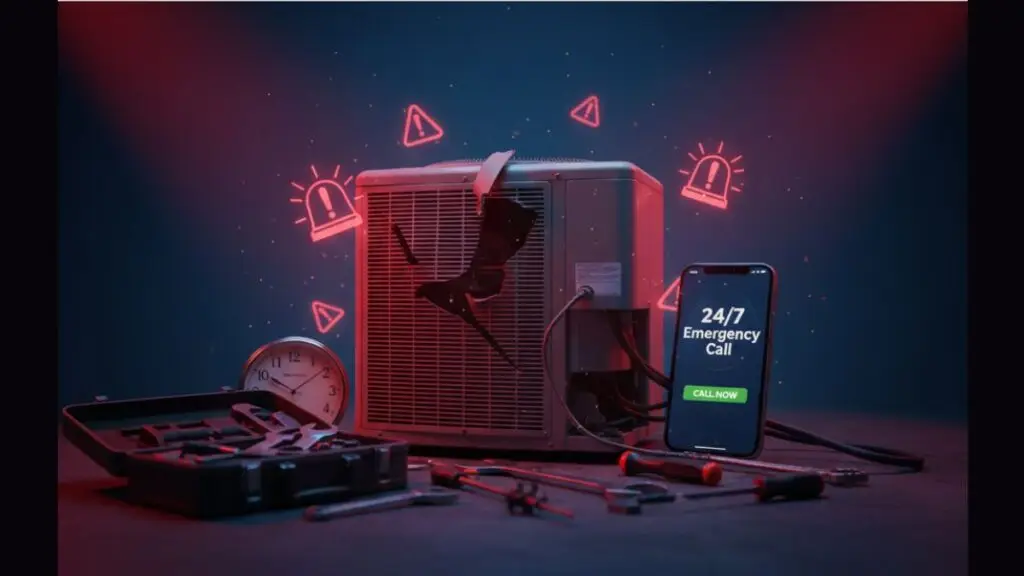
Identifying the signs of an emergency is only the first step; the final, and most critical, step is choosing a reliable service provider to handle the crisis promptly and professionally.
When selecting an emergency AC service, look for providers who meet these crucial criteria:
- Availability: You must choose a company offering 24/7 emergency service. This ensures an immediate response regardless of whether your system fails late at night, on the weekend, or during a holiday.
- Expertise: Look specifically for licensed and certified HVAC technicians. These professionals are equipped to offer accurate diagnostics and prompt solutions, resolving the issue efficiently.
- Reputation and Guarantees: Select a trusted provider with a strong reputation in the community. You can gauge reliability by looking at established companies—for instance, those boasting impressive metrics like being in business Over 30 Years or 60 years. Customer satisfaction is often backed by high volumes of public reviews, such as 1,000+ Reviews or 6000 reviews.
- Preventative Maintenance: To minimize future emergencies, schedule annual maintenance in the spring. This service can resolve minor repair needs before they escalate into high-stress summer emergencies.
Don’t wait if you notice any of these emergency issues. Your next step should be immediate action—book a same-day AC service if you notice any of these issues.
Conclusion: Act Fast, Stay Cool
The integrity of your home comfort relies on spotting the subtle—or sometimes violent—signals your AC system sends when it is failing. Whether you hear the loud, unusual, or violent noises that act as “warning sirens” or notice dangerous symptoms like a burning smell or the AC breaker tripping repeatedly, recognizing these immediate threats is essential. These issues are immediate threats to system integrity or household safety and should prompt a 24/7 call.
Postponing service when facing major issues like complete cooling failure or severe leaks can easily lead to greater damage and more costly repairs down the line. Remember, early intervention protects the vital compressor, which typically has a warranty lasting around 10 years, and helps keep older units (often lasting ten to fifteen years) running efficiently. Delaying service can pose safety risks and cause greater damage.
If your quick homeowner checks (like ensuring the filter is clean or the thermostat is set to Cool or AC mode) do not resolve the issue, it’s time to call an expert. Choose a licensed provider offering 24/7 emergency service and prioritize scheduling your annual maintenance in the spring to proactively resolve minor needs. Don’t hesitate—book a same-day AC service if you notice any of these signs.