Indoor Air Quality Guide: Common Problems, Warning Signs & Solutions for Louisiana Homes
Search
Recent Posts
Tags
Follow Us on
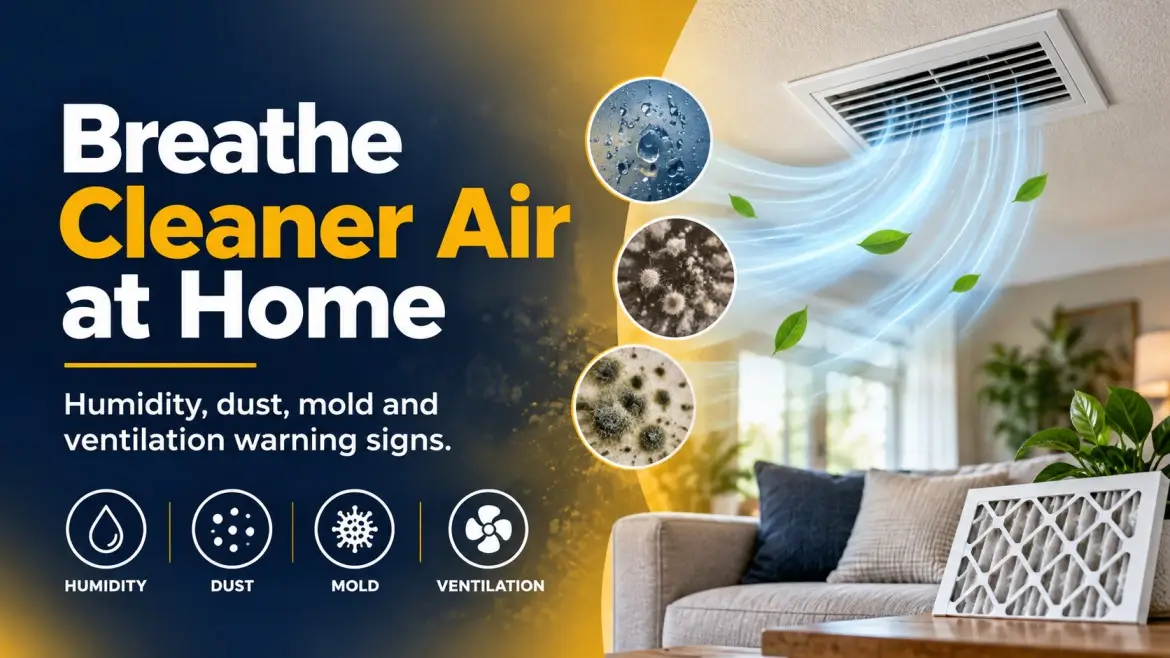
Indoor air quality (IAQ) describes how clean, dry, and healthy the air inside your home is. In Louisiana homes, the most common IAQ problems come from excess humidity, mold, dust and allergens, chemical fumes, and combustion gases. You can often improve IAQ by controlling moisture, keeping the HVAC system maintained, choosing the right filter, and reducing pollutant sources. Persistent odors, mold, or symptoms may call for a professional inspection.
Key Takeaways
- Humidity is the first thing to check in an Acadiana home. The EPA recommends keeping indoor relative humidity below 60%, ideally between 30% and 50%. Above that range, mold and dust mites thrive.
- Carbon monoxide is the one IAQ problem that needs immediate action. If a CO alarm sounds or several people feel sick at once, get everyone outside and call 911 or your gas utility before thinking about anything else.
- Radon risk is generally lower in Louisiana than in many states, but it is not zero. Testing is the only way to know your home’s level.
- A higher-rated filter only helps if your system can handle it. A filter that restricts airflow can hurt comfort and humidity control.
- Most IAQ problems have a source. Removing or controlling the source usually does more than any air purifier.
Many homeowners notice indoor air problems before they can name them. The house smells musty after a rainy week. Dust returns a day after cleaning. Someone’s allergies are worse at home than at work. This Indoor Air Quality Guide explains what causes these problems, which warning signs matter most, how Louisiana’s climate plays a role, and when a simple fix is enough versus when to have the home and HVAC system evaluated.
What Is Indoor Air Quality?
Indoor air quality refers to the condition of the air inside a building, especially as it relates to the health and comfort of the people living there. It covers airborne particles like dust and pollen, gases like carbon monoxide and chemical vapors, biological contaminants like mold and bacteria, and moisture levels.
The EPA notes that indoor levels of some pollutants can be higher than outdoor levels, and most people spend the majority of their time indoors. That makes the air in your home one of the biggest environmental exposures in your daily life.
Why Indoor Air Quality Matters in Louisiana Homes
Louisiana’s hot, humid climate puts steady pressure on indoor air. Homes stay closed up with the AC running for much of the year, which means pollutants generated inside have fewer chances to leave. At the same time, humid outdoor air constantly works its way in through leaks, doors, and ductwork.
This combination makes moisture control a central IAQ issue in Acadiana, not a side concern. When humidity stays high, it supports mold growth, dust mites, and musty odors, and it can make the home feel clammy even when the thermostat reads a normal temperature.
What Causes Poor Indoor Air Quality?
Most IAQ problems come from one of three sources, or a combination:
- Pollutant sources inside the home: gas appliances, cleaning products, new furniture, paint, tobacco smoke, cooking, pets, and building materials.
- Moisture problems: high humidity, plumbing leaks, roof leaks, poor drainage, and HVAC condensate issues.
- Inadequate ventilation or filtration: too little fresh air, blocked returns, dirty filters, or leaky ductwork that pulls in air from attics or crawlspaces.
Identifying which of these applies to your home is more useful than buying equipment and hoping it helps.
How Poor IAQ Affects Health and Comfort
Effects vary widely depending on the pollutant, the amount, and the person. Short-term effects can include headaches, fatigue, dizziness, and irritation of the eyes, nose, and throat. Allergy and asthma symptoms often worsen with exposure to mold, dust mites, and pet dander.
Some pollutants carry longer-term risks. Radon is a leading cause of lung cancer, and secondhand smoke and fine particles are linked to heart and lung disease. Comfort matters too: sticky air, stale odors, and constant dust make a home less pleasant to live in even when no health effect is obvious.
This article is general information, not medical advice. If you or a family member has ongoing symptoms, talk with a healthcare provider.
Common Indoor Air Pollutants and Their Health Risks
Excess Humidity and Moisture
Humidity isn’t a pollutant in itself, but it drives several of the most common IAQ problems in Louisiana homes. Indoor humidity that stays above 60% supports mold, mildew, and dust mites, and it can leave rooms feeling warmer than the thermostat setting suggests. Common causes include oversized or poorly performing AC equipment, air leaks, duct leaks, and moisture from bathrooms and kitchens without adequate exhaust.
For a full breakdown of causes and fixes, see our [Humidity Guide].
Mold and Biological Contaminants
Mold grows wherever moisture persists on surfaces such as drywall, wood, carpet, ceiling tiles, and inside HVAC components. Other biological contaminants include bacteria, dust mites, and pest droppings. Mold exposure can trigger allergic reactions and asthma symptoms in sensitive people.
The key point: mold is a moisture problem first. Cleaning visible mold without fixing the water source usually means it returns. Our [Mold Guide] covers identification and remediation in detail.
Radon
Radon is a colorless, odorless radioactive gas that forms naturally in soil and can enter homes through foundation cracks and gaps. The EPA identifies radon as the leading cause of lung cancer among nonsmokers.
According to the EPA’s radon zone map, Louisiana is generally in the lowest-potential category. That’s reassuring, but radon levels vary from house to house, and the only way to know your home’s level is to test. Inexpensive test kits are widely available.
Carbon Monoxide and Other Combustion Pollutants
Carbon monoxide (CO) is produced when fuel burns incompletely. Possible sources include gas furnaces, water heaters, gas stoves, fireplaces, attached garages, and portable generators. CO has no color or smell, and exposure can cause headaches, dizziness, nausea, confusion, and at high levels, death.
Combustion appliances can also release nitrogen dioxide and fine particles, especially when venting is blocked or equipment isn’t operating properly.
Safety first: If your CO alarm sounds, or several people in the home feel ill at the same time, leave the house immediately and call 911 or your gas utility from outside. Do not go back in until responders say it is safe. Every home with fuel-burning appliances or an attached garage should have working CO alarms, generally near sleeping areas and on each level.
Volatile Organic Compounds (VOCs) and Chemical Odors
VOCs are gases released from many household products: paints, varnishes, adhesives, cleaning supplies, air fresheners, new furniture, flooring, and cabinetry made with pressed wood. Formaldehyde is one of the best-known examples.
VOC levels often spike after renovations or new furniture deliveries, then decline over time. Exposure can cause eye, nose, and throat irritation, headaches, and nausea. Some VOCs carry longer-term health concerns at higher exposures.
Particulate Matter, Smoke, and Secondhand Smoke
Particulate matter includes tiny particles from cooking, candles, fireplaces, tobacco smoke, and outdoor sources like wildfire or field-burning smoke. Fine particles, called PM2.5, are small enough to reach deep into the lungs.
Secondhand tobacco smoke is one of the most harmful indoor pollutants. No level of exposure is considered safe, and it cannot be fully removed by ventilation or air cleaners. The only reliable solution is not smoking indoors.
Dust, Pet Dander, and Indoor Allergens
Household dust is a mix of skin flakes, fibers, pollen, soil, dust mite debris, and pet dander. Dust mites thrive in humid environments, so Louisiana homes that run high humidity often have more of them.
Allergens tend to settle in carpet, bedding, and upholstery, then get stirred back into the air by activity. Good filtration helps with airborne particles, but regular cleaning and humidity control matter just as much.
Warning Signs of Poor Indoor Air Quality
Odors, Humidity, and Visible Mold
Use this quick checklist to spot moisture-related IAQ problems:
- A musty or earthy smell, especially when the AC first starts
- Condensation on windows, supply vents, or cold water pipes
- Floors or furniture that feel slightly damp or sticky
- Visible mold or dark spotting on ceilings, walls, vent covers, or around windows
- Warped wood, peeling paint, or water stains
- A hygrometer reading consistently above 60%
A single sign isn’t proof of a serious problem, but two or three together usually point to a moisture source worth investigating.
Excessive Dust or Poor Air Circulation
If dust builds up quickly after cleaning, or some rooms feel stuffy while others feel fine, look at airflow and filtration. Possible causes include a dirty or poorly fitting filter, leaky return ducts pulling in attic or wall-cavity dust, blocked vents, or rooms that don’t have a clear return air path when doors are closed.
Dark streaks around supply registers or at the edges of carpet near walls can also suggest dirty air moving through gaps.
Recurring Allergy or Asthma Triggers
A useful clue is where symptoms happen. If allergy or asthma symptoms are consistently worse at home and improve when you’re away, the home environment may be contributing. Symptoms that worsen when the HVAC system runs, or in one particular room, can help narrow down the source.
Headaches, Irritation, or Other Indoor Concerns
Headaches, fatigue, and eye or throat irritation that ease after leaving the house deserve attention. These symptoms can have many causes, but they’re worth connecting to what’s going on indoors, such as recent painting, new furniture, a gas appliance, or a musty room.
If headaches, dizziness, or nausea affect more than one person, or occur along with a gas appliance running, treat it as a possible carbon monoxide issue and get outside first.
How Louisiana’s Climate Affects Indoor Air Quality
High Humidity and HVAC Challenges in a Humid Climate
In a humid climate, your AC has two jobs: lowering the temperature and removing moisture. As air passes over the cold evaporator coil (the indoor coil that absorbs heat), water vapor condenses and drains away. That’s how an AC dehumidifies.
Problems arise when the system can’t run long enough or cold enough to remove moisture effectively. An oversized system may cool the house quickly and shut off before pulling out much humidity, a pattern called short cycling. High fan settings, leaky ducts in a hot attic, and a lot of outdoor air infiltration can also leave indoor humidity high even when the temperature feels acceptable.
Mild spring and fall days bring their own challenge. When it’s humid but not hot, the AC may barely run, so moisture builds up indoors.
Indoor Air Quality After Hurricanes and Flooding
Storms and flooding create some of the most serious IAQ situations Acadiana homes face. Wet materials that aren’t dried or removed quickly can grow mold, and the EPA advises drying water-damaged areas within 24 to 48 hours to help prevent growth.
A few points specific to HVAC after a storm:
- Don’t run HVAC equipment that has been underwater until a qualified technician has inspected it. Flooded electrical components and gas controls can be a safety hazard.
- Ductwork that took on floodwater may be contaminated and often needs professional evaluation.
- Never run a portable generator inside the home, garage, or near windows and doors. Generator exhaust is a leading cause of carbon monoxide poisoning after storms. The CDC recommends keeping generators at least 20 feet from the house.
Outdoor Air Pollution and Wildfire Smoke
Outdoor air affects indoor air, especially in a leaky house. In Acadiana, sources can include smoke from marsh and wildland fires, agricultural burning during sugarcane harvest season, pollen, and industrial or traffic emissions.
On smoky or poor-air days, check the local air quality forecast at AirNow.gov. Keeping windows closed and running the HVAC system with a good filter can reduce the amount of smoke you breathe indoors. Some systems have a fresh-air intake. If yours does, ask a technician whether it should be adjusted during smoke events.
Indoor Air Quality Guidelines and Recommended Levels
IAQ Guidelines vs. Standards: What’s the Difference?
A standard is a legally enforceable limit. A guideline is a recommendation based on health research. For private homes in the U.S., most IAQ numbers are guidelines. They are useful benchmarks for making decisions, not legal requirements your home has to meet.
Recommended Humidity, CO, and Radon Levels
| Factor | Common benchmark | Source / note |
| Relative humidity | Below 60%, ideally 30–50% | EPA recommendation |
| Radon | Fix the home at 4 pCi/L or higher; consider fixing between 2 and 4 pCi/L | EPA action level |
| Carbon monoxide | No routine indoor level should be treated as acceptable from a malfunctioning appliance; CO alarms alert at dangerous concentrations | Follow alarm and manufacturer guidance |
For humidity, an inexpensive digital hygrometer lets you see where your home actually sits. For CO, the practical tool is a working alarm, not a target number.
Particulate Matter and VOC Considerations
The World Health Organization’s air quality guidelines set health-based targets for fine particles (PM2.5). Consumer air monitors often report PM2.5 and give you a general sense of whether cooking, candles, or outdoor smoke are affecting your air.
VOCs are harder to judge. Many home monitors report a combined “TVOC” number, which is useful for spotting spikes, such as after painting, but doesn’t identify which chemical is present. Treat those readings as a trend indicator, not a diagnosis.
EPA and WHO Guidance (No Mandatory U.S. Home Standards)
There is no single federal standard that sets mandatory air quality limits inside private homes. The EPA provides guidance on specific pollutants like radon, mold, and CO, and the WHO publishes health-based guidelines. Workplaces and some commercial buildings fall under different rules. For homeowners, the practical approach is to use these guidelines to decide what to monitor and when to take action.
How Your HVAC System Affects Indoor Air Quality
How AC Helps Control Humidity
Every time your AC runs, it removes some moisture from the air. How much depends on how long the system runs, coil temperature, airflow, and how well the equipment matches the home’s actual load. A properly sized and set-up system generally runs longer, steadier cycles that allow more dehumidification.
A few thermostat habits can also affect humidity. Setting the fan to “On” instead of “Auto” can re-evaporate moisture off the wet coil between cycles in some systems. If your home feels clammy, “Auto” is usually the better starting point.
HVAC Air Filters and Filtration
Filters are rated using MERV (Minimum Efficiency Reporting Value). Higher MERV numbers capture smaller particles. The EPA’s guidance on home air cleaners suggests using the highest-rated filter your system can accommodate, often MERV 13 where compatible.
That last part is key. A denser filter can restrict airflow in systems not designed for it, which may reduce comfort, affect dehumidification, and put strain on the blower. If you’re unsure what your system can handle, ask a technician. Filter fit matters as much as rating, since air bypassing a loose filter isn’t filtered at all.
Air Ducts and Ventilation
Ductwork carries air to and from every room. In many Louisiana homes, ducts run through hot, humid attics. Leaks on the return side can pull in attic dust, insulation fibers, and humid air, bypassing the filter entirely.
Ventilation is the other half. Bathroom and kitchen exhaust fans remove moisture and pollutants at the source, and they should vent outdoors, not into the attic. Some homes also have a mechanical fresh-air system. More ventilation isn’t automatically better in a humid climate, since outdoor air brings moisture with it, so the goal is controlled, balanced ventilation.
How Poor HVAC Maintenance Affects Air Quality
Neglected equipment can become a source of IAQ problems rather than a solution. Common issues include:
- Dirty evaporator coils that reduce moisture removal and can harbor biological growth
- Clogged condensate drains or standing water in drain pans
- Dirty blowers that restrict airflow
- Overdue filters
- For gas furnaces, venting or combustion problems that only a technician can properly check
Regular professional maintenance gives someone the chance to catch these conditions before they affect your air.
How to Diagnose an Indoor Air Quality Problem
Identify Symptoms and Check for Moisture/Mold
Start by writing down what you notice and when: smells, dust, symptoms, which rooms, and whether it changes with the weather or when the AC runs. Patterns are often the best clue.
Next, check humidity with a hygrometer in a few rooms over several days. Look for condensation, water stains, and visible mold under sinks, around windows, in closets on exterior walls, and near the indoor HVAC unit.
Inspect HVAC Filters, Ductwork, and Drain Pans
A homeowner can safely:
- Check whether the filter is dirty, the correct size, and seated properly
- Look at supply vents for dust streaks, condensation, or visible growth
- Make sure supply and return vents aren’t blocked by furniture or rugs
- Look for water around the indoor unit or signs of an overflowing drain
Leave anything that requires opening the equipment, cleaning coils, or inspecting inside the ductwork to a technician. Those areas can involve electrical components and require the right tools.
Identify Potential Pollution Sources
Walk through the house with fresh eyes. Note recent paint, new furniture or flooring, stored chemicals, air fresheners, candles, gas appliances, an attached garage, pets, and anyone smoking indoors. Many IAQ problems improve significantly once an obvious source is removed or stored outside the living space.
When Indoor Air Quality Testing Is Needed
Testing makes sense when the source isn’t obvious, when symptoms persist after basic fixes, or when a specific pollutant needs to be confirmed. Radon and CO are pollutants you can’t detect without a test or alarm. Testing is also useful after flooding, before buying a home, or when someone in the household has serious respiratory sensitivities.
How to Improve Indoor Air Quality in Your Louisiana Home
Control Humidity and Improve Ventilation
Humidity control is usually the highest-impact step in a Louisiana home. Practical actions include:
- Run bathroom exhaust fans during showers and for a while afterward
- Use a kitchen range hood that vents outdoors when cooking
- Set the thermostat fan to “Auto”
- Fix plumbing leaks and drainage problems around the foundation
- Seal obvious air leaks around doors and windows
If humidity stays above 60% despite these steps, the HVAC system’s performance, ductwork, or sizing may need a professional look.
Use the Right HVAC Filter and Maintain Your System
Check your filter monthly and replace it when it’s dirty. Many homes need replacement every one to three months, though pets, dust, and filter type all affect this. Choose the highest-MERV filter your system can handle without restricting airflow.
Pair that with routine professional maintenance, which typically includes checking the coil, drain, blower, airflow, and, for gas equipment, combustion safety.
Reduce VOCs, Allergens, and Smoke Exposure
- Choose low-VOC or zero-VOC paints, finishes, and adhesives
- Let new furniture or flooring air out, ideally in a garage or ventilated space, before bringing it indoors
- Store paints, solvents, and fuel away from living areas
- Skip heavy air fresheners and scented candles, which add pollutants rather than removing them
- Vacuum with a HEPA-filter vacuum and wash bedding in hot water to reduce dust mites
- Keep smoking outside
Prevent Mold Growth
Keep humidity in range, fix leaks quickly, and dry any wet materials within 24 to 48 hours. Make sure the AC condensate drain flows freely. For identification, cleanup, and when professional remediation is appropriate, see our [Mold Guide].
Equipment Solutions: Dehumidifiers, Air Purifiers, and UV Systems
When source control and basic maintenance aren’t enough, equipment can help. Each option solves a different problem:
| Equipment | What it helps with | Limitations |
| Whole-home dehumidifier | Persistent high humidity, especially during mild, humid weather | Needs proper sizing and installation; doesn’t fix leaks or water intrusion |
| Portable dehumidifier | Single rooms or problem areas | Needs emptying or a drain; limited coverage |
| Portable air purifier (HEPA) | Airborne particles in one room | Doesn’t remove gases unless it has substantial activated carbon; sized by room |
| Upgraded HVAC filtration | Airborne particles throughout the house | Must be compatible with system airflow |
| UV lights (in HVAC system) | Biological growth on coils and drain pans | Limited effect on particles and gases; effectiveness depends on design and placement |
Avoid ozone-generating “air purifiers.” The EPA warns that ozone is a lung irritant and that ozone generators are not effective at the levels considered safe for people.
The right equipment depends on what’s actually wrong in your home, which is why identifying the problem comes first.
Indoor Air Quality Testing
What Does a Test Measure?
IAQ testing can target different things depending on the concern:
- Humidity and temperature: the most basic and often most revealing measurement
- Carbon monoxide: through alarms or a technician checking combustion appliances
- Radon: through short-term or long-term test kits
- Particulate matter (PM2.5/PM10): through monitors that show real-time levels
- VOCs and formaldehyde: through monitors or lab-analyzed samples
- Mold: through visual inspection and, in some cases, air or surface sampling
No single test covers everything. Knowing what you’re testing for helps you choose the right method.
When Should You Test? (DIY vs. Professional)
DIY testing works well for humidity, radon screening, and general particle and VOC trends. A hygrometer and a radon kit are inexpensive places to start, and working CO alarms are essential.
Professional evaluation makes more sense when:
- Symptoms persist and the cause isn’t clear
- You suspect hidden mold behind walls or in ductwork
- A radon test comes back at or above the EPA action level
- The home has been flooded
- Gas appliances need to be checked for safe operation
Mold air sampling in particular is easy to misinterpret without context, so results should be reviewed by someone qualified.
Improving Indoor Air Quality During Home Renovations
How Remodeling Can Increase Indoor Pollutants
Renovations stir up dust, release VOCs from new materials, and may disturb hidden mold. In older homes, sanding or demolition can release lead paint dust or asbestos fibers. Homes built before 1978 may contain lead-based paint, and work that disturbs it should follow EPA lead-safe practices.
Construction dust can also end up in your HVAC system, clogging filters and coating ductwork and coils.
Improving Ventilation and Choosing Lower-Emission Materials
- Seal off the work area with plastic sheeting when possible
- Cover or close supply and return vents in the work zone, and ask your contractor whether to shut the HVAC system off during heavy dust work
- Check and replace the HVAC filter more often during and after the project
- Ventilate the work area with window fans exhausting outward when weather allows
- Choose low-VOC paints, adhesives, and sealants, and look for flooring and cabinets certified for low formaldehyde emissions
- Allow new materials to off-gas before moving back into the space when possible
When to Call an Indoor Air Quality Professional
Persistent Mold, Moisture, or Musty Odors
If mold keeps returning after cleaning, or a musty smell lingers even when no visible growth is present, there’s likely a moisture source you haven’t found. It could be in walls, under floors, in ductwork, or inside the HVAC equipment itself. A professional can help locate the source rather than just treating the symptom.
Excessive Humidity That’s Difficult to Control
If indoor humidity stays above 60% even with exhaust fans, fixed leaks, and the fan set to “Auto,” the HVAC system may not be removing moisture as it should. Possible factors include equipment sizing, airflow settings, duct leakage, or coil condition. Diagnosing which one applies requires measurement on site, not guesswork.
Recurring HVAC or Air Quality Problems
Repeated drain clogs, water around the indoor unit, dust blowing from vents, uneven room humidity, or odors when the system starts are signs that something in the system needs attention. These problems usually come back until the underlying cause is addressed.
Ongoing Allergy or Respiratory Concerns
If someone in your home has asthma, severe allergies, or ongoing respiratory symptoms that seem connected to the house, work with a healthcare provider on the medical side. An HVAC or IAQ professional can then help evaluate humidity, filtration, and ventilation so the home supports, rather than works against, their treatment.
Conclusion
Good indoor air quality in a Louisiana home starts with the basics: keep humidity below 60%, remove pollutant sources, maintain your HVAC system, and use the best filter your system can handle. Those steps address the most common problems Acadiana homes face, including musty odors, mold, dust, and allergy triggers.
Treat carbon monoxide as a safety issue that calls for immediate action, and test for radon rather than assuming. When moisture, odors, or symptoms persist after the simple fixes, the cause is usually something that needs a closer look, whether that’s the ductwork, the equipment’s performance, or a hidden water source.
If you’d like to understand what options may fit your home, see the indoor air quality solutions offered by Fontenot’s Air Conditioning & Heating, or visit Fontenot’s Air Conditioning & Heating to learn more about HVAC service for homes in Lafayette, Broussard, Youngsville, and across Acadiana.