
How to Choose the Right AC System Size for Your Home in Lafayette, LA
Search
Recent Posts

Tags
Follow Us on
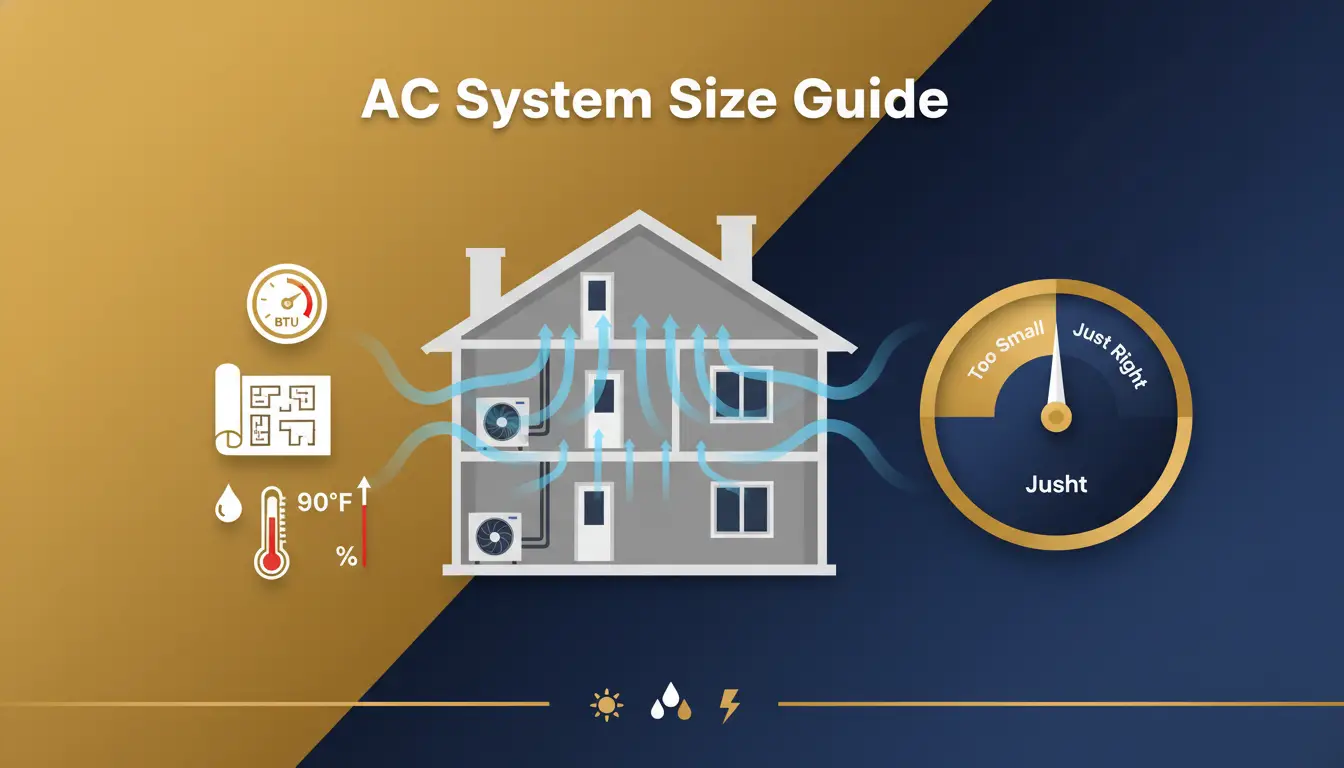
Choosing the right AC system size means matching your home’s cooling load to the correct unit capacity, measured in BTUs or tons. A properly sized system keeps your home comfortable, controls humidity, and runs efficiently. Sizing too small or too large causes comfort problems, higher energy bills, and premature system failure.
Key Takeaways
- AC system size is measured in BTUs and tons; one ton equals 12,000 BTUs per hour of cooling capacity.
- Square footage is a starting point only. Insulation, ceiling height, windows, and local climate all change what size you actually need.
- An oversized AC creates humidity problems and short cycling. An undersized AC runs constantly and still fails to cool your home.
- In Lafayette, LA, high heat and humidity demand careful sizing. A Manual J load calculation is the only truly accurate method.
- Always hire a licensed HVAC contractor who performs a Manual J before recommending any system size.
Why Proper AC Sizing Matters for Comfort, Efficiency, and Cost
Most homeowners think buying a bigger AC unit is the safe choice. It feels logical: more power, more cooling. But HVAC sizing does not work that way.
An AC system that is too large for your home will cycle on and off repeatedly without completing a full cooling cycle. When that happens, it removes heat but fails to remove humidity, leaving your home feeling sticky and damp even when the thermostat reads 72°F.
An undersized system runs almost constantly, trying to reach the set temperature. On the hottest August afternoons in Lafayette, it may never get there. Your electricity bill climbs, your equipment wears out faster, and your family is still uncomfortable.
Getting the AC system size right the first time means lower monthly energy costs, better indoor humidity control, longer equipment lifespan, and a home that actually feels cool rather than just cold in some rooms and warm in others.
How Lafayette’s Heat and Humidity Impact AC Performance
Lafayette, Louisiana sits in a hot-humid climate zone (Climate Zone 2A, according to the U.S. Department of Energy). That classification matters directly to AC sizing.
Average summer temperatures regularly exceed 90°F, and humidity levels frequently push above 70 to 80 percent. Your AC system must work harder here than in a drier climate with the same temperature. Without the right size and the right system type, your home will feel muggy no matter how low you set the thermostat.
This is why sizing rules developed for homes in, say, Denver or Chicago do not apply cleanly to Lafayette. Local climate conditions must factor into every sizing decision.
Step-by-Step: How to Choose the Right AC System Size
Step 1: Choose the Right Type of AC System for Your Home
Before calculating capacity, decide which type of system fits your home. Central split systems work best for homes with existing ductwork. Ductless mini-splits work well for older homes, additions, or rooms without ducts. Heat pumps offer efficient year-round comfort in Louisiana’s mild winters. Each system type handles capacity differently, and your contractor should match the system type to your home’s layout before any sizing conversation begins.
Step 2: Estimate Size Using Square Footage and BTUs
Start with the general rule: 20 to 25 BTUs per square foot of conditioned living space. A 2,000 sq ft home, for example, falls in the range of 40,000 to 50,000 BTUs, or roughly 3.5 to 4 tons of cooling capacity.
This estimate gives you a reasonable ballpark. Use it to start the conversation with your contractor, not to make a final purchase decision.
Step 3: Adjust for Home-Specific Factors
Raw square footage never tells the whole story. After your initial estimate, adjust for ceiling height above 8 feet, poor attic insulation, large south-facing windows, and the number of people regularly in the home. Each of these factors increases your cooling load and means you may need more capacity than the square footage formula suggests.
Step 4: Review Energy Efficiency Ratings (SEER2)
SEER2, or Seasonal Energy Efficiency Ratio 2, measures how efficiently an AC system uses electricity. Higher SEER2 ratings mean lower operating costs over time. As of January 2023, the U.S. Department of Energy requires a minimum SEER2 of 13.4 for split systems in the South (Source: U.S. DOE, 2023). In Louisiana’s climate, choosing a system with a SEER2 rating of 15 or higher generally pays off in reduced electricity costs over the system’s lifetime.
Step 5: Get a Manual J Load Calculation
A Manual J load calculation is the engineering standard for AC sizing. It accounts for every variable that affects your home’s cooling load: square footage, insulation R-values, window area and orientation, air infiltration, occupancy, ductwork design, and local climate data. No online calculator or quick estimate can replicate it. Every reputable HVAC contractor should perform one before recommending a system size.
Step 6: Choose a Qualified HVAC Contractor
Your sizing is only as good as the person doing the calculation. Look for a contractor who is NATE-certified (North American Technician Excellence), licensed in Louisiana, and willing to show you the Manual J results before quoting equipment. You can explore professional AC installation services to get started with a qualified team in Lafayette.
Understanding AC Size: BTUs, BTUh, Tons, and Cooling Capacity
What BTUs and BTUh Mean in Air Conditioning
BTU stands for British Thermal Unit. It measures the amount of heat energy required to raise one pound of water by one degree Fahrenheit. In air conditioning, the relevant measurement is BTUh: BTUs per hour. This tells you how much heat an AC system can remove from your home each hour.
Converting BTUs to Tons (1 Ton = 12,000 BTUs)
The term “ton” in HVAC refers to cooling capacity, not weight. One ton of cooling capacity equals 12,000 BTUh. A 3-ton system moves 36,000 BTUh of heat out of your home. A 5-ton system moves 60,000 BTUh. Most residential systems range from 1.5 tons to 5 tons.
Standard Rule: 20–25 BTUs Per Square Foot
The industry baseline is 20 BTUs per square foot for moderate climates and up to 25 BTUs per square foot for hot, humid climates like Lafayette’s. Applying 25 BTUs per square foot to a 1,800 sq ft home gives you 45,000 BTU, or approximately 3.75 tons. In practice, most contractors would round to a 4-ton system and then adjust based on additional factors.
How to Read AC Unit Specifications Correctly
When you look at a unit’s spec sheet, find the nominal cooling capacity listed in BTUh or tons. Also check the SEER2 rating, the electrical requirements (voltage and amperage), and the refrigerant type. A system listed as “4-ton nominal” may have a rated capacity of 47,000 to 49,000 BTUh. These small differences matter when matching the unit to your Manual J results.
Quick AC Size Chart by Square Footage (BTU and Tonnage Guide)
100–700 Sq Ft AC Size Guide
| Square Footage | BTU Required | Tonnage |
| 100–300 sq ft | 5,000–7,000 BTU | 0.5 ton |
| 300–500 sq ft | 10,000–12,000 BTU | ~1 ton |
| 500–700 sq ft | 14,000–18,000 BTU | 1–1.5 tons |
700–1,200 Sq Ft AC Size Guide
| Square Footage | BTU Required | Tonnage |
| 700–1,000 sq ft | 18,000–21,000 BTU | 1.5 tons |
| 1,000–1,200 sq ft | 21,000–24,000 BTU | 2 tons |
1,200–2,000 Sq Ft AC Size Guide
| Square Footage | BTU Required | Tonnage |
| 1,200–1,500 sq ft | 24,000–30,000 BTU | 2–2.5 tons |
| 1,500–2,000 sq ft | 30,000–40,000 BTU | 2.5–3.5 tons |
2,000–2,500+ Sq Ft Homes: 3.5–5 Ton Systems
| Square Footage | BTU Required | Tonnage |
| 2,000–2,500 sq ft | 40,000–50,000 BTU | 3.5–4 tons |
| 2,500–3,000 sq ft | 50,000–60,000 BTU | 4–5 tons |
| 3,000+ sq ft | 60,000+ BTU | 5 tons or zoned system |
When to Use Estimates vs Professional Calculations
Use these chart numbers to set expectations and have an informed conversation with your contractor. Never use them to purchase a system without a professional load calculation. In Lafayette’s climate, real-world variables like insulation quality, window exposure, and internal heat sources routinely shift the required tonnage by half a ton or more.
What Size AC Unit Do You Need for Common Home Sizes?
1,500 Sq Ft Home AC Size Recommendation
A 1,500 sq ft home in Lafayette typically needs a 2.5 to 3-ton system, or 30,000 to 36,000 BTUh. If the home has high ceilings, poor insulation, or large south-facing windows, moving to a 3.5-ton unit may be appropriate after a Manual J confirms it.
2,000 Sq Ft Home AC Size in Lafayette, LA
A 2,000 sq ft Lafayette home generally falls in the 3 to 4-ton range. The high humidity here often pushes sizing toward the upper end of that range. A well-insulated newer home might stay at 3 tons, while an older home with single-pane windows and attic access issues may need 3.5 to 4 tons to keep up.
Larger Homes and Multi-Zone Cooling Needs
Homes above 2,500 sq ft often benefit from a zoned system rather than one oversized central unit. Multi-zone setups allow different areas of the home to cool independently, improving efficiency and comfort. Talk to a qualified local HVAC professional about whether your larger home is better served by a zoned system or a high-capacity central unit.
Why Square Footage Alone Is Not Enough
Limitations of Rule-of-Thumb Sizing
Think of square footage sizing like estimating a car’s fuel usage based only on its color. It gives you a number, but it misses the things that actually drive performance. Square footage tells you how much floor space needs cooling but nothing about how much heat is entering through the roof, walls, and windows, or how efficiently that heat is being blocked.
A quick rule-of-thumb estimate has real value as a starting point. As a final sizing decision, it regularly leads to wrong-sized equipment.
Why Two Homes of the Same Size Need Different AC Units
Two 1,800 sq ft homes on the same street can have completely different cooling loads. One was built in 2018 with spray foam insulation, double-pane windows, and a sealed attic. The other was built in 1975, has fiberglass batt insulation that has settled and compressed, single-pane aluminum windows, and a vented attic that reaches 150°F on summer afternoons.
The newer home may cool efficiently with a 2.5-ton system. The older home may need 3.5 tons to maintain the same comfort level. Same square footage, very different AC system size requirements.
Key Factors That Affect AC System Size
Insulation Quality and Building Materials
Well-insulated walls and attics reduce heat gain significantly. Homes with R-38 or higher attic insulation hold conditioned air longer and require less cooling capacity overall. Homes with minimal or degraded insulation allow heat to pour in from every surface, forcing the AC system to work harder and requiring a larger unit to compensate.
Window Size, Type, and Placement
Windows are the biggest source of heat gain in most Louisiana homes. A south-facing living room with large single-pane windows can add thousands of BTUs to your cooling load. Low-E double-pane windows reduce that load considerably. Your contractor should account for both window area and orientation in the Manual J calculation.
Sun Exposure and Shading Adjustments
A home shaded by mature trees on the south and west sides can see cooling loads 10 to 15 percent lower than an identical home with full sun exposure. Shading from trees, neighboring structures, or properly installed awnings directly reduces the size of the system you need.
Ceiling Height and Air Volume
Standard HVAC sizing assumes 8-foot ceilings. Vaulted or cathedral ceilings increase the volume of air your system must condition. A room with 12-foot ceilings has 50 percent more air volume than the same square footage with standard ceilings. That translates directly to a higher cooling requirement.
Number of Occupants and Internal Heat Sources
People generate heat. Each person in a room adds roughly 250 to 600 BTUs per hour to the cooling load. A kitchen with a gas range and a full household cooking regularly adds meaningful heat that your system must offset. Large refrigerators, home theaters, and server rooms all contribute similarly.
Local Climate Conditions in Lafayette, LA
Lafayette averages about 75 cooling degree days per month during peak summer, with relative humidity regularly exceeding 75 percent (Source: NOAA Climate Data). That combination places higher demands on residential AC systems than most of the continental United States. Systems sized for milder climates will fall short here.
Room-by-Room AC Sizing Adjustments
Adding Capacity for Sunny Rooms (+10%)
Any room with more than average sun exposure, particularly those with south or west-facing windows and minimal shading, should have 10 percent added to its calculated BTU requirement before sizing. This adjustment prevents afternoon hot spots that a correctly sized main unit still cannot fully address.
Reducing Capacity for Shaded Areas (-10%)
Rooms that receive consistent shade from trees, overhangs, or adjacent structures throughout the day can have their BTU estimate reduced by about 10 percent. This reflects the lower heat gain those spaces experience and prevents oversizing in those zones.
Occupancy Adjustments (+600 BTU per Person)
For rooms regularly occupied by more than two people, add 600 BTUs per additional person. A home office where two people work all day, or a den where four family members gather each evening, requires more cooling than a bedroom used only for sleeping.
Extra Cooling Needs for Kitchens
Kitchens generate more heat than any other room in the house during active use. Standard sizing guidelines recommend adding 4,000 BTUs to the kitchen’s load estimate to account for stove, oven, and appliance heat. In Lafayette’s climate, where you may be cooking without the benefit of open windows for much of the year, this adjustment matters.
The Importance of Manual J Load Calculation
What a Manual J Calculation Includes
A Manual J residential load calculation, developed by the Air Conditioning Contractors of America (ACCA), accounts for the following variables:
- Conditioned square footage and room-by-room layout
- Ceiling heights and total air volume
- Insulation R-values for walls, attic, and floor
- Window area, orientation, and glazing type
- Air infiltration and building tightness
- Internal heat gains from occupants and appliances
- Local outdoor design temperatures (Lafayette’s 99% design day)
- Ductwork layout and estimated losses
No shortcut method accounts for all of these factors simultaneously.
Why It’s the Gold Standard for Accurate Sizing
Manual J is the industry standard endorsed by ACCA, ASHRAE, and building code authorities in most U.S. states. In Louisiana, proper sizing calculations are increasingly required before permit-approved installations. Beyond compliance, a properly executed Manual J prevents the costly mistakes that come from guessing: oversized units, undersized units, humidity problems, and high energy bills.
Risks of Skipping Professional Load Calculations
When a contractor sizes your system based on a quick rule of thumb or your old unit’s tonnage, you risk paying for equipment that was wrong for your home from day one. According to the Building Performance Institute, more than half of all residential HVAC systems in the U.S. are incorrectly sized (Source: BPI). The consequences are felt every month in your energy bill and every summer afternoon in your comfort.
Choosing the Right Type of AC System
Central Air Conditioning Systems
Central AC remains the most common choice for Lafayette homes with existing ductwork. It distributes conditioned air through a system of supply and return ducts and maintains even temperatures throughout the home when properly sized and installed.
Split System vs Packaged AC Units
A split system has two components: an indoor air handler and an outdoor condenser unit. A packaged unit combines all components into a single outdoor cabinet and connects directly to the ductwork through the wall or roof. Split systems generally offer greater efficiency. Packaged units are more common in homes with limited indoor space for mechanical equipment.
Ductless Mini-Split Systems
Mini-splits consist of an outdoor compressor unit connected to one or more indoor air handlers mounted on walls or ceilings. They require no ductwork, making them ideal for additions, historic homes, or rooms that are difficult to condition with central air. They also allow room-by-room temperature control, which can reduce energy use significantly.
Heat Pumps for Louisiana Homes
Heat pumps move heat rather than generate it, making them highly efficient in moderate climates. Louisiana’s mild winters make heat pumps an excellent year-round solution. Modern cold-climate heat pumps operate efficiently down to very low outdoor temperatures, though in Lafayette, extreme cold is rarely a concern.
Window and Portable AC Units
Window and portable units work for small spaces or temporary cooling needs. They are not appropriate for whole-home cooling solutions and should not replace a properly sized central system in a full-size home.
Ductwork and Airflow Considerations
How Duct Design Affects Cooling Efficiency
Even a perfectly sized AC unit performs poorly if the ductwork is undersized, leaky, or improperly laid out. Ducts that are too small create excessive static pressure, forcing the system to work harder and reducing airflow to distant rooms. The result is uneven cooling even when the equipment itself is correctly sized.
Static Pressure and Air Distribution Issues
Static pressure is the resistance the blower motor must overcome to move air through the duct system. High static pressure from undersized or restricted ducts leads to reduced airflow, increased wear on the blower motor, and inconsistent room temperatures. A good contractor will measure static pressure during installation.
When Duct Modifications or Replacement Are Needed
If you are replacing an older system, ask your contractor to evaluate the ductwork at the same time. Sealing leaky ducts alone can improve system efficiency by 20 to 30 percent, according to the U.S. Department of Energy. Replacing an old system while ignoring deteriorated ductwork means you will never get the full benefit of the new equipment.
Energy Efficiency and SEER2 Ratings
What SEER2 Means for Homeowners
SEER2 (Seasonal Energy Efficiency Ratio 2) measures how much cooling a system delivers per unit of electricity consumed over a typical cooling season. A higher SEER2 number means more cooling for less electricity. The “2” designation reflects updated testing procedures introduced in 2023 that better simulate real-world installation conditions.
Choosing the Right Efficiency Level for Louisiana Climate
In Louisiana, where the cooling season stretches from April through October, energy efficiency directly affects your annual operating costs. A system with a SEER2 of 18 uses roughly 25 percent less electricity than a comparable system with a SEER2 of 14. Over a 15-year system lifespan, that difference can amount to thousands of dollars in savings.
Balancing System Size with Energy Savings
Efficiency ratings apply to a correctly sized system. An oversized high-efficiency unit that short-cycles will never deliver its rated SEER2 performance in real-world conditions. The efficiency investment only pays off when the equipment is also properly sized for the home.
AC Too Small vs Too Large: What Happens and Why It Matters
Problems with Undersized AC Units (Constant Running and High Bills)
An undersized AC runs nearly continuously, trying to meet the thermostat setting. On peak summer days in Lafayette, it may never reach the set temperature at all. Continuous operation drives up electricity costs, accelerates wear on the compressor, and shortens the system’s lifespan. You end up replacing the unit years earlier than expected.
Problems with Oversized AC Units (Short Cycling and Humidity Issues)
Short cycling means the system reaches the thermostat temperature too quickly, shuts off, then turns back on just minutes later. Each startup cycle consumes a surge of electricity and stresses the compressor. More importantly, the system never runs long enough to pull moisture from the air effectively. In Lafayette’s humid climate, an oversized AC that cannot dehumidify properly makes a home feel uncomfortable even at 72°F.
Comfort, Energy, and Lifespan Comparison
| Factor | Undersized AC | Correct Size | Oversized AC |
| Cooling Performance | Poor on hot days | Consistent | Uneven, short cycles |
| Humidity Control | Adequate if running | Excellent | Poor |
| Energy Bills | Very high | Optimized | Higher than expected |
| Equipment Lifespan | Shortened | Full lifespan | Shortened |
| Comfort | Hot spots, inconsistent | Even throughout home | Cool but damp |
Signs Your Current AC System Is the Wrong Size
Uneven Cooling Across Rooms
If some rooms in your home are always colder than others, or if you cannot get certain areas to cool down regardless of the thermostat setting, your system size or ductwork may be the problem. Uneven cooling is one of the most common complaints from homeowners with improperly sized systems.
High Energy Bills Without Explanation
A sudden or gradual increase in electricity costs during the cooling season, without a change in your usage habits, often points to a system that is working harder than it should. An undersized unit running constantly or an oversized unit that cycles excessively will both drive up your monthly bill.
Excess Indoor Humidity
If your home feels sticky or humid even when the thermostat is set, your AC may be oversized. Short-cycling equipment lacks the runtime needed to condense and remove moisture from the air. Persistent indoor humidity above 55 to 60 percent creates discomfort and can contribute to mold growth over time.
Frequent Repairs or Short Cycling
A system that turns on and off repeatedly every few minutes, or one that requires repair calls more than once per season, is likely mismatched to the home’s actual cooling load. Before investing in another repair, have a contractor evaluate whether the system size itself is the root problem.
Home Energy Audit and Efficiency Considerations
What Is a Home Energy Audit?
A home energy audit is a professional assessment of how energy moves through your home: where heat enters in summer, where conditioned air escapes, and how efficiently your building envelope performs. Auditors use tools like blower door tests and infrared cameras to identify specific problem areas.
How Energy Loss Affects AC Sizing
A home with significant air leaks and poor insulation has a much higher cooling load than a tight, well-insulated home of the same size. Addressing those issues before installing a new AC system can reduce the required tonnage, lower equipment cost, and produce better long-term efficiency. In some cases, energy upgrades make the difference between needing a 3.5-ton and a 3-ton system.
When to Schedule an Energy Audit Before Installation
Schedule an energy audit before purchasing a new AC system if your home is more than 15 years old, has original windows and insulation, or if your previous energy bills were unusually high. The audit results can inform your Manual J calculation and ensure your new system is sized for the home you actually have, not the home the contractor assumes you have.
AC Installation Costs in Lafayette, LA
Average Cost by AC Size (Tonnage)
| System Size | Estimated Installed Cost |
| 1.5 tons | $2,500–$4,000 |
| 2 tons | $3,000–$4,500 |
| 2.5 tons | $3,500–$5,500 |
| 3 tons | $4,000–$6,500 |
| 3.5 tons | $4,500–$7,500 |
| 4 tons | $5,000–$8,500 |
| 5 tons | $6,000–$10,000+ |
Costs vary based on equipment brand, SEER2 rating, ductwork condition, and labor market conditions in 2025.
Equipment vs Labor Cost Breakdown
In a typical residential AC installation, equipment accounts for 50 to 60 percent of the total cost, with labor and materials making up the remainder. Higher-efficiency systems cost more upfront but reduce operating costs over time.
Factors That Affect Installation Pricing
Pricing in Lafayette varies based on system type, brand, efficiency rating, ductwork condition, electrical panel requirements, and permit fees. Getting multiple detailed quotes from licensed contractors is always worth the time. A lower price that skips proper sizing, permitting, or Manual J is rarely a genuine bargain.
Rebates, Tax Credits, and Energy Savings
Federal Energy Efficiency Tax Credits
As of 2025, the Inflation Reduction Act provides a federal tax credit of up to 30 percent of the cost of qualifying high-efficiency HVAC equipment, capped at $600 per year for central AC units and $2,000 for heat pumps (Source: IRS Energy Efficient Home Improvement Credit, energystar.gov). Consult a tax professional to confirm eligibility for your specific installation.
Local Utility Rebates in Louisiana
Entergy Louisiana and CLECO periodically offer rebates for qualifying high-efficiency HVAC equipment. Program details and rebate amounts change annually. Visit your utility provider’s website or ask your HVAC contractor about currently available rebates before purchasing equipment.
How Proper Sizing Maximizes Savings
A correctly sized, high-efficiency system maximizes both tax credit and rebate eligibility while delivering the lowest possible operating costs over its lifetime. An oversized or undersized system underperforms its rated efficiency, reducing the real-world return on your equipment investment.
When to Replace or Resize Your AC System
Signs It’s Time to Upgrade Your System
Consider replacement rather than repair when your system is more than 12 to 15 years old, requires frequent service calls, uses the older R-22 refrigerant (now phased out), or consistently fails to keep your home comfortable. Modern systems with SEER2 ratings of 16 or higher can cut cooling costs by 30 to 40 percent compared to older low-efficiency equipment.
How Home Renovations Affect AC Size Needs
Adding square footage, converting a garage to conditioned space, enclosing a porch, or making major window changes all shift your home’s cooling load. Any renovation that changes the conditioned area or the building envelope should trigger a new load calculation before you assume your existing system can handle the updated requirements.
Benefits of Resizing vs Repairing
Replacing a wrong-sized system with a correctly sized one is not just an equipment upgrade. It is a comfort upgrade, a reliability upgrade, and an energy cost reduction. Continuing to repair an incorrectly sized system delays those benefits while adding repair costs to an already inefficient monthly operating expense.
How to Choose the Best HVAC Contractor in Lafayette, LA
What to Look for in a Licensed HVAC Professional
Look for a contractor who holds a valid Louisiana State Contractor’s License for HVAC work, carries full liability insurance and workers’ compensation, and employs NATE-certified technicians. NATE (North American Technician Excellence) certification confirms that a technician has passed independent testing on HVAC knowledge and skills.
Questions to Ask Before Hiring an AC Contractor
Before signing anything, ask these questions:
- Will you perform a Manual J load calculation before recommending a system size?
- Can you provide the calculation results in writing?
- Are you pulling permits for this installation?
- What warranty comes with the equipment, and what is your labor warranty?
- Do you handle utility rebate paperwork for customers?
A contractor who hesitates or deflects on any of these questions is worth reconsidering.
Why Proper Installation Matters as Much as Proper Sizing
Even a perfectly sized system performs poorly if installed incorrectly. Refrigerant charge must be set precisely. Duct connections must be sealed. Airflow must be balanced. According to the EPA’s Energy Star program, improper installation can reduce system efficiency by 30 percent or more. The contractor you hire matters as much as the equipment you buy.
FAQs About AC Sizing
What Size AC Do I Need for a 2,000 Sq Ft Home in Lafayette, LA?
Most 2,000 sq ft homes in Lafayette require a 3 to 4-ton AC system, or 36,000 to 48,000 BTUh. The exact size depends on insulation quality, ceiling height, window area, and sun exposure. A Manual J load calculation by a licensed HVAC contractor will confirm the right size for your specific home.
Can an AC Unit Be Too Big for a House?
Yes. An oversized AC unit cools the space too quickly, causing it to short-cycle: turn on and off repeatedly without completing a full cooling cycle. This prevents adequate humidity removal, increases wear on the compressor, and raises electricity bills. Bigger is not better in AC sizing.
How Do I Calculate BTUs for My Home?
Start by multiplying your conditioned square footage by 25 BTUs for Lafayette’s hot-humid climate. Adjust upward for high ceilings, poor insulation, or large sun-exposed windows. Adjust downward for heavy shade or very tight construction. Then have a licensed contractor verify your estimate with a Manual J calculation before purchasing equipment.
How Long Should My AC Run in Louisiana Heat?
During peak summer heat, a properly sized AC system in Lafayette should run 12 to 16 hours per day in total runtime, with individual cooling cycles lasting 15 to 20 minutes. Continuous runtime without shutting off usually indicates an undersized system. Cycles shorter than 8 to 10 minutes suggest an oversized system that is short-cycling.
Get the Right AC System Size for Your Home Today
Schedule a Professional Manual J Load Calculation
The single best thing you can do before buying a new AC system is to have a licensed HVAC contractor perform a Manual J load calculation for your home. It takes the guesswork out of sizing, protects your investment, and ensures your system delivers the comfort and efficiency you are paying for.
Get a Free AC Sizing Estimate in Lafayette, LA
Fontenot’s AC offers professional AC installation services in Lafayette and the surrounding area. Their team performs proper load calculations before recommending any system, so you get the right size from day one.
Ensure Comfort, Efficiency, and Long-Term Savings
Choosing the right AC system size is not complicated when you work with the right people. Stop guessing, stop overpaying, and stop living with a system that cannot keep up. Contact Fontenot’s AC today to schedule your consultation and take the first step toward a cooler, more efficient home this summer.