

Most homes in Lafayette need a professional AC tune-up once a year, scheduled for spring before the heat sets in. If your system also handles heating, such as a heat pump, plan on a second visit in the fall. This guide covers that schedule, what a tune-up actually checks, and what you can handle yourself between visits. It also covers how to tell a routine check-up from a repair call. Lafayette’s long cooling season and constant humidity are why this schedule holds up better here than a generic once-a-year rule would somewhere drier.
How Often to Service AC
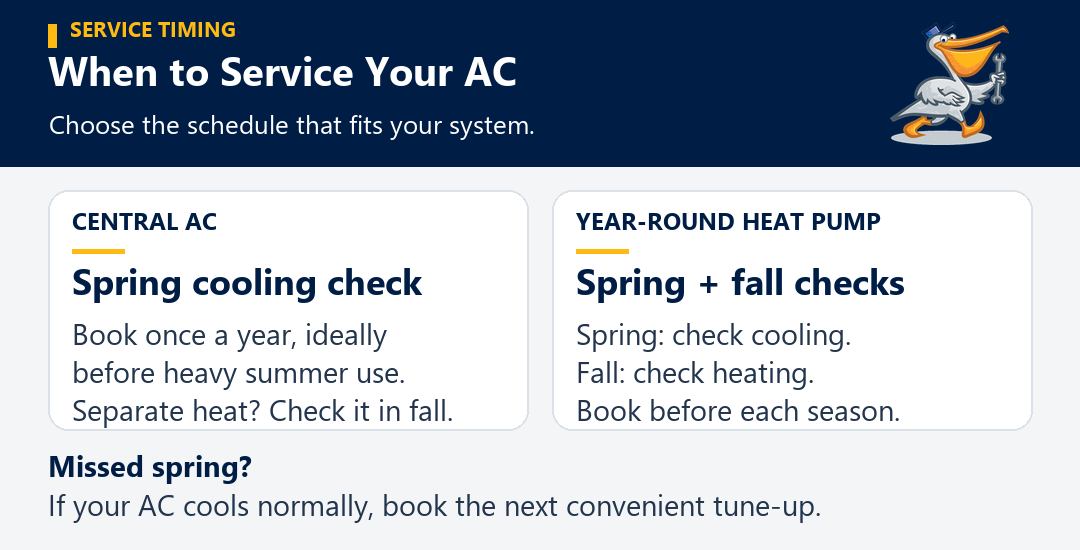
For a standard central AC system that only cools, one professional check-up a year is the baseline. Spring is the right time to book it, before the daily highs climb and the system has to run for months without a real break.
If your home runs on a heat pump instead of a separate furnace, that one unit handles both heating and cooling. It earns two visits a year: a spring check before cooling season, and a fall check before the system switches over to heat. Skipping the fall visit on a heat pump means the heating side goes a full year without anyone looking at it. That is true even though it has been running the whole time the AC side was idle.
Louisiana’s climate is a big part of why this schedule matters more here than it would in a drier, milder state. A Lafayette system runs for a long cooling season, often starting well before summer and lasting past it. It also does that work against constant humidity rather than dry heat. Humidity does not just make the air feel heavier. It also means more condensation on the coils and more moisture in the drain line. Both create conditions for mold and corrosion if nothing clears them out between visits.
Hurricane season adds one more local wrinkle. Wind and heavy rain can shift debris against the outdoor unit or loosen its mounting. It is worth a quick look after any named storm passes through, even outside your regular spring or fall visit.
A few other things push the schedule up, no matter what equipment you have:
- System age. A system older than ten years has more wear to keep an eye on. Small issues on an older unit also tend to turn into bigger ones faster than on a newer system.
- How hard the system runs. A home that runs the AC nearly nonstop through a Lafayette summer puts more hours on the compressor in a single season than a system in a milder climate ever sees.
- Pets or allergies in the house. More hair, dander, and debris in the air means the filter clogs faster, so the system needs a closer eye between the scheduled professional visits.
When Your AC Needs Repair
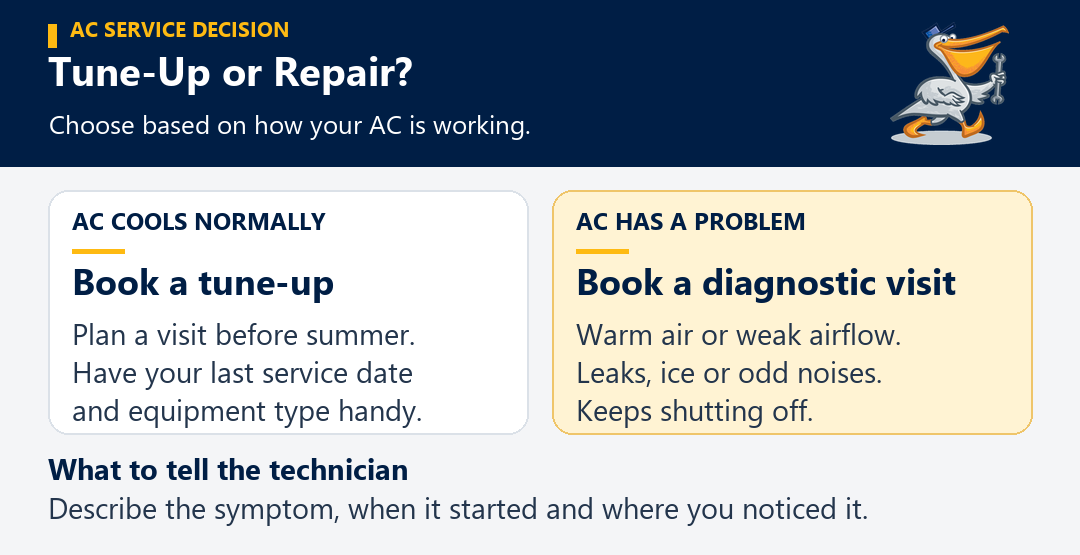
A tune-up and a repair call are not the same visit, and knowing which one you need saves you a wasted trip. If your AC is cooling the house the way it should, a scheduled tune-up is the right move. Book it before the season gets busy, rather than waiting until the system gives you a reason to call.
If the system already has a problem, that is a repair call, not a maintenance visit. Watch for:
- Warm air coming from vents that used to blow cold. This often points to a refrigerant problem or a failing compressor, neither of which a homeowner can fix.
- Weak airflow, even with the fan running. A clogged filter is the simple version of this; a failing blower motor or blocked ductwork is the version that needs a technician.
- Ice on the refrigerant lines, usually near the indoor unit. Ice forming on a system that is supposed to be cooling, not freezing, almost always means something is wrong with airflow or refrigerant level.
- A new noise: grinding, hissing, or banging that wasn’t there before. A system that suddenly sounds different is telling you something changed mechanically, even if it is still cooling for now.
- The unit keeps shutting off on its own before the house cools down. This short-cycling pattern wastes energy and puts extra strain on the compressor every time it restarts.
Waiting on any of these signs usually costs more than it saves. A small refrigerant leak left alone can damage the compressor, which is the most expensive part of the system to replace. A clogged drain left alone can turn into water damage in the ceiling or floor below the unit. The sooner a symptom gets looked at, the smaller the fix tends to be.
When you call about a problem like this, have three things ready: what the symptom is, when it started, and where in the house you noticed it. That lets a technician diagnose an AC repair faster instead of starting from scratch at the door.
Already seeing one of these signs? Don’t wait for a scheduled visit. Call Fontenot’s Air Conditioning and Heating at (337) 789-6070 and we’ll get a technician out to take a look.
What a Tune-Up Covers
A professional AC tune-up works through the parts of the system a homeowner can’t easily check alone. It is a checklist, not a quick glance. That is why a scheduled visit catches small problems before they turn into a repair call in the middle of a Louisiana summer. For the background on why each of these steps matters, see the U.S. Department of Energy’s guide to air conditioner maintenance.
- Filter: checked, and replaced if it’s dirty enough to restrict airflow. A clogged filter forces the whole system to work harder just to move the same amount of air.
- Coils: the indoor and outdoor coils are inspected and cleaned. A dirty coil makes the system work harder to cool the same amount of air, and in a humid climate, grime on a coil also holds moisture that can encourage mold.
- Refrigerant level: checked, since low refrigerant is one of the most common reasons a system stops cooling well, and it usually means there is a leak somewhere that needs attention.
- Electrical connections: inspected and tightened. Loose connections are a common cause of a system that won’t start, and in a humid environment they can also corrode faster than they would somewhere drier.
- Moving parts: motors and bearings get lubricated to cut down on friction and wear, which helps the system run quieter and last longer.
- Condensate drain: cleared so it doesn’t back up. This step matters more here than in a drier climate, since a clogged drain in a humid house can lead to standing water and water damage, not just a minor inconvenience.
- Thermostat: checked for accurate readings, so the system isn’t running longer than it needs to because of a thermostat that is reading the room wrong.
AC Checks Between Visits
Between professional visits, a few things are worth checking yourself. None of this replaces a professional tune-up, but it keeps small issues from building up in the months between visits.
- Filter: check it every one to three months, and replace it if it looks gray or clogged. It’s the single easiest thing to fix yourself, and the thing most likely to get ignored until the system is already struggling.
- Outdoor unit clearance: keep the area around the outdoor unit clear of leaves, grass clippings, and overgrown plants. The unit needs open airflow on all sides to work efficiently, and this is worth checking again after any storm that blows debris around the yard.
- Water near the indoor unit: a damp spot or standing water near the indoor air handler usually means the condensate drain is clogged. It’s worth a call before it causes water damage to the floor or ceiling below it.
- New noises: a system that suddenly sounds different than it did last week is worth a call rather than a wait-and-see, since most mechanical noises get worse, not better, on their own.
Tune-Up or Maintenance Plan?
A one-time tune-up covers a single visit. Fontenot’s Energy Savings Plan covers two: a spring visit for the cooling side and a fall visit for the heating side, so both halves of the system get checked before they’re asked to do the hard part of their job for the season.
The plan is worth asking about if:
- Your home runs on a heat pump, since that one unit is doing both jobs and gets used twice as much as a cooling-only system.
- You’d rather have the spring and fall visit set on the calendar automatically instead of remembering to book each one separately.
- Your system is a few years old, where catching small issues twice a year matters more than it would on a brand-new unit still under its first year of use.
The plan covers more than the two visits themselves. It includes a full round of system checks plus equipment cleaning and testing at each visit, and Fontenot’s calls you ahead of time to schedule it, so you are not the one who has to remember. Two separate service calls booked on their own typically cost more than the plan does, which is worth asking about when you call.
Not sure which option fits your system? Call (337) 789-6070 and tell us your system’s age and how it’s been running. We’ll tell you straight whether a single tune-up or the twice-a-year plan makes more sense for your house.
AC Maintenance FAQ
How often should I get my AC serviced?
Once a year for a standard AC-only system, scheduled in spring. Twice a year, spring and fall, if your system includes a heat pump or combined heating and cooling.
Is AC maintenance worth it?
Yes, for one simple reason: a technician catches small issues, like a dirty coil or a loose electrical connection, while they’re still small. Skipping maintenance does not make those issues go away. It just means they get found during a breakdown instead of a scheduled visit.
What is the difference between a tune-up and a repair?
A tune-up is a scheduled check on a system that is working normally. A repair is a call about a system that already has a problem: warm air, a new noise, weak airflow, or a unit that will not turn on.
Can I do AC maintenance myself?
Some of it. Checking and replacing the filter, and keeping the outdoor unit clear of debris, are homeowner tasks. Checking refrigerant levels, cleaning coils, and working on electrical connections need a licensed technician.
What is the best time of year for an AC tune-up in Louisiana?
Spring, before the daily highs climb and before Lafayette’s humidity has the AC running nearly nonstop. Booking early also means you are not competing for an appointment once the heat arrives and call volume rises.
Does a heat pump need more maintenance than a regular AC?
It needs a second visit a year, not more work per visit. A heat pump cools in summer and heats in winter, so it gets checked twice a year instead of once, matching each season it is actually doing the work.
What happens if I skip a scheduled tune-up?
The system keeps running, but small issues go unnoticed longer. In Lafayette’s climate, that often shows up as a higher utility bill before it shows up as a full breakdown.
Where can I get my AC checked in Lafayette?
Fontenot’s Air Conditioning and Heating serves Lafayette, Broussard, Youngsville, and the surrounding area. Call (337) 789-6070 to schedule a tune-up.
Will AC maintenance lower my energy bill?
Yes, if the system was running dirty or low on refrigerant before the tune-up. A clean filter, clean coils, and the correct refrigerant level all let the system cool the same space with less effort. How much you notice on the bill depends on how neglected the system was beforehand.
Book Your Next Tune-Up
If it has been more than a year since your last check-up, or you are not sure when your last one was, now is the time to get on the calendar. Call Fontenot’s Air Conditioning and Heating and tell us your system type and roughly how old it is. We will get you scheduled for the next spring or fall tune-up slot, or send a technician out sooner if something is already wrong. Either way, you will know the condition of your system before the next heat wave or cold snap puts it to the test.