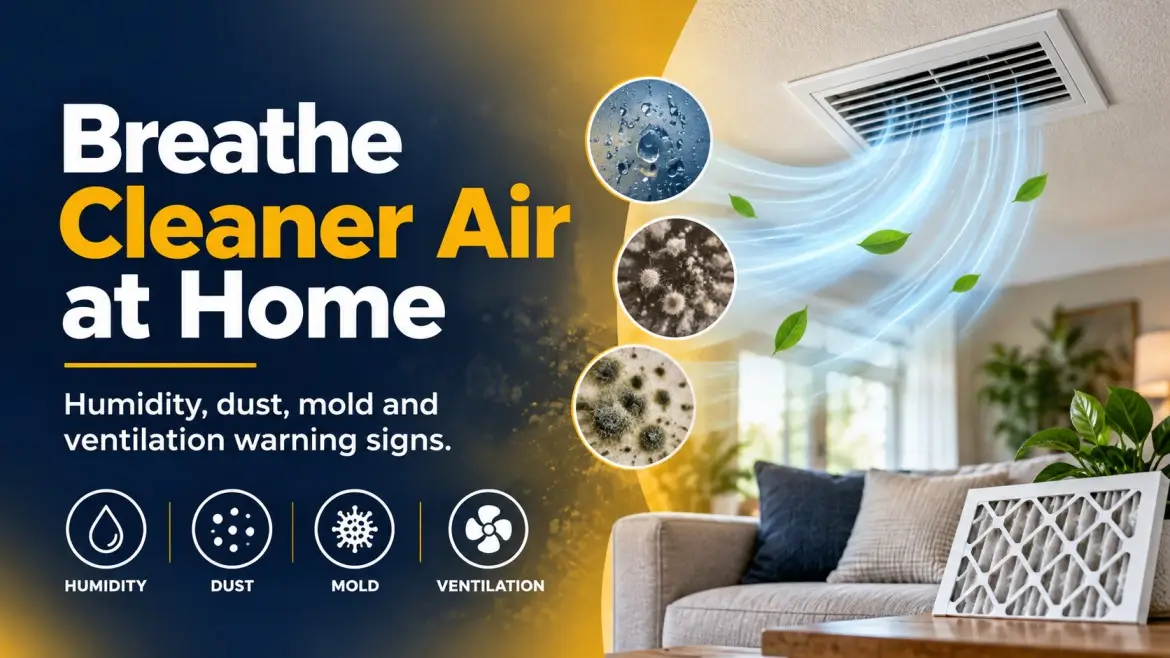
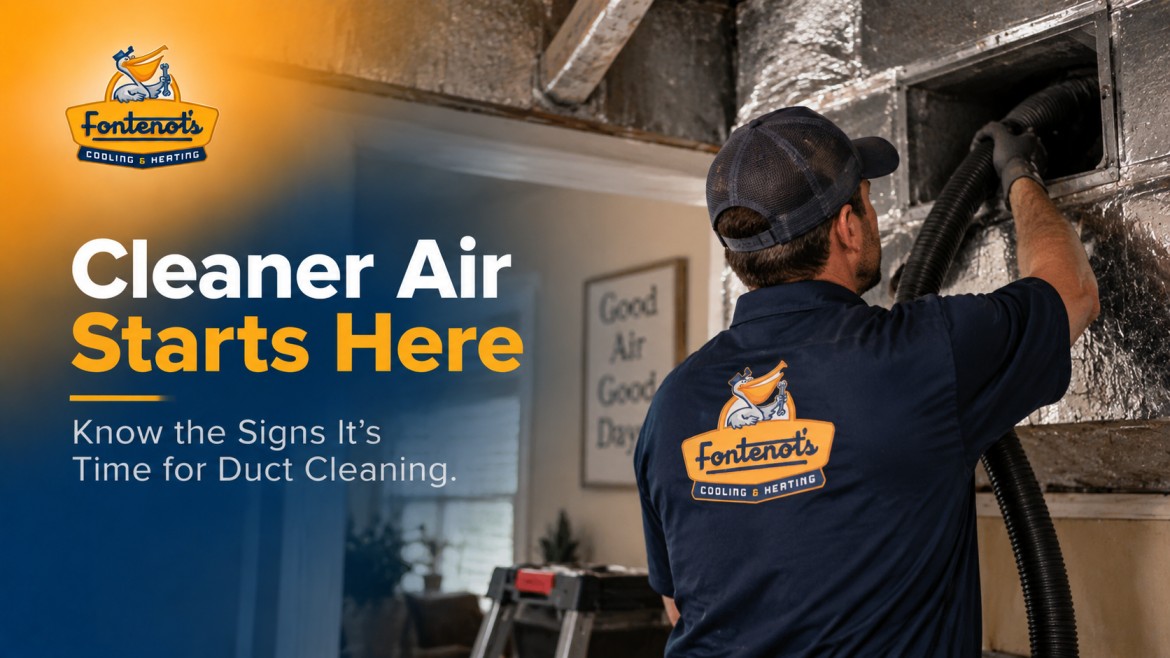
Your air ducts need cleaning when you notice heavy dust blowing from vents, musty or moldy smells, weak airflow, rising energy bills, or signs of pests inside the ductwork. In Lafayette’s humid climate, these signs often show up faster. A professional inspection confirms whether cleaning is necessary.
Key Takeaways
Dust blowing from your vents, even right after you change the filter, is the clearest sign your ducts need cleaning.
Musty odors or visible mold near vents point to trapped moisture that a filter change cannot fix.
Louisiana’s humidity and heavy AC use make Lafayette homes show these signs faster than homes in drier climates.
Not every layer of dust means trouble. Normal household dust looks different from a genuine duct problem.
A NADCA-certified inspection from Fontenot’s AC & Heating tells you exactly what your ducts need, before you spend money you don’t have to.
You keep sneezing at home, and you don’t know why. Dust seems to return to your furniture days after you clean it. Your energy bill crept up again this month, even though your habits haven’t changed. These are classic signs your air ducts need cleaning right now.
At Fontenot’s AC & Heating, we walk into Lafayette homes every week with this exact complaint. Most of the time, the ductwork tells the real story. Dirty ducts push dust, allergens, and sometimes mold spores through every room your air reaches.
In this guide, you will learn the specific signs that mean your air ducts need cleaning now, the situations that call for immediate action, and why Lafayette’s climate makes this problem show up sooner. You will also learn when duct cleaning isn’t actually necessary, so you never pay for a service you don’t need.
Why Clean Air Ducts Matter
Key Takeaways
Dirty ducts recirculate dust, pollen, and pet dander through your entire home, not just one room.
A clogged duct system forces your HVAC unit to work harder, which raises your energy bills.
Most duct contamination builds up from everyday sources like construction dust, pets, and humidity, not neglect.
How Dirty Ducts Affect Indoor Air Quality and HVAC Performance
Dirty air ducts lower your indoor air quality every time your system turns on. Air moves through the ductwork before it reaches your rooms. If that path is coated in dust, mold spores, or debris, your air carries those particles with it.
This problem doesn’t stay in one room. Your HVAC system pulls air from your whole house and pushes it back out through the same ducts. So a dirty duct system spreads contaminants everywhere your air travels.
Your equipment feels this too. Restricted airflow forces the blower motor to work harder. According to the U.S. Department of Energy, a poorly sealed duct system can waste around 20 percent of the air moving through it. Over time, that strain shortens the life of your system and raises your utility bills.
Common Causes of Dirty Air Ducts
Several everyday sources fill your ductwork with debris. Construction or renovation dust settles into the system fast, even with vents covered. Pets add hair and dander with every trip through the house.
Humidity, especially in Lafayette, encourages dust to clump and stick to duct walls instead of blowing straight through. Old or leaky duct joints pull in attic or crawl space dust every time the system runs.
Construction or remodeling debris
Pet hair and dander
High indoor humidity
Leaky or unsealed duct joints
Regular indoor smoking
Top Signs Your Air Ducts Need Cleaning Right Now
Key Takeaways
Six clear signs point to ducts that need cleaning, from visible dust to strange noises.
Weak airflow and rising energy bills often trace back to clogged ductwork, not just an aging unit.
Pest activity inside your ducts is one sign that calls for a same-day inspection.
Dust Blowing From Vents or Filters Dirtying Too Fast
Dust blowing visibly from your vents is the most obvious sign your air ducts need cleaning. Hold a dark cloth near a vent while the system runs. If it collects a heavy layer within a minute, your ducts are likely overdue.
A filter that turns gray or black within two to three weeks also signals trouble. Most standard filters last 60 to 90 days. A filter dirtying far faster than that means your ductwork is feeding it extra debris.
Musty Odors or Visible Mold
A musty smell when your HVAC system kicks on usually means moisture is trapped somewhere in the ductwork. This smell often gets stronger in humid weather, which is common across Lafayette, Broussard, and Youngsville.
Visible mold around a vent cover is never something to ignore. According to the CDC, mold exposure can trigger coughing, irritated sinuses, and other symptoms in people who are sensitive to it. If you see any, call a professional instead of wiping it away yourself.
Weak Airflow, Uneven Cooling, or Rising Energy Bills
Weak airflow from your vents often means something is blocking the path between your unit and your rooms. A blocked duct forces your system to strain to move the same amount of air.
Uneven cooling is another clue. One room feels comfortable while another stays warm, even with the thermostat set the same. This problem happens when ducts feeding certain rooms carry more buildup than others.
Rising energy bills without a change in your habits point to the same root cause. Your system runs longer to reach the temperature you want, which costs you more every month.
Increased Allergy/Respiratory Symptoms or Strange Noises
More sneezing, coughing, or itchy eyes at home than usual can trace back to dirty ductwork. Contaminants circulating through your air supply affect everyone in the house, especially children, older adults, and anyone with asthma.
Rattling, whistling, or popping sounds from your vents are worth a look too. These noises often mean debris, loose insulation, or even a small animal is caught inside the duct run.
Rodents or Insects in the Ductwork
Scratching sounds inside your walls or vents are a strong sign that pests have found their way into your ductwork. Rodents and insects leave droppings, nesting material, and odors behind that spread through your air supply.
This isn’t a sign to wait on. Pest contamination inside ducts calls for a professional cleaning and inspection, not a DIY fix.
It’s Been Several Years Since Your Last Cleaning
Even without obvious symptoms, ductwork builds up debris over time. Our technicians at Fontenot’s AC & Heating recommend a duct inspection every three to five years for the average Lafayette home.
Homes with pets, smokers, or recent renovations often need a check sooner. If you can’t remember your last cleaning, that alone is reason enough to schedule an inspection.
Situations That Call for Immediate Duct Cleaning
Key Takeaways
Renovation dust, water damage, fire, and pest infestations all call for immediate duct cleaning, not routine scheduling.
Older or previously owned homes often carry years of hidden buildup from the last occupants.
Ignoring these signs strains your HVAC system and can worsen indoor air quality over time.
After Renovation, Water Damage, Fire/Smoke, or Pest Infestation
Any major renovation sends fine dust straight into your ductwork, even when vents are covered. Drywall dust, sawdust, and insulation particles settle deep inside the system and keep circulating long after the work is done.
Water damage is just as urgent. Moisture inside ducts can create the right environment for mold within 24 to 48 hours. Fire or smoke damage leaves soot and odor residue that a filter change can’t remove. A pest infestation, rodent or insect, means your air is carrying contamination you can’t see.
In any of these situations, schedule a cleaning right away instead of waiting for your next routine maintenance visit.
Moving Into an Older or Previously Owned Home
You rarely know what the last owners left behind in the ductwork. Years of dust, pet dander, old filters, and sometimes pest activity can sit untouched in a system you’ve never inspected.
A duct cleaning and inspection soon after you move in gives you a clean starting point. It also helps you catch hidden damage or blockage before it affects your new home’s air quality.
What Happens If You Ignore These Signs (Air Quality, Health, HVAC Wear)
Ignoring these signs doesn’t make the problem go away. It usually gets worse. Contaminants keep building up, your indoor air quality keeps dropping, and your family keeps breathing it in.
Your HVAC system pays a price too. The blower motor works harder against restricted airflow, parts wear out faster, and repair bills come sooner than they should. Ask yourself this: would you rather pay for a cleaning now, or a new blower motor later?
Why Lafayette, LA Homes Show These Signs More Often
Key Takeaways
Louisiana’s high humidity keeps dust and moisture trapped inside ductwork longer than in drier climates.
Heavy air conditioning use for most of the year means more air, and more debris, moving through your ducts.
Seasonal pollen from Southern Louisiana’s long growing season adds another layer of buildup.
Louisiana’s Humidity, Heavy AC Use, and Storm Moisture
Lafayette’s humidity plays a bigger role in duct buildup than most homeowners realize. Moist air makes dust clump and stick to duct walls instead of blowing through cleanly. We see this pattern often across Broussard, Scott, Carencro, and Milton.
Because Louisiana summers run long and hot, your AC system runs almost constantly for months. More runtime means more air moving through your ducts, and more chances for dust and moisture to collect.
Tropical storms and heavy rain add another risk. Roof leaks or humidity spikes after a storm can introduce moisture into your attic ductwork, raising the chance of mold if it isn’t addressed quickly.
Seasonal Pollen and Outdoor Allergens
Southern Louisiana’s long growing season means pollen season lasts for months, not weeks. Pine, oak, and grass pollen work their way into your home through doors, windows, and fresh air intakes.
This pollen settles into your ductwork along with regular dust. For homeowners with allergies, this buildup can make spring and fall symptoms feel worse indoors than outdoors.
When Duct Cleaning May Not Actually Be Necessary
Key Takeaways
A thin layer of dust on a vent cover is normal and doesn’t always mean you need a cleaning.
The EPA notes there’s no proof that a light amount of household dust in ducts affects your health.
Routine filter changes and yearly HVAC maintenance often solve the problem without a full duct cleaning.
Understanding Normal Household Dust
Some dust in your ductwork is completely normal. Every home generates dust from skin cells, fabric fibers, and everyday activity. A light coating on a vent cover doesn’t automatically mean your system needs a full cleaning.
According to the U.S. EPA, duct cleaning hasn’t been shown to actually prevent health problems, and normal dust doesn’t pose a proven risk on its own. The signs covered earlier in this guide, like visible mold, pests, or heavy debris, are what actually call for action.
Common Air Duct Cleaning Myths
Myth: you need duct cleaning every single year. Truth: most homes only need it every three to five years, unless you fall into one of the immediate-action situations covered above.
Myth: a dusty vent cover means the whole system is dirty. Truth: vent covers collect surface dust fast. That alone doesn’t confirm buildup deep inside the duct run.
Myth: duct cleaning cures every allergy problem. Truth: it helps when ducts are the actual source, but allergies can come from many places inside and outside your home.
When Routine HVAC Maintenance Is Enough Instead
Regular filter changes and a yearly HVAC tune-up handle most everyday dust problems. A clogged filter is often mistaken for a duct problem, when swapping it solves the issue completely.
Our seasonal HVAC maintenance service covers filter checks, coil cleaning, and airflow testing. This routine care catches small problems before they turn into a reason for full duct cleaning.
Professional Duct Cleaning vs. DIY: A Quick Note
Key Takeaways
You can safely check filters and visible vent covers yourself, but the duct interior needs professional tools.
A NADCA-certified technician has the equipment to clean deep inside the system without damaging it.
DIY methods often just move dust around instead of actually removing it from the ductwork.
What Homeowners Can Safely Check Themselves
You can handle a few checks on your own before calling a professional. Change your air filter and check the date you last replaced it. Look at accessible vent covers for dust, staining, or mold.
You can also listen for unusual noises when your system runs and note any rooms with weak airflow. Write down what you notice. It helps a technician diagnose the problem faster during an inspection.
Task
DIY-Friendly?
Why
Changing the air filter
Yes
Simple and safe, and should happen every 60 to 90 days
Wiping visible vent covers
Yes
Removes surface dust you can see and reach
Cleaning inside the duct run
No
Requires specialized brushes and negative-air vacuum equipment
Removing mold from ductwork
No
Improper handling can spread spores through your home
Sealing leaky duct joints
No
Needs the right materials and HVAC knowledge to do safely
When to Call a NADCA-Certified Professional (brief — link to pillar page for full process/pricing)
Call a NADCA-certified professional once you notice any sign covered in this guide, especially visible mold, pest activity, or a musty smell that won’t go away. NADCA certification means a technician follows industry standards for a thorough, safe cleaning.
For the full breakdown of our duct cleaning process and pricing, reach out to Fontenot’s AC & Heating directly, and our team will walk you through it.
Schedule a Professional Duct Inspection in Lafayette, LA
You don’t have to guess whether your air ducts need cleaning. The signs are usually clear: heavy dust, musty smells, weak airflow, rising bills, or pest activity. Lafayette’s humidity and long AC season only make these signs show up faster and more often.
Not every bit of dust means you need a service call. Sometimes a filter change or routine maintenance solves the problem. But when the signs point to something deeper, a professional inspection tells you exactly what your ductwork needs, before small problems turn into expensive repairs.
At Fontenot’s AC & Heating, we’ve inspected and cleaned ductwork across Lafayette, Broussard, Scott, Youngsville, Carencro, Maurice, and Milton for years. If any of these signs sound familiar, we’re ready to help. Schedule your professional duct inspection with our NADCA-certified team today, or call now for a same-day HVAC assessment.
How often should air ducts be cleaned?
Most homes need a duct cleaning every three to five years. Homes with pets, smokers, or recent renovations often need it sooner. If it’s been longer than five years since your last cleaning, or you notice any warning signs, schedule an inspection with Fontenot’s AC & Heating.
What are the most common signs of dirty air ducts?
The clearest signs include dust blowing visibly from vents, filters that dirty within weeks, musty odors, weak airflow, uneven cooling, and rising energy bills. Strange noises or signs of pests in the ductwork also point to a system that needs professional attention.
Does duct cleaning really improve indoor air quality?
It can, especially when mold, pest debris, or heavy dust are present. The EPA notes that duct cleaning hasn’t been proven to prevent health problems tied to normal household dust, so it helps most when a genuine contamination issue exists.
Can I clean my air ducts myself?
You can safely change filters and wipe accessible vent covers. Cleaning inside the actual duct run requires specialized brushes and vacuum equipment most homeowners don’t have. A NADCA-certified technician can clean deep inside the system without spreading debris.
How much does professional duct cleaning cost in Lafayette, LA?
Cost depends on your home’s size, duct layout, and condition. Fontenot’s AC & Heating provides a full pricing breakdown after an inspection. Call our team for a same-day HVAC assessment and an accurate quote for your home.
Should I clean my ducts after a home renovation?
Yes. Renovation dust settles deep inside ductwork even when vents are covered. Scheduling a cleaning after any major renovation keeps drywall dust, sawdust, and insulation particles from circulating through your home’s air for months afterward.