AC Maintenance for Rental Properties in Lafayette, LA
Search
Recent Posts
Tags
Follow Us on
AC maintenance for rental properties in Lafayette, LA, means landlords must schedule seasonal HVAC inspections, replace filters regularly, and address repairs promptly to meet habitability standards. South Louisiana’s intense heat and humidity accelerate system wear, making preventive maintenance essential for protecting tenants, controlling costs, and extending the life of every cooling unit on your property.
Key Takeaways
- Lafayette’s heat and humidity put rental property AC systems under significantly more stress than in most U.S. regions, making annual tune-ups a financial necessity, not a luxury.
- Louisiana law does not explicitly mandate air conditioning, but courts increasingly treat functional cooling as a habitability requirement during extreme heat.
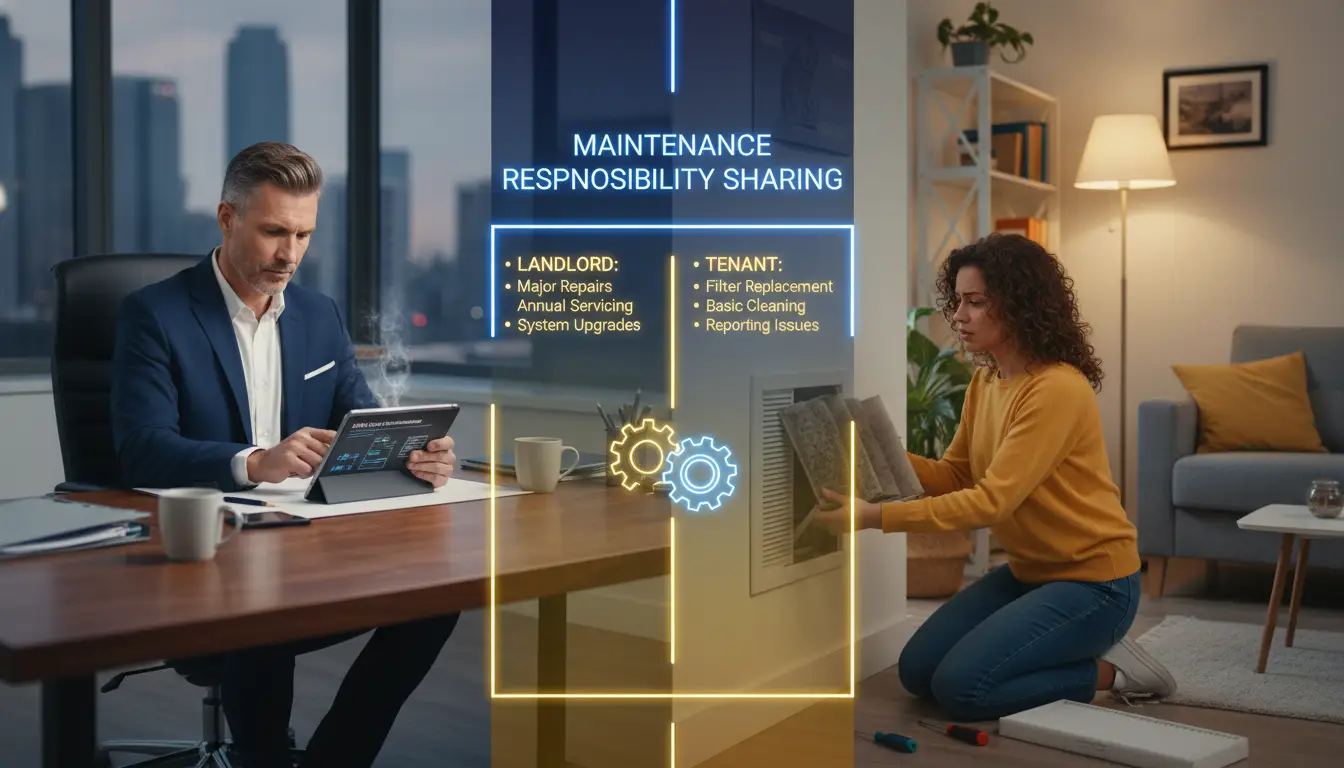
- Landlords are responsible for major HVAC repairs and system maintenance; tenants are generally responsible for filter changes and keeping vents unobstructed.
- A single emergency HVAC call during peak summer can cost 3 to 5 times more than a preventive maintenance visit scheduled in spring.
- Detailed HVAC maintenance records protect property owners in tenant disputes, insurance claims, and legal proceedings.
Why Does HVAC Maintenance Matter for Rental Properties?
Why Does Preventive HVAC Maintenance Matter in South Louisiana?
Lafayette sits in one of the most demanding climate zones for residential HVAC systems in the entire country. Summers regularly push temperatures above 95°F, and the region’s humidity rarely drops to a comfortable level even after sunset. For rental property owners, this means your tenants are running the air conditioner from April through October, sometimes without pause.
A system that runs under those conditions without regular maintenance will fail. The question is not whether neglect will cause problems; it is when and how expensive those problems will be. According to the U.S. Department of Energy, HVAC systems that receive regular maintenance operate 15 to 25 percent more efficiently than systems that are ignored. For landlords managing multiple units, that efficiency gap translates directly into higher utility costs, more tenant complaints, and shorter equipment lifespans.
Preventive maintenance also protects you legally. If a tenant documents repeated cooling failures and you have no service records to show, you are in a weak position in any dispute.
How Do Lafayette Heat and Humidity Affect AC Performance?
Heat and humidity are two separate burdens on your cooling system, and in Lafayette, both arrive together at full intensity.
High outdoor temperatures force the compressor to work harder to move heat out of the home. At the same time, excess humidity means the evaporator coil must remove moisture from the air in addition to lowering its temperature. This dual load shortens the time between required maintenance intervals and increases the risk of component failure during peak demand periods.
When humidity is high and the air filter is dirty, the system compensates by running longer cycles. Longer cycles mean more wear on the blower motor, compressor, and capacitors, which are among the most expensive components to replace. In short, Lafayette’s climate punishes deferred maintenance faster than a drier region would.
What Are the Common Cooling Challenges in Acadiana Rental Homes?
Rental properties in the Acadiana area face several recurring HVAC problems. Older housing stock in Lafayette, Broussard, Youngsville, and surrounding areas often has ductwork that was undersized for modern high-efficiency units or was never properly sealed. Crawlspace construction common in the region allows moisture to migrate upward into the building envelope, which raises indoor humidity and forces the AC system to compensate.
Additionally, tenant turnover creates gaps in filter maintenance. A tenant who moves out in July may leave behind a filter that has not been changed in six months. The next tenant moves into a system already straining under a restricted airflow load.
These are preventable problems. A clear maintenance schedule and lease language that defines tenant responsibilities address most of them before they become expensive repairs.
How Does Routine Maintenance Reduce Long-Term Repair Costs?
The math on preventive maintenance is straightforward. A professional spring tune-up for a residential HVAC system in the Lafayette area typically costs between $80 and $150. An emergency compressor replacement can cost $1,200 to $2,500 or more. A full system replacement for a rental unit runs $4,000 to $8,000, depending on system size and installation complexity.
Routine maintenance catches the early warning signs, low refrigerant, weak capacitors, partially clogged drain lines, before they cascade into failures. For landlords managing more than two or three properties, a preventive maintenance agreement with a licensed HVAC contractor is almost always the more cost-effective path. The next section explains exactly what systems you are maintaining and why each component matters.
What Should Landlords Understand About Rental Property HVAC Systems?
What Are the Key AC Components That Require Regular Maintenance?
Understanding your equipment makes you a better property owner. A typical central air conditioning system in a Lafayette rental home includes:
- Air filter: Captures airborne particles before they reach the evaporator coil. Needs replacement every 30 to 90 days, depending on filter type and occupancy.
- Evaporator coil: Located inside the air handler, this component absorbs heat from indoor air. Dirt buildup insulates the coil and sharply reduces efficiency.
- Condenser unit: The outdoor cabinet houses the compressor and condenser coil. It releases the heat extracted from inside the home and requires clear airflow around it.
- Condensate drain line: Removes moisture collected by the evaporator coil. A clogged drain line causes water backup, interior leaks, and mold growth.
- Blower motor and fan: Circulates conditioned air through the duct system. Bearings wear over time and need periodic lubrication or replacement.
- Thermostat: Controls system operation. Miscalibrated or failing thermostats cause short cycling and inefficient operation.
- Refrigerant: The working fluid that carries heat between the indoor and outdoor coils. Low refrigerant indicates a leak that requires professional repair.
How Do Central Air Conditioning Systems Operate?
Central AC works through a refrigeration cycle. The indoor evaporator coil absorbs heat from return air, which cools the air before the blower pushes it back through the supply ducts. The refrigerant carrying that absorbed heat travels to the outdoor condenser unit, where the compressor raises its pressure, and the condenser coil releases the heat to the outside air.
This cycle repeats continuously while the system runs. Every component in the chain must work correctly for the system to cool efficiently. When one component degrades, the rest compensate, often at the cost of increased energy consumption and accelerated wear.
How Does Humidity Impact Cooling Efficiency and Indoor Comfort?
Humidity control is inseparable from cooling performance in Louisiana. An AC system removes moisture from the air as a byproduct of the cooling process. As warm, humid air passes over the cold evaporator coil, water vapor condenses on the coil surface and drains away through the condensate line.
When the system is undersized, improperly charged with refrigerant, or running with a dirty coil, it cannot remove moisture effectively. The result is a home that feels clammy even when the thermostat reads a comfortable temperature. Tenants often respond by lowering the thermostat further, which increases energy costs without solving the comfort problem.
According to the Environmental Protection Agency, indoor relative humidity above 60% creates conditions that support mold and mildew growth. In a rental property, that is both a habitability concern and a potential liability.
What Is the Expected Lifespan of Rental Property HVAC Systems?
A well-maintained central AC system in a Louisiana climate lasts 12 to 15 years on average. Systems that receive irregular maintenance in high-humidity environments often fail closer to the 8 to 10 year mark. Heat pump systems, which are common in the region, have similar lifespans but require slightly different maintenance procedures because they provide both heating and cooling.
For landlords budgeting long-term, treat any system older than 10 years as a candidate for near-term replacement. Plan for it financially rather than waiting for an emergency failure during the hottest week of the year.
Who Is Responsible for HVAC Maintenance in a Rental Property?
What Are Landlord Responsibilities for HVAC Maintenance and Repairs?
As a landlord, you are responsible for ensuring the HVAC system is functional and safe at the start of every tenancy and throughout the lease term. Specifically, that means:
- Providing a properly functioning cooling system at move-in.
- Scheduling and paying for all professional maintenance, including annual tune-ups and seasonal inspections.
- Repairing or replacing failed components within a reasonable timeframe after receiving tenant notification.
- Ensuring refrigerant is properly charged and that the system meets applicable efficiency standards.
- Replacing the full system when it has exceeded its functional lifespan or when repair costs outweigh replacement value.
These responsibilities exist regardless of whether your lease agreement explicitly states them. They derive from the general habitability obligations that apply to residential rentals under Louisiana law.
What Are Tenant Responsibilities for Routine AC Care?
Tenants are responsible for day-to-day care that falls within a non-professional’s ability. That typically includes:
- Replace air filters on the schedule specified in the lease (usually every 30 to 60 days).
- Keeping supply and return vents unobstructed by furniture, rugs, or stored items.
- Maintaining thermostat settings within a reasonable range to avoid system strain.
- Reporting cooling problems promptly rather than waiting until a minor issue becomes a system failure.
- Keeping the area around the outdoor condenser unit clear of vegetation and debris.
When you define these responsibilities clearly in the lease, you create a documented standard that applies throughout the tenancy.
What Qualifies as Normal Wear and Tear?
Normal wear and tear refers to deterioration that occurs through ordinary use over time, without negligence or misuse. For HVAC systems, this includes gradual efficiency loss as components age, natural refrigerant seepage in older systems, and minor duct leakage that develops over years of thermal expansion and contraction.
Normal wear and tear is a landlord’s responsibility. You cannot deduct the cost of addressing it from a tenant’s security deposit.
What Are Examples of Tenant-Caused HVAC Damage?
Tenant-caused damage goes beyond ordinary use. Examples include:
- Running the system with the same dirty filter for an entire lease term despite written instructions to replace it.
- Blocking all return vents with furniture is causing coil freeze and compressor damage.
- Tampering with the thermostat or electrical disconnect.
- Allowing pets to urinate near or on the outdoor condenser unit repeatedly.
- Failing to report a water leak from the condensate line, allowing mold to spread to the air handler cabinet and surrounding structure.
Document the condition of the HVAC system at move-in and move-out with photos and written records. That documentation is the difference between a recoverable deposit deduction and an unenforceable claim.
How Do Lease Agreements Define HVAC Obligations?
A well-drafted lease should include at a minimum: the tenant’s obligation to replace filters on a specific schedule, a prohibition on tampering with HVAC components, a requirement to report malfunctions within 24 to 48 hours of discovery, and the landlord’s commitment to address reported repairs within a defined timeframe.
Some landlords provide filters directly to tenants at move-in and with each lease renewal to remove any ambiguity about filter type and replacement frequency. This is a practical approach that costs little and prevents the most common source of tenant-caused HVAC damage.
Why Does HVAC Documentation Help Prevent Disputes?
When a tenant claims the AC was broken for weeks and you claim the system was functional, the dispute comes down to documentation. Maintenance records showing service dates, technician findings, and completed repairs give you a clear, timestamped record of the system’s condition and your response to any reported problems.
This documentation also supports insurance claims and can be required by warranty providers for new equipment. Keep digital and physical copies for at least three years beyond the end of each tenancy. The next section gives you a concrete schedule to build those records systematically.
What Is the Recommended HVAC Maintenance Schedule for Lafayette Rental Properties?
Why Should Landlords Schedule Spring HVAC Tune-Ups?
Spring is the most important maintenance window for Lafayette rental properties. Scheduling a professional tune-up in March or April, before the cooling season begins, ensures the system is ready for the months of continuous operation ahead.
A standard spring tune-up covers the following:
Refrigerant Level Inspection
A technician measures refrigerant charge and checks for leaks. A system running low on refrigerant cannot cool effectively and risks compressor damage from operating outside its design pressure range. Under EPA Section 608, refrigerant handling requires certification, so this task always requires a licensed technician.
Evaporator and Condenser Coil Cleaning
Both coils accumulate dirt, pollen, and biological growth during the off-season. Dirty coils act as insulation, blocking heat transfer and forcing the system to run longer to achieve the same result. Cleaning both coils in the spring restores efficiency before peak demand begins.
Thermostat Calibration
A thermostat that reads two or three degrees off the actual room temperature causes the system to short-cycle or run longer than necessary. Calibration takes minutes during a tune-up and can meaningfully improve both comfort and efficiency.
Condensate Drain Line Cleaning
The drain line carries moisture from the evaporator coil to the exterior or a floor drain. Algae and debris accumulate in the line over winter. A clogged line causes water to back up into the drain pan, overflow, and leak into the ceiling or walls below the air handler. Flushing the line in spring prevents this entirely.
How Often Should Air Filters Be Replaced in Rental Properties?
Filter replacement frequency depends on the filter type and the rental unit’s occupancy conditions. As a general guideline:
- Standard 1-inch fiberglass filters: Every 30 days.
- Pleated 1-inch filters (MERV 8-11): Every 60 to 90 days.
- Thicker media filters (4-5 inches): Every 6 to 12 months, per manufacturer specification.
Units with pets, heavy occupancy, or nearby construction may require more frequent changes. Build your lease language around a 30 to 60 day interval, which covers most scenarios conservatively.
What Should Mid-Summer HVAC Performance Checks Include?
A brief mid-season check in July or August catches problems that develop under heavy load. This does not need to be a full tune-up. A visual inspection of the condensate drain pan, a check of airflow at supply registers, and a review of the thermostat’s performance are sufficient.
If a tenant reports that cooling has felt less effective in recent weeks, a mid-summer visit is worth scheduling. Catching a partially clogged drain line or a low-performing capacitor in July costs far less than replacing a burned-out compressor in August.
What Does a Fall HVAC Inspection Cover?
Lafayette’s cooling season tapers off in October and November. A fall inspection focuses on closing out the cooling season properly and preparing for the mild winter months.
This includes clearing organic debris from around the condenser unit, checking for moisture intrusion at the air handler, and inspecting the duct system for any gaps or disconnections that may have developed during the summer. In homes with a heat pump, the fall visit also tests heating operation before outdoor temperatures drop.
What Does an Annual Full-System HVAC Inspection Include?
An annual full-system inspection goes deeper than a seasonal tune-up. A licensed technician checks electrical connections for corrosion or looseness, measures motor amperage, inspects the heat exchanger (in gas systems), tests safety controls, evaluates overall system efficiency, and provides a written report of findings.
This inspection is the foundation of your maintenance record and the best early-warning system for aging equipment. Schedule it every year without exception through a trusted provider like Fontenot’s AC.
What Should Be on a Rental Property HVAC Maintenance Checklist for Landlords?
What Indoor HVAC Inspection Tasks Should Landlords Complete?
Use this checklist at each professional maintenance visit and at every move-in and move-out inspection:
- Inspect and replace the air filter if needed.
- Check thermostat operation and calibration.
- Inspect the evaporator coil for dirt, ice, or biological growth.
- Flush and test the condensate drain line.
- Inspect the drain pan for standing water or staining.
- Check all supply and return vents for obstruction.
- Test airflow at multiple registers throughout the home.
- Listen for unusual sounds during system operation.
- Verify that the air handler cabinet is sealed and free of gaps.
What Does Outdoor Condenser Unit Maintenance Involve?
- Clear all vegetation within two feet of the condenser on all sides.
- Remove leaves, debris, and dirt from the top and fins of the unit.
- Inspect refrigerant lines for insulation damage or oil staining (which can indicate a leak).
- Check the electrical disconnect box for corrosion.
- Verify the condenser sits level on its pad (uneven mounting causes vibration and premature wear).
- Listen for unusual sounds when the compressor cycles on.
What Moisture and Mold Prevention Checks Should Landlords Perform?
Moisture problems in Lafayette rental properties often originate with the HVAC system. At each inspection, check:
- The condensate drain pan collects standing water, rust, or mold.
- The area around the air handler may show water staining on the walls or ceiling.
- Supply ducts in unconditioned spaces (attics, crawlspaces) for condensation or visible mold.
- Indoor humidity levels with an inexpensive hygrometer. If readings consistently exceed 60%, the system may be undersized or improperly charged.
What Should Move-In and Move-Out HVAC Inspections Include?
At move-in, test the system in cooling mode and document: thermostat setting used, airflow quality at all registers, filter condition, and any existing damage to the air handler or condenser. Provide the tenant with a written record and have them sign it.
At move-out, repeat the same inspection and compare findings. Any filter neglect, vent damage, or condenser unit damage beyond normal aging should be documented with photos and added to the move-out report.
Why Is HVAC Maintenance Recordkeeping Important?
Maintain a dedicated file for each rental unit containing: service dates, technician name and company, work performed, parts replaced, and total cost. Add tenant-reported issues with your response dates. This file protects you in disputes, supports warranty claims, and gives any future buyer of the property documented evidence of responsible ownership.
What Is on the AC Maintenance Checklist for Tenants?
What Monthly HVAC Tasks Can Tenants Safely Perform?
Tenants do not need technical training to handle these basic tasks:
- Replace the air filter on the schedule defined in the lease.
- Check that all supply vents are open and unobstructed by furniture or rugs.
- Keep the area around the outdoor condenser unit clear of vegetation, outdoor furniture, and stored items.
- Set the thermostat to a stable temperature rather than repeatedly adjusting it throughout the day.
- Inspect the area around the indoor air handler for any signs of water leakage.
What Warning Signs Should Tenants Report Immediately?
Tell your tenants in writing that the following symptoms require prompt notification:
- Warm air is coming from the supply vents when the AC is running.
- Water dripping from the air handler or ceiling near the unit.
- Ice is visible on any part of the indoor unit or refrigerant lines.
- A musty or burning smell is coming from the vents.
- Unusually high electric bills with no change in usage habits.
- The system is cycling on and off more frequently than normal.
- Complete system failure during hot weather.
Prompt reporting is not just helpful; it is a legal obligation. A tenant who waits two weeks to report a drain line leak that causes ceiling damage has likely contributed to the scope of that damage.
What Maintenance Tasks Should Tenants Avoid?
Tenants should not attempt to:
- Add refrigerant or diagnose refrigerant-related problems.
- Clean evaporator or condenser coils with any chemical agent.
- Adjust or rewire the thermostat.
- Access the electrical disconnect or breaker for the HVAC system beyond resetting a tripped breaker.
- Seal or modify ductwork.
- Pour any liquid into the drain line beyond water or diluted white vinegar, and only if the landlord has explicitly authorized this.
How Do Dirty Filters and Blocked Vents Affect Cooling?
This is the single most preventable tenant-caused HVAC problem in Lafayette rental properties. A dirty filter restricts airflow across the evaporator coil. When airflow drops, the coil temperature falls below freezing, and ice forms on the coil surface. Frozen coils cannot transfer heat, so the system loses cooling capacity entirely.
At the same time, a blocked return vent has the same effect. A tenant who pushes furniture against a return grille effectively starves the system of the air volume it needs to operate. The result is the same: ice, reduced cooling, and eventual compressor stress. One clear sentence in your lease about filter and vent responsibilities prevents most of this.
What Are the Common AC Problems in Lafayette Rental Properties?
How Do Dirty Air Filters Cause AC Problems?
Dirty filters are the leading cause of avoidable HVAC service calls in residential properties. When a filter clogs, airflow across the evaporator coil drops. The coil cools below 32°F, ice forms, and the system stops cooling the home. Once the ice melts, the water overflows the drain pan and leaks into the structure.
Beyond the immediate failure, running with a restricted filter for weeks damages the blower motor and stresses the compressor. In a rental context, a dirty filter is almost always a tenant responsibility issue rather than a system defect.
What Causes Frozen Evaporator Coils?
Frozen coils result from one of three causes: a dirty air filter reducing airflow, low refrigerant reducing coil pressure to below-freezing temperatures, or a failing blower motor that cannot maintain adequate air movement. In Lafayette’s climate, frozen coils are a common summer complaint because systems run continuously in high heat and humidity conditions.
The fix depends on the cause. Filter replacement resolves airflow-related freezes. Refrigerant leaks require a licensed technician. Blower motor issues require diagnosis and component replacement. Never allow a tenant to run a frozen system; the compressor can overheat and fail permanently.
What Causes Condensate Drain Line Clogs and Water Leaks?
The condensate drain line removes several gallons of water per day from the evaporator coil during normal summer operation in Louisiana. Algae, biofilm, and debris accumulate in the line over time. When the line clogs, the drain pan overflows, and water leaks into the ceiling, wall, or floor, depending on where the air handler is located.
In a rental property, an overflowing drain pan can damage drywall, insulation, flooring, and personal property within hours. Flushing the drain line annually in spring and treating it with condensate tablets or a diluted bleach solution prevents most clogs.
What Causes Humidity and Mold-Related HVAC Problems?
An AC system that cannot adequately dehumidify the home creates conditions for mold growth in walls, ductwork, and around the air handler. This happens most often when the system is oversized for the space (running in short cycles that cool the air quickly without removing enough moisture), when refrigerant is low, or when the evaporator coil is dirty.
Mold in ductwork is a serious habitability issue. It spreads spores throughout the home every time the blower operates. Remediation is expensive and disruptive. Preventing it through proper system sizing, correct refrigerant charge, and regular coil cleaning is far more practical.
What Are the Signs of a Refrigerant Leak?
Refrigerant leaks reduce the system’s ability to transfer heat. The signs include: longer run times to reach the set temperature, warm air from supply vents despite the system running, ice on the refrigerant lines or indoor coil, and a hissing or bubbling sound near the indoor unit in some cases.
Refrigerant handling is regulated under EPA Section 608. Only licensed technicians may purchase and handle refrigerants. If you suspect a leak, schedule a professional inspection immediately. Running a system with low refrigerant damages the compressor.
What Happens When the Condenser Unit Gets Dirty?
The condenser coil sheds heat by pushing air through its fins. When grass clippings, cottonwood seeds, dirt, and organic matter accumulate on the fins, airflow is restricted, and heat transfer efficiency drops sharply. The compressor runs at elevated pressure, consumes more electricity, and reaches operating temperatures that shorten its lifespan.
Cleaning the condenser unit once or twice per year, in spring before peak season and again in fall after summer growth, is a straightforward task that preserves system efficiency and extends equipment life.
What Is Short Cycling and What Causes It?
Short cycling means the system turns on, runs for a very short period (typically two to five minutes), then shuts off and restarts again. It is a sign of a problem, not normal operation.
Causes include: an oversized system that reaches the set temperature too quickly without completing a full dehumidification cycle, a failing thermostat, a dirty or frozen evaporator coil, or a tripped safety switch in the system’s electrical circuit. Short cycling puts significant mechanical stress on the compressor because startup draws the highest electrical current of any point in the operating cycle.
What Are the Warning Signs an AC System Needs Immediate Service?
What Does Weak Airflow or Uneven Cooling Indicate?
Weak airflow from supply registers often signals a clogged filter, a failing blower motor, or significant duct leakage. Uneven cooling, where some rooms are comfortable, and others are noticeably warmer, can indicate duct problems, blocked registers, or a system that is not properly sized for the home’s layout.
Either issue warrants a service call. Do not let a tenant condition a complaint about uneven cooling as minor; it is frequently an early symptom of a more significant system problem.
Why Would Energy Bills Rise During Summer?
If a tenant reports a sharp increase in their electricity bill without a change in usage habits, the AC system is the first place to look. A system running inefficiently due to a dirty filter, low refrigerant, dirty coils, or a failing capacitor consumes significantly more electricity than a properly maintained system performing the same work.
According to the U.S. Energy Information Administration, air conditioning accounts for approximately 12 percent of annual U.S. home energy expenditure, but in hot, humid climates like Louisiana’s, that share is considerably higher. Any unexplained spike in summer energy costs deserves investigation.
What Do Water Leaks and Excess Humidity Indicate?
Water around the air handler, dripping from supply vents, or visible on the ceiling near the unit almost always points to a condensate drain problem. Excess indoor humidity despite normal system operation suggests either an oversized system, a refrigerant charge issue, or a coil in need of cleaning.
Both situations require prompt attention. Water damage in a rental property compounds quickly, and mold can establish itself within 24 to 48 hours of sustained moisture exposure.
What Do Strange Noises, Burning Smells, or Cycling Issues Mean?
Banging or clanking sounds suggest a loose component inside the air handler or condenser. Squealing indicates a bearing failure in the blower motor or fan motor. A burning smell points to an electrical issue, which is a potential fire hazard that requires immediate shutdown and a service call.
Rapid on-off cycling, as described in the short cycling section above, always needs professional diagnosis. These are not symptoms to monitor; they are reasons to call a technician the same day.
What Happens When an AC System Fails During Extreme Heat?
In Lafayette’s summer climate, a complete AC failure during a heat event above 100°F is a potential health emergency for vulnerable tenants, including elderly residents, young children, and those with respiratory conditions. Louisiana courts and housing authorities have become increasingly clear that landlords must respond to cooling failures promptly.
If your system fails and cannot be repaired within 24 to 48 hours, document your efforts to expedite repair, consider providing temporary cooling solutions, and communicate clearly with your tenant. Failing to respond creates legal exposure under general habitability obligations.
When Is Emergency HVAC Service Necessary?
Emergency service is warranted when: the system fails completely during a heat event and cannot be restored by checking the thermostat settings and circuit breaker, a burning smell or electrical issue is present, water is actively leaking from the unit into the living space, or a tenant with medical vulnerabilities reports heat-related symptoms.
For those situations, Fontenot’s AC offers responsive service to landlords and property managers throughout the Lafayette and Acadiana area.
How Can Landlords Improve Energy Efficiency in Rental Property HVAC Systems?
How Does Preventive Maintenance Improve Energy Efficiency?
Every maintenance task described in this guide contributes directly to efficiency. Clean coils transfer heat with less energy. A properly charged refrigerant system operates at design pressure rather than compensating for a deficit. A lubricated blower motor draws less current. Sealed ducts deliver conditioned air to living spaces rather than losing it to the attic or crawlspace.
The compounding effect of these improvements is meaningful. A system that operates at peak efficiency uses less electricity to deliver the same comfort, which benefits both your operating budget and your tenant’s utility bills.
What Are the Recommended Thermostat Settings for Lafayette Summers?
The U.S. Department of Energy recommends setting the thermostat to 78°F when occupants are home and 85°F when the home is unoccupied during summer. These settings balance comfort with energy efficiency and prevent the system from running continuously in Lafayette’s heat.
Many tenants resist higher thermostat settings, but explaining the logic in a simple tenant welcome letter, along with the instruction to use fans for supplemental comfort, can reduce system strain without creating conflict.
How Do Smart Thermostats Benefit Rental Properties?
Smart thermostats allow landlords to set baseline schedules and temperature limits remotely, which prevents tenants from setting the system to extreme cooling temperatures that stress the equipment. Models compatible with most residential systems are available for $100 to $250 and can reduce HVAC-related energy consumption by 10 to 15 percent annually, according to Energy Star program data.
From a landlord’s perspective, smart thermostats also provide usage data that can be useful when diagnosing complaints or evaluating system performance between professional visits.
How Can Landlords Reduce Utility Costs Without Sacrificing Comfort?
Several practical steps reduce the cooling load on the HVAC system:
- Install or verify the presence of ceiling fans in primary living areas. Fans allow tenants to raise the thermostat setpoint by up to 4°F without a perceived comfort difference.
- Inspect window seals and weatherstripping at each move-in. Air leaks around windows and doors allow heat and humidity to enter, increasing the system’s workload.
- Ensure attic insulation meets current standards. In Louisiana’s climate, inadequate attic insulation is one of the largest contributors to cooling load.
- Use light-blocking window treatments in west and south-facing rooms to reduce solar heat gain during afternoon hours.
When Do HVAC Upgrades Improve Long-Term ROI?
Upgrading to a higher-efficiency system becomes financially justified when the existing system is more than 10 years old, requires frequent repairs, or has a SEER (Seasonal Energy Efficiency Ratio) rating below 14. Modern systems carry SEER ratings of 16 to 20 or higher. The energy savings on an upgraded system can reduce annual cooling costs by 20 to 40 percent compared to an older low-efficiency unit.
For landlords with multiple properties, phasing out older systems during planned replacements rather than emergency failures saves both money and scheduling stress.
How Should Landlords Budget for HVAC Maintenance?
What Are Typical Annual HVAC Maintenance Costs?
For a single-family rental home in the Lafayette area, budget the following as baseline annual HVAC costs:
| Expense Item | Estimated Annual Cost |
| Spring tune-up (professional) | $80 to $150 |
| Air filters (12-month supply) | $30 to $80 |
| Condensate drain treatment | $10 to $20 |
| Mid-season check (if needed) | $60 to $100 |
| Total preventive maintenance | $180 to $350 |
These figures cover routine care. They do not include repairs, which vary by component and should be budgeted separately as a contingency.
How Do Preventive Maintenance Costs Compare to Emergency Repair Expenses?
The contrast is significant. Common emergency repair costs in the Lafayette area:
- Capacitor replacement: $150 to $400
- Blower motor replacement: $400 to $700
- Evaporator coil replacement: $800 to $1,500
- Compressor replacement: $1,200 to $2,500
- Full system replacement: $4,000 to $8,000
A landlord who spends $250 per year on preventive maintenance for a rental unit dramatically reduces the probability of a $1,500 coil replacement or a $2,000 compressor failure within the same period.
How Should Landlords Budget for Aging HVAC Systems?
Any system between 8 and 12 years old deserves a dedicated capital reserve. A practical approach is to set aside $500 to $1,000 per year per unit with an aging system toward an eventual replacement fund. This prevents a $6,000 emergency replacement from disrupting your cash flow.
Ask your HVAC technician to assess the current system’s remaining useful life during the annual inspection. A professional opinion gives you the information you need to plan rather than react.
How Does HVAC Maintenance Protect Property Value?
A well-maintained HVAC system is a documented asset when you sell a rental property. Buyers, inspectors, and lenders view detailed service records as evidence of responsible ownership. A property with a maintained system and organized records commands a better price and moves through the inspection process with fewer surprises.
Conversely, a property with an aging, poorly maintained system and no documentation invites aggressive buyer negotiations and can complicate financing.
Should You Repair or Replace a Rental Property AC System?
What Are the Signs an HVAC System May Need Replacement?
Consider replacement rather than repair when:
- The system is 12 or more years old and is facing a major component failure.
- Repair costs exceed 50 percent of the cost of a new system.
- The system uses R-22 refrigerant (phased out in 2020 in the U.S.; replacement refrigerant is expensive and increasingly scarce).
- The system has required two or more major repairs in the past three years.
- Efficiency has declined to the point that tenant utility complaints are recurring.
- A licensed technician recommends replacement after a full diagnostic evaluation.
How Should Landlords Compare Repair and Replacement Costs?
A useful rule of thumb is the 5,000 rule: multiply the system’s age by the estimated repair cost. If the result exceeds $5,000, replacement is generally the smarter investment.
For example, a 10-year-old system facing a $600 repair costs 10 x $600 = $6,000 on the scale, which suggests replacement is worth evaluating. A 4-year-old system facing the same repair costs 4 x $600 = $2,400, which favors repair.
This is a guideline, not a formula. Always get a professional assessment before committing to either decision.
How Does Regular Maintenance Extend HVAC System Life?
Maintenance extends lifespan by reducing the cumulative stress on mechanical and electrical components. A compressor in a well-maintained system starts against the correct refrigerant pressure, operates at the correct temperature, and cycles normally. The same compressor in a neglected system starts against elevated pressure, runs hot, and experiences more frequent and longer cycles.
The difference in lifespan between a maintained and neglected compressor in Louisiana’s climate can easily be five years. On a $4,000 to $8,000 system, that is a meaningful return on a modest annual maintenance investment.
What Do Louisiana Landlords Need to Know About Air Conditioning Law?
Are Louisiana Landlords Required to Provide Air Conditioning?
Louisiana law does not explicitly list air conditioning as a required rental property amenity. However, Louisiana’s Residential Landlord and Tenant Act requires landlords to maintain properties in a habitable condition. As summer temperatures in Lafayette routinely exceed 95°F with high humidity, a non-functioning air conditioner during peak heat is increasingly treated as a habitability violation by courts and housing authorities.
If your property has an existing AC system, you are generally obligated to maintain it in working order. Removing it or allowing it to fail without repair would likely constitute a breach of the habitability standard in modern Louisiana judicial interpretation.
What Are Habitability Expectations During Extreme Heat?
During a declared heat emergency or when outdoor temperatures reach dangerous levels, the expectation on landlords to respond promptly to HVAC failures increases sharply. Housing advocates and courts in southern states have shown greater willingness in recent years to treat prolonged heat exposure as a habitability violation.
The practical standard: respond to tenant cooling complaints within 24 hours, schedule repairs within a timeframe appropriate to the severity, and document all communication and service calls. If repairs will take more than a few days, communicate with your tenant about interim solutions.
What Lease Clauses Should Address HVAC Maintenance and Repairs?
A protective lease should include:
- A clause specifying filter replacement frequency and the tenant’s obligation to perform it.
- A clause prohibiting tenant tampering with HVAC components or settings beyond normal thermostat use.
- A clause requiring the tenant to report malfunctions within 24 hours of discovery.
- A clause defining the landlord’s repair response timeframe (typically 24 to 72 hours for HVAC complaints during summer).
- A clause indicating that the tenant’s failure to maintain filters or report problems promptly may result in cost liability for resulting damage.
Have a Louisiana-licensed attorney review your lease language before using it. The above is general guidance, not legal advice.
How Should Landlords Respond to Tenant HVAC Complaints?
Respond to every HVAC complaint in writing, even if the initial contact was by phone. Confirm what was reported, when you received the report, and what steps you are taking. Schedule a technician visit promptly and follow up with the tenant after the service call.
This communication trail is your most important protection if the tenant later claims the problem was ignored. A delayed or undocumented response to a cooling complaint is the basis for most successful tenant complaints against Louisiana landlords on habitability grounds.
How Do Maintenance Records Protect Property Owners?
If a tenant claims the property was uninhabitable due to a failing AC system, your maintenance records show that you have consistently serviced the equipment, responded to reported problems, and acted in good faith. These records support your position in small claims court, housing authority complaints, and security deposit disputes.
Keep records organized by property and year, and store digital copies in a location you can access quickly if needed.
How Should Landlords Choose an HVAC Company in Lafayette, LA?
What Should You Look for in a Licensed HVAC Contractor?
A qualified HVAC contractor for rental property work should hold a current Louisiana contractor’s license, carry general liability insurance, and employ technicians with EPA Section 608 certification for refrigerant handling. Look for contractors with verifiable experience in residential central air systems of the type common in the Lafayette area.
References from other property owners or property managers carry significant weight. A contractor who regularly works with landlords understands the importance of clear documentation, timely service, and communication that protects both the property owner and the tenant relationship.
How Should Landlords Compare HVAC Maintenance Plans?
Service agreements vary by contractor but generally offer a defined number of annual visits, priority scheduling during peak season, and discounted rates on parts and labor. When comparing plans, evaluate:
- What inspections and cleaning tasks are included in each visit?
- Whether the agreement covers both heating and cooling systems.
- What is the response time commitment for emergency calls?
- Whether the agreement transfers if you sell a property.
- The total annual cost versus the cost of scheduling individual visits.
For landlords managing multiple units, a portfolio maintenance agreement with a single trusted contractor often provides the most cost-effective and administratively efficient solution.
What Questions Should Property Owners Ask Before Hiring?
Before signing a service agreement or scheduling a first visit, ask:
- Are you licensed in Louisiana and insured?
- Do your technicians hold EPA Section 608 certification?
- Have you worked with rental property owners or property managers in this area?
- What does your standard tune-up include, specifically?
- What is your typical response time for non-emergency service calls in summer?
- Will you provide written documentation of all work performed?
- Do you offer maintenance agreements, and what are the terms?
A contractor who answers these questions clearly and without evasion is demonstrating the professionalism that rental property maintenance requires.
What Are the Benefits of Ongoing Preventive Maintenance Agreements?
A maintenance agreement with a reliable HVAC company provides several practical advantages:
- Priority scheduling: During peak summer demand, property owners with service agreements typically receive faster scheduling than one-time callers.
- Consistent documentation: Every visit generates a written record that supports your maintenance file.
- Relationship continuity: A technician familiar with your system can identify developing problems faster than a contractor seeing the equipment for the first time.
- Budget predictability: Known annual maintenance costs are easier to include in your property budget than unpredictable emergency expenses.
Why Does Local HVAC Experience Matter in Lafayette’s Climate?
An HVAC contractor familiar with Lafayette’s climate understands the maintenance priorities that apply here but may not apply elsewhere. They know that condensate drain lines must be treated aggressively because algae growth is faster in Louisiana’s heat. They understand that ductwork in older Acadiana homes often requires specific attention. They recognize when an equipment complaint is a system failure versus a humidity comfort perception issue specific to this region’s summers.
That local knowledge has practical value every time a technician visits your property.
Conclusion
AC maintenance for rental properties in Lafayette is not optional. It is a practical, legal, and financial requirement in a climate that demands more from residential HVAC systems than almost anywhere else in the country.
The landlords who avoid the largest HVAC costs are the ones who schedule spring tune-ups before the season starts, document every service visit, write clear maintenance obligations into their leases, and work with a trusted local contractor who knows their properties.
If you are ready to put a professional maintenance plan in place for your Lafayette rental properties, Fontenot’s AC offers experienced HVAC maintenance services designed for residential property owners throughout the Acadiana area. Contact them today to schedule a spring inspection or set up an ongoing maintenance agreement for your portfolio.
Frequently Asked Questions
How often should I have the AC system serviced in my Lafayette rental property?
At a minimum, schedule a professional tune-up once per year, in spring before peak cooling season. Properties with older systems or previous maintenance issues benefit from a second mid-season check in July or August. Filter replacement should happen every 30 to 60 days throughout the year, regardless of professional visits.
Can I charge a tenant for AC repairs caused by a dirty filter?
Yes, in most cases, if your lease specifies filter replacement as a tenant obligation and the dirty filter is documented as the direct cause of the damage. Photograph the filter condition at move-out, get a written technician assessment confirming the cause of damage, and document your original lease language. Security deposit deductions require clear evidence and proper procedure under Louisiana landlord-tenant law.
Does Louisiana require landlords to provide air conditioning?
Louisiana law does not explicitly list air conditioning as a mandatory amenity. However, the state’s habitability standard requires livable conditions, and given Lafayette’s summer heat and humidity, courts have increasingly treated a non-functional cooling system as a habitability problem. If your rental unit has an AC system, you are generally obligated to maintain it.
What is the most common HVAC problem in Lafayette rental properties?
Dirty air filters are the leading cause of avoidable HVAC service calls in residential rentals. A clogged filter restricts airflow, causes evaporator coil freezing, and can result in water damage from an overflowing drain pan. Filter neglect is preventable with clear lease language and direct tenant communication at move-in.
What should I do if my tenant’s AC fails during a heat wave?
Respond the same day the complaint is received. Schedule a technician visit as quickly as possible and document all communication. If the repair will take more than 48 hours, consider providing a portable cooling unit for the bedroom as an interim measure. Keeping written records of your response steps is essential for your legal protection.
How much should I budget annually for HVAC maintenance on a Lafayette rental property?
Plan for $180 to $350 per unit for routine preventive maintenance, including a professional tune-up and annual filter supply. Maintain a separate contingency fund of $500 to $1,000 per unit for repairs, and increase that reserve to $1,000 to $2,000 for systems over 10 years old that are approaching end-of-life.