Can I Install an AC Unit Myself? Risks & What Pros Say
Search
Recent Posts
Is Air Duct Cleaning Worth It? What the EPA Says
August 14, 2026
Mold in Air Ducts: Health Risks and How to Fix It
August 13, 2026
Tags
Follow Us on
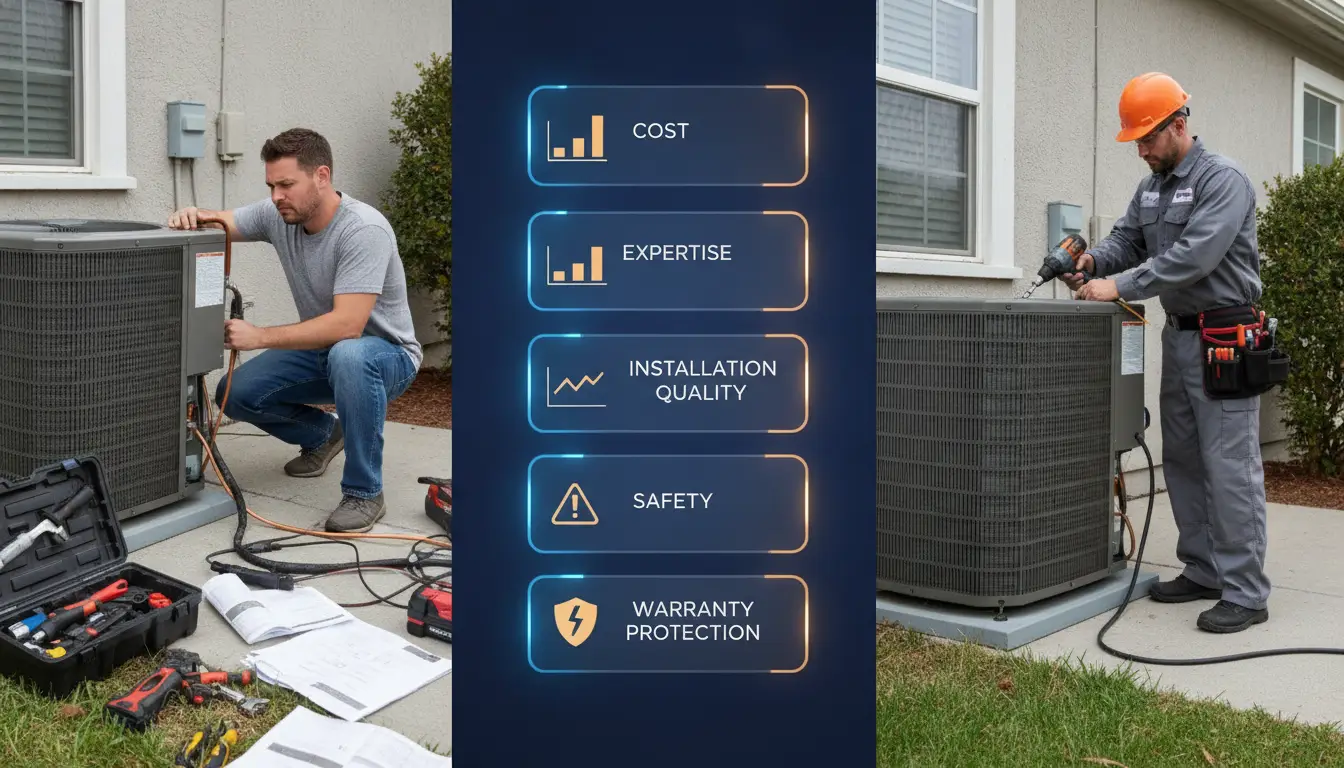
Homeowners can legally install certain AC units, window units, portable systems, and through-the-wall units without a license. However, central air conditioning, mini-split systems, and heat pumps require a licensed HVAC contractor in Louisiana. Handling refrigerants without EPA Section 608 certification is a federal violation that carries fines up to $44,539 per day.
| Key Takeaways |
| ✓ Window, portable, and through-the-wall AC units can be installed by homeowners without a license in Louisiana. |
| ✓ Central AC and mini-split systems require a Louisiana-licensed HVAC contractor; DIY installation voids most manufacturer warranties. |
| ✓ The EPA prohibits venting refrigerants into the atmosphere. Only EPA Section 608-certified technicians can legally purchase and handle refrigerants. |
| ✓ Improper sizing is the most common DIY mistake and leads to short cycling, high humidity indoors, and early compressor failure. |
| ✓ In Lafayette, LA, central AC installation requires a permit and must pass a city inspection before the system can be legally used. |
Every summer in Lafayette, LA, the heat index climbs past 100°F, and homeowners start asking the same question.
Can they save money by skipping the contractor and installing their own AC unit? It’s a fair question. A new central air system with professional installation can run $5,000 to $12,000 or more. That price tag makes any homeowner pause.
The honest answer is more nuanced than a simple yes or no. Some AC systems are genuinely designed for DIY installation. Others involve high-voltage electrical work, pressurized refrigerant lines, and building permits, a territory where a mistake can cost far more than the labor you saved.
This guide breaks down exactly which systems homeowners can install legally, what the process actually involves, what can go wrong, and why licensed HVAC professionals in Lafayette consistently recommend professional installation for anything beyond a basic window unit. By the end, you will have the information you need to make the right call for your home.
Can Homeowners Legally Install Their Own AC Unit?
Is DIY AC Installation Legal in Louisiana?
Louisiana law does not prohibit homeowners from installing certain types of air conditioning equipment in their own primary residence. However, that general allowance has important limits.
Any AC installation involving refrigerant handling, electrical panel work, or ductwork modifications typically requires a licensed contractor in Louisiana. The Louisiana State Licensing Board for Contractors (LSLBC) regulates HVAC work in the state. Installing a central air conditioning system or a mini-split system without a license violates the Louisiana contractor licensing law.
Bottom line: Simple plug-in units are generally fine for homeowners. Anything requiring refrigerant lines or duct connections is not.
Who Can Legally Handle Refrigerants?
Federal law controls this, not just state law. The U.S. Environmental Protection Agency (EPA) regulates refrigerant handling under Section 608 of the Clean Air Act. Only EPA-certified technicians can purchase restricted refrigerants like R-410A or R-32, which are used in modern residential AC systems.
If you are not EPA-certified, you cannot legally buy the refrigerants your system needs. This alone makes DIY installation of a split system practically impossible for most homeowners.
EPA Certification and Refrigerant Venting Restrictions
| Federal Law Alert: Intentionally venting refrigerants into the atmosphere is a federal violation under the Clean Air Act. Penalties reach up to $44,539 per day per violation (Source: U.S. EPA, 2024 enforcement guidelines). |
The EPA requires technicians to recover refrigerant before opening any refrigerant circuit. They must also use certified recovery equipment. A homeowner who attempts to work on a charged refrigerant circuit without this equipment and certification faces serious legal and financial consequences.
Why Homeowners Consider DIY Installation Anyway
The most common reason is cost. Labor for a professional AC installation in Lafayette can range from $1,500 to $4,000, depending on the system and home size. Some homeowners also enjoy hands-on projects and feel confident working around their home.
Those instincts are not unreasonable. But the systems where DIY is actually legal and safe are the simpler ones: window units, portable ACs, and through-the-wall units. For split systems and central air, the risks and legal barriers generally outweigh the savings.
The next section explains which system types fall into which category.
Which Types of AC Units Can Homeowners Install?
| Key Takeaways |
| ✓ Window units and portable ACs are the safest DIY options; they require no refrigerant handling or permit. |
| ✓ DIY mini-split kits exist, but they still require EPA certification for any refrigerant work. |
| ✓ Central air conditioning and heat pumps should always be installed by a licensed HVAC contractor. |
Window Air Conditioners
Window air conditioners are self-contained units that sit in a window opening. They come pre-charged with refrigerant and require no refrigerant handling during installation. Most homeowners can install one with basic tools in under an hour.
No permit is required for window AC installation in Louisiana. The main installation steps are mounting the unit securely, sealing the gaps around it, and plugging it into an appropriate electrical outlet. Some larger window units require a dedicated 240V circuit, which is an electrical task best handled by a licensed electrician.
Portable Air Conditioners
Portable ACs are freestanding units that cool a room by exhausting hot air through a window vent hose. They are the most accessible DIY option and require no tools or permanent installation.
The trade-off is efficiency. Portable ACs are less efficient than window units and work best in small spaces. They are not a practical solution for cooling an entire home.
Through-the-Wall AC Units
Through-the-wall units are similar to window ACs but are installed through a dedicated wall sleeve. They are more permanent and better sealed, making them a reasonable choice for rooms without suitable windows.
Installation requires cutting a hole through an exterior wall, which involves structural considerations. Most homeowners with DIY experience can manage this, but hiring a professional for the wall opening is worth considering.
Ductless Mini-Split Systems
Mini-split systems are increasingly popular in Louisiana because of their energy efficiency and flexibility. They consist of an outdoor compressor unit and one or more indoor air handlers connected by refrigerant lines.
Some manufacturers now sell “DIY mini-split” kits with pre-charged line sets designed to let homeowners skip the refrigerant charging step. These kits can reduce the technical barrier, but they still require careful electrical work and proper mounting of both units.
Even with a DIY kit, if the pre-charged line set needs to be modified or if any refrigerant work is needed later, EPA certification applies. Most HVAC contractors in Lafayette also note that improper line set routing in these DIY kits is a common source of efficiency loss and early system failure.
Central Air Conditioning Systems
Central air conditioning systems cool an entire home using ductwork to distribute conditioned air. Installation involves connecting an outdoor condenser, an indoor air handler or furnace coil, refrigerant lines, electrical circuits, and duct connections.
Central AC installation requires a licensed HVAC contractor in Louisiana. It also requires a building permit in Lafayette Parish. This is not optional or a technicality; it is state law and local code.
If you need a professional AC installation in Lafayette, LA, the team at
Fontenot’s AC & Heating AC installation services cover the full scope of work, from load calculations to final inspection.
Heat Pump Systems
Heat pumps function as both a heating and cooling system. They work the same way as a standard split AC system, but can reverse the refrigerant cycle to provide heat during winter. In South Louisiana’s mild winters, heat pumps are an efficient year-round solution.
Heat pump installation carries the same legal requirements as central AC in Louisiana. A license, permit, and inspection are all required. Do not attempt DIY installation on a heat pump system.
What Is Actually Involved in Installing an AC Unit?
| Key Takeaways |
| ✓ A Manual J load calculation must happen before any central AC system is selected; skipping it leads to improper sizing. |
| ✓ Refrigerant line connections require vacuum pumps, manifold gauge sets, and EPA-certified handling. |
| ✓ The electrical circuit for a central AC system typically requires a dedicated 240V breaker and licensed electrical work. |
Choosing the Correct System for Your Home
System selection is not guesswork. An HVAC professional performs a Manual J load calculation to determine the exact cooling capacity your home requires, measured in BTUs or tons. This calculation accounts for square footage, ceiling height, insulation quality, window placement, and local climate data.
In Lafayette, LA, the combination of high summer heat and extreme humidity means that both cooling capacity and dehumidification performance matter. An undersized system never catches up with the heat load. An oversized system short-cycles, which leaves indoor humidity dangerously high.
Preparing the Installation Location
Before installation begins, the site must be prepared. For a central system, this means checking that the ductwork is properly sized and sealed, that the air handler location has proper clearances, and that the outdoor condenser pad is level, stable, and positioned for adequate airflow.
Outdoor units should be placed away from dryer vents, debris sources, and dense landscaping. A minimum clearance of 18 to 24 inches on all sides is typically required for proper condenser airflow.
Installing the Air Handler and Outdoor Condenser
The air handler (or evaporator coil) connects to the home’s ductwork and sits inside the home, usually in an attic, closet, or mechanical room. The outdoor condenser houses the compressor and condenser coil. Both units must be properly mounted and secured.
Vibration and noise issues often trace back to improper mounting at this stage. A condenser that is not level stresses the compressor and shortens the system’s life.
Electrical Circuit Requirements
A residential central AC system typically requires a dedicated 240V, 30- to 60-amp circuit at the outdoor condenser, plus the air handler’s power connection. This work must comply with the National Electrical Code (NEC) and Louisiana’s local electrical codes.
Improper wiring is one of the leading causes of residential fires. This is not a step where cutting corners is acceptable.
Connecting Refrigerant Lines
Refrigerant lines connect the indoor evaporator coil to the outdoor condenser. On a standard split system, these lines are copper and must be brazed, insulated, and pressure-tested before the system is charged.
Charging the system requires a vacuum pump to remove moisture and air from the lines, manifold gauges to monitor pressure, and precise refrigerant addition based on line length. Overcharging or undercharging the system by even a few ounces degrades efficiency and damages the compressor over time.
Condensate Drainage Requirements
The evaporator coil removes moisture from indoor air as it cools. That moisture collects in a drain pan and must flow through a condensate drain line to the outside or to a drain. In a hot, humid climate like Lafayette, the volume of condensate can be substantial.
A clogged or improperly sloped condensate drain is one of the most common causes of water damage from AC systems. The drain line must slope correctly and include a secondary overflow drain or float switch as a backup.
Testing and Commissioning the System
After installation, a licensed technician checks refrigerant pressures, verifies airflow across the coil, tests all electrical connections, confirms that the thermostat controls the system correctly, and documents the installation for the permit inspection.
This commissioning step is what separates a working system from a system that will fail within two years. Skipping it, as often happens with DIY installs, leaves problems undetected until they become expensive repairs.
Why Is DIY AC Installation Risky?
| Key Takeaways |
| ✓ Most manufacturers require professional installation to maintain warranty coverage. |
| ✓ Electrical mistakes during AC installation are a leading cause of residential electrical fires. |
| ✓ An improperly sized system will cost more in energy bills every single month, and the savings from DIY labor vanish quickly. |
Does DIY Installation Void the Manufacturer’s Warranty?
For most central AC and mini-split systems, yes. Manufacturers write professional installation requirements directly into their warranty terms. If the system was not installed by a licensed contractor, the warranty is void from day one.
That means any compressor failure, refrigerant leak, or electrical fault, even if caused by a manufacturing defect, becomes your out-of-pocket cost. Compressor replacement alone can run $1,500 to $2,500 on a residential system.
Electrical Safety Hazards
AC systems operate on high-voltage circuits. A wiring error can cause immediate arcing, a tripped breaker, or a slow-developing problem that leads to a house fire months later. The National Fire Protection Association (NFPA) estimates that electrical failures cause roughly 46,700 home fires annually in the United States.
Most homeowners are not trained to identify undersized wire gauges, improper breaker sizing, or ground fault risks. An electrical inspector may not flag these problems until after an incident occurs.
Improper System Sizing
Picking the wrong size AC unit is the single most common DIY mistake. A unit that is too small runs constantly and never fully cools the home. A unit that is too large cools quickly but shuts off before removing enough humidity from the air.
In Lafayette, where summer relative humidity often exceeds 80%, an oversized system leaves the home feeling clammy and uncomfortable even when the thermostat reads the right temperature. Proper sizing requires a Manual J calculation, not a rule of thumb based on square footage alone.
Reduced Energy Efficiency
Even if the right-sized unit is chosen, improper refrigerant charge, poor duct connections, and inadequate airflow all reduce efficiency. A system that is even 10% low on refrigerant can lose up to 20% of its cooling capacity and consume significantly more electricity to achieve the same output. (Source: U.S. Department of Energy, Energy Saver guide, 2024)
Premature Equipment Failure
The compressor is the most expensive component in any AC system. It depends on proper refrigerant charge, correct oil circulation, clean electrical power, and adequate airflow to stay healthy. Install the system incorrectly in any of those areas, and compressor life drops sharply.
An HVAC system installed by a licensed contractor typically lasts 15 to 20 years in South Louisiana with regular maintenance. A poorly installed DIY system may fail within 3 to 5 years.
Failed Building Inspections
Central AC installation in Lafayette requires a permit and a passed inspection. If a homeowner installs a system without a permit and it is discovered during a home sale, insurance claim, or neighbor complaint, the system may need to be removed and reinstalled by a licensed contractor at full cost.
This scenario is not hypothetical. Real estate transactions in Louisiana frequently uncover unpermitted HVAC work, which delays closings and reduces sale prices.
How Can DIY Installation Affect Homeowners’ Insurance?
Homeowners’ insurance policies typically include language about professional installation for major systems. If a fire, flood, or structural claim traces back to an improperly installed AC system, the insurer may deny the claim or reduce the payout on the grounds of negligent installation.
Before attempting any AC installation, review your policy terms and check with your agent. The potential liability is real.
What Can Go Wrong If an AC Unit Is Installed Incorrectly?
| Key Takeaways |
| ✓ Short cycling damages the compressor and leads to early system failure. |
| ✓ Excess indoor humidity is a direct result of improper sizing or poor airflow, a common complaint after DIY installs in Lafayette. |
| ✓ Refrigerant leaks are an environmental violation and reduce cooling capacity by the day. |
Short Cycling Issues
Short cycling happens when the AC unit turns on and off too frequently. It is almost always a sign of an oversized system or a refrigerant problem. Each start-up cycle stresses the compressor, accelerating wear. A system that short-cycles may fail years ahead of schedule.
Uneven Cooling Throughout the Home
Uneven cooling usually points to duct design problems, blocked airflow, or a mismatched system capacity. Some rooms run cold while others stay hot. This problem is frustrating to live with and difficult to fix after installation without redesigning part of the system.
Excess Indoor Humidity
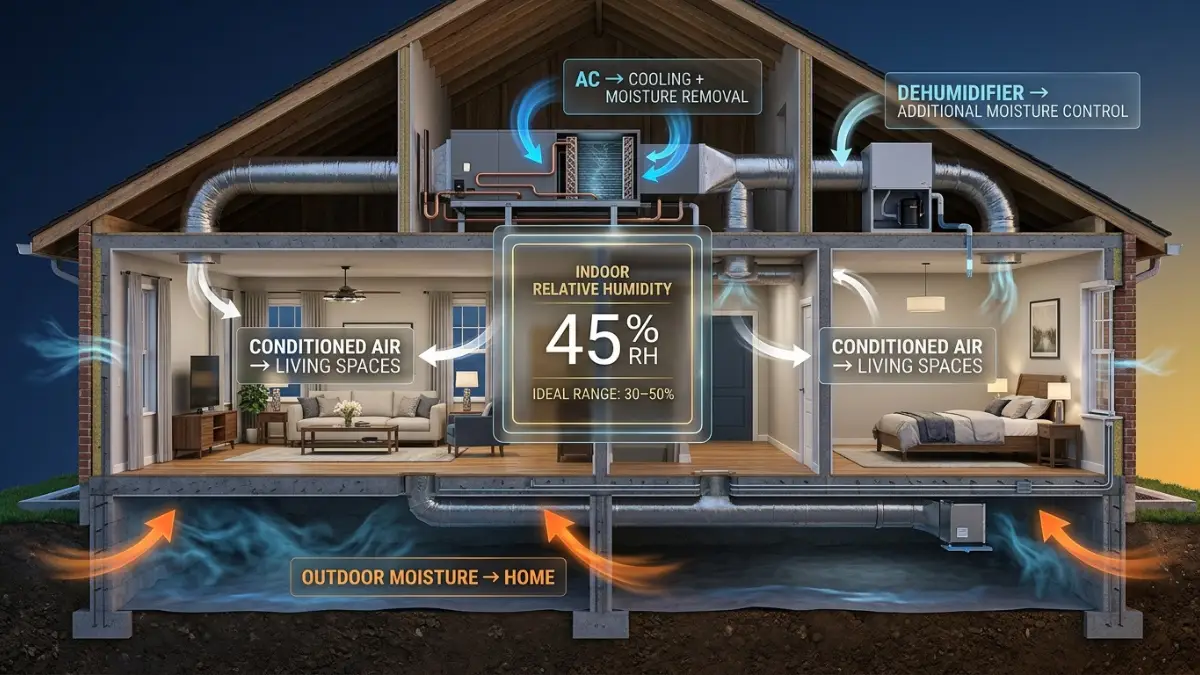
An AC system that short-cycles never runs long enough to pull significant moisture from the air. In Lafayette, this results in indoor humidity that stays above 60%, creating conditions for mold growth, allergen build-up, and general discomfort.
Ask yourself: would you rather pay a contractor now or pay a mold remediation company later? In South Louisiana, excess indoor humidity is not a minor inconvenience; it is a serious health and property issue.
Increased Energy Bills
Almost every installation error eventually shows up on the monthly electricity bill. A system that is low on refrigerant, poorly sized, or struggling with duct leaks has to work harder to cool the home, drawing more power per hour of operation.
Compressor Damage
The compressor is the heart of any AC system and the most expensive component to replace. Compressor damage from incorrect refrigerant charge, voltage irregularities, or poor airflow often happens gradually; the system keeps running, but at reduced efficiency, until it fails entirely.
Refrigerant Leaks
Improperly connected refrigerant lines can develop slow leaks that the homeowner may not notice for months. The system loses cooling capacity gradually, energy bills rise, and eventually the compressor overheats.
Beyond the mechanical damage, refrigerant leaks are an EPA violation. Repair and recharge by a certified technician is required, which can cost $300 to $800 or more, depending on the amount of refrigerant lost.
Why Do HVAC Professionals Recommend Professional Installation?
| Key Takeaways |
| ✓ Professional HVAC installation requires specialized tools that most homeowners do not own and cannot rent easily. |
| ✓ A licensed contractor brings years of hands-on training, not just a checklist. |
| ✓ Proper refrigerant charging by weight, not by pressure guesswork, is what separates an efficient system from an inefficient one. |
What Specialized Tools Are Required for AC Installation?
Vacuum Pumps
A vacuum pump removes moisture and non-condensable gases from the refrigerant circuit before charging. Without proper evacuation, moisture in the lines reacts with the refrigerant to form acids that corrode the system from the inside. A quality two-stage vacuum pump costs $200 to $500.
Micron Gauges
A micron gauge measures vacuum depth in the refrigerant circuit. A proper evacuation pulls the system below 500 microns. Without a micron gauge, there is no way to confirm the evacuation is deep enough, yet this step is routinely skipped in DIY installs.
Manifold Gauges
Manifold gauge sets monitor high-side and low-side refrigerant pressures during charging and diagnostics. They are essential for verifying proper refrigerant charge. A professional-grade set costs $150 to $400. Knowing how to read and interpret the pressures requires training and experience.
Electrical Testing Equipment
Multimeters, clamp meters, and capacitor testers are needed to verify voltages, check motor windings, and confirm that all electrical components are operating within spec. Skipping this step means the system goes live without knowing whether a component is about to fail.
What Technical Knowledge and Training Does Installation Require?
Licensed HVAC technicians in Louisiana complete formal training programs and pass state licensing exams. They understand refrigerant thermodynamics, psychrometrics, electrical theory, and building science. That background lets them diagnose problems and correct them before the system is commissioned.
YouTube tutorials and manufacturer installation manuals can provide useful context, but they cannot substitute for that depth of training when real problems arise during installation.
What Are Proper Refrigerant Charging Procedures?
Refrigerant must be charged by weight to the manufacturer’s specification, then verified using superheat and subcooling measurements at the system’s operating conditions. Charging by pressure readings alone, a common shortcut, is unreliable and often leads to an improper charge.
An improperly charged system does not perform at its rated efficiency. The difference between a properly charged system and one that is 15% off-spec can mean hundreds of dollars per year in extra electricity costs.
Why Do Safe Electrical Connections Matter So Much?
AC system wiring involves line-voltage connections at the condenser, low-voltage thermostat wiring, and the air handler’s internal electrical components. Each connection must be correct, tight, and properly protected.
A loose connection can arc and ignite nearby materials. A missed ground can create a shock hazard. These are not abstract risks; they are real outcomes that licensed contractors are specifically trained to prevent.
Why Does Proper AC Sizing Matter So Much?
| Key Takeaways |
| ✓ A Manual J load calculation is the industry standard for sizing; rules of thumb based on square footage alone are not reliable. |
| ✓ In Lafayette, humidity control is as important as temperature control; an oversized system fails at both. |
| ✓ Higher SEER2 ratings mean lower operating costs, but only when the system is properly installed. |
What Is a Manual J Load Calculation?
Manual J: the industry-standard method developed by the Air Conditioning Contractors of America (ACCA) for calculating residential heating and cooling loads. It accounts for local climate data, home orientation, insulation levels, window area, infiltration rates, and internal heat gains from occupants and appliances.
A properly done Manual J takes 30 to 90 minutes of data gathering and calculation. HVAC contractors use specialized software to generate the result. This is the only reliable way to determine what size system your home actually needs.
Why Is Bigger Not Always Better?
Many homeowners assume that a larger AC unit will cool their home faster and more effectively. In reality, an oversized unit causes more problems than an undersized one in most cases.
An oversized system cools the air temperature quickly but shuts off before completing a full dehumidification cycle. The result is a home that feels cold but damp, what HVAC professionals call short cycling with high residual humidity. In Lafayette, this is a recipe for mold growth and indoor air quality problems.
Why Does Humidity Control Matter in Lafayette, LA?
Lafayette sits in the heart of South Louisiana, where summer relative humidity regularly exceeds 80%. Human comfort depends on both temperature and humidity. A home at 74°F and 70% relative humidity feels more uncomfortable than a home at 76°F and 50% relative humidity.
A properly sized and installed AC system in Lafayette removes 20 to 30 gallons of water from the indoor air daily during peak summer conditions. This is one reason why proper sizing matters more in humid climates than in dry ones.
How Do AC Efficiency Ratings Affect System Selection?
The SEER2 (Seasonal Energy Efficiency Ratio, version 2) rating measures how efficiently an AC system converts electricity into cooling. As of January 2023, the U.S. Department of Energy requires a minimum SEER2 of 13.4 for residential systems in the South, including Louisiana. (Source: U.S. DOE, 2023)
Higher SEER2 ratings mean lower monthly electricity costs. A system rated at SEER 18 uses significantly less electricity per BTU of cooling than a minimum-efficiency unit. However, those efficiency gains only materialize when the system is properly installed, charged, and matched to the home’s actual load.
What Are the AC Installation Requirements in Lafayette, LA?
| Key Takeaways |
| ✓ Lafayette Parish requires a permit for central AC installation, and the system must be inspected before use. |
| ✓ Louisiana HVAC contractors must hold a valid LSLBC license to perform residential HVAC work. |
| ✓ Unpermitted HVAC work can surface during a home sale and cost far more to fix than the original installation. |
Do You Need a Permit for AC Installation in Lafayette?
Yes. Installing a central air conditioning system or heat pump in Lafayette Parish requires a mechanical permit from the Lafayette Consolidated Government. The permit triggers an inspection by a licensed building inspector before the system can be put into service.
Window units and portable ACs do not require permits. Replacing an existing AC unit with an identical system in the same location may qualify for a simplified permit process, but you should confirm with the city before starting any work.
What Are Louisiana HVAC Licensing Requirements?
The Louisiana State Licensing Board for Contractors (LSLBC) requires HVAC contractors to hold a valid state license to perform heating, air conditioning, and refrigeration work on residential and commercial properties. Contractors must pass licensing exams and carry general liability insurance and workers’ compensation coverage.
Before hiring any HVAC contractor in Lafayette, verify their license on the LSLBC website. An unlicensed contractor cannot pull a permit, which means any installation they perform is immediately non-compliant.
Verify Louisiana HVAC contractor licenses at lslbc.louisiana.gov.
What Are the Local Electrical Code Requirements?
Lafayette follows the National Electrical Code (NEC) for residential electrical work. AC installations must use properly sized conductors, correctly rated breakers, and approved disconnect switches within sight of the outdoor unit.
Any new electrical circuit for an AC system must be inspected along with the mechanical permit. In many cases, a separate electrical permit is also required.
What Are the Inspection Requirements for HVAC Projects?
After installation is complete, the HVAC contractor schedules a rough-in inspection and a final inspection with the city. The inspector verifies that the system was installed according to permitted plans and that all mechanical and electrical connections meet code.
The system cannot be put into regular use until the final inspection passes. Operating an uninspected system is a code violation in Lafayette.
What Are the Potential Consequences of Non-Compliant Installation?
Installing a central AC system without a permit in Lafayette can result in fines, a required permit application after the fact, and a mandatory inspection. If the work does not pass inspection, portions of the installation may need to be redone.
More practically, unpermitted HVAC work surfaces in real estate transactions. Title companies and mortgage lenders regularly flag open or unpulled permits during closing, which can delay or kill a home sale.
DIY AC Installation vs. Professional Installation: How Do They Compare?
| Key Takeaways |
| ✓ Professional installation typically costs $1,500 to $4,000 more upfront but avoids thousands in potential repair costs. |
| ✓ A professionally installed system runs more efficiently, saving money on electricity every month. |
| ✓ Warranty protection alone, worth $1,000+ in potential compressor coverage, justifies professional installation for most homeowners. |
| Factor | DIY Installation | Professional Installation |
| Upfront Cost | Lower (saves $1,500–$4,000 in labor) | Higher (includes labor, permit, and commissioning) |
| Installation Quality | Variable, depends on the homeowner’s skill | Consistent, follows manufacturer specs and code |
| Energy Efficiency | Often reduced by sizing or charging errors | Optimized through proper sizing and commissioning |
| Electrical Safety | High risk if the homeowner lacks electrical training | Code-compliant, inspected, and insured work |
| Warranty Protection | Voided by most manufacturers | Fully protected for parts and labor |
| Permit & Inspection | Homeowner must self-permit (often skipped) | Contractor handles all permit and inspection steps |
| Long-Term Ownership Cost | Often higher due to inefficiency and early failure | Lower , efficient, well-installed systems last longer |
Cost Comparison
On paper, DIY saves the labor cost of installation. In practice, the savings erode quickly. A system installed without proper commissioning may run 10 to 20% less efficiently than a professionally installed one. Over 15 years, that inefficiency compounds into thousands of dollars in electricity costs.
Installation Quality Comparison
A licensed HVAC contractor installs systems every day. They know exactly where the common failure points are and how to prevent them. A homeowner installing their first AC system does not have that experience base, which means problems are more likely to go unnoticed.
Energy Efficiency Comparison
Proper refrigerant charge, correct duct sizing, and well-sealed connections all affect system efficiency. Professional installation optimizes all three. DIY installs commonly miss at least one of these, resulting in a system that never reaches its rated SEER2 efficiency in the real world.
Safety Considerations
High-voltage electrical work carries genuine shock and fire risks. Refrigerant at high pressure can cause freeze burns. These hazards are manageable with proper training and equipment, neither of which most homeowners have for AC installation.
Warranty Protection
Manufacturer warranties on central AC equipment typically cover 5 to 10 years on parts and compressors, but only when installed by a licensed professional. Voiding the warranty to save labor costs is rarely a financially sound trade-off.
Long-Term Ownership Costs
A poorly installed AC system requires more frequent service calls, more refrigerant additions, and earlier major repairs. The true cost of DIY installation is not just the upfront installation; it is the 15-year ownership cost of a system that was never set up correctly.
How Much Does Professional AC Installation Cost in Lafayette, LA?
| Key Takeaways |
| ✓ Central AC installation in Lafayette typically runs $4,000 to $12,000, depending on system size and home conditions. |
| ✓ Mini-split installation costs $2,000 to $7,000 per zone. |
| ✓ Financing options are available through many Lafayette HVAC contractors, making professional installation accessible even for budget-conscious homeowners. |
What Are Average Central AC Installation Costs in Lafayette?
A standard central air conditioning system installation in Lafayette, LA, ranges from $4,000 to $12,000 in 2025, depending on system size, efficiency rating, and home-specific factors like duct conditions and attic access. Most average-size Lafayette homes in the 1,500 to 2,500 square foot range fall in the $5,000 to $9,000 range for a complete system.
What Are Average Mini-Split Installation Costs?
A single-zone ductless mini-split system typically costs $2,000 to $5,000 installed in Lafayette. Multi-zone systems with two or more indoor heads range from $4,000 to $10,000 or more, depending on the number of zones, the brand, and the complexity of the installation.
What Factors Affect Installation Pricing?
- System size and efficiency (SEER2 rating), higher efficiency units cost more upfront
- Duct condition: Older or damaged ductwork may need repairs or replacement
- Accessibility of the air handler location (attic vs. closet vs. basement)
- Electrical upgrades required for the new system’s load
- Brand and equipment warranty terms
- Permit and inspection fees (included by most licensed contractors)
Are There Financing Options for New AC Installation?
Fontenot’s AC & Heating offers financing options for new system installations, making it easier for Lafayette homeowners to invest in the right system without paying the full cost upfront. Contact us to ask about current financing programs.
Why Does Professional Installation Save Money Long Term?
A professionally installed system operates at its rated efficiency, lasts its full design life, and stays under warranty for years. These factors collectively produce a lower total cost of ownership than a DIY install that runs inefficiently, fails early, and has no warranty coverage.
How Do You Find the Right HVAC Contractor in Lafayette, LA?
| Key Takeaways |
| ✓ Always verify LSLBC license and insurance before signing any contract. |
| ✓ A contractor familiar with South Louisiana’s humidity and heat load requirements will size and install your system correctly. |
| ✓ Multiple estimates protect you from both overpricing and underqualified work. |
How Do You Verify Licensing and Insurance?
Any licensed HVAC contractor in Louisiana must hold an active license with the LSLBC. Ask for their license number and verify it online before any work begins. Also, confirm that they carry current general liability insurance and workers’ compensation coverage for their employees.
If a contractor cannot provide these credentials immediately, look elsewhere.
Why Does Familiarity With South Louisiana Climate Conditions Matter?
An HVAC contractor who works in Lafayette every day understands the specific challenges of South Louisiana’s climate: extreme summer heat indices, sustained high humidity, and the dehumidification demands that come with it. This local knowledge affects how they size systems and design duct configurations.
A contractor from outside the region may not account for local climate factors appropriately in their Manual J calculations.
Should You Ask About Warranties and Permits?
Yes, always. Before signing a contract, confirm that the contractor will pull the required permit, handle the inspection scheduling, and provide documentation of the system warranty terms. A reputable contractor handles all of this without hesitation.
Be cautious of any contractor who suggests skipping the permit to save time or money. That shortcut creates problems for you, not for them.
Should You Request Multiple Estimates?
Getting two or three estimates from licensed, insured Lafayette HVAC contractors gives you a realistic picture of fair market pricing. It also lets you compare what is included in each bid, equipment brand, efficiency rating, warranty, and whether the permit is included.
The lowest estimate is not always the best choice. Compare the full scope of work, not just the bottom line number.
How Important Are Online Reviews and References?
Online reviews on Google and the Better Business Bureau give you real customer experiences with local contractors. Look for patterns across reviews rather than focusing on individual outliers. Ask for references from recent local installations if you have specific concerns.
The team at Fontenot’s AC & Heating has served Lafayette, Broussard, Scott, Youngsville, Carencro, Maurice, and Milton for years, with a track record of licensed, permitted, and professionally inspected installations.
Conclusion
Installing your own AC unit is legal for certain system types, practical for a few more, and genuinely inadvisable for the rest. Window units and portable ACs are real DIY options. Central air conditioning, heat pumps, and most mini-split systems are not; they require licensed installation, building permits, and EPA-certified refrigerant handling to be legal, safe, and warranty-compliant in Lafayette, LA.
The risks of improper installation go beyond voided warranties and failed inspections. A poorly sized or incorrectly charged system in Lafayette’s climate creates months of indoor humidity problems, inflated electricity bills, and accelerated equipment wear that ultimately costs far more than the labor you set out to avoid. The upfront cost of professional installation is an investment that pays back through efficiency, reliability, and protection for the full life of the system.
At Fontenot’s AC & Heating, we have installed and serviced AC systems across Lafayette, Broussard, Scott, Youngsville, Carencro, Maurice, and Milton for years. We handle the permit, the load calculation, the installation, and the inspection, so you get a system that is sized right, installed correctly, and fully covered under warranty. Contact us today to schedule your professional AC installation estimate, or call to ask about financing options that make a new system affordable right now.
Frequently Asked Questions
Can I install a mini-split AC unit myself without a license in Louisiana?
Some manufacturers sell DIY mini-split kits with pre-charged line sets. However, any refrigerant handling, including adjustments after installation, requires EPA Section 608 certification. Louisiana also requires a licensed HVAC contractor for split systems. DIY kits may reduce the barrier, but legal and warranty risks remain significant.
Do I need a permit to replace my existing AC unit with the same model?
In Lafayette Parish, replacing an existing AC unit typically still requires a mechanical permit. A like-for-like replacement may qualify for a simplified permit process, but you should confirm with Lafayette Consolidated Government before starting work. Skipping the permit creates liability during home sales and insurance claims.
What happens if I install central AC without a permit in Lafayette?
Installing central AC without a permit in Lafayette is a code violation. Consequences can include fines, a required after-the-fact permit application, and a mandatory inspection. If the work fails inspection, portions may need to be redone. Unpermitted work also surfaces during real estate transactions and can delay or derail a home sale.
How do I know if my AC system is the right size for my home?
The only reliable way to size a residential AC system is through a Manual J load calculation performed by a licensed HVAC contractor. Square footage rules of thumb are not accurate enough, especially in Lafayette, where humidity adds to the cooling demand. An improperly sized system costs more to operate and fails sooner.
Can a window AC unit cool my entire house?
Window AC units are designed to cool individual rooms, not entire homes. A single unit can effectively cool a room of up to 350 to 550 square feet, depending on its BTU rating. Cooling an entire home with window units requires multiple units in multiple rooms and results in uneven temperatures and higher combined energy costs than central air.
What is the average lifespan of a professionally installed central AC system in Lafayette?
A properly installed and regularly maintained central AC system in Lafayette, LA, typically lasts 15 to 20 years. South Louisiana’s high humidity and heat load push systems harder than in more moderate climates, making proper installation and annual maintenance especially important for achieving a full service life.
Related Articles
Is Air Duct Cleaning Worth It? What the EPA Says
August 14, 2026